










In the rapidly evolving landscape of artificial intelligence, the transition from simple chatbots to sophisticated, autonomous "agentic" systems has placed unprecedented strain on global data center infrastructure. As LLMs become more capable, their computational profiles have shifted toward long-context decoding, multi-step reasoning, and complex tool usage. Microsoft has responded to this shift with the introduction of the Azure Maia 300, the third generation of its custom AI accelerator program.
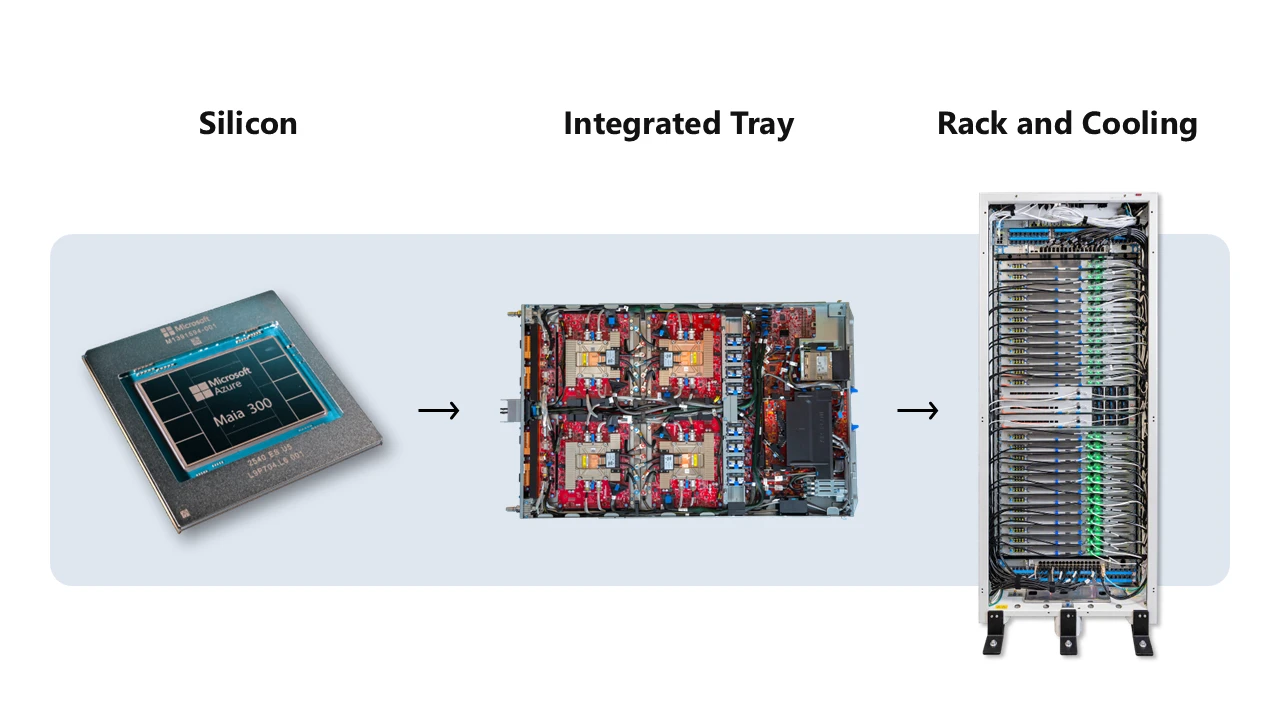
The Maia 300 is not merely a faster chip; it is a holistic re-engineering of the entire AI stack. By co-designing silicon, software, rack infrastructure, and networking to operate as a singular, unified platform, Microsoft aims to solve the industry’s most pressing problem: how to sustain explosive AI growth within the constraints of finite power and cooling envelopes.
The Core Philosophy: Optimization at Scale
From the inception of the Maia project, Microsoft’s architectural philosophy has remained consistent: optimize every watt and every dollar to deliver maximum "useful intelligence." In an era where agentic workloads are changing the arithmetic intensity of AI, the Maia 300 serves as the most mature expression of this goal.
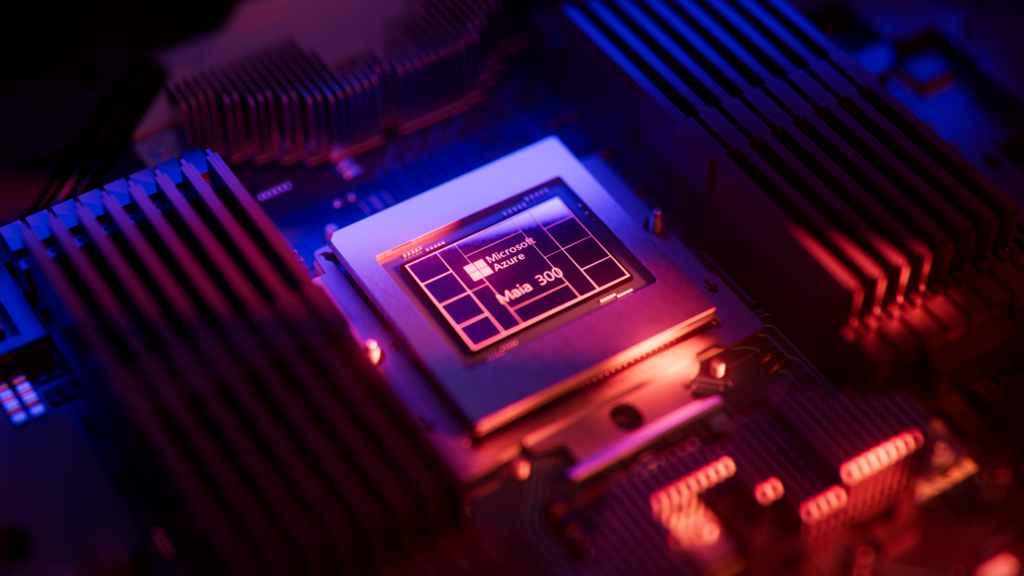
Unlike traditional server designs that treat processors, memory, and networking as discrete components, the Maia 300 is designed as a complete system. This approach is necessitated by the nature of modern agentic inference, which requires sustaining extreme memory locality, minimizing the energy cost of data movement, and scaling communication fabrics across thousands of accelerators. By integrating these elements, Microsoft has moved beyond the "brute force" scaling of power to a more surgical, data-aware efficiency.
A Chronology of Innovation: From Maia 200 to 300
The journey toward the Maia 300 began with the breakthrough architecture introduced in the Maia 200: the Software Defined Locally Accessed Dataflow (SDLA) Architecture.
The SDLA Foundation
The Maia 200 challenged the industry standard by separating control path programming from data path execution. This allowed software to explicitly orchestrate data placement, conversion, and synchronization across local memory, DMA engines, and compute engines. It recognized a fundamental truth in modern computing: moving data is often more energy-intensive than computing on it.
The Evolution to Maia 300
With the Maia 300, Microsoft has evolved the SDLA framework to address the specific challenges of 2026-era workloads:
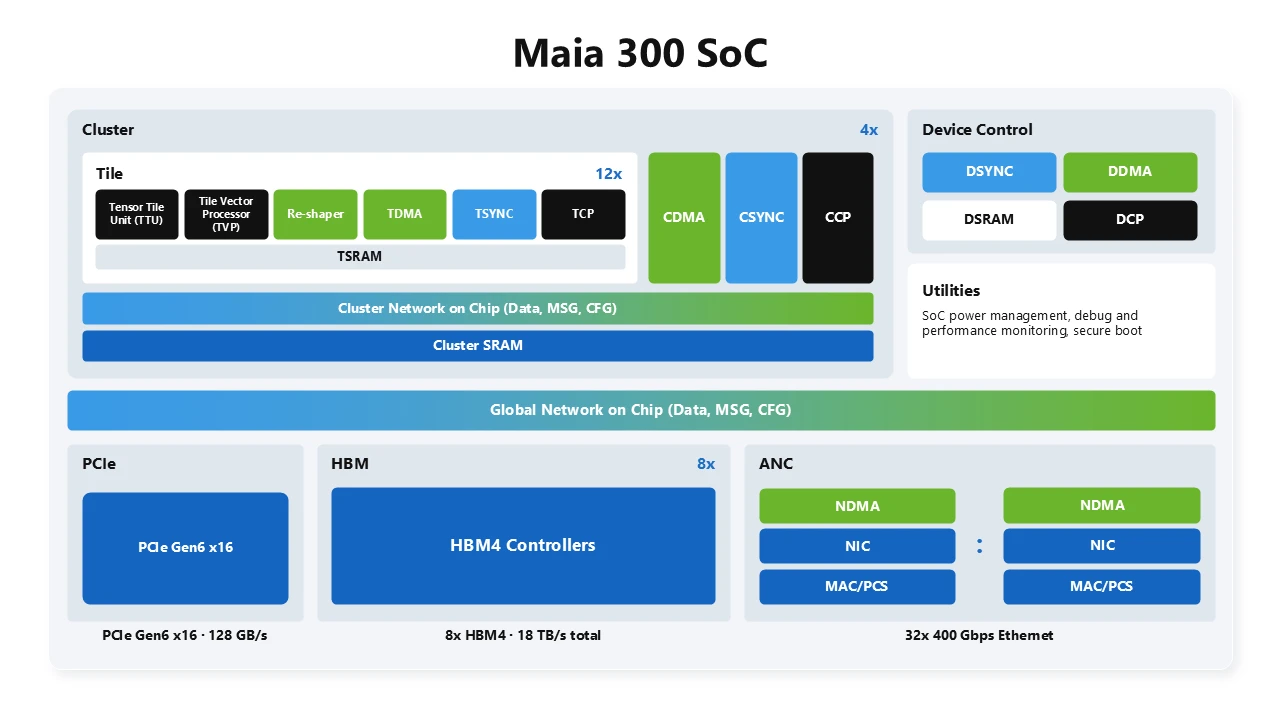
- NUMA-Aware Memory: Moving away from Uniform Memory Access (UMA), the Maia 300 employs a Non-Uniform Memory Access (NUMA) organization across its chiplets. This allows software to physically position data in closer proximity to the compute units that require it, drastically reducing latency.
- Narrow-Precision Breakthroughs: The new generation features hardware-accelerated, narrow-precision data type conversion, which reduces the number of bytes moved for every generated token.
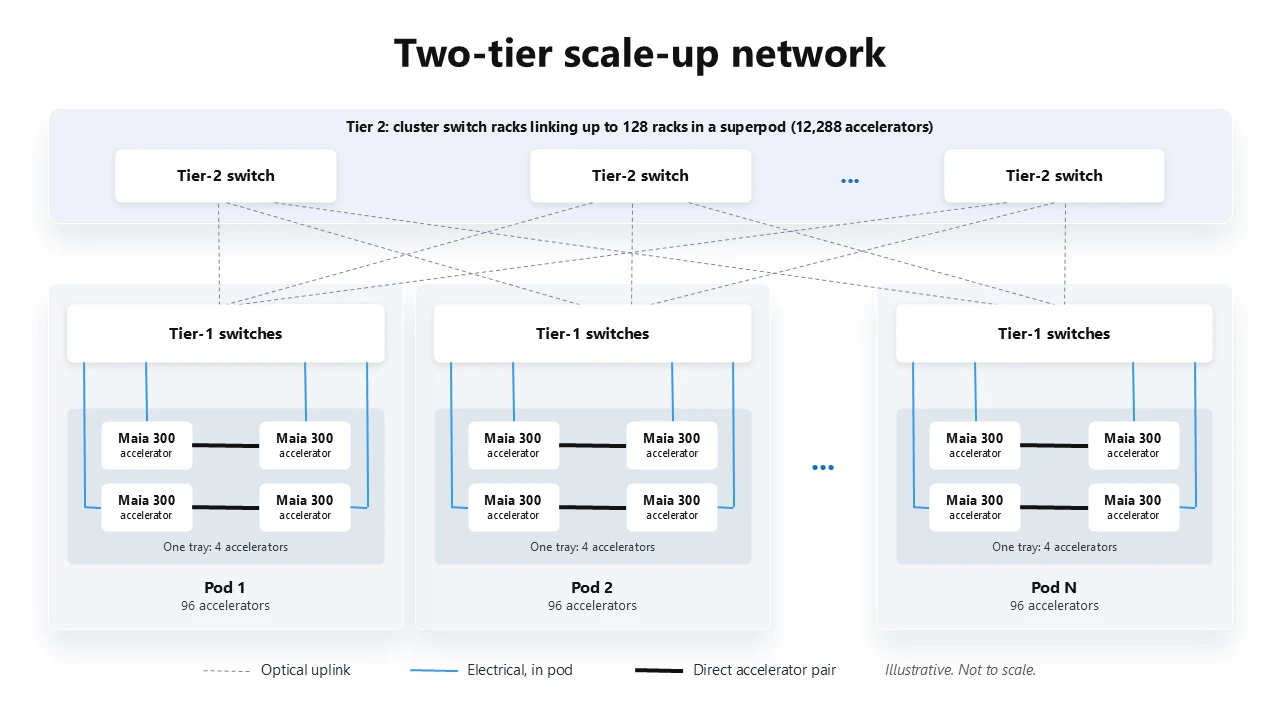
- Superpod Scaling: The scale-up domain has been expanded to a "superpod" configuration of 12,288 accelerators, allowing for unprecedented cluster-wide performance.
Supporting Data: Efficiency Metrics
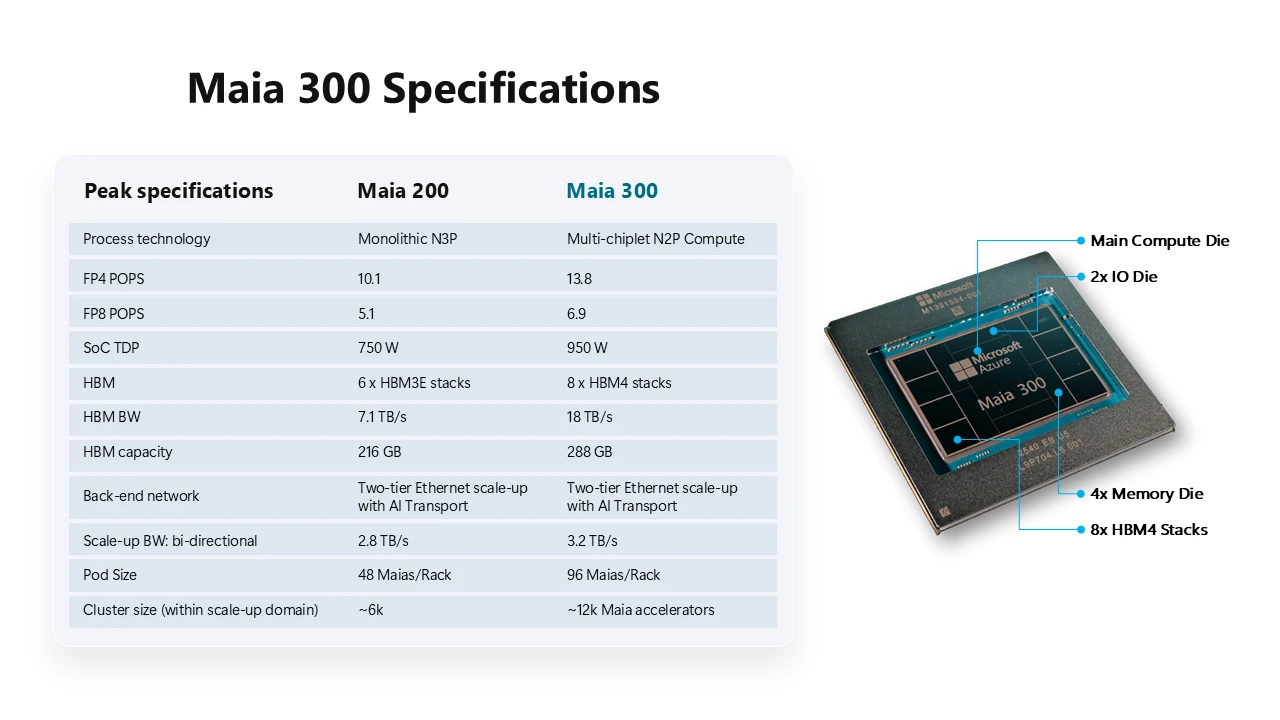
The performance gains achieved by the Maia 300, when compared to its predecessor, are substantial. The hardware optimizations have yielded a generational leap that directly addresses the "bottleneck" problems facing current data centers.
- Throughput: The Maia 300 delivers up to 7 times greater rack-scale token throughput in its full 96-accelerator configuration.
- Energy Efficiency: The system achieves more than 2.5 times the performance per watt compared to the Maia 200.
- Memory Performance: The architecture provides 2.5 times the memory bandwidth and 33% more capacity, with twice the High Bandwidth Memory (HBM) bandwidth per watt.
These numbers illustrate a fundamental shift in strategy: rather than scaling performance by simply increasing the silicon surface area or power consumption, Microsoft has focused on architectural efficiencies that optimize the dataflow path. By maximizing the utility of every watt, the company is effectively increasing the "density of intelligence" within its existing data centers.
The Network as a Fabric: Superpod Connectivity
One of the most significant innovations in the Maia 300 is the way it treats the network as a native extension of its SDLA architecture. Microsoft has implemented a custom AI transport layer built on Ethernet, ensuring that the network is not a bottleneck, but a fluid conduit for data.
Two-Tier Communication
The two-tier network design enables the 12,288-accelerator superpod to function as a single, unified compute fabric. Software sees a consistent communication model, meaning it can move data directly to any accelerator within the superpod using the same set of instructions. This simplifies the development process for engineers, who no longer need to worry about the complexities of physical topology.
Resilience and Flexibility
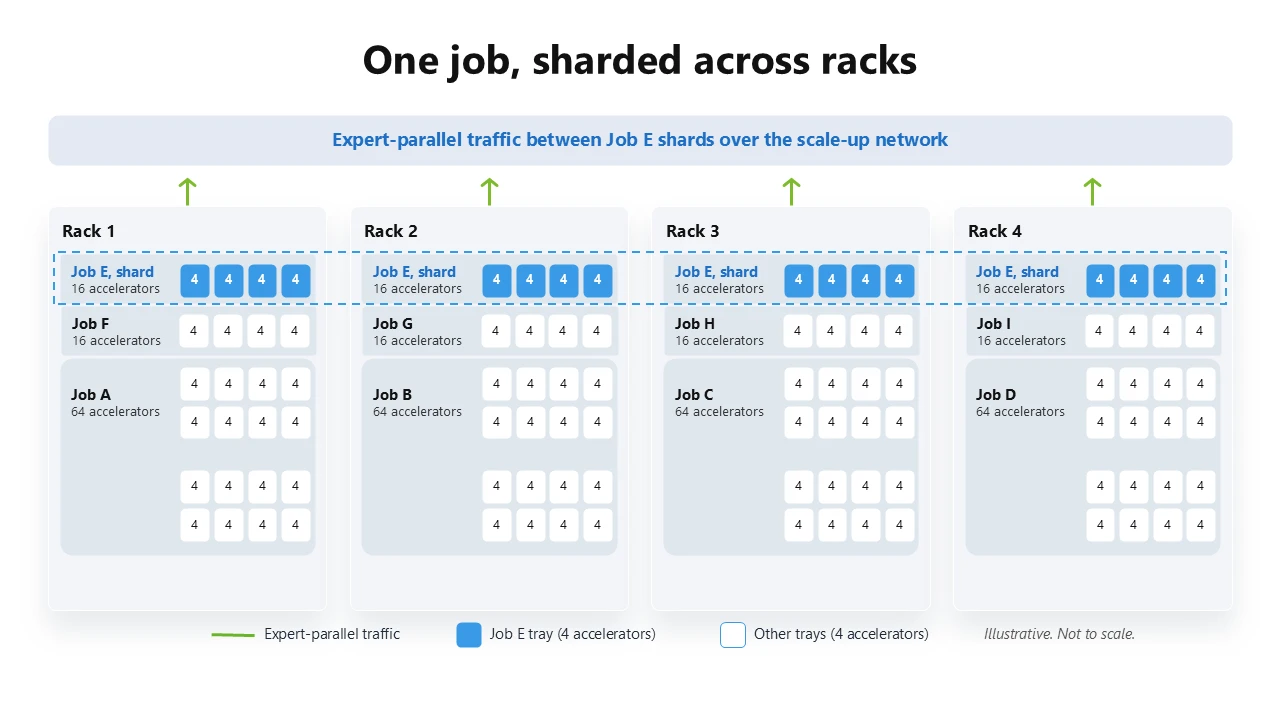
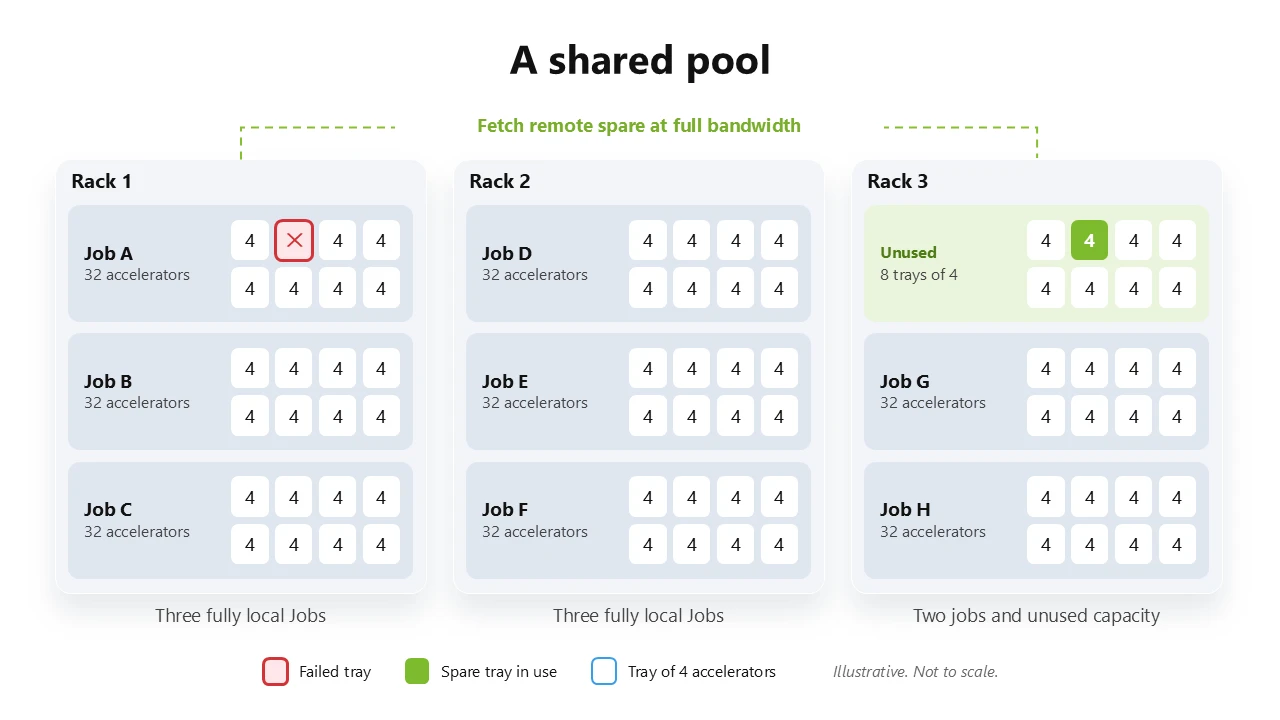
The system is built for the realities of hyperscale operations. A 64-accelerator job can be dynamically broken into four 16-accelerator shards across different racks. Furthermore, the architecture includes a "shared spare pool" capability: if a tray of accelerators fails in one rack, a spare tray in a different rack can be dynamically allocated to take its place. This ensures that the system maintains its performance targets even in the face of hardware failures, minimizing downtime for critical AI services.
Rack-Scale Architecture and Deployment
The efficiency of a data center is defined by its ability to maximize deployment within a fixed power and cooling envelope. The Maia 300 rack is a masterpiece of co-design, integrating server layout, power distribution, and advanced telemetry into a single, high-density package.
By utilizing advanced cooling techniques and optimizing the power-delivery network, Microsoft has effectively eliminated the "dead space" often found in traditional server deployments. The telemetry built into the rack allows operators to monitor, in real-time, the performance-per-watt metrics of specific jobs, enabling dynamic power management that ensures the system is always operating at peak efficiency.
Implications for the AI Ecosystem
The arrival of the Maia 300 has profound implications for the future of artificial intelligence, particularly regarding the accessibility and sustainability of high-end AI services.
Powering the Copilot Era
Microsoft’s internal usage of its own silicon provides a "real-world" testing ground for these chips. With platforms like Microsoft Copilot, GitHub Copilot, and Microsoft Foundry operating at massive scale, the company has a unique vantage point on the shifting needs of AI developers. The Maia 300 is not just a theoretical advancement; it is a tool built to lower the cost of inference for these massive, user-facing applications.
Democratizing Intelligence
The ultimate goal of the Maia program is to make advanced AI capabilities more affordable. By increasing the number of "useful tokens per dollar," Microsoft is essentially lowering the barrier to entry for developers and organizations that require high-performance, long-context reasoning. If the cost of inference drops significantly, we can expect to see an explosion in the complexity and capability of AI agents, which were previously too expensive or slow to run at scale.
Future Outlook
As Microsoft prepares for Microsoft Ignite 2026, the industry will be watching to see how the company integrates these hardware advancements into its broader Azure cloud strategy. The Maia 300 is a signal that the "Frontier Transformation"—the move toward ever-more-intelligent, agentic models—is being underpinned by a new, more efficient, and more sustainable hardware foundation.
The transition from general-purpose GPUs to specialized, software-defined silicon like the Maia 300 marks a maturation of the AI industry. We are moving away from the era of "AI at any cost" and into the era of "AI at scale." With this third-generation platform, Microsoft is ensuring that it has the infrastructure not just to support the next generation of agents, but to define them.
For further technical documentation and updates on the Azure Maia 300, visit the official Azure Maia hub.



