










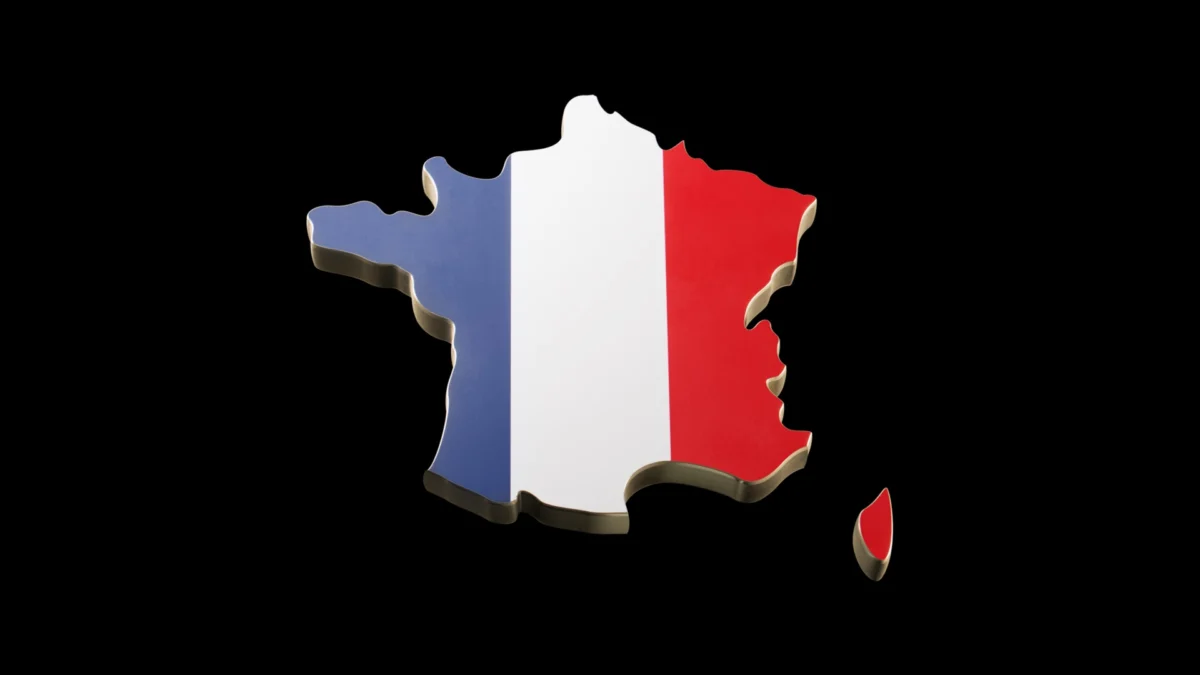
PARIS — France has firmly transitioned from AI ambition to large-scale, nationwide application. Across industries as diverse as aerospace, financial services, public administration, retail, and scientific research, French enterprises and public institutions are actively deploying agentic computing. Powered by advanced NVIDIA infrastructure and cutting-edge open models, this technological leap marks a watershed moment for European digital sovereignty and industrial innovation.
Driven by deliberate strategic groundwork—including compute commitments cemented during the AI Action Summit in February 2025 and successive Choose France Summits—the French AI ecosystem has successfully built out a comprehensive, full-stack technological framework. Today, this ecosystem is proving that localized infrastructure and sovereign data governance can coexist with world-class computational performance.
Main Facts
The rapid acceleration of agentic computing in France is characterized by concrete milestones across hardware, software, and real-world deployment:
- Sovereign Infrastructure and Manufacturing: Bull is expanding European AI server production to incorporate NVIDIA Vera Rubin Ultra NVL72 systems by 2028, with rack integration centered at its newly inaugurated Angers factory.
- Edge AI in Space: Loft Orbital and its joint venture Orbitworks successfully launched Altair-1, the first satellite in a $1 billion, 50-satellite constellation featuring on-board NVIDIA Jetson AGX Orin modules running Mistral models for real-time Earth observation.
- Public Sector Transformation: LINAGORA and Docaposte secured the CANUT framework agreement, positioning Twake.ai—built on NVIDIA Nemotron—as the exclusive sovereign digital workplace for over 2,500 French public organizations.
- Cross-Industry Enterprise Impact: L’Oréal is integrating NVIDIA ALCHEMI to accelerate in silico scientific formulation up to 100x faster than traditional methods, while Mirakl has onboarded more than 70 million products using GPU-accelerated open models to slash catalog onboarding times to under two hours.
- Next-Generation Hybrid Computing: Quantum pioneers Alice & Bob and Quandela have integrated the NVIDIA NVQLink platform to bridge GPU and QPU architectures, optimizing quantum error correction and advancing hybrid quantum-classical supercomputing.
Chronology of Progress
The maturation of France’s AI landscape is the result of a meticulously planned timeline bridging political commitment, infrastructural setup, and widespread commercial adoption:
- Early 2025 (The Catalyst): The AI Action Summit held in February 2025 anchors major international and domestic compute commitments on French soil, establishing a clear mandate for sovereign AI capabilities.
- Mid-2025 (Policy and Frameworks): Strategic public procurement agreements take shape. LINAGORA and Docaposte secure the CANUT framework, laying the groundwork to roll out secure, sovereign digital workspaces across the French public sector.
- October 2, 2025 (Infrastructural Milestone): Bull officially inaugurates its advanced factory in Angers, laying the physical foundation for regional server production that will eventually scale to NVIDIA Vera Rubin Ultra NVL72 systems.
- Late 2025 / Early 2026 (Orbital and Industrial Deployments): Loft Orbital launches Altair-1, validating edge-AI computing in orbit. Simultaneously, major enterprises like L’Oréal, Mirakl, and regional administrative bodies in Côte-d’Or deploy production-grade agentic workflows.
- Mid-2026 (Advanced Modeling and Quantum Integration): Fondation Inria launches its collaborative working group on open-source advanced modeling. Meanwhile, quantum hardware leaders like Alice & Bob and Quandela successfully implement GPU-QPU integration using NVQLink, signaling a leap into advanced hybrid computation.
- Future Horizon (2028 and Beyond): Bull’s scheduled production of Vera Rubin Ultra NVL72 systems and the ongoing scaling of the 50-satellite Altair constellation point toward a fully realized, sovereign agentic computing architecture.
Supporting Data & Industry Implementations
The breadth of agentic computing across France is best understood through the specific metrics and technological integrations driving sector-specific transformations:
1. Aerospace and Edge Computing
- The Project: The $1 billion, 50-satellite constellation featuring autonomous capabilities.
- The Tech: Altair-1 relies on NVIDIA Jetson AGX Orin edge modules running Mistral models. Integrated by Loft Orbital and built in Abu Dhabi by Orbitworks (a joint venture between Loft Orbital and Marlan Space), the satellite enables autonomous operations and real-time Earth observation directly from orbit.
2. Public Administration and Financial Services
- The Public Sector: Twake.ai, developed by LINAGORA and Docaposte using NVIDIA Nemotron, serves as the unified sovereign digital workplace for more than 2,500 public entities under the CANUT framework.
- Banking Innovation: Software provider SBS has launched a pioneering sovereign banking platform in collaboration with NVIDIA, allowing financial institutions to deploy governed generative and agentic services safely within internal environments.
- Model Customization: Mistral’s private preview release of Mistral Large 4 offers state-of-the-art open-weight performance tailored for cyber defense, manufacturing, finance, and complex multimodal tasks.
3. Retail, Commerce, and Visual Modeling
- L’Oréal: By integrating NVIDIA ALCHEMI into its research workflows, scientists can explore chemical formulations in silico, accelerating the discovery process by up to 100x compared to legacy experimental methods.
- Mirakl: Utilizing fine-tuned open models running on NVIDIA GPUs and inference software, Mirakl has processed over 70 million products, drastically cutting seller catalog onboarding times to under two hours.
- Omi & Marketing Visuals: Omi combines verified 3D digital twins with open models optimized on NVIDIA infrastructure to achieve 4x faster inference, ensuring absolute product accuracy in AI-generated marketing at scale.
4. Smart Cities and Infrastructure Management
- Côte-d’Or Deployment: ThinkDeep and Akila have deployed a sophisticated digital-twin agent powered by NVIDIA Cosmos open-world models, Nemotron, and Omniverse libraries. The system manages nearly 5,800 kilometers of roads and municipal buildings, achieving an immediate 10% reduction in operating costs with a targeted 30% reduction as rollout continues.
- Port Security: Port Sud de France utilizes ThinkDeep’s DeepBrain platform—likewise driven by Nemotron and Cosmos—to streamline goods processing and enhance port security protocols.
- Robotics in Healthcare: Paris-based Enchanted Tools is deploying social service robots powered by advanced AI to assist vulnerable patients, including children undergoing pediatric cancer care.
- Enterprise Telecommunications: Bouygues Telecom and Prisme.ai launched AI Studio V2, leveraging full-stack NVIDIA infrastructure to empower all employees to build secure, internally controlled AI agents.
5. Quantum-Classical Supercomputing
- Alice & Bob: Integrated the NVIDIA NVQLink platform with superconducting cat qubits to dramatically enhance quantum error correction efficiency.
- Quandela: Utilized NVQLink to establish a seamless connection between a DGX Spark system and photonic qubits, pushing the boundaries of QPU-GPU supercomputing.
Official Responses and Ecosystem Perspectives
Industry leaders and institutional figures have widely praised France’s rapid execution in moving from theoretical AI frameworks to hardened, sovereign applications.
The establishment of Fondation Inria’s working group on open-source advanced modeling, backed by NVIDIA, highlights a national commitment to collaborative transparency. Slated to deliver its comprehensive findings in the spring of next year, the initiative aims to institutionalize best practices for open-source AI adoption across European research and industrial sectors.
Furthermore, the widespread adoption of open models—such as the NVIDIA Nemotron framework and Mistral’s expanding portfolio—underscores a shared corporate and governmental philosophy: that digital sovereignty does not require technological isolation, but rather the strategic mastery of open, secure, and customizable infrastructure.
Implications
The successful scaling of agentic computing across France carries profound implications for the global technology landscape, Europe’s regulatory autonomy, and the future of enterprise productivity:
- Validation of Sovereign AI: France is proving that European nations do not need to rely entirely on foreign, closed AI ecosystems. By marrying local manufacturing (such as Bull’s Angers factory) with open-weight models (Mistral and Nemotron) and sovereign public frameworks (CANUT), France has established a viable blueprint for digital sovereignty.
- Redefining Enterprise Efficiency: From L’Oréal’s 100x acceleration in chemical formulation to Mirakl’s instantaneous catalog onboarding, agentic computing is shifting from a novelty to an indispensable operational engine. AI agents are no longer just answering questions; they are actively writing code, managing municipal grids, securing ports, and guiding laboratory experiments.
- The Convergence of Quantum and Classical Computing: The successful integration of NVQLink by quantum pioneers like Alice & Bob and Quandela signals that the bottleneck between quantum processors (QPUs) and classical accelerators (GPUs) is breaking down. This paves the way for hybrid supercomputing architectures that will solve previously intractable computational problems in cryptography, materials science, and logistics.
As the French ecosystem continues to expand its physical infrastructure—culminating in upcoming milestones such as the Vera Rubin Ultra deployments and ongoing technological showcases—the nation stands as a global beacon for what happens when industrial ambition meets disciplined execution.
Industry observers and technology professionals can catch further announcements and strategic insights by tuning in to NVIDIA founder and CEO Jensen Huang’s upcoming GTC Berlin keynote on Wednesday, Oct. 21, at 11 a.m. CEST.



