





A comprehensive update to the PHP interpreter addresses two severe, remotely exploitable flaws impacting the entire WordPress and WooCommerce ecosystem. Because the vulnerability resides at the infrastructure level, traditional dashboard updates will not suffice.
Executive Summary & Main Facts
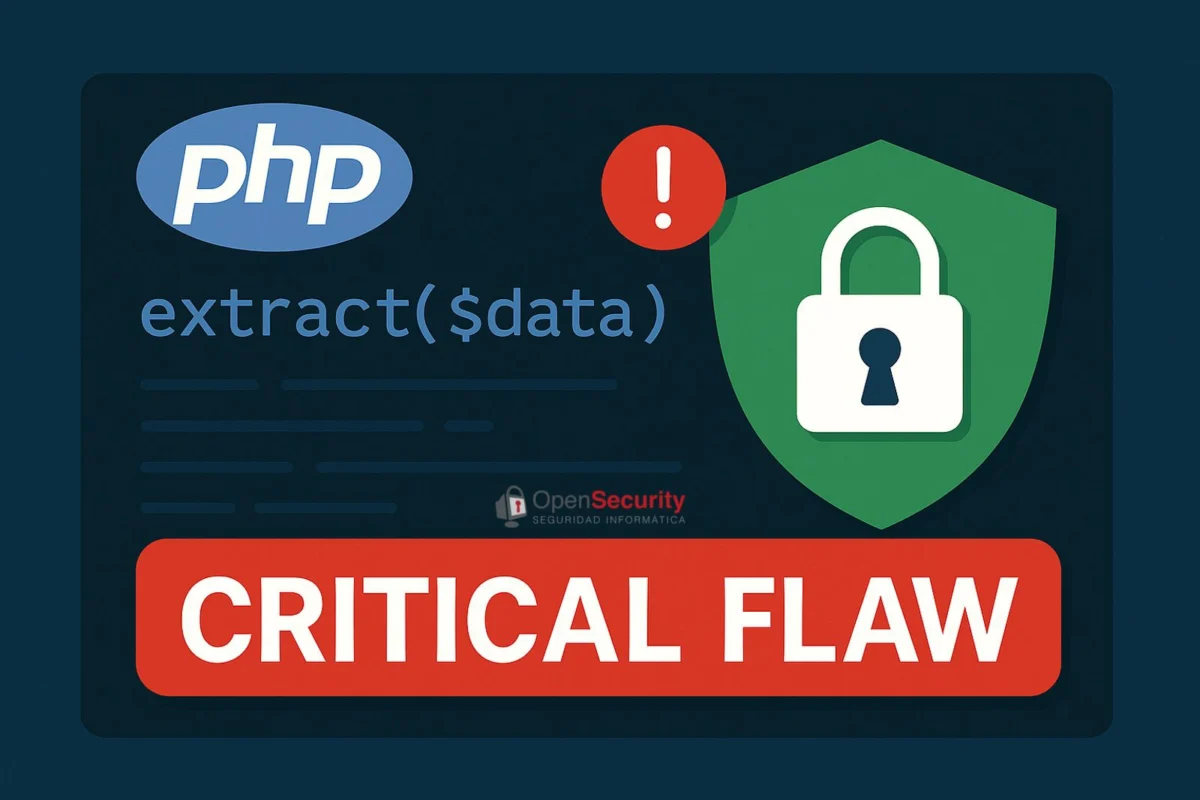
In a high-severity security alert that has mobilized web administrators globally, the PHP development team has officially released patches for two critical vulnerabilities bearing a maximum severity score of 9.2 out of 10 on the CVSS v4.0 scale.
Because WordPress—along with popular content management frameworks like Laravel and Symfony—is entirely written in and powered by PHP, the security posture of millions of websites is suddenly hanging in the balance. Unlike standard WordPress vulnerabilities, which can be mitigated via the administrative dashboard by updating a plugin or a theme, these flaws reside in the core PHP interpreter itself.
Consequently, even a newly installed, immaculately maintained WordPress site with pristine code is exposed if it runs on a vulnerable PHP version. Industry researchers, including teams from GMO Flatt Security and Sansec, have verified that successful exploitation could lead to Remote Code Execution (RCE), allowing malicious actors to compromise the underlying server infrastructure entirely.
Chronology of an Emergency: Timeline of Events
The unfolding crisis has moved at a breakneck pace, catching both independent developers and enterprise hosting providers off guard.
- October 20, 2026 (The Leak): Preliminary details regarding two high-severity flaws began circulating across underground security forums and independent researcher blogs. The leaked identifiers—CVE-2026-109618 and CVE-2026-109619—surfaced prematurely, triggering panic before official documentation could be assembled.
- October 21, 2026 (08:00 CEST): Early independent advisories from firms like Sansec and GMO Flatt Security confirmed that they had successfully reproduced attacks against localized staging environments running standard configurations of WordPress and WooCommerce.
- October 21, 2026 (16:00 CEST – Official Release): PHP officially published its emergency updates for supported branches, detailing the nature of the flaws and providing official patches.
- October 21, 2026 (Post-Release): Security operations centers worldwide, alongside infrastructure giants like Cloudflare, rolled out emergency mitigations and Web Application Firewall (WAF) rule updates to counter expected automated exploit scans.
Supporting Data and Technical Analysis
To understand why this vulnerability has triggered a red alert across the web hosting industry, one must examine how WordPress interacts with its environment.
The Mechanics of the Flaw
WordPress is fundamentally a dynamic application. Every time a user visits a page, submits a contact form, or uploads an image, the request is handed off to the server’s PHP interpreter, which executes the underlying logic.
If a vulnerability exists within the interpreter itself, the software layer sitting above it has no power to block malicious input. According to technical breakdowns provided by security researchers:
- Affected Environments: The proof-of-concept exploits were successfully reproduced in environments utilizing
mod_phpandphp-fpm. - Scope: E-commerce security specialists Sansec noted that the risk spans any server running legacy or current iterations of PHP from version 5.4 onward, putting millions of WooCommerce stores directly in the crosshairs.
- The Version Trap: PHP officially provides security maintenance exclusively for active branches (8.2, 8.3, 8.4, and 8.5). Websites still operating on outdated, End-of-Life (EOL) versions—such as PHP 7.4, 8.0, or 8.1—will receive no official patches from the PHP group. For these sites, upgrading the infrastructure is no longer a matter of performance optimization; it is an urgent prerequisite for survival.
Official Responses and Mitigations
With official patches now available, security agencies—including CERT-EU—and major cloud providers have issued clear guidelines on how administrators must respond.
1. Determining Your PHP Version
Before applying patches, administrators must assess their current exposure.
- Via WordPress Dashboard: Navigate to Tools > Site Health > Info > Server to view the active PHP version.
- Via Command Line (WP-CLI): System administrators managing multiple instances can query server environments instantly using:
wp --info
wp eval "echo PHP_VERSION;"
2. Immediate Workarounds (Temporary Mitigations)
If patching the server immediately is impossible, GMO Flatt Security recommended a temporary configuration adjustment to disrupt potential exploit vectors. By disabling PHP session upload progress tracking, administrators can mitigate a primary vector associated with form-based file uploads:
; php.ini or .user.ini
session.upload_progress.enabled = 0

# .htaccess (mod_php environments only)
php_flag session.upload_progress.enabled off
Note: While the core WordPress architecture does not rely on PHP sessions for standard operations—meaning this change should not disrupt typical sites—security experts emphasize that this is purely a stopgap measure and does not replace a full PHP version upgrade.
3. Cloudflare Emergency WAF Rules
For sites shielded by Cloudflare, the company deployed an emergency update to its Cloudflare Managed Ruleset. Introducing four new rules categorized under "Generic Rules – Anomalous Execution," the web application firewall actively inspects traffic for abnormal execution patterns. While Cloudflare did not explicitly tie these rules to the PHP vulnerabilities due to zero-day disclosure protocols, security analysts recommend keeping them active as an additional layer of defense.
Broader Implications for the Web Ecosystem
This incident highlights a systemic vulnerability in the modern web infrastructure stack: the invisible dependency on foundational software layers.
While website owners frequently audit their WordPress plugins, themes, and core files, the underlying server environment (the operating system, the web server software, and the PHP runtime) is frequently treated as a "set-and-forget" utility managed entirely by hosting providers.
Managed Hosting vs. Shared Hosting
The burden of this vulnerability falls unevenly across the market:
- Managed WordPress Hosts: Premium hosting providers typically handle PHP runtime updates automatically or offer intuitive one-click panel upgrades, drastically shortening the window of exposure.
- Unmanaged VPS and Shared Hosting: Administrators managing their own Virtual Private Servers (VPS) or legacy shared hosting environments bear direct responsibility for compiling or updating their PHP packages via package managers (such as
apt,yum, or EasyApache).
The Aftermath and Future Outlook
Security analysts warned that the hours immediately following the 16:00 CEST disclosure represented the most perilous window. Automated botnets immediately began reverse-engineering the official patches released by the PHP group to build weaponized exploit scripts targeting unpatched servers.
Ultimately, this crisis serves as a stark reminder that web security extends far beyond the confines of a Content Management System dashboard. As long as applications rely on underlying interpreters, infrastructure hygiene remains the ultimate line of defense for the open web.