










SAN FRANCISCO — In the rapidly evolving landscape of consumer artificial intelligence, tech giants and nimble startups alike are racing to answer a single question: How can generative AI move beyond novelty chatbots and genuinely integrate into the chaotic daily lives of everyday people?
Google is making its most aggressive move yet to capture the domestic market. This week, the search giant introduced a major overhaul of CC, its experimental agentic AI product originally built for individual productivity. With this latest update, Google is pivoting CC away from solo task management and directly into the heart of the modern household, positioning the technology as a centralized AI chief of staff for families.
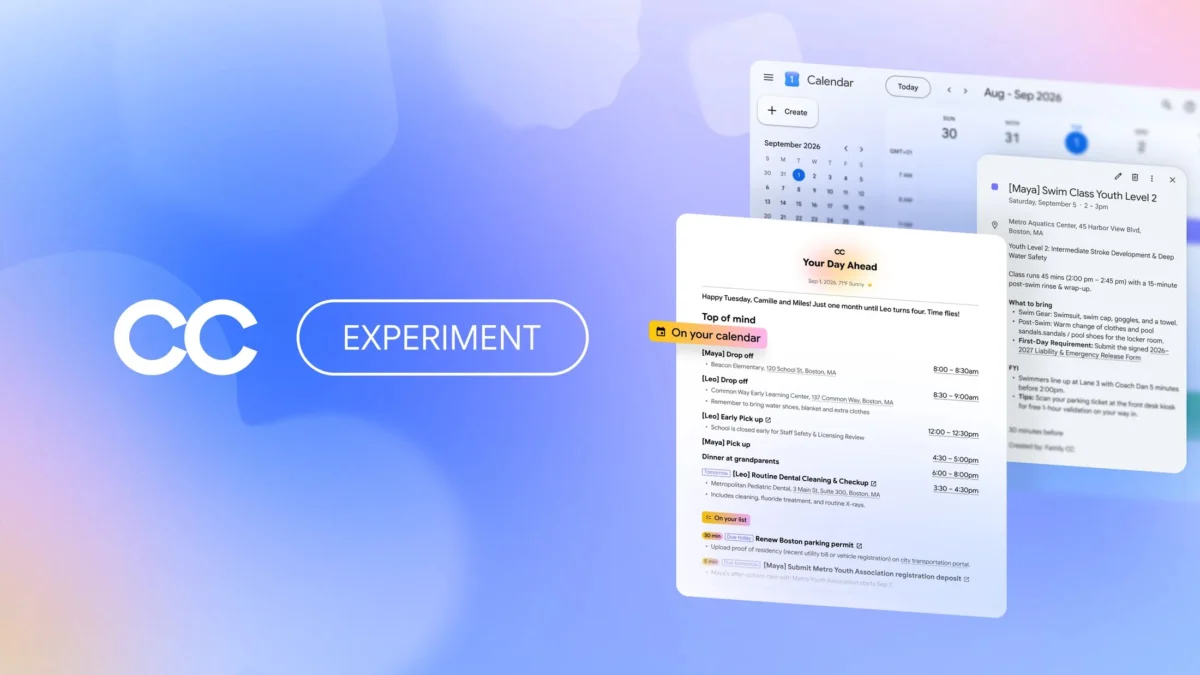
The updated version of CC is designed to operate seamlessly across a family’s email inboxes, digital calendars, group chats, and task lists. By bridging these disparate digital touchpoints, the AI agent aims to alleviate the cognitive load of household administration—automating everything from signing school permission slips and mapping out weekly meal plans to synthesizing children’s sports schedules and tracking medical appointments.
Google’s strategic shift comes amid a broader industry trend. A wave of specialized AI startups, including tools like Ollie and Fambot, have recently emerged with the explicit goal of helping parents and caregivers navigate the logistical nightmare of modern family life. By expanding CC into group environments, Google is signaling that it intends to compete fiercely in the nascent "family-tech" arena, leveraging its massive ecosystem to dominate how households coordinate.
Chronology: From Individual Productivity to Family Operations
To understand CC’s new family-centric evolution, it is helpful to look back at how the product originated within Google Labs:

- The Early Days (Productivity Agent): CC initially launched as a standalone productivity agent designed to connect to individual user accounts—including Gmail, Google Calendar, Google Drive, and the broader web. Its primary function was to analyze a user’s day and deliver a synthesized "Your Day Ahead" briefing straight to their inbox.
- May (Integration into Gemini): Google brought the underlying technology to its flagship Gemini app under the moniker "Daily Brief," signaling a broader push to make agentic AI a daily touchpoint for mobile users.
- The Pivot (User-Driven Demand): According to Google, telemetry and user feedback revealed a distinct pattern: individuals were overwhelmingly attempting to use CC for household management rather than solo office work. Users wanted the AI to track kids’ school calendars, sports practices, household bills, and grocery inventories.
- This Week (The Group & Family Update): Recognizing the demand for collaborative household tools, Google officially released the updated version of CC, equipping the agent with its own dedicated Google account to facilitate multi-user collaboration for up to six family members.
Main Features: How the New CC Works
The updated CC is more than just a shared calendar; it functions as an active participant in daily family logistics. Operating on its own isolated cloud computer powered by Gemini and Google’s proprietary agentic framework, Antigravity, the system is built to handle complex, multi-step workflows.
Collaborative Group Access
CC now operates with its own distinct Google account, allowing up to six family members to interact with, query, and command the agent simultaneously.
Granular Privacy and Sharing Controls
Recognizing the privacy sensitivities inherent in family data, Google designed CC with strict permission boundaries. Family members retain full control over what information they choose to share with the agent. Users can forward specific emails—such as doctor appointment confirmations, school notices, or birthday party invitations—to CC’s dedicated email address.
Alternatively, users can automate the process. Individuals can select specific email senders whose future messages will automatically route to CC, such as local school districts, youth sports leagues, travel agencies, or extracurricular clubs. Google notes that CC will also proactively suggest email senders to add to this automated sharing list on a weekly basis.
Automated Scheduling and Task Management
Once data is shared, CC parses the text to extract actionable items. If an orthodontist sends an email confirmation or a school announces a sudden teacher workday, the agent automatically populates the shared family calendar and updates shared task lists.

Advanced Domestic Execution
Beyond simple calendar management, CC can take direct action on behalf of the household. The agent can:
- Fill out complex permission slips and activity registration PDFs.
- Generate comprehensive school-supply shopping lists based on teacher requirements.
- Draft weekly meal plans and map them to grocery inventories.
- Calculate exact drive times between scattered after-school activities.
- Create and organize shared Google Docs or Sheets for family projects.
Crucially, if the agent lacks specific details—such as dietary restrictions for a new meal plan or emergency contact information for a form—it will actively query family members to fill in the blanks, storing the data in its group memory to ensure better assistance in the future.
Supporting Data and Market Context
The race to capture the family AI market is underpinned by profound demographic and sociological shifts. Modern households are increasingly complex, often requiring coordination not just between two working parents, but across extended support networks.
- Multigenerational Living: According to recent data from The New York Times, approximately one-third of young adults aged 18 to 34 still live with their parents, creating larger, multi-generational households that demand sophisticated organizational frameworks.
- The Caregiver Economy: Beyond traditional nuclear families, households frequently incorporate grandparents, hired caregivers, nannies, and adult children. Coordinating schedules among four to six adults with conflicting work hours represents a major logistical hurdle that traditional productivity apps fail to solve effectively.
- The Rise of Family-Centric AI: Startups like Fambot and Ollie have raised early capital by pitching themselves as "AI chiefs of staff" for parents. Google’s entry into this space validates the market category and threatens to commoditize niche competitors by embedding similar capabilities directly into the world’s most ubiquitous productivity ecosystem.
Official Responses and Strategic Implications
Google’s announcement has been met with significant interest from tech analysts, though experts have been quick to point out both the massive potential and the notable limitations of the current implementation.
The Age and Account Barrier
Currently, the CC experiment is restricted to U.S. users with a personal Gmail account who are ages 18 and older.

Industry observers have noted that this restriction introduces a significant friction point for families. Because the tool is locked behind adult personal accounts, older children—such as tweens and teenagers—cannot directly interact with the service unless they bypass age-verification protocols. Furthermore, many modern school districts run their entire digital infrastructure on Chromebooks and Google Workspace for Education, meaning student emails filled with critical school updates cannot currently be integrated into the CC ecosystem.
Security and Trust in the Home
By allowing an AI agent to ingest personal communications, school schedules, and medical appointments, Google is asking households for an unprecedented level of trust. While the company emphasizes that CC operates on an isolated cloud computer with strict user-governed permissions, consumer advocates note that building trust in domestic AI remains a high-stakes challenge. A single data leak or misdirected scheduling notification in a family context carries a far more immediate personal impact than a glitch in a corporate productivity tool.
Looking Ahead: How to Access CC
For households eager to test the future of AI-driven domestic management, Google is rolling out access in phases.
Existing users of the original CC productivity agent are receiving email invitations this week to upgrade their accounts to the new family-oriented framework. Meanwhile, new users interested in testing the agent can sign up for the official waitlist via the Google Labs CC landing page.
As agentic AI continues to mature, Google’s pivot suggests that the ultimate battleground for artificial intelligence may not be the corporate boardroom or the enterprise cloud, but the kitchen table. Whether families are willing to hand over the keys to their daily schedules remains to be seen, but the infrastructure to automate modern domestic life has officially arrived.



