










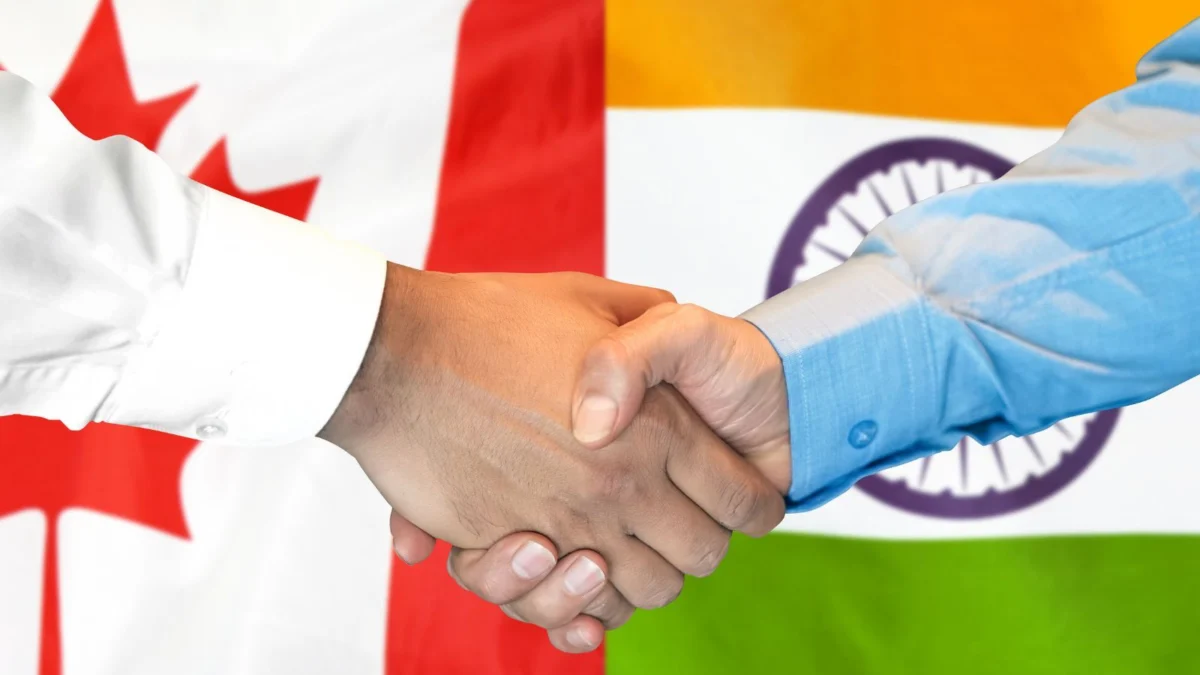
NEW DELHI/OTTAWA — In a robust display of diplomatic recalibration, Indian Prime Minister Narendra Modi and Canadian Prime Minister Mark Carney held a high-level telephonic conversation on Tuesday, committing their respective administrations to expediting negotiations on a Comprehensive Economic Partnership Agreement (CEPA). The renewed economic push forms the cornerstone of a broader strategic reset designed to double bilateral trade volumes by the end of the decade.
The high-level engagement underscores a sweeping diplomatic recovery following years of intense friction. As both nations pivot toward a future of pragmatic partnership, the renewed momentum spans not only trade and energy but also critical sectors including artificial intelligence, defense, and counter-terrorism.
Main Facts: A New Chapter in Bilateral Relations
The core objective of the recent dialogue between Prime Minister Modi and Prime Minister Carney is the swift conclusion of the long-awaited CEPA. According to an official readout released by the Canadian Prime Minister’s Office (PMO), the proposed bilateral trade agreement is viewed as a vital catalyst to meet the ambitious goal of doubling economic exchange between India and Canada by 2030.
The leadership dialogue was swiftly followed by on-the-ground diplomatic and ministerial visits. A high-powered Team Canada Trade Mission, spearheaded by Canadian Minister of International Trade Maninder Sidhu, is currently touring India to engage with industrial leaders and policy architects. Simultaneously, Canadian Foreign Affairs Minister Anita Anand arrived in New Delhi to coordinate shared priorities encompassing energy security, resilient supply chains, and robust people-to-people connections.
Prime Minister Modi characterized the diplomatic exchange on social media as "warm and productive," emphasizing that both governments are fully aligned in their vision to yield concrete, measurable outcomes across all pillars of their strategic partnership.
Beyond economics, the leaders addressed pressing geopolitical currents. Discussions touched upon maintaining stability in the Indo-Pacific region and securing dependable partners for global energy and agricultural markets. Notably, Prime Minister Carney expressed his appreciation for Prime Minister Modi’s diplomatic leadership and active engagement in pursuing a peaceful resolution to Russia’s ongoing war in Ukraine.
Chronology of Rapprochement: From Crisis to Cooperation
To understand the current trajectory of India-Canada relations, it is essential to trace the dramatic arc of diplomatic events that have shaped the partnership over the past three years.
The 2023 Diplomatic Fracture
Bilateral ties suffered a historic nadir in 2023 under former Canadian Prime Minister Justin Trudeau. Relations deteriorated sharply after Ottawa publicly alleged a potential link between Indian government agents and the June 2023 killing of Khalistani separatist Hardeep Singh Nijjar in British Columbia. New Delhi vehemently rejected the accusations, dismissing them as "absurd and motivated."
The October 2024 Escalation
The diplomatic crisis deepened significantly in October 2024. Canada took the unprecedented step of naming Indian High Commissioner Sanjay Kumar Verma and several other diplomats as "persons of interest" in the ongoing homicide investigation. In swift retaliation, New Delhi recalled its high commissioner and five other senior diplomats, while concurrently expelling an equal number of Canadian diplomatic staff from New Delhi.
The 2025 Political Turning Point and Leadership Transition
The downward spiral of relations was arrested following the Canadian parliamentary elections in April 2025, which saw the Liberal Party under Prime Minister Mark Carney sweep to power. Carney’s administration signaled an immediate desire to reset ties with the Indo-Pacific powerhouse, recognizing that economic pragmatism and strategic convergence outweighed political posturing.
Rebuilding Momentum (2025–2026)
- September 2025: National Security Advisers from both nations reconvened in New Delhi to restart structured bilateral security dialogues, signaling a thaw in intelligence and law enforcement channels.
- February 2026: Ottawa hosted subsequent security talks, culminating in the formal conclusion of a comprehensive Security Work Plan.
- March 2026: Prime Minister Carney undertook a landmark official visit to India, cementing the normalization of diplomatic ties. Both nations restored full high commissioner representation in each other’s capitals.
- October 5–7, 2026: David Morrison, senior diplomatic and international affairs adviser to the Canadian Prime Minister, traveled to New Delhi for high-level security consultations with India’s National Security Adviser, Ajit Doval.
- December 2026 (Upcoming): Prime Minister Modi is scheduled to make an official state visit to Canada, a milestone expected to yield definitive breakthroughs on the CEPA and broader strategic agreements.
Supporting Data: Economic Ambitions and Security Frameworks
The structural foundations of the revitalized India-Canada partnership rest on aggressive economic targets and formalized institutional mechanisms.
Economic and Trade Metrics
- The 2030 Target: Both governments have committed to doubling bilateral trade figures by 2030, a goal that requires accelerated regulatory harmonization and market access provided by the pending CEPA.
- Active Delegations: The ongoing deployment of the Team Canada Trade Mission, led by Minister Maninder Sidhu, alongside Foreign Minister Anita Anand’s New Delhi itinerary, highlights an unprecedented level of ministerial-level commercial diplomacy.
Security and Law Enforcement Cooperation
The operational depth of the renewed partnership was codified during the October 6 security talks between India’s NSA Ajit Doval and Canadian senior adviser David Morrison. According to India’s Ministry of External Affairs (MEA), the discussions systematically reviewed the implementation of the bilateral Security Work Plan adopted in February 2026.
Key pillars of this security cooperation include:
- Transnational Crime and Counter-Terrorism: Joint initiatives to dismantle international organized crime syndicates, combat violent extremism, and disrupt cross-border human and drug trafficking networks.
- Cyber and Economic Security: Plans to establish structured bilateral dialogues aimed at safeguarding critical infrastructure against cyberattacks, intellectual property theft, and financial crimes.
- Extradition and Legal Assistance: Streamlining legal processes for the extradition of criminal offenders to ensure impunity has no geographical boundaries.
- Defense Partnerships: Laying the groundwork for substantive military-to-military engagement, joint exercises, and defense technology collaboration, building upon previous NSA-level dialogues held in Ottawa and New Delhi.
Official Responses and Diplomatic Statements
The tone of official pronouncements from both capitals reflects a resolute commitment to looking forward, leaving behind the turbulence of the past.
In his post on X following the bilateral call, Prime Minister Narendra Modi emphasized the mutual desire for tangible results:
"Had a warm and productive conversation with Canadian Prime Minister Mark Carney. We discussed ways to further expand our cooperation in trade, energy, technology, and security. We remain committed to working together for concrete outcomes across key areas of our strategic partnership."
The Canadian Prime Minister’s Office released a complementary statement underscoring the broad scope of the dialogue:
"The Prime Ministers welcomed the significant increase in bilateral engagement over the past year across finance, defense, security, artificial intelligence, and people-to-people ties. They reaffirmed their shared commitment to concluding negotiations on a Comprehensive Economic Partnership Agreement at the earliest opportunity to support efforts to double bilateral trade by 2030."
India’s Ministry of External Affairs (MEA), reflecting on the October security dialogue, noted the maturity of the institutional relationship:
"The two sides reviewed the steady progress achieved in security and law enforcement cooperation under the framework of the Security Work Plan. Both nations agreed to deepen operational collaboration to counter terrorism, cybercrime, and transnational networks, ensuring a secure environment for economic growth and regional stability."
Implications: Strategic Convergence in a Fragmented World
The rapprochement between India and Canada carries profound geopolitical and economic implications for both nations and the broader Indo-Pacific theater.
1. Economic Diversification and Resilience
For Canada, deepening economic ties with India offers an invaluable opportunity to diversify trade relationships away from traditional markets, tapping into the world’s fastest-growing major economy. For India, access to Canada’s abundant natural resources—particularly energy, potash, and agricultural commodities—supports its massive infrastructure and food security imperatives. The finalization of the CEPA will provide institutional certainty for corporate investors on both sides.
2. Indo-Pacific Security Architecture
As geopolitical tensions rise across the Indo-Pacific, democratic middle and major powers find themselves compelled to forge reliable alliances. By establishing robust frameworks for maritime security, intelligence sharing, and defense cooperation, India and Canada are reinforcing a rules-based international order. Their mutual focus on cybersecurity and counter-terrorism ensures they are equipped to address non-traditional security threats collaboratively.
3. Strengthening Diaspora Bridges
With over 1.8 million Canadians of Indian origin calling Canada home, people-to-people ties constitute the emotional and cultural bedrock of bilateral relations. The restoration of smooth diplomatic channels ensures that students, families, and professionals can travel, study, and work without the friction of political hostility.
Looking Ahead to December 2026
All eyes are now turned toward Prime Minister Modi’s anticipated visit to Canada in December 2026. If current momentum is sustained, the summit could serve as the formal signing ceremony for the CEPA, marking a definitive, historic turning point in a relationship that has successfully weathered severe adversity to emerge stronger, more pragmatic, and fundamentally future-oriented.



