











In a significant move that underscores the growing investor appetite for organized players in India’s fragmented home interior space, Gravity, a full-stack platform for premium home interior materials, has successfully raised $15 million in a fresh funding round. The capital infusion, structured as a blend of equity and debt, was led by prominent investment firms 3one4 Capital and Info Edge Ventures.
The funding round also saw participation from Alteria Capital, Genesia Ventures, and a select group of high-profile angel investors, signaling strong confidence in the startup’s vision to modernize the supply chain of the interior design industry.
The Genesis: A Powerhouse Duo
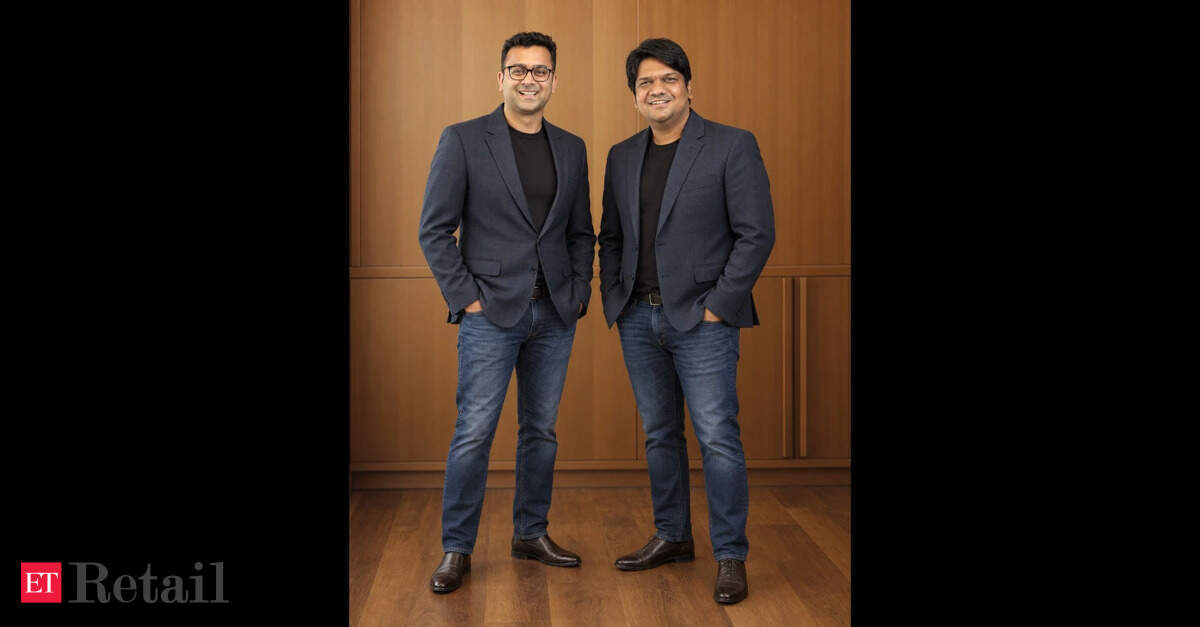
Gravity was established by two industry veterans, Saurabh Jain and Lalit Mittal, both of whom previously held senior leadership roles at the home interior giant, Livspace. Their departure from Livspace to launch Gravity was driven by a shared vision to solve the deep-rooted inefficiencies within the interior materials ecosystem.
During their tenure at Livspace, Jain served as the CEO of the India business, where he was instrumental in scaling the company’s annualised revenue run rate to an impressive ₹1,500 crore. Mittal, serving as the Chief Business Officer for India, played a pivotal role in the company’s massive geographical expansion, overseeing operations across 30 cities. Their combined expertise in scaling complex, service-heavy business models provides the foundational bedrock upon which Gravity is being built.
Addressing a Fragmented Market: The "Gravity" Proposition
The Indian home interior market is vast, currently estimated at approximately ₹3.5 lakh crore. Within this, the segment dedicated to "design-specified materials"—the products that architects and interior designers select for their projects—is valued at roughly ₹1.5 lakh crore. Despite its size, this market remains largely unorganized, characterized by a lack of standardization, opaque pricing, and fragmented distribution channels.
Gravity aims to consolidate this space by creating a full-stack platform that integrates technology, distribution, procurement, and key-account management. By acting as a bridge between manufacturers and the professional design community—including interior designers, architects, modular showrooms, and design-and-build studios—Gravity ensures that high-quality materials reach the end-user with greater efficiency.
Strategic Roadmap and Operational Maturity
Unlike many early-stage startups that prioritize growth over unit economics, Gravity enters the market with a robust financial foundation. The company has stated that its initial business units are already generating multi-hundred-crore revenue and are EBITDA positive.
Initial Focus: Kitchens and Wardrobes
Gravity’s initial operational focus has been on the kitchen and wardrobe segments. These categories represent high-frequency, high-value components of any home interior project. By mastering these segments, the company has proven its ability to manage the logistics of bulky, custom-specified materials.
Future Expansion
The $15 million infusion is earmarked for a multi-pronged expansion strategy:
- Category Diversification: Gravity plans to aggressively expand its portfolio to include doors, windows, lighting, wall surfaces, and home automation solutions.
- Infrastructure Enhancement: The company will invest in upgrading its proprietary technology stack and physical distribution infrastructure.
- Brand Building: A portion of the capital will be used to establish brand equity among the professional design community, reinforcing Gravity as the preferred partner for procurement.
- Working Capital: To maintain its growth trajectory, the company will bolster its working capital to manage larger inventory flows and support its expanding vendor network.
The Industry Context: Why Now?
The professional interior design segment in India is undergoing a structural shift. As urbanization increases and consumer aspirations rise, the demand for premium, durable, and aesthetically superior home materials has surged. However, architects and designers have historically struggled with the "procurement bottleneck"—a process often hindered by inconsistent quality and unreliable delivery timelines.
Gravity’s model addresses these pain points by offering a "common operating infrastructure." By centralizing procurement and distribution, Gravity allows designers to focus on their creative processes, while the company handles the technical specifications, logistics, and quality assurance. This B2B-focused approach is strategically sound, as these professionals act as the primary influencers who dictate the procurement choices for thousands of individual homeowners.
Implications for the Ecosystem
The entry of Gravity, backed by marquee investors like 3one4 Capital and Info Edge Ventures, signals a maturing of the "Home-Tech" sector in India.
1. The Professionalization of Supply Chains
The infusion of capital into the back-end infrastructure of the interior industry suggests that investors are looking beyond just "design platforms" (which focus on the consumer-facing app) toward "enabling platforms" (which focus on the plumbing of the industry). By digitizing the procurement cycle, Gravity is effectively reducing the time-to-market for interior projects.
2. A Model of Sustainable Growth
The fact that Gravity is already EBITDA positive is a rare and significant indicator of success in the current funding climate. It suggests that the founders have focused on solving actual business problems—procurement, distribution, and margin management—rather than relying on high burn rates to buy market share.

3. Increased Competition for Traditional Wholesalers
By leveraging technology to provide transparency and better logistics, Gravity is poised to disrupt traditional, local-level wholesalers and distributors. These entities have traditionally dominated the interior materials trade; however, they often lack the scale and digital tools that a tech-enabled company like Gravity brings to the table.
A Look Ahead: What the Future Holds
As Gravity scales, it faces the challenge of maintaining service quality while diversifying into new product categories. The addition of lighting, home automation, and wall surfaces brings with it different logistical complexities, including delicate handling and higher technical installation requirements.
However, the pedigree of the founding team suggests they are well-equipped to navigate these challenges. By positioning themselves as a "full-stack" partner, they are not merely selling products; they are selling a reliable service that mitigates risk for architects and designers.
The participation of Alteria Capital (a venture debt firm) indicates that the company has a clear path toward revenue generation and debt servicing, which is critical for a business that handles high volumes of inventory. Meanwhile, the backing of Genesia Ventures suggests an international outlook, possibly hinting at potential future cross-border opportunities or the adoption of global best practices in the Indian context.
Conclusion
Gravity’s $15 million raise is more than just a financial transaction; it is a validation of the potential inherent in India’s interior materials ecosystem. As the company prepares to scale its operations across new categories and geographies, the industry will be watching closely to see how it balances its high-growth ambitions with its current commitment to profitability.
With a clear focus on the professional segment, a proven management team, and the backing of sophisticated investors, Gravity is well-positioned to become the central nervous system of India’s interior materials market. Whether they can successfully translate their early success in kitchens and wardrobes into the broader categories of home automation and structural components remains the defining question for the company’s next phase of growth.
As India’s real estate and home improvement sectors continue to expand, Gravity’s role as an infrastructure provider could prove to be the linchpin in ensuring that the next generation of homes are built not just with better designs, but with a more efficient, transparent, and high-quality supply chain.



