










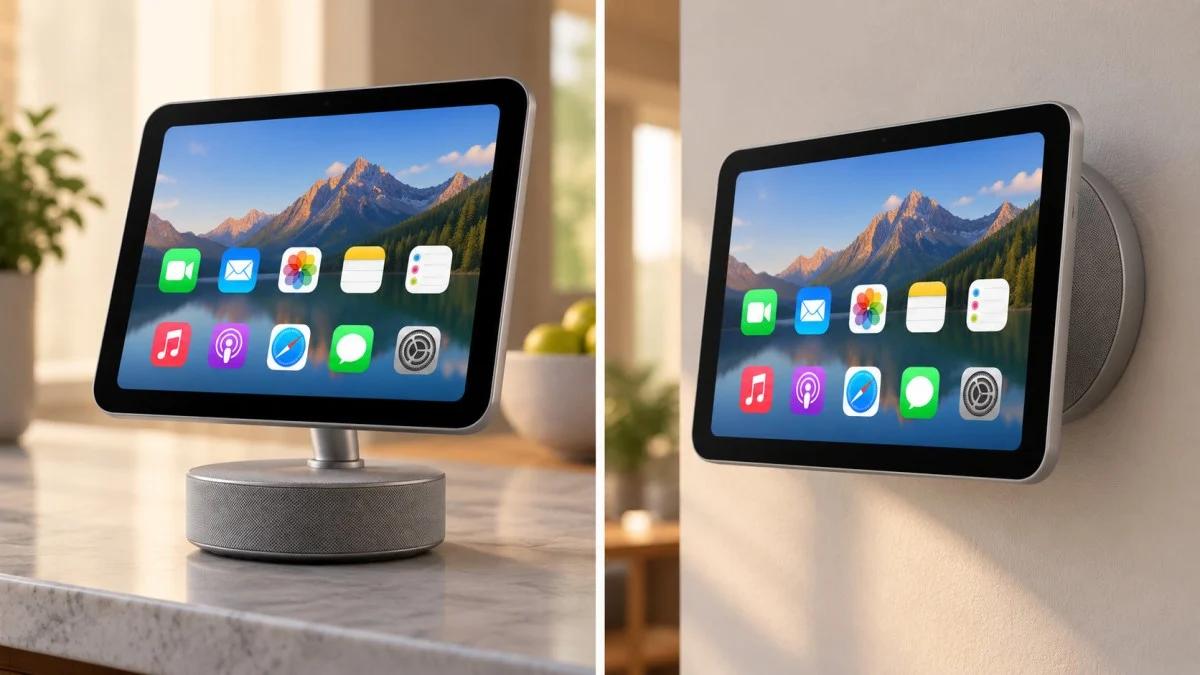
Apple is reportedly poised to make its most significant push into the smart home ecosystem in years. According to a comprehensive new report by Bloomberg’s well-connected tech journalist Mark Gurman, the Cupertino-based tech giant is finally ready to unveil its heavily rumored smart display—frequently dubbed the "HomePad"—on October 13.
Alongside this marquee product, Apple is expected to refresh two stalwarts of its living room ecosystem: an updated HomePod mini and a new iteration of the Apple TV 4K box. This coordinated hardware drop underscores a renewed corporate focus on ambient computing, artificial intelligence integration, and domestic automation.
Main Facts
The cornerstone of Apple’s autumn hardware blitz is a wall-mountable and countertop-ready smart display currently designated under the internal code-name J490. Serving as the physical and conceptual center of Apple’s reimagined smart-home strategy, the device aims to bridge the gap between traditional home automation panels and personal computing interfaces.
Hardware Specifications and Design
According to supply chain leaks and insider reports, the new smart-home hub features a distinct form factor designed to blend utility with Apple’s signature minimalist aesthetic:
- Display: The device sports a roughly 6-inch rectangular screen bordered by relatively thick bezels, closely resembling the design language of older generation iPads.
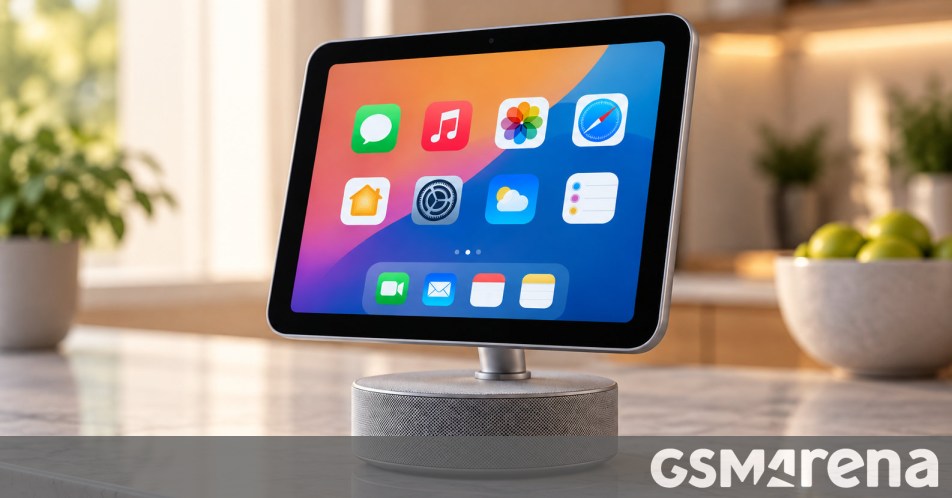
- Physical Build & Rests: The countertop variant features a round metal base housing high-fidelity speakers and far-field microphones. A dedicated metal arm extends upward to support the display, allowing users to tilt the screen for optimal viewing angles.
- Mounting Options: For wall-mounted installations, the device adapts with a thinner base profile, though it retains the core speaker and microphone arrays.
- Power and Portability: Notably, the hub relies entirely on a wired power supply via a USB-C connection and does not feature an integrated internal battery, reinforcing its stationary nature as a fixed home command center.
- Colorway: Unlike the vibrant hues often associated with Apple’s entry-level accessories, the J490 is reportedly launching in a single, utilitarian finish: Apple’s classic gray aluminum.
Software, Interface, and AI Integration
At the heart of the user experience is an adapted operating system that draws heavy inspiration from iPadOS. Apps running on the 6-inch display utilize a distinct two-panel layout—visible in software like the Messages application—to maximize productivity and readability on a smaller screen.
Core functionalities of the device include:
- Smart Home Command Center: Direct control over HomeKit- and Matter-compatible smart home accessories (lighting, security, thermostats).
- Communication: Support for high-definition FaceTime video calls and intercom-style household broadcasting.
- Media and Ambient Display: Music playback driven by the integrated base speakers, alongside dynamic photo slideshows when the device is idle.
- Advanced Biometrics: Integration of both voice and facial recognition capabilities to identify specific users, allowing the interface to dynamically surface personalized calendars, reminders, and messages based on who is interacting with it.
- Next-Generation Siri: All three incoming products—the HomePad, the new HomePod mini, and the Apple TV 4K—will feature deep native support for Apple’s advanced Siri AI capabilities, providing more natural, context-aware conversational interactions.
Accompanying Hardware Refreshes
To round out the ecosystem play, Apple is updating two mature product categories:
- HomePod Mini (2nd Generation): The original compact speaker debuted all the way back in 2020. The updated model promises internal acoustic enhancements and seamless integration with the new Siri AI engine.
- Apple TV 4K: Replacing a model that has remained unchanged since 2022, the new streaming box will benefit from upgraded processing hardware capable of handling heavier AI workloads and smoother interface navigation.
Chronology
To understand the magnitude of the upcoming October 13 launch, it is vital to trace the tortuous timeline of Apple’s smart home hardware development. The journey from conceptual sketches to retail shelves spans nearly half a decade, marked by internal restructurings, shifting priorities, and persistent supply chain whispers.
The Genesis of Apple’s Smart Display Ambitions (2019–2021)
- Late 2019: Following the modest market reception of the original, high-end HomePod (released in 2018), Apple engineers began exploring alternative form factors for home audio and automation. Discussions surrounding a display-equipped assistant began circulating internally within Apple’s hardware engineering groups.
- October 2020: Apple launches the HomePod mini at $99. The device becomes a surprise commercial hit due to its low price point, aggressive sound-to-size ratio, and widespread adoption of Thread networking technology. This success proved that consumers wanted affordable, ubiquitous audio nodes throughout their homes, laying the groundwork for a central display unit.
- 2021: Early patent filings emerge describing wall-mounted computing devices with articulated arms and camera arrays capable of tracking users around a room. Rumors begin to solidify that Apple is prototyping a hybrid device combining an Apple TV, a smart speaker, and a FaceTime camera.
Development Hurdles and Project Re-Alignments (2022–2024)
- March 2023: Industry analysts, including Bloomberg’s Mark Gurman, report that Apple has accelerated development on a low-end smart display that could double as a home control system and security monitor. However, software hurdles and debates over the product’s primary use-case stall rapid progress.
- Throughout 2023–2024: Apple’s smart home division faces shifting corporate strategies. While competitors like Amazon (Echo Show) and Google (Nest Hub) iterate rapidly on smart displays, Apple prioritizes the development of the Vision Pro headset and spatial computing software, temporarily drawing engineering talent away from ambient home displays.
- Early 2025: Code hidden within pre-release builds of macOS and iOS explicitly references unreleased hardware identifiers, such as "HomePad" and internal device architectures like J490. These software leaks confirm that the project has moved past the prototyping phase and is heading toward mass production.
The Final Stretch to Retail (Late 2025–Present)
- Spring 2026: Supply chain partners in Asia begin ramping up initial component manufacturing for the J490 chassis, customized screens, and audio drivers.
- September 2026: Leaks intensify as Bloomberg publishes definitive reports outlining the October 13 launch window, positioning the device as Apple’s next major product category entry since the Vision Pro.
Supporting Data
Apple’s entry into the smart display market does not happen in a vacuum. It arrives amidst a shifting landscape of smart home adoption, consumer spending habits, and fierce competition from established platform ecosystems.
Market Context and Competitive Landscape
- The Smart Display Market: According to consumer electronics market research, global shipments of smart displays have matured, moving away from novelty kitchen video players toward centralized domestic automation hubs. Consumers increasingly demand localized processing, privacy-focused security features, and seamless interoperability.
- Ecosystem Competitors:
- Amazon Echo Show series: Dominates the lower-to-mid tier market with deep Alexa integration, though consumer trust regarding privacy remains a recurring challenge.
- Google Nest Hub series: Offers strong Google Assistant integration and photo frame capabilities, though hardware updates have slowed in recent years.
- Dedicated Custom Solutions: High-end consumers frequently rely on expensive, custom-installed systems like Crestron or Control4, a market segment Apple’s J490 could disrupt by offering a sleek, out-of-the-box consumer alternative.
- Aging Product Lifecycles: The incoming hardware refreshes address glaring staleness in Apple’s lineup:
- The original HomePod mini has been on sale for six years without a physical redesign.
- The current Apple TV 4K has remained the benchmark streaming box since its refresh in four years ago, leaving room for silicon upgrades tailored to modern spatial audio and on-device machine learning tasks.
Official Responses
As is customary for Apple ahead of major hardware announcements, corporate leadership has maintained a strict policy of official silence regarding the specifics of the leaked October 13 product launch.
Cupertino’s Calculated Silence
During quarterly earnings calls and investor updates throughout 2026, Apple executives—including Chief Executive Officer Tim Cook and Chief Financial Officer Luca Maestri—have repeatedly emphasized the "long-term growth opportunity" presented by the home ecosystem and ambient computing. However, when directly pressed by financial analysts regarding rumors of a dedicated smart display, leadership has routinely declined to comment on unannounced products.
Industry Insider and Developer Reactions
Despite the lack of an official press release, the tech developer community and industry analysts have offered robust commentary on the strategic pivot:
- Software Integration Focus: Independent developers familiar with Apple’s HomeKit and Matter frameworks have noted that the inclusion of iPadOS-like interfaces on a 6-inch home hub signals a mature approach to multi-tasking within domestic spaces.
- Privacy as a Differentiator: Security analysts have highlighted Apple’s emphasis on local facial and voice recognition as a key marketing angle. Unlike cloud-reliant competitors, processing biometric identification and household commands locally via advanced on-chip neural engines aligns strongly with Apple’s long-standing privacy branding.
Implications
The launch of the J490 "HomePad," alongside the refreshed HomePod mini and Apple TV 4K, carries profound implications for Apple’s hardware ecosystem, software strategy, and position in the consumer electronics marketplace.
1. Solidifying the Smart Home Ecosystem
For years, critics have argued that Apple’s smart home strategy has been fragmented. While the Home app on iOS provides a capable control interface, users have lacked a dedicated, always-on physical presence in the home outside of their personal iPhones and iPads. The introduction of a stationary command center bridges this gap. By centralizing lighting, security cameras, climate control, and communication into a single countertop or wall-mounted unit, Apple establishes a physical anchor for the HomeKit and Matter standards.
2. The Commercialization of Next-Gen Siri
Artificial intelligence has become the primary battleground for consumer tech giants. By ensuring that the new HomePad, updated HomePod mini, and Apple TV 4K all ship with native support for the new Siri AI, Apple is actively decentralizing its AI capabilities. Instead of AI living solely inside iPhones, iPads, and Macs, it becomes an ambient presence permeating the physical living space. This makes conversational computing natural and accessible to every member of a household, regardless of whether they own a personal Apple device.
3. Monetization and Market Expansion
Entering the smart display category opens up a brand-new revenue stream for Apple. While the pricing of the J490 has not yet been officially confirmed, analysts expect it to be positioned as a premium home accessory—likely bridging the gap between high-end audio gear and utilitarian smart tablets. If successful, it could encourage Android-centric households to invest more deeply in Apple’s ecosystem, particularly families prioritizing data privacy and unified domestic communication through FaceTime and integrated messaging.
4. A Template for Ambient Computing
Beyond immediate hardware sales, the October 13 launch represents a philosophical step toward ambient computing—technology that fades into the background until needed. By opting for a clean, gray aluminum finish, a distraction-free two-panel interface, and non-intrusive mounting hardware, Apple is betting that consumers want smart home technology that respects their interior design while remaining instantly responsive. As the release date approaches, all eyes will turn to Cupertino to see how these pieces ultimately fit together in Apple’s unfolding vision for the modern connected home.



