










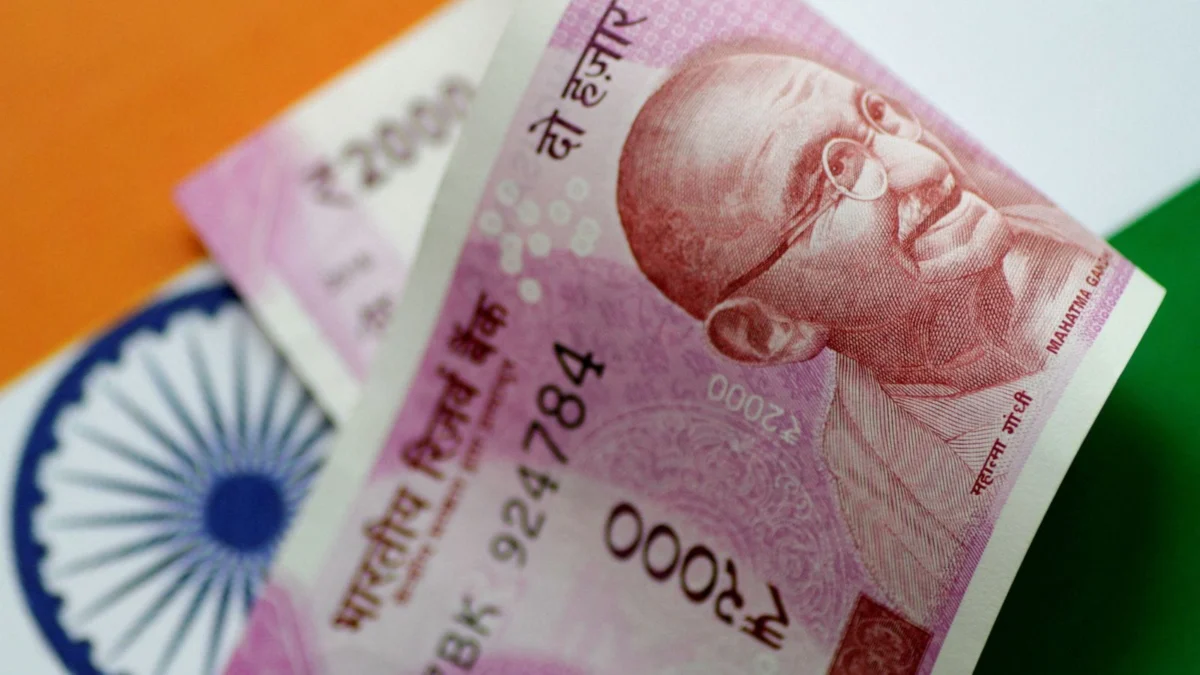
MUMBAI — Veteran banker and Kotak Mahindra Bank founder Uday Kotak has made a compelling case for a hands-off approach toward currency management, asserting that the Indian rupee should be permitted to find its natural market equilibrium. Speaking at the prestigious Bloomberg New Economy Forum, Kotak emphasized that over the long horizon, the underlying macroeconomic strength of the Indian economy will naturally be reflected in the currency’s valuation.
Instead of policymakers engaging in aggressive defense mechanisms or setting specific target thresholds, Kotak argued that the current currency pressures should serve as a strategic wake-up call for the nation. India, he noted, must aggressively bolster its industrial competitiveness, enhance systemic efficiency, drive self-reliance (Atmanirbhar Bharat), and scale up capital allocation toward research, development, and technological innovation.
Kotak’s remarks arrive at a critical juncture for the domestic foreign exchange market, which has recently experienced heightened volatility driven primarily by shifts in global liquidity and portfolio capital flows rather than fundamental structural weaknesses in India’s current account.
Main Facts: The Core Arguments and Market Dynamics
The central thesis of Uday Kotak’s address rests on the mechanics of free-market economics versus targeted policy intervention. According to the veteran financier, allowing market forces to freely determine currency valuations eliminates the risks associated with moral hazard and speculative positioning.
Key Highlights of Kotak’s Address:
- Natural Equilibrium: The rupee should be allowed to discover its own level without artificial anchors, letting the fundamental growth metrics of the Indian economy dictate its long-term value.
- Strategic Competitiveness: Currency fluctuations should be viewed as a catalyst to improve domestic manufacturing efficiency, structural competitiveness, and national self-reliance.
- R&D and Innovation: India must pivot toward higher-value-added sectors by substantially increasing investments in research, development, and technological innovation.
- Avoiding Policy Targets: Policymakers should refrain from signaling specific exchange rate thresholds to prevent global and domestic market participants from building one-sided speculative bets against the central bank.
- Understanding Market Psychology: Drawing from decades of experience as a market practitioner, Kotak noted that maintaining strategic ambiguity regarding official intervention levels keeps speculators off-balance and protects the integrity of the financial system.
"My personal view is we should let the rupee find its own level, and over time, the true strength of the economy will play out," Kotak stated during his keynote session. He added that market practitioners understand the nuances of what truly works in financial ecosystems, and giving markets a defined line in the sand invites aggressive speculation.
Chronology: Recent Developments and the RBI’s Intervention
To fully appreciate the context of Kotak’s recommendations, it is essential to trace the recent timeline of events that put the Indian rupee under severe depreciation pressure, prompting swift action from the Reserve Bank of India (RBI).
Timeline of Market Pressure and Regulatory Response:
- Mid-to-Late Prior Week: The Indian rupee faced sustained downward momentum. Unlike previous historical crises driven by structural current account deficits (CAD)—such as high oil import bills swelling the trade deficit—this round of depreciation was predominantly triggered by heavy portfolio investment outflows from domestic equities and debt markets by foreign institutional investors (FIIs).
- The Weekend Policy Announcement: Recognizing the speculative pressures building in the spot and derivative segments, the Reserve Bank of India announced a comprehensive suite of targeted measures over the weekend to stem the rupee’s decline.
- Special Oil Window: The central bank established a dedicated liquidity and dollar window specifically for state-run oil marketing companies (OMCs). This structural intervention removed massive, recurring dollar demand directly from the open spot market, alleviating immediate pressure on the currency pair.
- Derivative Market Tightening: The RBI tightened regulatory frameworks governing foreign exchange derivatives trades. These stricter compliance and position limits were designed to curb speculative positioning and leveraged bets directed against the rupee.
- Monday’s Market Reaction: Following the announcement of the RBI’s intervention matrix, the domestic currency staged a dramatic turnaround. On Monday, the rupee appreciated by a staggering 93 paise—logging its steepest single-day percentage gain in more than six months—to close at 95.78 against the US dollar.
- Tuesday’s Continuation: Building on the momentum from the previous session, the rupee extended its winning streak for the third consecutive day on Tuesday. It strengthened by an additional 40 paise, settling provisionally at 95.38 against the greenback, validating the immediate effectiveness of the central bank’s liquidity management.
Supporting Data: Understanding the Capital Outflows and Currency Performance
A closer examination of the macroeconomic indicators reveals that India’s external sector fundamentals remain vastly different from historical vulnerabilities. The pressure on the rupee was not an indictment of India’s trade balance, but rather a reflection of global liquidity dynamics and shifting global portfolio allocations.
Capital Account vs. Current Account Dynamics
Historically, depreciations of the Indian rupee were heavily correlated with widening current account deficits, often exacerbated by spikes in international crude oil prices or sluggish export performance. However, the recent depreciation cycle deviated from this historical script:
- Current Account Stability: India’s current account deficit has remained relatively contained, supported by robust services exports (led by IT and global capability centers) and steady inward remittances.
- Portfolio Outflows (FII/FPI): The primary driver of currency weakness stemmed from the capital account. Driven by rising global bond yields, shifting monetary policy stances in advanced economies, and tactical portfolio rebalancing by global funds, emerging markets experienced capital flight. India was no exception, as foreign investors pulled capital out of local bourses.
Exchange Rate Volatility and Recovery Metrics
- Steepest Gain in 6 Months: The 93-paise surge on Monday represented a vital psychological boost for market participants, signaling that regulatory authorities retain the capacity to disrupt speculative short positions.
- Consecutive Recovery: The three-day appreciation trend—moving from lows toward the 95.38 mark against the US dollar—demonstrated that targeted administrative and liquidity measures can successfully stabilize disorderly market conditions without necessarily requiring aggressive depletion of foreign exchange reserves through outright spot interventions.
Official Responses and Policy Perspectives
Uday Kotak’s commentary brings to the forefront a longstanding debate among central bankers, macroeconomists, and financial market veterans: Where is the dividing line between necessary systemic stabilization and market distortion?
While the RBI’s recent actions—such as the oil window and derivative tightening—demonstrate a proactive willingness to manage disorderly market volatility, Kotak’s perspective introduces a nuanced counter-narrative. He cautions against the pitfalls of "defending lines." When a central bank signals that it is committed to protecting a specific exchange rate (e.g., defending a psychological threshold), it inadvertently provides a one-way option to global hedge funds and speculators. If the market senses that the central bank’s reserves or resolve are finite, it can trigger speculative attacks that force even heavier intervention.
By suggesting that policymakers avoid giving markets a specific numerical level to target, Kotak advocates for a regime of managed flexibility—one where the exchange rate acts as a shock absorber for the economy, adjusting smoothly to external shocks while the state steps in only to curb excessive volatility rather than dictate absolute price levels.
Implications: Building Long-Term Economic Resilience
Kotak’s broader message transcends short-term foreign exchange management. He redirected the focus toward the structural foundations required to make India a resilient, high-growth economic superpower over the next decade.
1. Enhancing Industrial Competitiveness
A weaker or adjusting currency naturally alters the cost dynamics of international trade. To maximize this, India must upgrade its manufacturing capabilities, streamline logistics, and reduce regulatory friction. Lowering logistics costs through infrastructure modernization (such as dedicated freight corridors and coastal shipping) will ensure that Indian exporters can compete globally on quality and cost, regardless of currency swings.
2. Driving Self-Reliance (Atmanirbhar Bharat)
Reducing structural import dependencies—particularly in critical sectors such as semiconductors, active pharmaceutical ingredients (APIs), advanced electronics, and capital goods—will insulate the Indian economy from imported inflation and external supply chain shocks.
3. Scaling Up Research, Development, and Innovation
Kotak underscored that India’s long-term economic destiny will not be shaped by cost arbitrage alone, but by intellectual property, innovation, and technological leadership. Transitioning from a service-led assembly and outsourcing economy to a product- and innovation-driven powerhouse requires:
- Substantially higher gross expenditure on R&D (GERD) from both public and private sectors.
- Deepening industry-academia collaborations to foster cutting-edge breakthroughs in artificial intelligence, green energy, biotechnology, and advanced materials.
- Strengthening patent regimes and protecting intellectual property rights to attract high-end global investments.
Conclusion
Uday Kotak’s observations at the Bloomberg New Economy Forum offer a timely roadmap for Indian macroeconomic policy. While short-term tactical interventions by the Reserve Bank of India have successfully curbed speculative volatility and restored calm to the forex market, the ultimate solution to currency stability lies in fundamental economic strength. By allowing the rupee to find its natural equilibrium and aggressively channeling national capital into competitiveness, efficiency, and innovation, India can build a resilient financial architecture capable of weathering global economic storms.



