










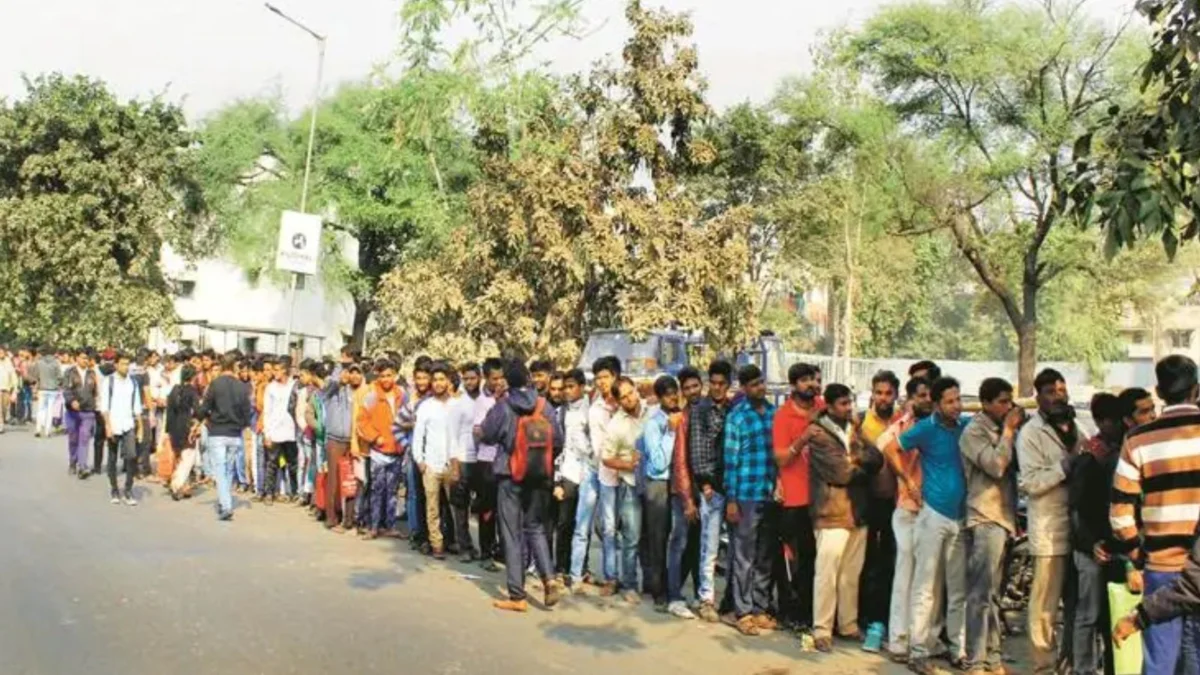
New Delhi: In a stark revelation concerning India’s demographic dividend, newly released district-level data from the Ministry of Statistics and Programme Implementation (MoSPI) highlights a deepening economic and educational crisis in pockets of the country. According to findings based on the Periodic Labour Force Survey (PLFS) for 2025, more than half of all young people aged 15 to 29 in two districts of Odisha were found to be entirely outside the realms of employment, formal education, or vocational training.
The data brings to light the staggering magnitude of the "NEET" phenomenon—referring to youth Not in Education, Employment, or Training. Far exceeding the standard youth unemployment rate, the NEET metric is widely endorsed by the International Labour Organization (ILO) as a more reliable and comprehensive barometer of youth vulnerability and economic exclusion.
Main Facts: The Anatomy of the Youth NEET Crisis
The release of the MoSPI dataset on Friday has mapped the socio-economic status of youth across 566 districts nationwide, painting a complex portrait of India’s labor market dynamics.
- The Epicenter of Exclusion: Odisha’s Anugul district recorded the highest NEET rate in the entire country, with a staggering 56.1% of its youth population aged 15 to 29 neither studying, working, nor undergoing training.
- Close Seconds: Kendrapara, another district in Odisha, followed closely behind at 51.4%, making Odisha home to the two districts with the most severe youth disengagement rates. Dhenkanal, also in Odisha, secured the third spot nationally at 45.3%.
- National Benchmarks: The all-India average for youth NEET status stood at 25% in 2025. Putting this into perspective, a recent NITI Aayog report released in August noted that approximately 8.7 crore Indians aged 15 to 29 fell into this category back in 2021.
- The Paradox of Odisha: In a striking socio-economic paradox, Odisha also houses the district with the lowest NEET rate in India: Nabarangapur, where only 4.1% of youth fall into the NEET category. Nabarangapur also boasted the second-highest Labour Force Participation Rate (LFPR) in the country at 85.4%.
Chronology and Background: Tracking India’s Evolving Labor Data
The release of this district-level PLFS data represents a continuous effort by the central government to decentralize economic metrics and provide granular insights into regional labor markets.
- 2021 Baseline: The underlying vulnerability of India’s youth cohort was highlighted by NITI Aayog, which estimated that nearly 87 million young individuals were disconnected from educational institutions and labor markets alike.
- Early 2025 (The ASUSE Release): This week’s data drop follows a landmark release by MoSPI just days prior, which utilized the Annual Survey of Unincorporated Sector Enterprises (ASUSE) for 2025. That survey exposed stark regional disparities in the informal sector, such as Nirmal district in Telangana recording 78% female informal workers—the highest nationwide.
- September 19, 2025: MoSPI officially publicizes the district-level PLFS 2025 estimates. Out of 566 districts analyzed, 251 districts recorded at least 25% of their 15–29 age bracket trapped in NEET status, while only 18 districts managed to keep their youth NEET rate below 10%. Furthermore, data from 18 districts was flagged for high statistical error, warranting cautious interpretation.
Supporting Data: Regional Disparities and Labor Metrics
The granular data exposes vast geographical divides, showcasing how economic opportunities cluster unevenly across state borders.
State-Wise NEET Concentrations
When evaluated at the state level through district concentrations, the geographic fault lines become glaringly apparent:
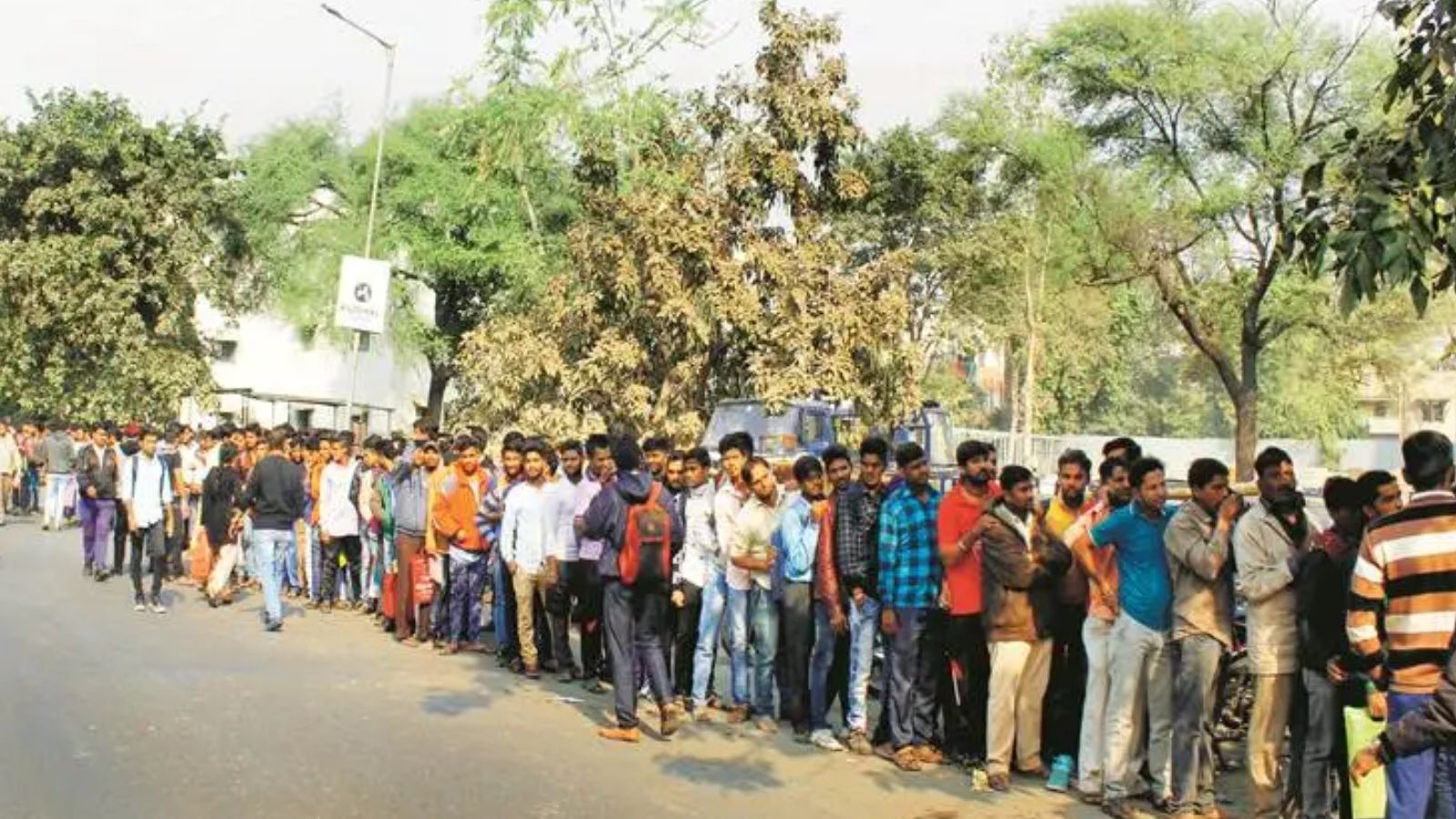
- Bihar: The state faces the most pervasive systemic challenge, with a massive 81% of its districts recording a youth NEET rate exceeding 25%.
- West Bengal: Ranked second, where 75% of its districts crossed the 25% NEET threshold.
- Haryana and Andhra Pradesh: Tied for third place, with 70% of their districts reporting high youth disengagement.
- Uttar Pradesh: Follows closely with 69% of its districts crossing the benchmark.
Conversely, states managing to keep these high-NEET districts to a minimum included Rajasthan and Maharashtra (both at 17% of their districts exceeding the 25% mark) and Jammu and Kashmir (13%).
Participation and Unemployment Extremes
- Labor Force Participation Rate (LFPR): Defined as the percentage of the population either employed or actively seeking work, the highest participation was recorded in a cluster of Gujarat districts—Dohad, Narmada, Dang, Tapi, Chhota Udepur, and Mahisagar—grouped together by MoSPI at 86%, narrowly beating Odisha’s Nabarangapur (85.4%).
- Urban Success Stories: Among the 100 most populous districts in India, Ernakulam in Kerala emerged as a stellar performer, registering the lowest NEET rate at 9.6%.
- Unemployment Rates: While NEET measures broader disengagement, traditional unemployment rates varied wildly. Districts like Raisen in Madhya Pradesh and Saharsa in Bihar recorded astonishingly low unemployment rates of 0.3%. At the other end of the spectrum, Papum Pare in Arunachal Pradesh registered the highest unemployment rate at 16.1%.
Official Perspectives and Analytical Insights
Labor economists and policymakers view the district-level NEET metrics as a critical diagnostic tool for targeted intervention.
Unlike the traditional unemployment rate—which only counts individuals who are actively looking for work but cannot find it—the NEET indicator captures a much broader population. This includes young women who have dropped out of the labor force due to domestic responsibilities, discouraged workers who have stopped searching for jobs out of despair, and youth who lack access to higher education or skill-building programs.
Experts point out that high NEET rates among women frequently skew state averages. Cultural norms, safety concerns, and a lack of localized employment opportunities often force young women out of both classrooms and workplaces post-puberty. The concentration of high NEET rates in states like Bihar, West Bengal, and parts of Odisha underscores an urgent need for gender-sensitive employment schemes and robust educational infrastructure expansion.
Implications: The Threat to India’s Demographic Dividend
India’s economic narrative heavily relies on its "demographic dividend"—the economic growth potential resulting from a shifting population age structure where the share of the working-age population is larger than the non-working-age share. However, data of this scale serves as a sobering reality check.
- Wasted Human Capital: When more than half of the youth population in districts like Anugul and Kendrapara are neither acquiring skills nor contributing to the economy, the demographic dividend risks transforming into a demographic burden.
- Widening Regional Inequality: The stark contrast between districts like Nabarangapur (Odisha) with a 4.1% NEET rate and Anugul (Odisha) with 56.1% highlights that state-level averages mask hyper-local economic realities. Tailored, district-specific policymaking is no longer optional; it is imperative.
- Policy Shifts Required: Central and state governments must move beyond macro-level job creation. Interventions must focus on bridging the employability gap through localized vocational training, improving school-to-work transition systems, and dismantling structural barriers that keep young women out of the workforce.
As India navigates its path toward becoming a developed economy by 2047, addressing the silent crisis of its NEET youth will be the ultimate litmus test for the nation’s socio-economic planning.



