










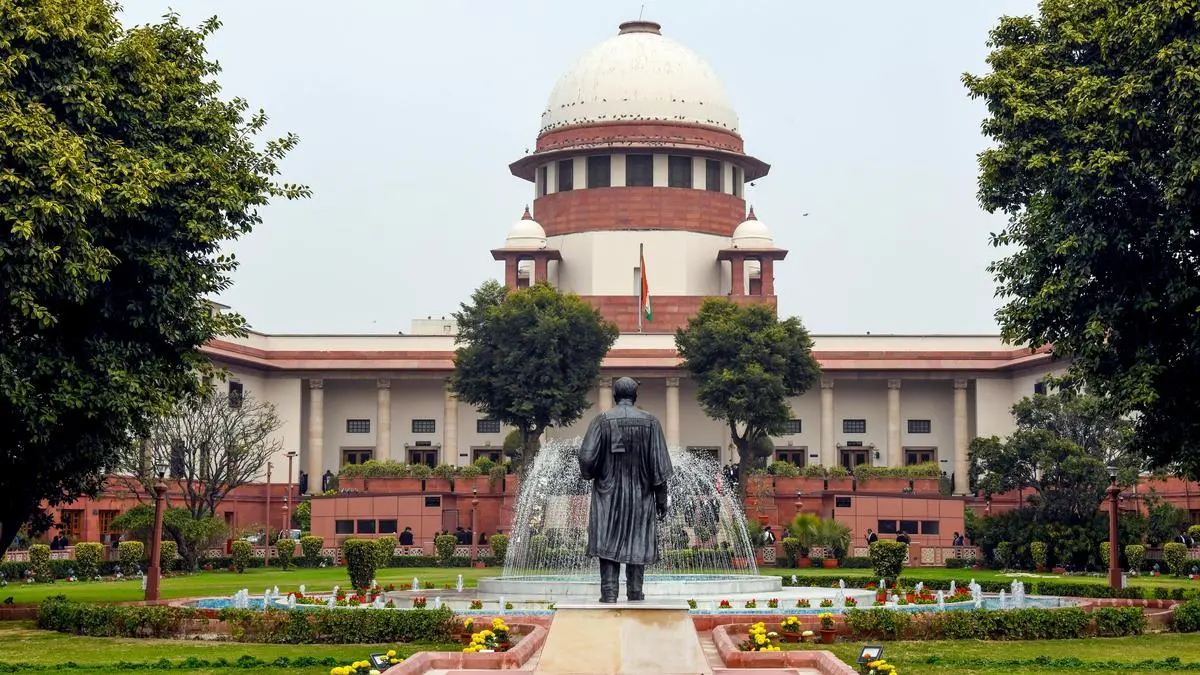
New Delhi, October 11, 2026 — In an extraordinary special sitting held on a Sunday, the Supreme Court of India intervened to curb the sweeping security measures that brought the national capital to a virtual standstill. The court issued a stern directive to the Centre, mandating that peaceful protesters must not be subjected to illegal detention and that essential services, including the Delhi Metro and rail networks, must remain operational.
The bench, comprising Justices Joymalya Bagchi and V. Mohana, convened to address urgent petitions following widespread reports of massive detentions and the paralysis of public transport during a protest organized by the Citizens for Justice and Peace (CJP) and various student organizations. The protest was aimed at Chief Election Commissioner Gyanesh Kumar, with demonstrators alleging systemic irregularities and a lack of transparency within the Election Commission of India.
The Chronology of the Crisis
The friction between the state authorities and the protest groups reached a boiling point over the weekend of October 10–11, 2026.
- October 9, 2026: The Supreme Court issued an initial order in response to a petition challenging the government’s preemptive move to close 57 metro stations and cancel incoming trains to Delhi. The court expressed concern over a "complete prohibition" of public movement, urging authorities to maintain a balance between public order and the right to peaceful protest.
- October 10, 2026: Despite the court’s earlier observations, reports surfaced of a massive security clampdown. Authorities invoked Section 163 of the Bharatiya Nagarik Suraksha Sanhita (BNSS), 2023, to impose prohibitory orders. By the end of the day, over 7,000 individuals—including high-profile political figures, prominent student leaders such as Abhijit Dipke, and digital media personality Dhruv Rathee—had been detained.
- October 11, 2026: Following a habeas corpus petition filed by senior advocate Menaka Guruswamy and a contempt plea filed by advocate Shailendra Mani Tripathi, the Supreme Court held a special Sunday sitting to address the "flagrant violation" of its earlier directions.
Judicial Observations: The "Flagrant Violation"
During the proceedings, the Supreme Court bench did not mince words regarding the conduct of the authorities. The bench noted that the state’s response went far beyond the scope of reasonable law enforcement.
"Senior counsels submitted there was a flagrant violation of the directions—metro railway was not functioning, New Delhi and Nizamuddin railway stations remained closed, no traffic advisories were issued and a large number of persons were subjected to undue harassment and illegal detention even beyond the area which was covered by the prohibitory order," the court stated in its official records.
The court specifically tasked Solicitor General Tushar Mehta with ensuring that the Delhi Metro resumes normal operations immediately and that internet services remain undisrupted, provided that the overall law and order situation allows. Furthermore, the court emphasized that lawyers, journalists, and essential service providers must not be impeded in the discharge of their professional duties, noting reports that members of the press had been harassed during the crackdown.
Official Responses and Government Defense
Representing the Union government, Solicitor General Tushar Mehta defended the security measures, arguing that the steps were necessary to maintain public order in a sensitive environment.
Mehta disputed the scale of the disruption claimed by the petitioners, asserting that out of the 303 stations within the Delhi Metro network, entry and exit were restricted at only 45 stations. He maintained that the government’s actions were calibrated to prevent potential violence and that the detention of thousands of individuals was a proactive measure to prevent the mobilization from spiraling into an uncontrollable law-and-order crisis.
However, the respondents named in the contempt petition—including Union Home Secretary Govind Mohan, Delhi Police Commissioner Anurag Kumar, and DMRC Chairperson D. Thara—now face the prospect of a judicial inquiry into whether the preemptive lockdowns constituted a contempt of the Supreme Court’s October 9 directive.
The Nature of the Protests: Questioning the Election Commission
At the heart of the unrest is a growing wave of skepticism regarding the integrity of the electoral process. The CJP, an organization that has been vocal about institutional accountability, led the call for a mass mobilization at Jantar Mantar.

The primary grievance cited by the protesters is the alleged lack of transparency in the functioning of the Election Commission (EC) under Chief Election Commissioner Gyanesh Kumar. Specifically, student groups and civil society members have raised concerns regarding:
- Voter Roll Integrity: Allegations of mass deletions and irregular additions to voter lists in key constituencies.
- Technological Transparency: Demands for greater accountability regarding the backend operations of the Electronic Voting Machines (EVMs) and the Voter Verifiable Paper Audit Trail (VVPAT) verification processes.
- Regulatory Impartiality: Claims that the EC has shown bias in its application of the Model Code of Conduct during recent state elections, favoring the ruling establishment.
These allegations have been vehemently denied by the Election Commission, which has maintained that all processes remain compliant with constitutional mandates and statutory laws.
Implications for Democracy and Civil Liberties
The events of October 2026 have sparked a national debate regarding the limits of state power and the right to dissent. Legal scholars argue that the use of the Bharatiya Nagarik Suraksha Sanhita (BNSS) to effectively paralyze the capital’s infrastructure creates a dangerous precedent for future protest movements.
Impact on Freedom of Movement
The shutting down of transit hubs like the New Delhi and Nizamuddin railway stations affects millions of citizens who are not involved in political movements. When the state treats public transport as a tool for security management, it risks isolating the capital from the rest of the country, potentially infringing on the constitutional right to freedom of movement.
The Role of Digital Dissent
The detention of Dhruv Rathee, a YouTuber with a significant following, marks a shift in how the state perceives digital influencers. By treating influencers as primary agitators, the government signals that the digital sphere is now a central battlefield for public order, raising concerns about the future of free speech on social media platforms.
Judicial Overreach vs. Executive Necessity
The Supreme Court’s intervention highlights the ongoing tension between the executive’s duty to maintain order and the judiciary’s duty to protect fundamental rights. By holding a Sunday sitting, the court has signaled that it will not tolerate the suspension of civil liberties under the guise of administrative convenience.
Future Outlook
As the contempt proceedings loom, the case is expected to have far-reaching consequences for how protests are managed in India’s metropolitan centers. The Supreme Court has signaled that it intends to monitor the situation closely, moving forward with a broad hearing that includes all concerned legal parties.
The government is now under significant pressure to balance its security requirements with the democratic necessity of allowing public dissent. If the court finds that the authorities did indeed violate the October 9 order, it could lead to stricter guidelines on how Section 163 of the BNSS is applied in the future, ensuring that the "complete prohibition" of services is treated as a measure of last resort rather than a first-line response.
For now, the capital remains in a state of high alert. While the Supreme Court’s intervention has provided a temporary reprieve, the underlying frustrations of the CJP and the student organizations remain unaddressed. Whether this conflict leads to a formal investigation into the Election Commission or results in further tightening of public protest laws remains to be seen in the coming weeks.
The judiciary’s next steps will be critical in determining whether India’s democratic institutions can withstand the current strain of public skepticism and executive rigidity.



