










By AI Industry Correspondent
Published: October 2025
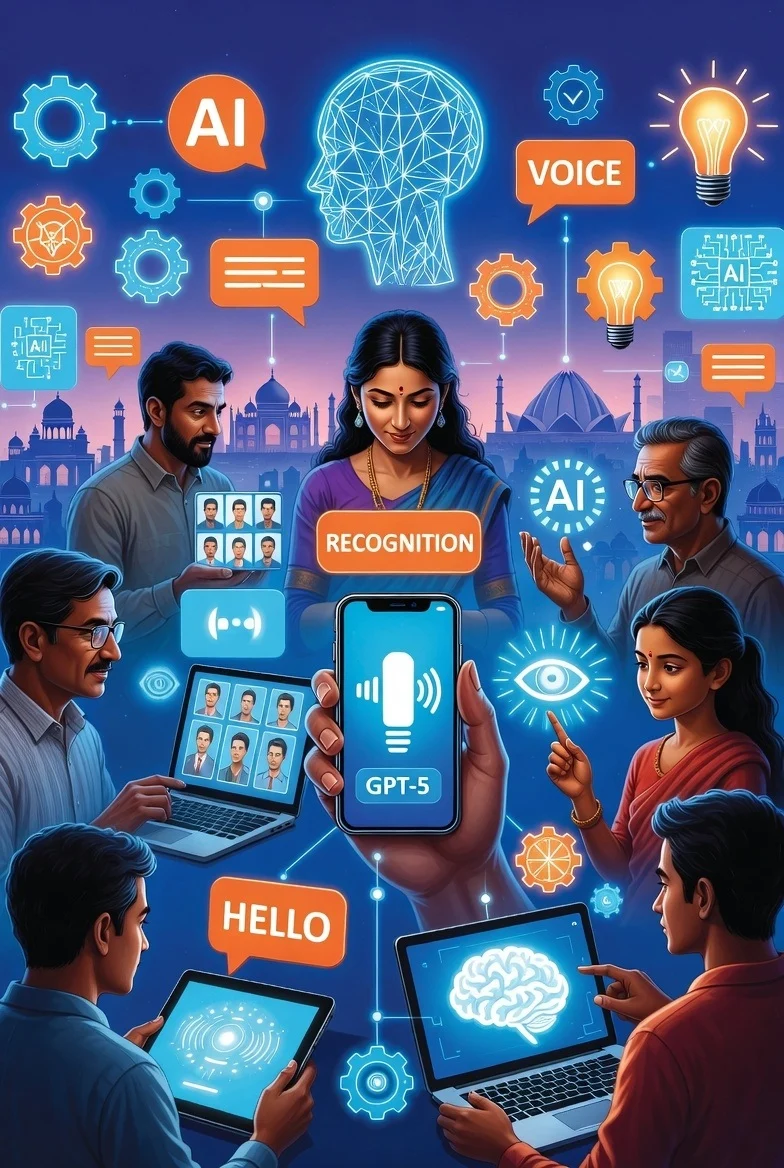
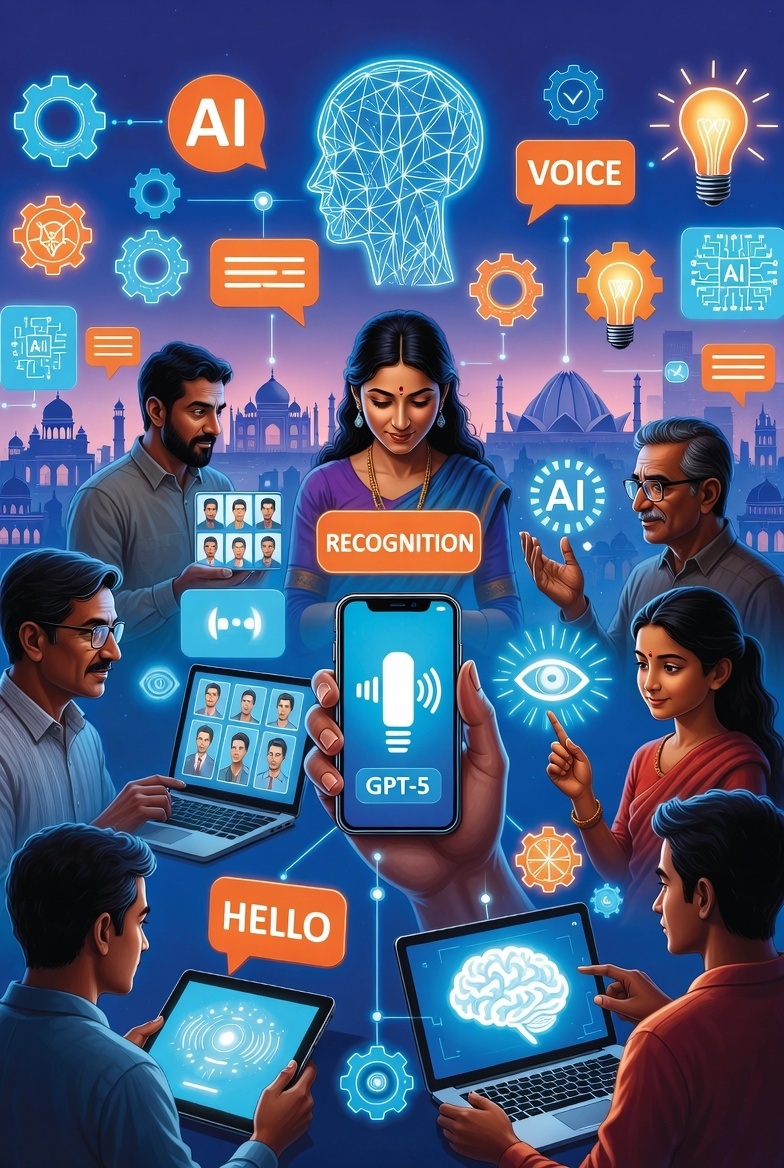
In a landmark decision that signals a seismic shift in the global artificial intelligence landscape, OpenAI has officially declared that India will be the primary beneficiary of its most aggressive expansion strategy to date. Starting November 4, 2025, users across India will gain one year of complimentary access to "ChatGPT Go," the premium tier of the company’s services. This unprecedented initiative serves as a major endorsement of India’s growing status as a powerhouse in the global AI ecosystem and provides millions with free, high-octane access to the revolutionary GPT-5 model.
The Strategic Pivot: Why India?
The decision to offer a full year of premium AI capabilities—which includes significantly expanded usage limits, priority access to high-demand servers, and advanced multimodal processing—is not merely an act of corporate benevolence. It is a strategic move to cement OpenAI’s dominance in a market that has shown the highest daily active usage of generative AI tools globally.
India, with its massive demographic dividend, a burgeoning population of STEM-proficient youth, and a rapidly digitizing economy, has become the world’s most significant "AI laboratory." By removing the financial barrier to entry, OpenAI is effectively accelerating the adoption of its technology within the Indian startup ecosystem, educational institutions, and corporate sectors.
What ChatGPT Go Offers: The Technical Edge
The "ChatGPT Go" package is designed to be a comprehensive productivity suite rather than just a chatbot. By leveraging the power of GPT-5, users are moving beyond simple text-based prompts into an era of deep, multimodal integration. Key features of this premium access include:
- GPT-5 Processing Power: Unrestricted access to the most advanced model architecture available, characterized by lower latency and higher reasoning capabilities.
- Multimodal Integration: The ability to seamlessly process text, audio, and visual data simultaneously, allowing for real-time document analysis, live translation, and complex data visualization.
- Expanded Usage Limits: A significant reduction in message caps, enabling power users and developers to conduct long-form research and iterative coding sessions without interruption.
- Personalized Workflows: Access to "Custom GPTs," allowing users to build specialized AI agents tailored for specific tasks, from legal research to financial modeling.
Chronology of the Announcement and Rollout
The road to this announcement has been paved with months of speculation regarding OpenAI’s "OpenAI for Countries" initiative.
- Q1 2025: OpenAI begins formal discussions with Indian regulatory bodies regarding data sovereignty and local infrastructure requirements.
- August 2025: Beta testing of localized, high-speed regional server clusters is completed in Bangalore and Hyderabad.
- October 2025: Official announcement of the "ChatGPT Go" free-tier initiative for the Indian market.
- November 4, 2025: The official launch date. The service goes live for all users who have configured their Android and web-based profiles to the Indian region.
- 2026: A transition period will begin for users to either renew their subscriptions or revert to a standard free-tier model.
Eligibility and Technical Requirements
To ensure a smooth transition, OpenAI has laid out specific parameters for those looking to tap into the free premium tier. The service is available to:
- Individual Users: Any person over the age of 18 with a verified Indian mobile number.
- Academic Institutions: Faculty and students with verified institutional email addresses (ending in .edu.in or equivalent).
- Small Business Entities: Registered MSMEs looking to integrate AI into their operational workflows.
Technical Configuration:
Users must ensure their devices—particularly Android handsets—are set to the India region in their system settings. For existing subscribers on paid plans (Plus, Pro, or Enterprise), OpenAI has announced a "credit-back" system. These users are advised to pause or adjust their current billing cycles to prevent overlapping charges during the 12-month promotional period.
The "Double-Edged Sword": Public Reception and Critical Analysis
While the announcement has been met with widespread enthusiasm, it has also sparked intense debate regarding the implications of such rapid AI saturation.
1. Data Sovereignty and Privacy
Privacy advocates argue that "free" access often comes at the cost of data. There are concerns regarding how OpenAI will utilize the massive influx of Indian user data to train future models. Critics are calling for greater transparency on data residency—ensuring that the data of Indian citizens is not just stored locally but is protected under the strictest interpretations of the Digital Personal Data Protection Act (DPDPA).
2. The Plagiarism and Copyright Conflict
The Indian media landscape, which has been vocal about the copyright infringement issues surrounding AI-generated content, remains wary. Several publishing houses and creative unions have already filed inquiries regarding whether their copyrighted content is being ingested into the GPT-5 training set without compensation. The free rollout is viewed by some as a way to "normalize" AI usage before potential regulatory crackdowns on copyright usage.
3. AI Bias and Cultural Nuance
There is a legitimate concern regarding the "Western-centric" nature of LLMs. Critics worry that despite the accessibility, the model may struggle with the vast linguistic and cultural diversity of India, potentially leading to biased outputs or a homogenization of information.
Implications for the Indian AI Ecosystem
The introduction of ChatGPT Go is expected to act as a catalyst for local competition. Currently, India is seeing a surge in homegrown AI development. Projects like BharatGPT, which focuses on Indic language support, and GitaGPT, which emphasizes cultural and philosophical alignment, are essential components of India’s push for "Atmanirbhar" (self-reliant) AI.
The influx of a highly capable, free model like GPT-5 may force these local players to pivot toward niche, specialized applications where they can offer better accuracy or language support than the global giant.
The Future of Policy and Governance
As India positions itself as a global leader in AI policy, this rollout will likely serve as a test case for future international relations. The government’s planned "OpenAI for Countries" initiative—which involves building local data storage facilities—is a critical step toward balancing innovation with national security.
Furthermore, the Ministry of Electronics and Information Technology (MeitY) is expected to continue its rigorous oversight, focusing on:
- Ethical AI Frameworks: Ensuring that the deployment of these tools does not lead to large-scale job displacement or the spread of misinformation.
- Regulated Growth: Monitoring the competitive landscape to ensure that large global players do not engage in predatory pricing that might stifle local startups.
Conclusion: A New Era of Productivity
The decision to grant India one year of free access to ChatGPT Go is a pivotal moment in the history of the 21st-century digital economy. For the student in a remote village, the developer in a tech hub, and the entrepreneur scaling a business, the barrier to entry for the world’s most advanced intelligence has been removed.
However, the true success of this initiative will not be measured by the number of sign-ups, but by how effectively this tool is leveraged to solve real-world problems in education, healthcare, and governance. As India steps into this new, AI-augmented reality, it does so with a blend of immense optimism and necessary caution, continuing its journey toward becoming the world’s most dynamic AI-driven nation.
The year ahead will be defined by how Indian users navigate the trade-offs between the convenience of AI-led productivity and the fundamental need for privacy, ethical integrity, and intellectual autonomy. The stage is set; the code is live; and for the next 365 days, the future of AI in India will be written in real-time.



