










Artificial Intelligence (AI) has transitioned from a speculative technological frontier to the bedrock of modern operational infrastructure. For professionals and individuals alike, the rapid integration of machine learning and large language models (LLMs) represents the most significant shift in business methodology since the dawn of the internet. As these tools become increasingly sophisticated, their utility has expanded from niche programming tasks to the comprehensive optimization of global commerce, creative workflows, and project management.
The State of Global AI Adoption: A Statistical Overview
The current digital landscape is defined by a race toward automation and intelligence-driven decision-making. According to data provided by AuthorityHacker, approximately 35% of companies have already fully integrated AI into their core business processes. This is not merely a trend; it is a strategic repositioning. An overwhelming 90% of enterprises now identify AI assistance as a decisive competitive advantage, signaling a shift where those who fail to adopt these technologies risk falling behind more agile, AI-empowered competitors.
Furthermore, the ubiquity of AI is underscored by consumer hardware, with 77% of modern devices incorporating some form of artificial intelligence in their standard functionalities. This integration creates a seamless bridge between the end-user and advanced computational power, setting the stage for a future where AI is the silent partner in every professional interaction.
A Chronology of the Generative AI Boom
To understand the current fervor, we must look at the timeline of the recent explosion in AI utility:
- Pre-2020: The Era of Specialization. AI was primarily used for data analysis, predictive modeling, and basic automation within large corporations.
- 2022: The Paradigm Shift. The release of high-profile generative models (such as GPT-3.5) democratized AI, allowing non-technical users to generate text, code, and insights through natural language.
- 2023: The Integration Phase. Businesses began moving beyond experimentation, embedding AI into SaaS (Software as a Service) platforms. Marketing suites, project management tools, and design software began rolling out "AI assistants" as standard features.
- 2024: The Maturity Period. We are currently in a phase where AI is no longer a "novelty" but a mandatory component of professional toolkits. The focus has shifted from "can we do this?" to "how can we optimize this for maximum ROI?"
Strategic Implications for Online Retailers and Content Creators
For online stores, blogs, and digital platforms, the implications of AI adoption are profound. AI does not merely save time; it changes the nature of work. By automating repetitive tasks—such as generating product descriptions, managing inventory projections, or drafting social media posts—teams can pivot their focus toward high-level strategy and creative vision.
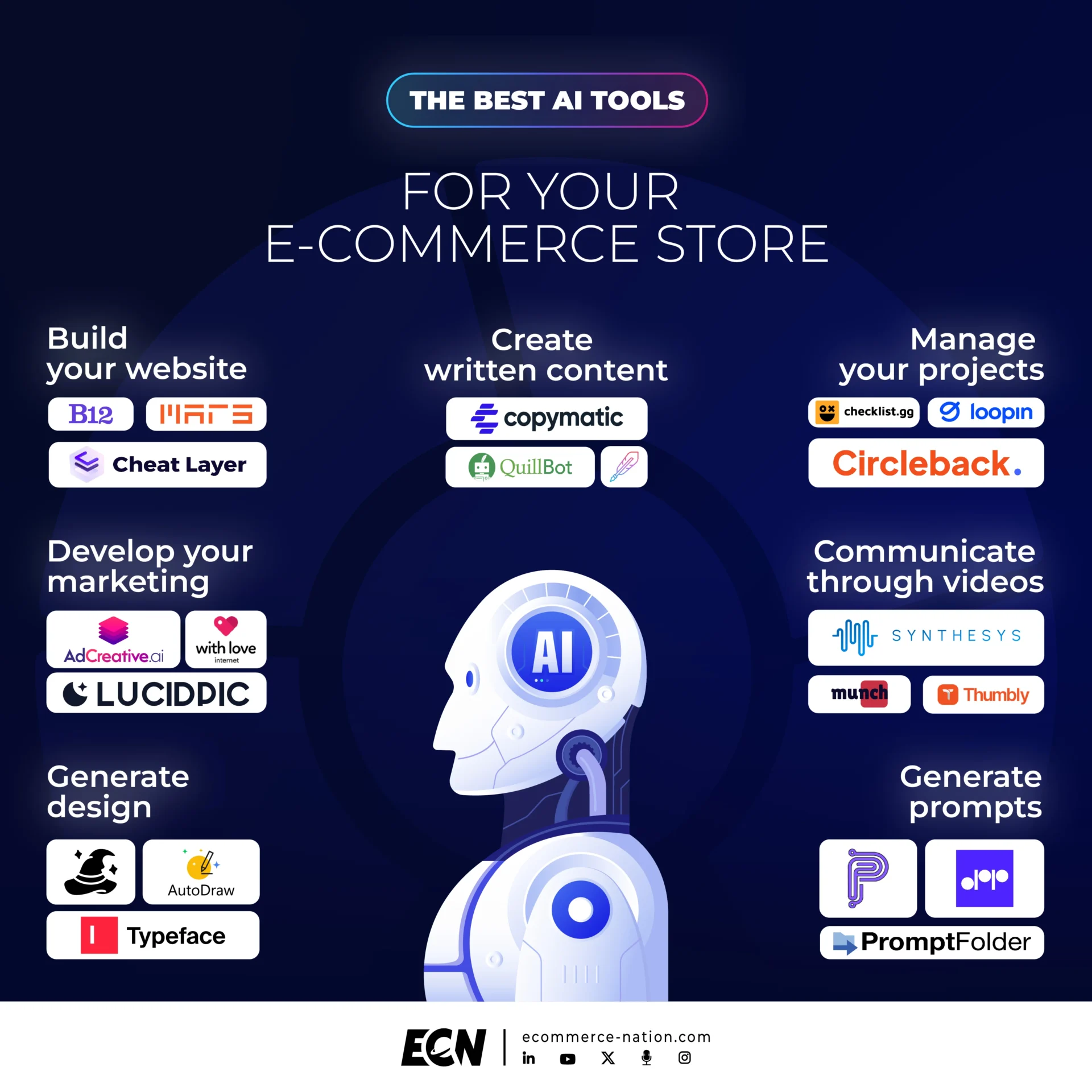
1. Architectural Development: Building the Digital Storefront
Modern website building has been revolutionized by AI-driven platforms. These tools analyze user behavior patterns to suggest layout adjustments, optimize conversion paths, and even generate code snippets to resolve technical debt, ensuring that even small teams can maintain enterprise-level websites.
2. Marketing Precision
Marketing is perhaps the sector most drastically altered by AI. Predictive analytics now allow brands to forecast consumer demand, while generative tools enable the creation of highly personalized email campaigns and advertisement copy that resonate with specific audience segments. The result is a higher conversion rate and a significant reduction in customer acquisition costs.
3. Video Production and Multimedia
Communication is increasingly video-centric. AI-powered editing suites now allow for automated captioning, voice synthesis, and dynamic scene generation. This enables creators to produce high-quality video content at a fraction of the historical cost and time, essential for maintaining visibility on platforms like TikTok, Instagram, and YouTube.
4. Project Management and Operational Efficiency
The "bottleneck" in project management is often communication and task tracking. AI tools now act as "digital project managers," tracking milestones, summarizing meeting transcripts, and flagging potential delays before they impact the budget. By providing real-time transparency, AI fosters a more collaborative and accountable environment.
5. The Art of the Prompt
As we rely more on AI, the "Prompt Engineer" has emerged as a vital role. Knowing how to interface with LLMs is the new literacy. AI tools that generate prompts help bridge the gap between human intent and machine output, ensuring that the results are not just functional, but high-quality and on-brand.
6. Scaling Content Marketing
Content is the fuel of the digital economy. Generative AI allows companies to scale their output without sacrificing quality. From SEO-optimized blog posts to long-form whitepapers, AI acts as a sophisticated writing assistant that can mimic brand voice and adhere to strict editorial guidelines.
7. Design and Visual Identity
Graphic design was historically a labor-intensive, high-cost endeavor. With AI image generators, businesses can produce high-fidelity assets, mockups, and logos in seconds. This allows for rapid A/B testing of visual branding, ensuring that design choices are driven by data rather than intuition.
The Human Element: An Official Perspective on AI Integration
While the technological capability of AI is undeniable, industry leaders emphasize that it is not a replacement for human intellect, but an "intelligence multiplier." The most successful businesses in 2024 are those that utilize AI to handle the "heavy lifting" of data processing and drafting, leaving the nuance, emotional intelligence, and ethical oversight to humans.
The consensus among analysts is that the competitive advantage provided by AI comes from how it is integrated. Simply using the tools is insufficient; companies must curate an "AI stack" that aligns with their specific goals—whether that be scaling an e-commerce empire or building a personal brand.
Navigating the Future: A Call to Action
The rapid evolution of AI can feel overwhelming, but it is fundamentally an opportunity for democratization. Barriers to entry for complex business operations—such as international marketing, professional-grade design, and technical web development—are crumbling.
To remain relevant, organizations must adopt a culture of continuous learning. This involves:
- Auditing current workflows: Identify the most repetitive tasks and seek AI solutions to automate them.
- Investing in Literacy: Train team members not just to use tools, but to understand the logic behind them.
- Maintaining Authenticity: Use AI to enhance your brand, not to replace the human connection that keeps your customers coming back.
As we look toward the remainder of 2024 and beyond, the gap between those who leverage AI and those who do not will only widen. Whether you are an entrepreneur looking to launch your first online store or a seasoned professional seeking to optimize complex workflows, the tools are now at your fingertips. The challenge is no longer access; it is application.
Author: Thibault Herpin
Date: March 18, 2024
Source: Ecommerce Nation