










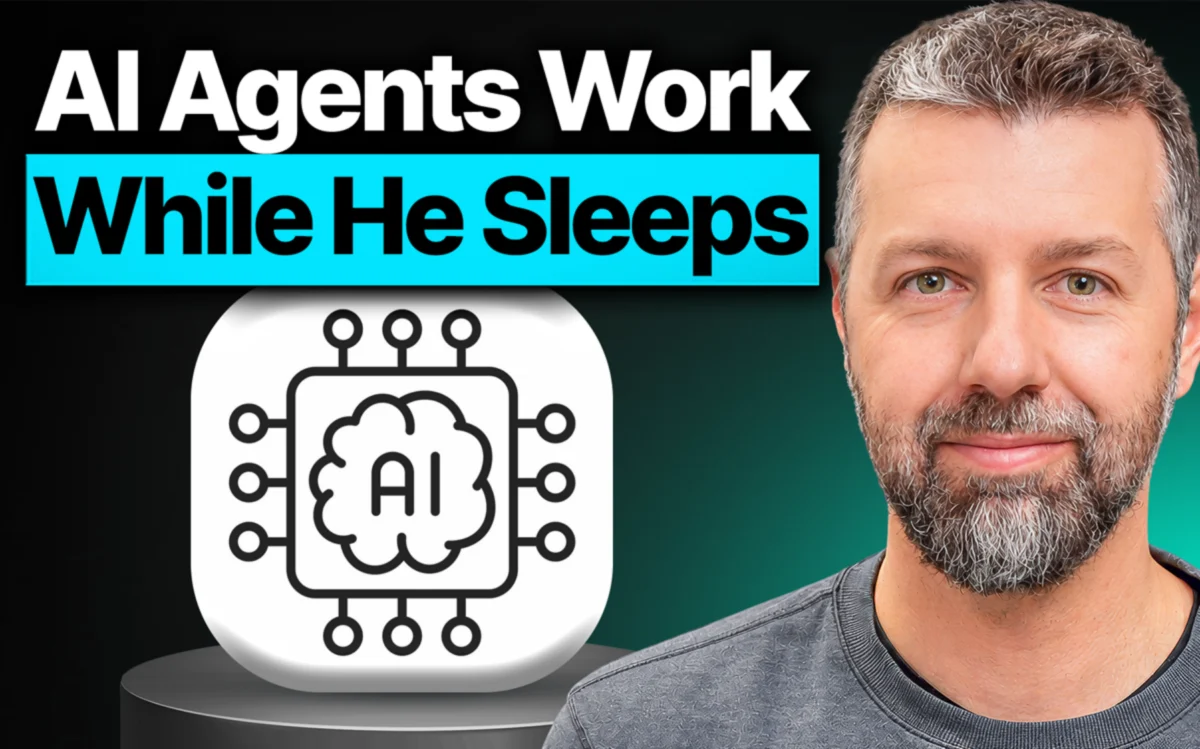
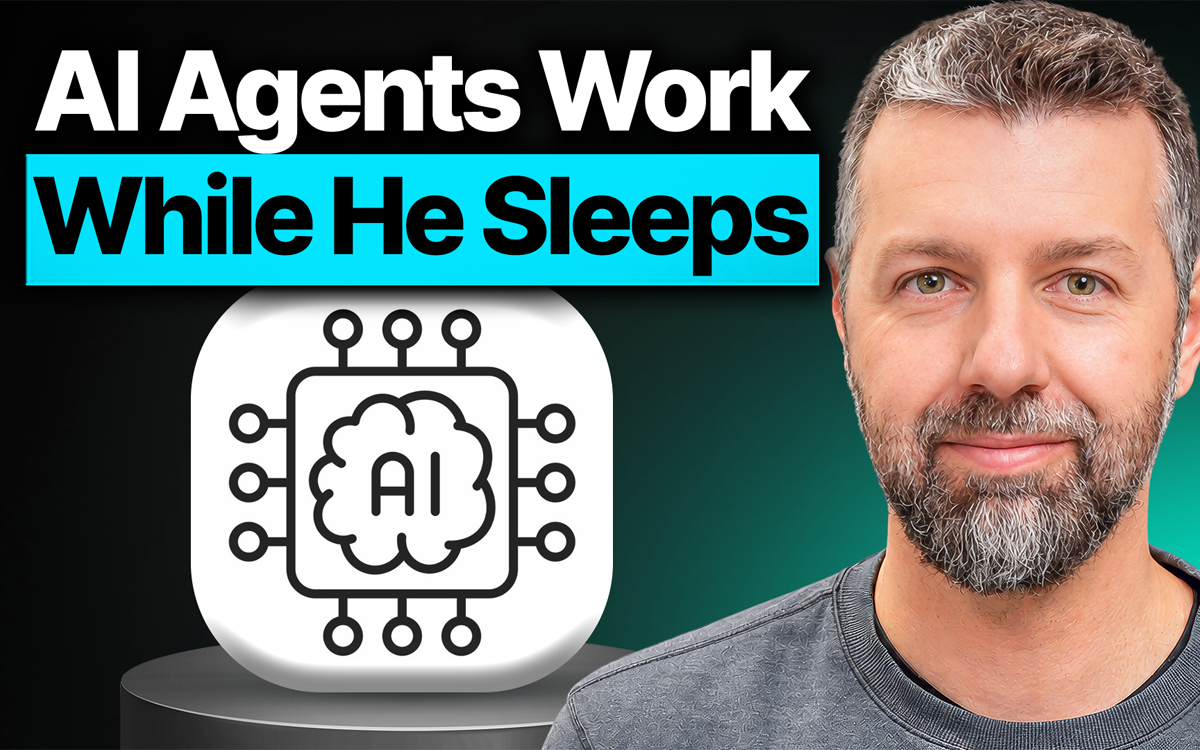
In the fast-evolving landscape of modern entrepreneurship, the boundary between technical founder and traditional business operator is rapidly blurring. This transition takes center stage in a recent episode of the Niche Pursuits podcast, where host Jared sits down with seasoned entrepreneur Brian Casel. Together, they dissect the mechanics behind Casel’s latest venture, Builder Methods, an AI-focused ecosystem constructed entirely through a strategic blend of YouTube content, email marketing, community engagement, and autonomous AI agents.
Casel is no stranger to the startup trenches. Bringing nearly two decades of experience as a designer, developer, founder, and operator, his journey offers a masterclass in adapting to technological shifts without losing sight of fundamental business principles. For entrepreneurs intimidated by the prospect of coding, Casel’s insights provide a reassuring truth: building with AI agents requires less traditional programming and more of the organizational discipline that business owners already practice every day.
Main Facts: The Blueprint of Builder Methods
At its core, Builder Methods is an educational and community-driven platform designed to teach non-technical business owners and developers how to leverage artificial intelligence—specifically AI agents and development tools like Claude Code—to build software and streamline operations.
The enterprise operates on a classic, highly effective modern funnels-and-community model:
- Top of Funnel: A fast-growing YouTube channel documenting practical, hands-on AI software creation.
- Middle of Funnel: A focused email newsletter that nurtures leads and delivers value through free tools and insights.
- Bottom of Funnel / Monetization: Builder Methods Pro, an annual paid membership granting access to an extensive course library, community interaction, and continuous training.
- Operational Edge: The systematic deployment of autonomous AI agents to manage recurring business tasks, freeing up human bandwidth for high-level strategy.
Unlike many web enterprises launched to capitalize on fleeting tech trends, Builder Methods is anchored by Casel’s 20 years of accumulated entrepreneurial scar tissue, blending real-world software deployment with deep operational insight.
Chronology: Two Decades Leading to an AI-First Pivot
Casel’s path to launching Builder Methods was paved over twenty years of continuous experimentation, pivoting, and scaling across different business models.
The Early Years: Design, Development, and Bootstrapping
Casel began his career as a web designer before transitioning into development. Over time, he taught himself the essential disciplines of marketing, sales, content creation, and operations. This foundational era gave him a comprehensive view of how digital businesses operate from the ground up.
The Productized Service Era (2015–2020)
One of Casel’s most notable milestones during his pre-SaaS era was Audience Ops, a productized content marketing service. Launched around 2015, Audience Ops solved a major pain point for businesses needing consistent content without the friction of hiring traditional agencies. Casel successfully operated and scaled this service until selling it in 2020.
The SaaS Pivot: Clarityflow (2021–Present)
Following the exit of Audience Ops, Casel leaned heavily into software-as-a-service (SaaS). In 2021, he launched Clarityflow, a SaaS product tailored specifically for coaches who rely on asynchronous video, audio, and text messaging to communicate with clients. Clarityflow remains operational today, anchoring his ongoing commitment to software solutions.
The 2024–2025 AI Shift: Launching Builder Methods
By 2024, working full-time on his SaaS business brought familiar realities common to bootstrapped founders: steady, incremental growth rather than explosive breakout metrics. Seeking a fresh direction aligned with his evolving interests, Casel began experimenting deeply with AI tooling, spec-driven development, and software automation.
By early to mid-2025, this experimentation culminated in the launch of Builder Methods, shifting his professional focus toward documenting and teaching the AI-first building process.
Supporting Data: Content Metrics, Reach, and Revenue Channels
Building an audience in a technical niche requires consistency, high production value, and a deep understanding of audience behavior. Casel’s transition onto YouTube and subsequent funnel optimization yielded measurable results across multiple metrics.
YouTube Growth and View Distribution
Casel spent roughly two years treating YouTube seriously, publishing weekly videos before AI became the central thesis of the channel. Early content explored Ruby on Rails and various software experiments, but pivoting to Claude Code and spec-driven AI development in 2025 caused the channel to accelerate rapidly.
- Breakout Success: A standout video covering OpenClaw in March drove massive viewership, pushing the channel’s cumulative reach toward the one million view mark—a remarkable feat for a niche technical topic.
- Mid-Tier Performance: Videos focusing specifically on Claude Code regularly achieve between 50,000 and 60,000 views.
- Baseline Engagement: Smaller, highly targeted videos routinely pull in 1,000 to 3,000 views within their first week or two. Casel emphasizes that even lower-view videos hold immense business value, consistently converting highly engaged viewers into newsletter subscribers and community members.
Funnel Economics and Membership Growth
To convert raw views into sustainable revenue, Casel optimized his viewer-to-subscriber transition. Initially placing newsletter calls-to-action within the first 30 seconds of his videos, he later shifted them to the middle or later segments, realizing that casual viewers need time to absorb the content before taking action.
The primary revenue driver, Builder Methods Pro, features:
- An annual subscription model providing access to an extensive curriculum.
- Over 100 training videos at the time of the interview, organized into comprehensive courses covering AI building, Claude Code, non-developer tool creation, and agent setup.
- A vibrant community space populated by hundreds of active builders sharing workflows, troubleshooting code, and exchanging operational tactics.
In addition to the Pro membership, Casel’s revenue model incorporates secondary channels including sponsored content, consulting, and the continued operation of Clarityflow.
Official Responses and Methodology: Redefining the Customer Avatar
A critical turning point in the evolution of Builder Methods was a deliberate shift in how Casel communicates his value proposition to the market.
From Professional Developers to Business Operators
When the brand first launched, its messaging targeted professional software developers looking to adapt their workflows to AI coding assistants. While that audience remains a core component of the community, Casel observed a broader, untapped market: business owners and non-coders with a systems mindset.
Casel argues that operational business owners possess instincts that make them uniquely positioned to succeed with AI agents. Because they have spent years documenting procedures, hiring staff, and managing recurring workflows, they already understand the core logic required to prompt and structure AI systems.
"People don’t need to become traditional programmers to start building useful tools," Casel notes. "If you have ever created an SOP, managed a team, trained an assistant, or built a repeatable process, you may already have more AI readiness than you think."
Separating Free Content from Paid Training
Casel maintains a strict operational boundary between his public-facing media and his paid educational assets:
- YouTube Content: Highly produced, polished, and structured primarily for viewer retention, brand awareness, and top-of-funnel reach.
- Paid Membership Content: Deep, step-by-step, and project-oriented. Because members have already invested in their education, the focus shifts entirely from entertainment and retention to clear, actionable execution and follow-along training.
Implications: The Rise of the Agent-Driven Business
The most profound takeaway from Casel’s journey with Builder Methods is the conceptual shift regarding what AI agents represent for modern businesses. Rather than viewing AI merely as an interactive chat tool for generating ideas or drafting copy, Casel deploys agent-based workflows that run on automated schedules.
Operationalizing AI Agents
Within his own business operations, Casel utilizes scheduled, autonomous agents to handle repetitive tasks:
- Routine data aggregation and formatting.
- Internal systems monitoring and workflow checks.
- Content distribution pipelines and administrative scheduling.
By running these tasks hourly or daily, agents function effectively as digital team members rather than one-off utilities.
Cross-Industry Applications: Beyond Software Startups
The implications of this agent-driven mindset extend far beyond tech entrepreneurs and software founders. Casel highlights real-world examples from his own community—such as a healthcare professional running a dental practice in California who is learning to build custom internal tools for case management, bookkeeping, and patient tracking.
Service businesses, local companies, digital creators, agencies, and professional practices can all apply these principles. Common operational tasks ripe for agent-supported workflows include:
- Client onboarding and document collection.
- Automated invoice reconciliation and bookkeeping support.
- Customer support ticket categorization and initial routing.
- Lead qualification and CRM data hygiene.
The common denominator across all these use cases is process. Whenever a task is repeatable and rule-based, an opportunity exists to translate that workflow into an agent-supported system.
Conclusion
Brian Casel’s work with Builder Methods demonstrates how decades of foundational business experience can be successfully synthesized with cutting-edge technology. By bypassing short-term hype and focusing on community, systematic education, and operational efficiency, Casel has built a resilient enterprise model.
For modern entrepreneurs, the message is clear: mastering AI is not about memorizing complex programming languages. It is about recognizing repeatable processes, designing clear Standard Operating Procedures (SOPs), and allowing autonomous agents to execute the heavy lifting while humans focus on strategy, creativity, and growth.



