










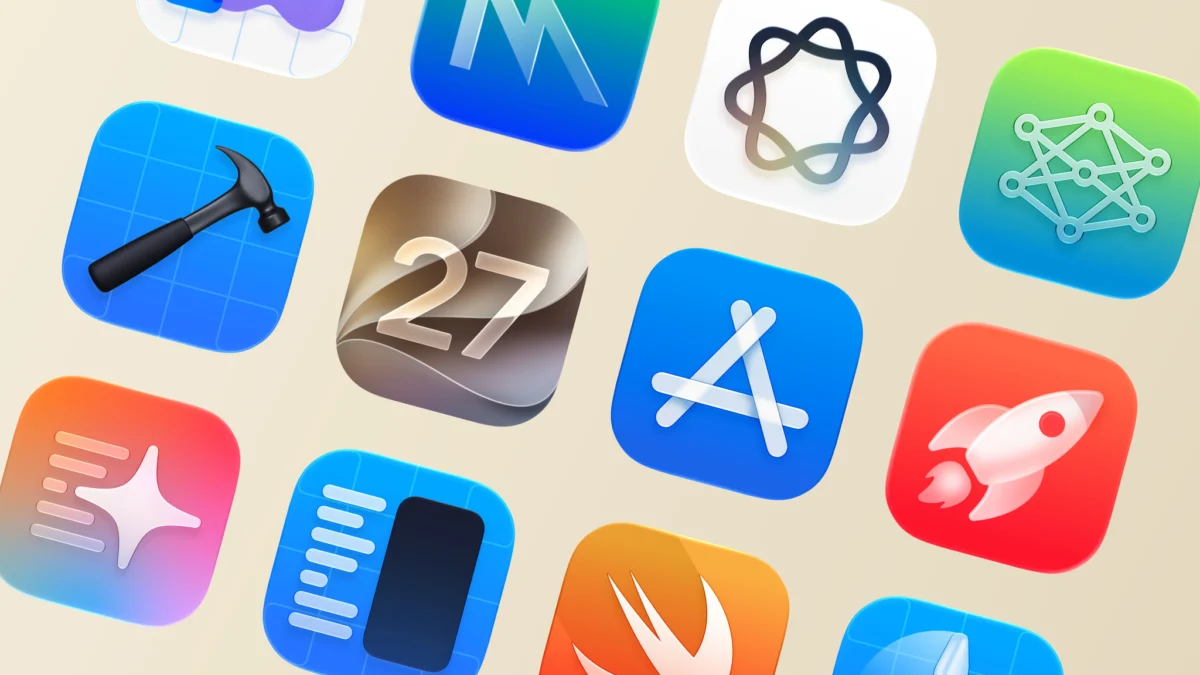
CUPERTINO, CALIFORNIA — Apple has officially opened the floodgates for developers worldwide to begin submitting applications and games optimized for its next-generation software lineup. In an announcement that marks a watershed moment for the tech giant’s ecosystem, the company confirmed that iOS 27, iPadOS 27, macOS 27, tvOS 27, visionOS 27, and watchOS 27 are racing toward their global public releases.
With this rollout, software creators are being handed the keys to Apple’s most advanced technological stack to date, featuring deep integrations with Apple Intelligence, the powerful new Foundation Models framework, sweeping interface design language updates, and groundbreaking App Store discovery features.
For developers, the call to action is immediate: download the Xcode 27 Release Candidate, test rigorously through TestFlight, and ready applications for submission. However, beneath the excitement of new software capabilities lies a monumental architectural shift—most notably, the definitive end of the Intel era for Mac computers.
Main Facts
The latest developer advisory issued by Apple outlines a comprehensive roadmap for the autumn 2026 software cycle. The core highlights of the announcement include:
- Next-Generation OS Readiness: Developers can now build, test, and submit apps leveraging the SDKs for iOS 27, iPadOS 27, macOS 27, tvOS 27, visionOS 27, and watchOS 27.
- Apple Intelligence & Foundation Models: The new software generation places heavy emphasis on advanced on-device artificial intelligence capabilities, allowing third-party developers to tap directly into Apple’s Foundation Models framework.
- The End of Intel: macOS 26 has been officially designated as the final operating system release to support Intel-based Mac computers and the Rosetta translation environment. macOS 27 will transition to a strictly Apple Silicon-only architecture.
- New Parental Controls (Time Allowances): App Store Connect has introduced mandatory age-rating and categorization updates to support new "Time Allowances," giving parents granular control over youth screen time across Entertainment, Games, and Social Media.
- App Store Presentation Overhaul: Fresh product page headers, search result assets, and an upcoming preview tool in App Store Connect will change how developers market their software.
- Baseline Deadlines: Effective April 2027, all software uploaded to App Store Connect must comply with upgraded baseline compliance metrics.
Chronology: The Path to the 2026 Release Cycle
To understand the weight of Apple’s September 2026 announcements, it is essential to trace the deliberate, multi-year technological migration that brought the company to this milestone.
Phase 1: The Silicon Transition Begins (June 2020)
At Worldwide Developers Conference (WWDC) 2020, Apple CEO Tim Cook announced the company’s transition away from Intel processors to its proprietary Apple Silicon chips. Promising industry-leading performance per watt and powerful custom architectures, Apple stated the transition would take approximately two years.
Phase 2: Introduction of Rosetta 2 and Universal Apps (Late 2020 – 2023)
To bridge the gap, Apple introduced Rosetta 2, an emulation translation layer allowing Intel-based apps to run seamlessly on the newly minted M1, M2, and subsequent chips. Throughout these years, developers were encouraged to build "Universal" binaries that supported both architectures.
Phase 3: The AI Revolution and Apple Intelligence (June 2024 – 2025)
At WWDC 2024, Apple unveiled Apple Intelligence, signaling a pivot toward generative artificial intelligence deeply integrated into the operating system. As hardware demands scaled up to support localized machine learning models, the performance gap between legacy Intel hardware and Apple Silicon widened into an unbridgeable chasm.
Phase 4: The Final Intel Stand – macOS 26 (Late 2025 – Mid 2026)
Apple designated macOS 26 as the final software iteration to support legacy Intel Mac configurations. Security patches and minor updates continued, but the writing was on the wall for the millions of x86-based Macs still lingering in enterprise and consumer environments.
Phase 5: The Xcode 27 Release Candidate & Global App Submissions (September 9, 2026)
Apple officially released the Xcode 27 Release Candidate. Developers were given immediate authorization to compile apps using the newest SDKs, while the company issued explicit instructions regarding the forthcoming, strictly Apple Silicon-only macOS 27.
Supporting Data & Technical Requirements
The transition to the 2026 operating system lineup demands that developers audit their codebase, user interfaces, and compliance protocols. Apple’s documentation highlights several vital areas requiring immediate technical attention.
1. The Death of Rosetta: Forcing the arm64 Hand
For developers maintaining legacy Intel builds, macOS 27 represents a hard stop. Because macOS 26 is the final release supporting Intel Mac computers and Rosetta, macOS 27 will operate exclusively on Apple Silicon (M-series processors).
To prepare, developers must modify their Xcode build settings:
- Set the build architecture strictly to
arm64only. - Recompile and thoroughly test the binary on Apple Silicon hardware.
- Resubmit the application to the App Store.
Data Insight: Dropping Intel support reduces package sizes, eliminates legacy dependencies, and allows software to natively leverage Apple Silicon features such as the Unified Memory Architecture, enhanced Neural Engine cores, and advanced media decoding blocks.
+-------------------------------------------------------------+
|               macOS Architecture Support Timeline           |
+-------------------------------------------------------------+
| macOS 20 through macOS 26 | Intel (x86_64) + Apple Silicon  |
+---------------------------+---------------------------------+
| macOS 27 and Beyond       | Apple Silicon (arm64) ONLY      |
+-------------------------------------------------------------+
2. Regulatory and Compliance: Time Allowances & Social Media Tagging
App Store compliance is seeing a significant adjustment regarding youth digital safety. Apple has introduced robust Time Allowances, offering parents flexible, granular mechanisms to monitor and regulate app usage across high-engagement categories:
- Entertainment
- Games
- Social Media
Developers whose applications incorporate social media features—such as integrated chat rooms, direct messaging, user feeds, or community forums—must explicitly declare these capabilities within App Store Connect. Failure to accurately tag software will result in review rejections or compliance penalties ahead of the April 2027 enforcement deadline.
3. Visual and Marketing Enhancements
First impressions dictate App Store conversion rates. Apple is rolling out redesigned product page headers and flexible search result assets. To assist developers, Apple has published updated design guidelines and UI templates covering:
- High-impact product page headers
- Optimized search result thumbnails
- High-resolution screenshots tailored for varied device form-factors
- Dynamic app previews and In-App Event banners
Furthermore, Apple is introducing a dedicated product page preview tool directly inside App Store Connect. This sandbox utility lets creators inspect exact renderings of their store listings prior to public distribution.
Official Responses and Developer Community Reactions
The developer community has responded to the September 2026 announcement with a mixture of pragmatic relief and urgent workflow adjustments.
Independent game developers and enterprise software houses alike have long anticipated the sunsetting of Intel architecture. Speaking anonymously, a lead engineer at a prominent macOS productivity app studio noted:
"Maintaining Rosetta compatibility has felt like dragging an anchor behind a speed boat for the last two years. Dropping Intel support with macOS 27 doesn’t just simplify our build pipeline; it frees us up to write code that assumes every Mac has a Neural Engine and unified memory bandwidth. It’s a bitter pill for those still holding onto 2019 MacBook Pros, but it’s a necessary leap for the platform."
On the consumer privacy and parental control front, digital wellness advocacy groups have lauded the introduction of Time Allowances. A spokesperson for a prominent family digital health coalition released a statement commending Apple for expanding parental oversight tools deeper into social and entertainment ecosystems:
"Giving families granular control over how children spend time across fragmented app categories addresses the modern reality of youth screen engagement. By baking these controls into the infrastructure of App Store Connect and the OS, Apple is setting a standard for platform-level digital responsibility."
Meanwhile, Apple’s developer relations representatives have emphasized that technical support channels, documentation portals, and TestFlight infrastructure are fully scaled up to handle the influx of Xcode 27 builds. Engineers are encouraged to utilize Apple Developer Forums to troubleshoot Foundation Models integrations and Apple Intelligence workflow queries.
Implications for the Tech Industry
The rollout of iOS 27, macOS 27, and their companion operating systems carries profound ripple effects across hardware manufacturing, software development, and consumer expectations.
1. Accelerated Hardware Refresh Cycles
The total abandonment of Intel architecture in macOS 27 places an expiration date on the utility of older Mac hardware. While machines running macOS 26 will continue to receive security updates for a standard lifecycle window, enterprise environments and creative professionals relying on cutting-edge software will be forced to complete their migration to Apple Silicon. This policy is expected to inject a fresh wave of enterprise hardware upgrades into Apple’s supply chain through late 2026 and 2027.
2. AI as a Baseline, Not an Add-On
By making the Foundation Models framework and Apple Intelligence core pillars of the 2026 software release, Apple is signaling that artificial intelligence is no longer an experimental feature. Developers who fail to integrate on-device intelligence risk creating applications that feel sluggish or disconnected from the native operating system experience. The competitive edge in the App Store will increasingly belong to apps that seamlessly anticipate user intent through local machine learning models.
3. Stricter App Store Governance
The April 2027 enforcement deadline for minimum upload requirements, combined with mandatory social media disclosures and Time Allowances compliance, proves that Apple’s regulatory posture is tightening. The App Store is evolving into a heavily curated, safety-centric marketplace where data transparency and family-friendly controls are non-negotiable prerequisites for publication.
Conclusion
Apple’s September 9, 2026 announcement marks the official beginning of a transformative era for its global ecosystem. As developers download the Xcode 27 Release Candidate and begin submitting apps infused with Apple Intelligence, the industry is bearing witness to a clean break from legacy computing.
With Intel officially relegated to the history books, macOS 27 stands as a monument to Apple’s unified hardware-software vision. For developers, the message is unequivocal: adapt to the silicon standard, integrate advanced machine learning frameworks, ensure strict compliance with modern digital safety standards, and prepare for a future where intelligent, native performance reigns supreme.



