










By The Tech & Marketing Desk
Published: March 2026
Main Facts: The Shift from Search to Synthesis
For decades, the foundational mandate of product marketing has remained remarkably consistent: defining how a product should be described, establishing the exact category in which it competes, and highlighting the core differentiators that matter most to discerning buyers. Traditionally, these strategic decisions were translated into structured playbooks, sales enablement decks, website copy, and multi-channel advertising campaigns.
Today, however, that playbook faces a massive paradigm shift. A new, autonomous channel has emerged—one that interprets, aggregates, and rebroadcasts corporate positioning at an unprecedented scale, completely bypassing traditional brand gatekeepers: AI answer engines.
When modern B2B and B2C buyers research software or hardware, they rarely rely solely on traditional search engine result pages (SERPs) littered with blue links and sponsored ads. Instead, they turn to generative AI assistants and answer engines. These systems synthesize comprehensive, confident summaries drawn from hundreds of disparate sources across the web—ranging from third-party review platforms and forum discussions to fierce competitor content and independent industry analyst coverage.
If a company’s owned content is absent from this dynamic source mix, its market positioning is effectively being written by everyone else. Left unchecked, answer engines can inadvertently misrepresent a product, rely on stale data, or frame a brand unfavorably against competitors.
Recognizing this vulnerability, leading organizations are aggressively adopting Answer Engine Optimization (AEO). High-performing product marketing teams are shifting their focus to three core pillars:

- Actively monitoring what generative AI models say about their products in real time.
- Creating authoritative owned content specifically engineered to shape those AI-generated summaries.
- Tracking attribution to prove how improved AI positioning directly impacts pipeline velocity, deal quality, and overall revenue.
Recent industry data underscores the urgency of this transition. According to comprehensive benchmark research from HubSpot, brands that successfully master AEO strategies generate 2.6 times more leads than those relying solely on legacy SEO and outbound tactics.
Chronology: How AI Rewrote the Rules of Discovery
To understand why AEO has become an existential priority for product marketers, it is helpful to look at how the digital discovery landscape has evolved over the past decade:
- Pre-2023 (The Era of Keyword SEO): Product discovery was dominated by search engines indexing keywords and backlinks. Product marketers collaborated closely with SEO teams to ensure landing pages ranked for high-intent search queries. Positioning was largely controlled via owned web properties, sponsored ads, and targeted content marketing.
- 2023–2024 (The Generative AI Boom): The public launch of advanced large language models (LLMs) fundamentally altered user behavior. Buyers stopped hunting through multiple links and began asking conversational, complex questions directly to AI chatbots. While digital marketers scrambled to understand "Search Generative Experience" (SGE), many treated it as an incremental SEO update rather than an entirely new marketing channel.
- 2025 (The Crisis of Positioning Drift): Companies began noticing a troubling disconnect. Even when their organic search rankings remained stable, inbound leads frequently possessed inaccurate expectations about product capabilities, pricing models, and competitive differentiators. Investigations revealed that AI answer engines were pulling outdated positioning from old forum threads and rival comparison sites, completely ignoring corporate homepages.
- 2026 (The Rise of Dedicated AEO Platforms): The realization that passive observation was failing led to the development of dedicated Answer Engine Optimization toolsets—pioneered by platforms like HubSpot. Product marketing officially expanded from managing human-facing narratives to programming machine-readable brand positioning, closing the loop between AI visibility and CRM revenue metrics.
Supporting Data & Market Metrics
The transition from human-driven search to machine-synthesized answers is backed by compelling quantitative data regarding buyer behavior and marketing ROI:
- 2.6x Lead Generation Lift: HubSpot’s research indicates that companies actively utilizing AEO tools and structured content strategies capture more than double the lead volume compared to non-optimized competitors.
- The "Black Box" Problem: Over 70% of enterprise buyers now begin their product evaluation phases using generative AI summaries rather than browsing traditional vendor comparison directories.
- The Cost of Misrepresentation: Studies on sales cycle friction show that prospects arriving with AI-distorted product expectations experience a 35% higher churn rate during onboarding and require significantly more sales education, ultimately dragging down overall pipeline velocity.
- Content Parsability Gap: More than 60% of traditional marketing web pages fail to rank or get cited in AI responses because they rely heavily on vague, marketing-heavy language rather than structured, factual, and easily extractable assertions.
Official Responses & Industry Perspectives
As AEO transitions from a speculative theory into a core operational discipline, marketing leaders and industry technologists are weighing in on what it takes to survive the AI revolution.
"Product marketing’s core job has always been positioning—deciding how a product should be described and which differentiators matter most," notes a leading product strategist at HubSpot. "But now there’s a channel that interprets and rebroadcasts your positioning at scale without asking permission. If you aren’t feeding the answer engines clean, structured data, your competitors will write your market narrative for you."
Industry analysts emphasize that AEO is not merely an extension of technical SEO, but a fundamentally distinct discipline requiring collaboration between product marketing, content teams, and revenue operations.

“Traditional marketing taught us to write for human emotion and persuasion,” explains a veteran B2B marketing VP. “AEO requires a delicate balance. You must still capture the human buyer’s interest, but your underlying content architecture must be clean, structured, and logical enough for an LLM to parse, synthesize, and cite accurately. If the AI cannot extract your core claims, it simply skips you for someone who makes it easier.”
Implications: Taking Back Control of the Brand Narrative
The rise of answer engines carries profound implications for the future of product marketing, touching everything from daily workflows to executive revenue reporting.
1. Moving Beyond Passive Monitoring
It is easy to spot product positioning drift in traditional channels—marketers can read competitor ads, audit their own landing pages, and listen in on recorded sales calls. Monitoring AI answers, however, requires specialized tooling.
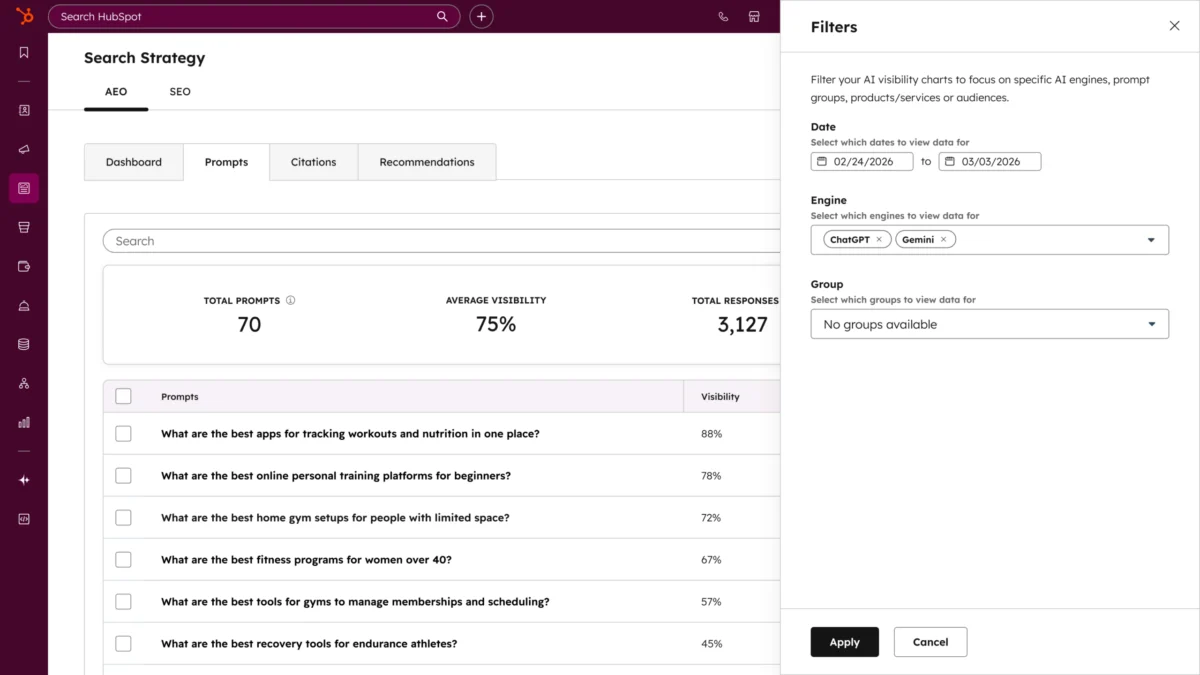
Solutions like HubSpot’s Brand Visibility Dashboard allow marketing teams to track specific prompts that trigger brand mentions, analyze the surrounding context of citations, and identify gaps where the AI narrative diverges from the company’s intended market positioning. Without such visibility, brands fly blind, unaware of how they are being pitched to high-value prospects behind closed AI doors.
2. Engineering Content for Machine Consumption
To influence AI summaries, product marketers must overhaul how they produce content. Answer engines do not reward fluffy, adjective-laden copy. They crave authoritative, structured, and factual material that clearly articulates what a product does, who it is built for, and how it stacks up against alternatives.
Tools like HubSpot’s Recommendations tool and specialized content agents are stepping in to bridge this gap. By analyzing citation data, these tools provide actionable content guidance, helping teams build customized, machine-readable web pages and documentation that put official positioning front and center.

3. Connecting Visibility to CRM Revenue
Perhaps the greatest challenge for product marketers has been proving the ROI of brand positioning to skeptical executive boards. Historically, product marketing’s contribution to pipeline quality was notoriously difficult to measure, making high-level branding budgets vulnerable to budget cuts.
AEO changes this dynamic by bridging the gap between brand visibility and hard revenue data. By integrating brand visibility metrics directly into CRM platforms (such as HubSpot’s ecosystem), marketers can track pipeline velocity, close rates, and deal quality specifically for buyers originating from AI-referred channels.
When organizations can definitively prove that accurate AI positioning leads to faster-closing deals and lower customer churn, AEO transforms from an experimental visibility metric into an indispensable commercial growth engine.
Conclusion
For product marketers, the rules of engagement have permanently evolved. Positioning has always been shaped, to some degree, by external sources outside of direct control. What has changed today is the blistering scale and speed at which those external sources are synthesized into the very first impression a buyer receives.
By actively monitoring AI outputs, authoring machine-optimized content, and tying visibility metrics directly to CRM pipeline data, forward-thinking product marketing teams can finally seize control of their brand positioning—meeting modern customers precisely where their digital journeys begin.



