











In a landscape where the convergence of physical infrastructure and digital intelligence defines the modern competitive advantage, Microsoft has secured a pivotal recognition. The company has been named a Leader in the 2026 Gartner® Magic Quadrant™ for Global Industrial AIoT Platforms. This milestone validates Microsoft’s strategic pivot toward "learning operations"—an architecture where industrial systems do not merely collect data, but evolve through a continuous cycle of sensing, reasoning, and autonomous action.
As industrial organizations grapple with unprecedented labor shortages, supply chain volatility, and the relentless demand for operational resilience, Microsoft’s approach—centered on an adaptive cloud-to-edge framework—provides the architectural backbone necessary to transform raw telemetry into durable business outcomes.
The Strategic Shift: From Connectivity to Cognition
The first generation of Industrial Internet of Things (IIoT) adoption was defined by connectivity. Manufacturers sought to bridge the "air gap" between operational technology (OT) and information technology (IT). While visibility was a significant achievement, it was inherently reactive.
Microsoft’s current vision moves beyond simple connectivity. The company posits that the future of industry lies in systems that learn. This shift addresses the core challenges facing modern enterprises: the need to scale expertise, maintain safety, and ensure sustainability in an increasingly complex global market.
The Role of Industrial and Physical AI
At the heart of Microsoft’s recognition is the integration of Industrial AI and Physical AI. While Industrial AI focuses on predictive analytics and pattern recognition within data sets, Physical AI bridges the gap to the real world. It allows systems to interact with the environment, executing autonomous or human-assisted tasks that improve in accuracy as they gather more "real-world" experience. This creates a business learning loop where every cycle of measurement and action compounds, making the organization fundamentally smarter over time.
Chronology: The Journey to a Unified Industrial Platform
The recognition of Microsoft as a Leader in the 2026 Gartner Magic Quadrant is the culmination of a multi-year effort to harmonize disjointed industrial workflows.
- 2023–2024: Laying the Cloud-to-Edge Foundation: Microsoft aggressively invested in Azure Arc and Azure IoT Operations, establishing a management plane that treated industrial assets—from PLC-controlled assembly lines to remote sensors—as first-class cloud citizens.
- 2025: Data Democratization via Fabric: The integration of Microsoft Fabric into the industrial stack allowed for a unified data plane. By breaking down data silos, Microsoft enabled OT and IT teams to operate from a single, semantically aligned source of truth.
- 2026: The Rise of Agentic Operations: The current year has been marked by the shift toward agentic AI. Rather than waiting for human intervention, AI agents now utilize frameworks like Fabric IQ to monitor conditions and proactively manage operational bottlenecks, solidifying Microsoft’s position as a market leader.
Supporting Data and Technical Architecture
Microsoft’s industrial strategy is built upon a layered stack designed to ensure security, scalability, and interoperability.
Unified Platform for Industrial Needs
The platform extends Azure’s capabilities from the core cloud to the most constrained edge environments. Key components include:
- Azure IoT Operations: Provides the necessary middleware for edge-native data processing.
- Microsoft Foundry: Serves as the AI development hub, allowing organizations to tailor models to their specific operational context.
Security as a Competitive Advantage
In an era of rising cyber threats against critical infrastructure, Microsoft has leaned heavily into a Zero Trust architecture. By managing assets through Azure Resource Manager, organizations can enforce consistent security policies, manage identities for millions of devices, and perform firmware risk monitoring at scale. This "secure-by-design" approach is essential for large-scale deployments that span across geographically dispersed facilities.
Governing the Industrial Data Foundation
Data is only as valuable as its context. Microsoft’s platform excels at transforming raw, noisy telemetry into "structured, semantically aligned signals." By supporting industry standards and open formats, the platform facilitates the creation of a "digital thread," allowing information to flow seamlessly between digital twins, analytics engines, and autonomous agents.
Implications for the Modern Industrial Enterprise
The designation of Microsoft as a Leader has profound implications for how industrial firms will approach digital transformation in the coming years.
The "Learning Loop" Advantage
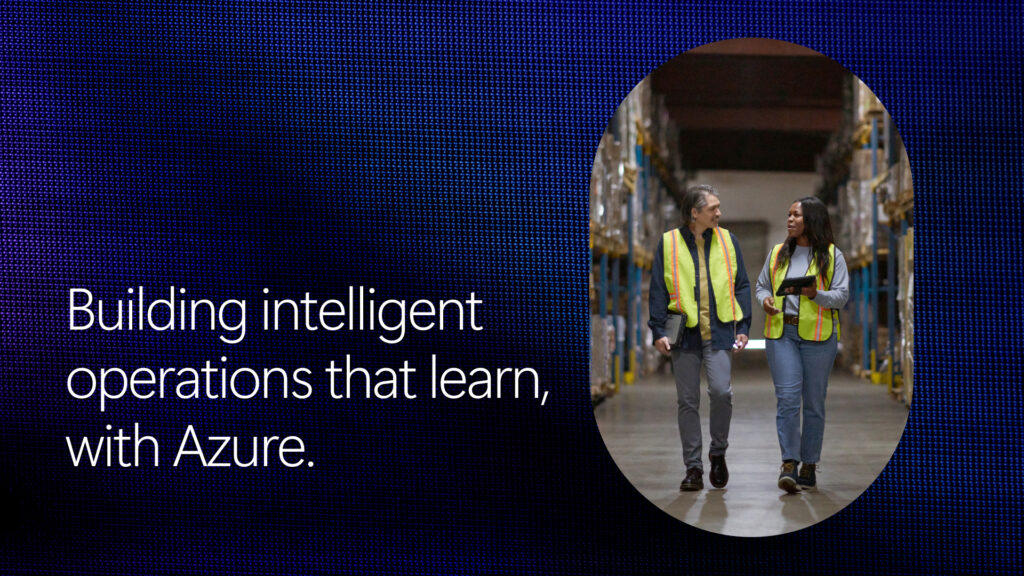
The most significant shift is the transition from static automation to dynamic learning. Organizations are no longer building systems to perform a single, pre-programmed task. Instead, they are building platforms that observe operational data, identify anomalies, and recommend—or execute—process improvements. As these systems scale, the "institutional knowledge" of the company is codified into the platform, ensuring that the business remains competitive even as staff turnover occurs or market conditions fluctuate.
The Human-Agent Collaboration
Microsoft’s emphasis on "agentic operations" does not imply the removal of the human element. Rather, it signifies a move toward intelligent augmentation. In this model, agents handle the mundane, high-frequency tasks of monitoring and anomaly detection, allowing human subject matter experts to focus on strategic decision-making and high-level optimization. Through integrations with tools like Microsoft Teams, these agents become collaborative partners, providing insights directly to the people who need them most.
The Frontier Company Initiative
Recognizing that technology alone is insufficient, Microsoft launched the Frontier Company initiative. This program combines deep industry expertise with enterprise-grade AI engineering. The goal is to help companies move beyond the "pilot purgatory" of AI experiments, enabling them to design and deploy systems that translate operational expertise into measurable, bottom-line business impact.
Official Perspective: Shaping the Future of Operations
Microsoft’s leadership maintains that the future of industry is not merely about "connecting things." It is about creating a feedback-driven ecosystem where every process makes the next one better.
By grounding AI in the operational reality of the factory floor, Microsoft is enabling a new class of "intelligent operations." This approach allows businesses to maintain control over their intellectual property and operational processes while benefiting from the massive, cloud-scale computing power of the Azure ecosystem.
The company’s robust partner ecosystem remains a cornerstone of this strategy. By working with local system integrators and specialized industrial partners, Microsoft ensures that the global vision of its platform is translated into tailored, site-specific solutions.
Conclusion: A New Standard for Industrial AIoT
The 2026 Gartner Magic Quadrant for Global Industrial AIoT Platforms arrives at a time of deep industrial transition. As organizations move away from legacy silos and toward integrated, AI-driven environments, the criteria for success have shifted. It is no longer enough to offer a tool; vendors must offer a platform that learns, adapts, and grows with the business.
Microsoft’s position as a Leader reflects its ability to deliver this vision at scale. By connecting the cloud and the edge, grounding data in organizational context, and empowering teams through agentic AI, Microsoft is providing the infrastructure for the next generation of industrial operations—one that is smarter, safer, and inherently more resilient.
For leaders in manufacturing, energy, and logistics, the path forward is clear: the integration of physical intelligence into the digital workspace is no longer an optional upgrade—it is the prerequisite for survival in an increasingly volatile, automated world.
Disclaimer: Gartner, Magic Quadrant for Global Industrial AIoT Platforms, 15 September 2026, Scot Kim Et Al. Gartner does not endorse any company, vendor, product or service depicted in its publications, and does not advise technology users to select only those vendors with the highest ratings or other designation. Gartner publications consist of the opinions of Gartner’s business and technology insights organization and should not be construed as statements of fact. Gartner disclaims all warranties, expressed or implied, with respect to this publication, including any warranties of merchantability or fitness for a particular purpose.



