










The landscape of web development is undergoing a period of intense recalibration. As we navigate the latter half of 2026, the industry is balancing the convenience of cross-platform abstractions with a renewed hunger for native performance, better type safety, and more robust architectural patterns. From Shopify’s strategic retreat from React Native to the rise of atomic CSS and the ongoing debates surrounding open-source sustainability, the technical choices made today are shaping the digital infrastructure of tomorrow.
Main Facts: The Shift in Web and Mobile Architecture
This week’s industry pulse highlights a critical pivot in how we build, style, and maintain software. Three primary developments dominate the current discourse:
- Shopify’s Pivot to Native: In a move that signals a potential paradigm shift for large-scale mobile engineering, Shopify has announced it is transitioning its mobile applications from React Native back to platform-native stacks (Swift and Kotlin).
- Modernizing Type Safety: As web APIs evolve at breakneck speed, TypeScript’s standard library definitions have struggled to keep pace. The release of
modern-web-typesprovides a critical stopgap for developers working with cutting-edge browser features. - The Atomic Styling Revolution: Meta’s StyleX is gaining significant traction, challenging established CSS-in-JS libraries by shifting the heavy lifting of style generation from runtime to build-time.
These developments are not isolated; they represent a collective effort to optimize for performance, developer velocity, and long-term maintainability in an era increasingly influenced by AI-assisted coding.
Chronology: A Week of Architectural Re-evaluation
The events of the past few days have highlighted the friction between abstraction and performance:
- Early Week: Discussions ignited regarding the limitations of TypeScript’s DOM types. Developers attempting to use modern, single-engine APIs—such as
startViewTransitionorfetchLater—found themselves blocked by restrictive type definitions. The release of themodern-web-typeslibrary by Google’s Philip Walton provided an immediate solution, allowing developers to safely experiment with new browser capabilities. - Mid-Week: Shopify Engineering released a landmark post detailing their "Back to Native" initiative. The decision marks a significant departure from the cross-platform enthusiasm of the early 2020s. The team argues that the emergence of sophisticated coding agents has mitigated the primary argument for React Native—the cost of writing code twice.
- Late Week: Deep-dive analyses into StyleX and the design space of
async/awaitacross languages provided the technical underpinnings for these shifts. Industry leaders began to weigh in on the "open-source funding gap," reigniting a conversation on how we can better support the maintainers who build the foundations of our web applications.
Supporting Data: Why the Industry is Changing
The Case for Native Over Cross-Platform
Shopify’s decision is backed by a shift in economic and technical realities. For years, the "write once, run anywhere" philosophy was the gold standard for mobile development. However, the rise of AI coding agents has effectively halved the "cost" of platform-specific development. By removing the barrier of manual duplication, the inherent performance, stability, and UI consistency advantages of Swift and Kotlin become the more logical choice for high-stakes enterprise apps.
The Complexity of async/await
Gavin Gray’s exploration of the design space of async/await highlights why mental models often fail developers. While JavaScript, Rust, Python, and Swift share the same terminology, their implementations differ wildly in how they handle execution contexts, error bubbling, and state management. The fact that a simple function can produce different outcomes across languages serves as a cautionary tale for those moving between ecosystems.

The Rise of Atomic CSS
StyleX is positioned as the next evolution of styling. By transforming JavaScript objects into atomic CSS at build time, it eliminates the runtime overhead associated with traditional CSS-in-JS solutions. This is particularly vital for performance-conscious web apps, where every millisecond of main-thread execution counts.
Official Responses and Expert Perspectives
The TypeScript DOM Dilemma
Philip Walton’s work on modern-web-types addresses a long-standing grievance: TypeScript’s conservative approach to DOM APIs. By only including APIs that ship in multiple engines, the TypeScript team prioritizes stability over innovation. Walton’s solution allows developers to opt into a "bleeding edge" set of definitions, effectively unblocking progress for teams ready to adopt new standards like fetchLater today.
The Sustainability Crisis
Laurie Voss, former npm executive, has sparked a firestorm of debate with his proposal that registries could be used to "force" companies to pay for open source. The consensus among maintainers is clear: the current voluntary donation model is failing. Voss argues that if package registries were to implement mandatory funding mechanisms, the collective stability of the web ecosystem would improve exponentially.
Implications: What This Means for Developers
1. The Death of the "One-Size-Fits-All" Frontend
We are entering an era of "architectural pragmatism." Developers are no longer choosing tools based on the promise of universal abstractions. Instead, they are evaluating technologies based on their specific utility in a world where AI can bridge the gap between platforms. If an agent can write your Kotlin view, the "React Native tax" suddenly looks like a liability rather than an asset.
2. The Return to Build-Time Optimizations
The popularity of StyleX signifies a broader trend: moving logic out of the browser and into the build step. Whether it is atomic CSS generation or static site generation, the industry is collectively moving toward "zero-runtime" architectures. This ensures that the end-user experience remains snappy, regardless of the complexity of the underlying application logic.
3. A Call to Action for Maintainers and Consumers
The discussion around funding open source suggests that the industry is approaching a tipping point. If the "registry as a lever" model gains traction, we could see a fundamental change in how npm, PyPI, and Crates.io operate. Companies may soon find that their dependencies are no longer "free," but rather a line item in their operational budget—a shift that would likely professionalize and stabilize the most critical parts of our dependency trees.
4. Improving Code Review Culture
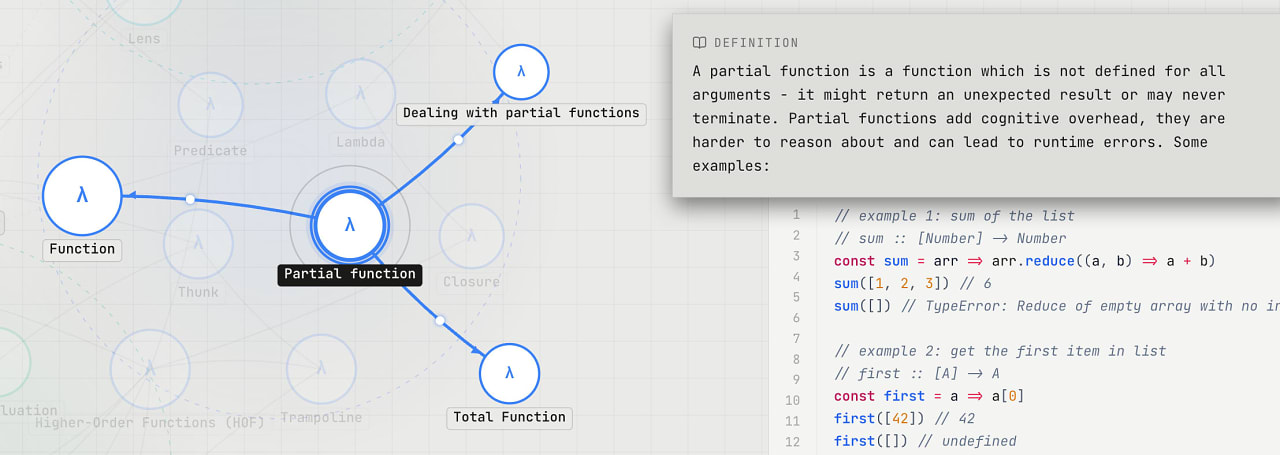
Evan Hahn’s observation that programmers dislike reduce highlights an often-ignored aspect of software engineering: readability. While reduce is a powerful functional tool, its complexity often obscures intent. As teams grow, the preference for map and filter suggests that developers are prioritizing "legible" code over "clever" code. This trend toward simplicity is likely to continue as codebases grow in size and complexity.
Conclusion: The Road Ahead
The web is not dying; it is maturing. The transition from the "experimental phase" of web-based mobile apps to a more disciplined, native-first approach indicates that we have reached a level of scale where performance and predictability are paramount.
Simultaneously, the focus on better type support and build-time styling shows that developers are demanding more from their tooling. We are no longer satisfied with "good enough." We want tools that handle the heavy lifting for us, whether that’s by generating atomic CSS or providing accurate type definitions for the latest browser APIs.
As we look toward the remainder of 2026, the successful developer will be one who stays informed, remains skeptical of "one-size-fits-all" solutions, and contributes to the ecosystem—both through code and through the financial support of the tools they rely upon. The tools we choose today are the legacy we leave for the next generation of web architects. Choose wisely.



