





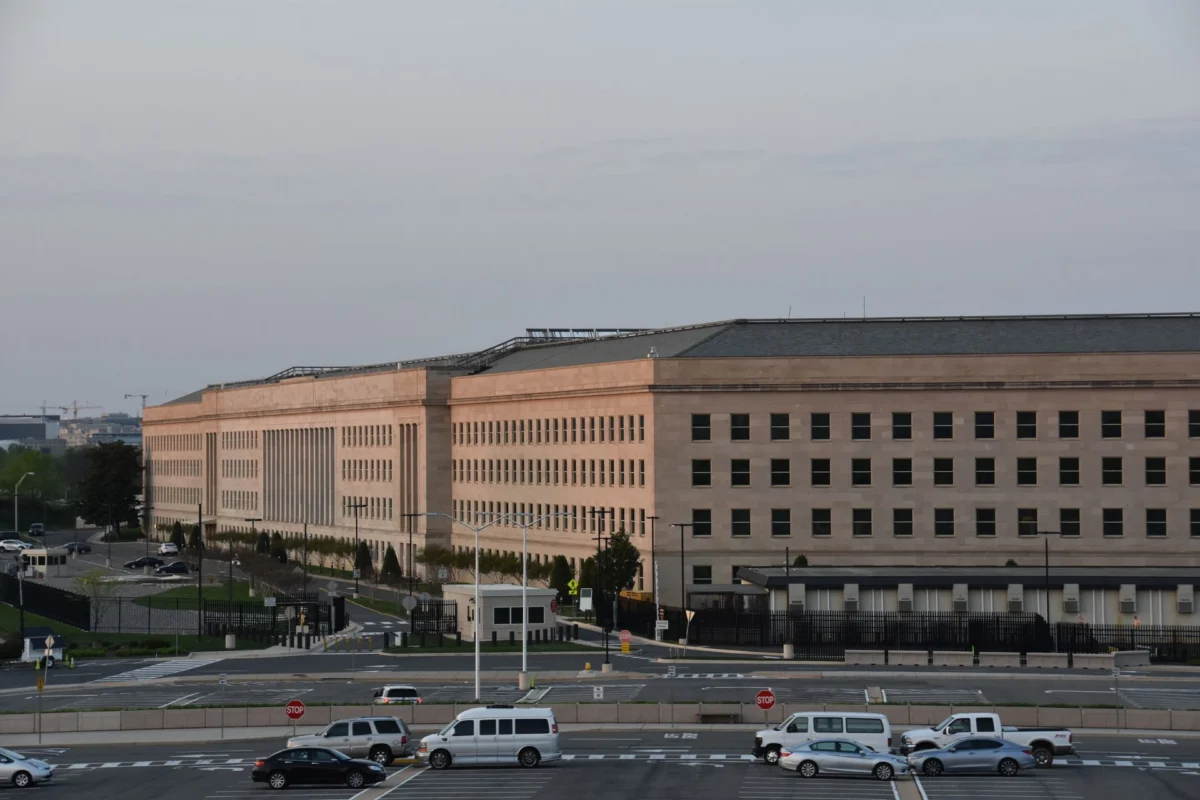
The United States Department of Defense has quietly inaugurated a new, highly classified entity designed to aggressively counter foreign technological advancements that threaten American strategic superiority. Known as the "Technology Support Office" (TSO), this clandestine arm operates in the shadows of the Pentagon, tasked with identifying, tracking, and—when necessary—actively sabotaging foreign technology programs.
While the name might suggest an internal IT support desk or a bureaucratic troubleshooting unit, the reality is far more kinetic. According to reports, the TSO is an aggressive intelligence-driven apparatus designed to ensure that the U.S. maintains its edge in an era defined by rapid technological disruption, artificial intelligence, and advanced robotics.
The Genesis of the TSO: Merging Classified Capabilities
The TSO officially came into existence in April, born from the consolidation of two distinct classified Pentagon intelligence programs that had been operational since 2023. By merging these efforts, the Department of Defense aimed to create a more streamlined, centralized, and lethal approach to tech-sabotage.
The initiative is largely the brainchild of Deputy Defense Secretary Steve Feinberg, a veteran of the Trump administration’s Intelligence Advisory Board, and Tom Rakusan, a senior advisor with a deep background in the CIA’s clandestine service. Their combined expertise has reportedly shaped the TSO into an entity that does not merely monitor foreign threats but seeks to dismantle them using the same "gray zone" tactics—cyber warfare, supply chain infiltration, and disinformation—that foreign adversaries have long used against the United States.
A Chronology of Escalating Tech Warfare
To understand the necessity, as perceived by the Pentagon, of an office like the TSO, one must look at the rapid evolution of global tech-sabotage over the last half-decade:
- 2020–2022 (The Foundation): The rise of sophisticated state-sponsored cyber espionage campaigns targeting Western infrastructure highlighted a vulnerability: the U.S. was frequently in a reactive, defensive posture.
- 2023 (The Pilot Phase): The two classified programs that would eventually form the TSO were launched. These programs were tasked with testing the feasibility of "non-attributable" interference in foreign research and development pipelines.
- April 2024 (The Consolidation): The TSO was formally established as a singular office to centralize procurement, intelligence, and operational deployment.
- Late 2024–Present: The TSO has reportedly begun acting as a clearinghouse for cyber-sabotage tools, connecting specialized engineering teams and intelligence officers to carry out operations against specific foreign programs in sectors like AI and autonomous weaponry.
Strategic Mandate: Why Now?
The rationale behind the TSO is rooted in the belief that the "bar for catastrophic disruption" has plummeted. In a world where a small drone swarm or a targeted AI-driven cyberattack can cripple critical infrastructure, the U.S. can no longer afford to play by traditional rules of engagement.
Proponents of the office argue that the TSO represents a "refocusing" of government resources that was long overdue. "We are no longer in a world where tech development happens in a vacuum," noted one former Pentagon official. "When a foreign adversary invests billions into AI-driven offensive capabilities, it is a matter of national security to ensure those capabilities never reach a state of deployment."
The TSO’s primary targets include:
- Artificial Intelligence: Disrupting neural networks and training data sets used by adversarial military research labs.
- Robotics and Drones: Sabotaging supply chains to introduce "latent flaws" or "kill switches" into critical hardware components.
- Communication Infrastructure: Intercepting and corrupting data flows to render advanced foreign command-and-control systems unreliable.
The Operational Model: A Pipeline, Not a Hammer
It is critical to distinguish the TSO from an operational combat unit. According to internal sources, the TSO does not launch missions itself. Instead, it serves as a central "pipeline." It procures proprietary tools, pools intelligence data from across the intelligence community, and directs teams of special operators and clandestine engineers to execute the sabotage.
By acting as a central hub, the TSO avoids the "silo" problem that has historically plagued the Pentagon, where different departments were unaware of—or actively working against—each other’s efforts. However, this centralization has become the primary point of contention for those concerned about the lack of checks and balances.
The Oversight Dilemma: A Double-Edged Sword
The secrecy surrounding the TSO is both its greatest asset and its most significant liability. Because its operations are highly classified, the office is shielded from the scrutiny of the general public and, to a large extent, the broader legislative oversight process.
Critics within the Pentagon have voiced significant concerns about the lack of "approval structures." One official questioned, "What are the rules of engagement? Who is accountable if an operation inadvertently triggers an escalation or causes collateral damage in a third-party country?"
There is a palpable fear that the TSO could become a rogue element within the defense apparatus. As one current national security officer admitted, "Because it’s a classified space, there are even more opportunities to hide, misdirect, and avoid the uncomfortable questions that come with ethical dilemmas."
Historical Parallels and Institutional Overreach
The history of American intelligence is pockmarked with examples of agencies overstepping their bounds in the name of national security. The TSO’s critics point to the "Black Chamber" of the 1920s, which coerced telegraph companies to surrender private communications, and the infamous COINTELPRO operations, which involved domestic surveillance and political manipulation.
The concern is that the TSO, if left unchecked, could follow this historical trajectory. The transition from "countering foreign threats" to "maintaining technological hegemony" is a slippery slope. If the office begins to view any significant foreign technological advancement as a "threat," the scale of its interventions could grow beyond what the American public or Congress would find acceptable.
Official Pentagon Response: Denial and Deflection
When pressed for comment, the Department of Defense has taken an aggressive stance. Deputy Pentagon Press Secretary Jacob Bliss issued a sharp rebuttal to reports concerning the office’s existence and mandate.

"This query appears to be built on information that is simply not true," Bliss stated. "Whoever is feeding you these claims are either badly misinformed or deliberately leading you astray to peddle their fantasies."
This denial is typical of "black programs"—programs that the government officially refuses to acknowledge for security reasons. However, the intensity of the denial has not quelled the speculation. In the intelligence community, a flat denial is often viewed as a confirmation of the sensitivity—and the reality—of the project in question.
Implications for Global Security
The existence of the TSO signals a fundamental shift in how the United States views its role in the global tech race. We are witnessing the weaponization of the research and development cycle. If the U.S. is indeed actively sabotaging foreign programs, it is safe to assume that other nations—such as China, Russia, and Iran—are doing the same.
The potential for a "shadow war" of technological sabotage is immense. If a nation suspects their AI program was sabotaged by a U.S. entity, the retaliation may not be limited to the cyber realm; it could manifest as kinetic conflict, diplomatic fallout, or economic warfare.
Conclusion: Balancing Security and Values
As the TSO moves forward, it faces a profound tension between its mandate to protect U.S. superiority and the necessity of operating within the bounds of democratic accountability. The office represents the cutting edge of 21st-century warfare, but it also reflects the darker, more opaque side of global power dynamics.
Without robust oversight, the TSO risks becoming the very thing it seeks to defeat: an opaque, unaccountable force that operates without regard for international norms. The question for the coming years is not whether the TSO will be effective, but whether it can remain effective without undermining the democratic values it was ostensibly created to protect. For now, the "Technology Support Office" remains a whisper in the halls of the Pentagon—a powerful, invisible hand shaping the future of global technology from behind a veil of total secrecy.