











SAN FRANCISCO — In the rapidly evolving landscape of enterprise technology, the definition of artificial intelligence is undergoing a fundamental shift. For the past several years, organizations experimented with generative AI primarily as a tool for drafting emails, summarizing text, or generating surface-level answers. Today, however, enterprise leaders face a higher threshold: probabilistic models alone are no longer enough when millions of dollars in revenue, complex supply chains, and sensitive customer data hang in the balance.
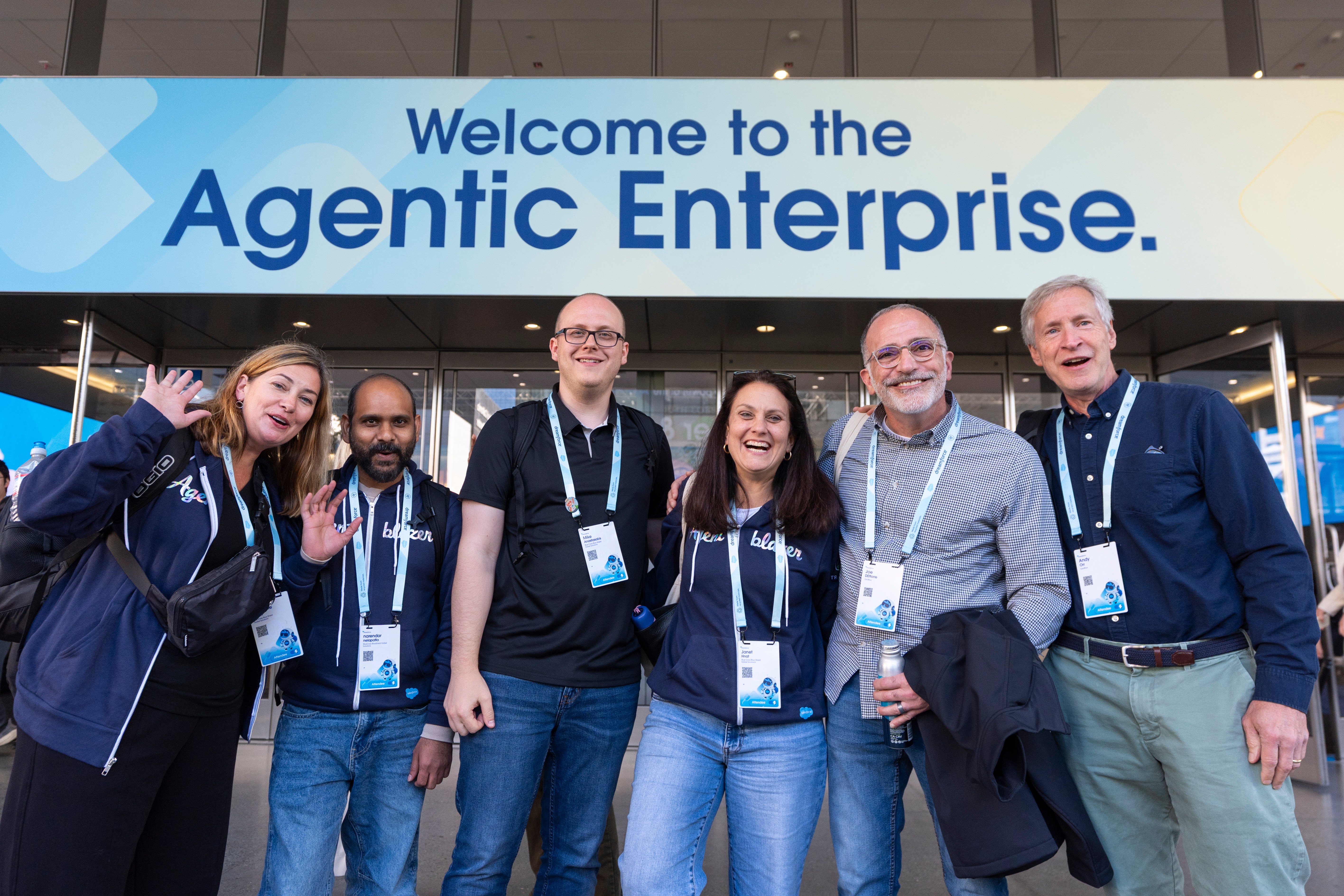
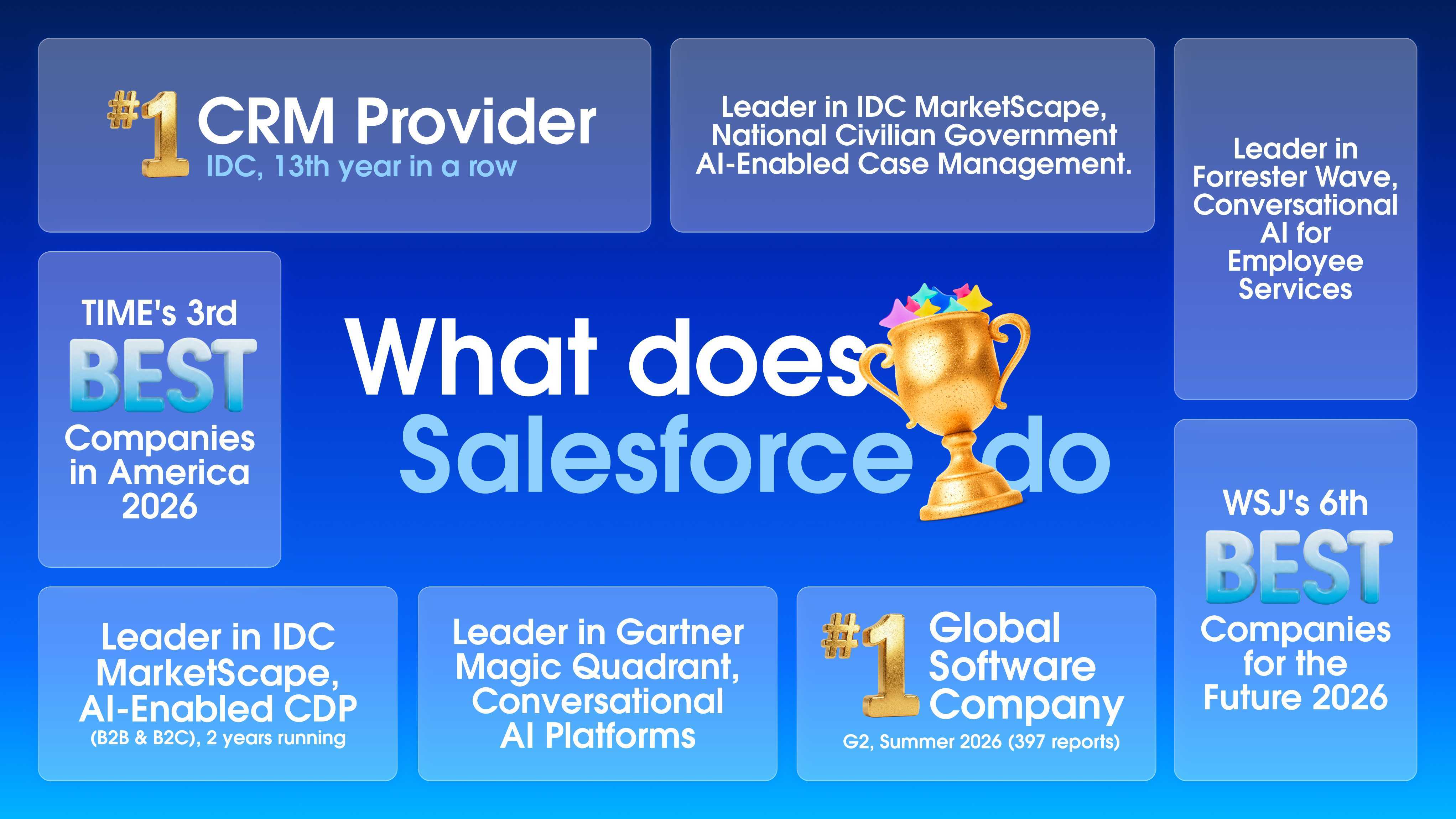
Enter the "Agentic Enterprise"—a paradigm where autonomous AI agents do not merely converse, but actively take audited, safe, and context-aware actions alongside human employees. At the forefront of this movement is Salesforce, which continues to cement its status as the world’s leading AI customer relationship management (CRM) platform. By unifying 27 years of proprietary business logic, rigorous governance, and trusted data, Salesforce is equipping companies of all sizes to navigate a future where human strategy merges seamlessly with machine execution.
Main Facts: The Architecture of the Agentic Enterprise
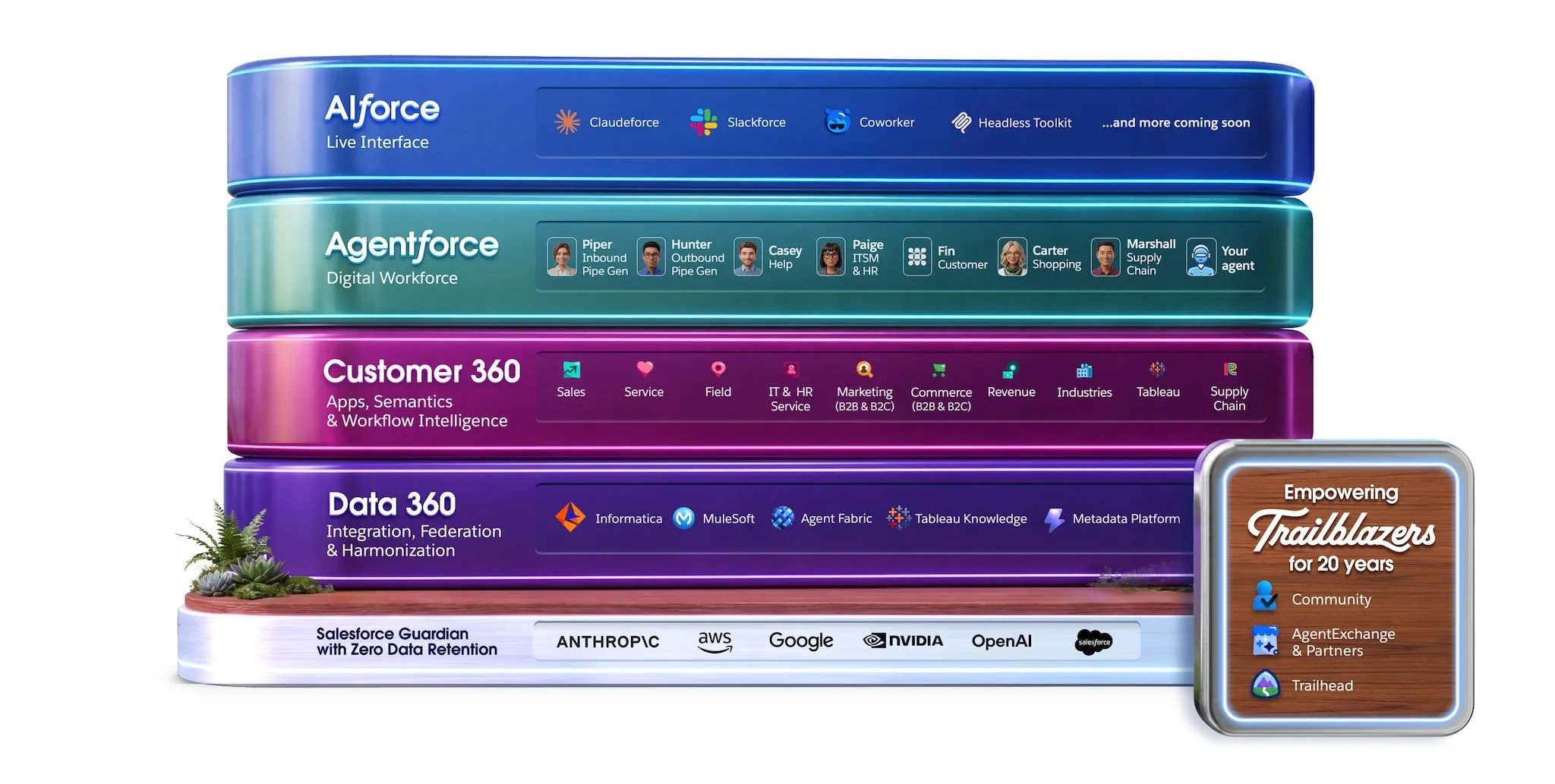
At its core, Salesforce provides a single, shared view of customer and business data for every employee, AI agent, and connected platform. This foundation bridges the gap between deterministic enterprise systems and probabilistic AI models.
While external AI models can suggest a hypothetical price for a product, they typically lack awareness of a specific company’s internal discount policies, profit margins, approval chains, and historical decisions. Salesforce solves this vulnerability by anchoring AI directly into the workflows, rules, and historical data systems that businesses already rely on.
Key Pillars of the Ecosystem
- AIforce: Salesforce’s live interface layer that brings business data and workflows directly to any AI interface via Model Context Protocol (MCP) servers, APIs, and Command Line Interface (CLI) tools, liberating enterprise software from static, single-screen navigation.
- Claudeforce: A strategic partnership between Salesforce and Anthropic that fuses Claude—widely recognized as a leading AI reasoning model—with Salesforce CRM data, governance, and workflows, ensuring data is never retained or used to train external models.
- Slack: The AI-powered enterprise workspace where humans and autonomous agents collaborate, utilizing Slackbot to search contextual history, connect with Google Drive and OneDrive, and automate daily tasks.
- Agentforce: A comprehensive platform that allows organizations to build, test, deploy, and govern autonomous AI agents capable of operating 24/7 within pre-set corporate guardrails.
According to Salesforce’s State of Agentic AI in the Enterprise report, organizations successfully deploying these AI agents achieve a return on investment (ROI) in approximately eight months, alongside a 53% employee adoption rate and a 29% reduction in operational costs.
Chronology: From Cloud Pioneer to Agentic Innovator
To understand how Salesforce arrived at the agentic era, it is helpful to trace the company’s trajectory over more than two decades:
- Early 2000s: Salesforce disrupts the software industry by pioneering cloud-based CRM, moving business applications out of local server rooms and into the cloud.
- The 2010s: The company expands its ecosystem through strategic acquisitions—including MuleSoft for API-led connectivity and Slack for team collaboration—while developing unified data architectures to break down departmental silos.
- The Generative AI Boom: As large language models emerge, Salesforce recognizes the critical missing link in enterprise AI: context and trust. Rather than building isolated chat interfaces, the company develops the Salesforce Trust Layer to mask sensitive data, filter unsafe content, and enforce zero data retention.
- The Agentic Era (Present Day): Salesforce launches platforms like Agentforce and Claudeforce, transitioning enterprise software from passive record-keeping systems to active, autonomous execution engines operating seamlessly across Microsoft Teams, Slack, developer tools like Claude Code, and various external interfaces.
Supporting Data: Quantifying the Impact
The shift toward agentic workflows is yielding measurable financial and operational results across industries. According to the 2026 Salesforce Success Metrics Global Highlights—aggregated from 3,887 customers across nine countries—98% of Salesforce customers achieve a positive ROI, with an average overall return of 55%.
Department-specific metrics underscore these enterprise gains:

- Customer Service (Service Cloud): Organizations report a 38% improvement in customer satisfaction (CSAT), a 30% reduction in support costs, and a 38% increase in cases resolved utilizing Salesforce AI.
- Sales (Sales Cloud): Businesses deploying AI-driven sales agents and tools witness a 78% improvement in win rates, a 35% increase in sales revenue, and a 36% rise in sales productivity.
- Marketing (Marketing Cloud & Commerce Cloud): Marketers leveraging autonomous agents for campaign planning and omnichannel personalization experience a 34% increase in customer engagement and marketing ROI, a 33% boost in conversion rates, and a 30% jump in digital revenue.
- Small Businesses: Among small-to-medium businesses (SMBs) utilizing Salesforce’s Starter and Pro suites, 74% agree that their AI investments generated strong ROI, while 78% designate AI as a top budgetary priority.
Official Responses and Real-World Implementation
Global enterprises are already translating these technological capabilities into operational reality. Among them is PepsiCo, a multinational powerhouse whose food and beverage products are consumed over a billion times daily across more than 200 countries.
"AI is reshaping our business in ways that were once unimaginable," said Ramon Laguarta, Chairman and CEO of PepsiCo.

To manage this immense scale—particularly in servicing small retail businesses alongside major partners like Walmart and Target—PepsiCo partnered with Salesforce and PwC to build a five-year technology roadmap. Utilizing the Salesforce Platform, Consumer Goods Cloud, Data 360, and MuleSoft, PepsiCo harmonizes data from internal spreadsheets, store DNA, and consumer habits. This foundation allows agents and human representatives alike to track share-of-shelf metrics, automate promotion timing, and deliver hyper-personalized marketing messages via SMS and WhatsApp.
"The more efficient we can be with our operations, the better," noted Dave Dohnalik, SVP of Technology Strategy & Enterprise Solutions at PepsiCo. Backed by Data 360 and Marketing Cloud, Dohnalik affirmed, "We know where our consumers are and we know what’s moving."

Implications: The Future of Trust, IT, and Enterprise Security
As businesses rush to adopt artificial intelligence, IT leaders face unprecedented governance challenges. The proliferation of disconnected point solutions and "bolted-on" AI models introduces severe risks regarding data privacy, compliance, and hallucinated outputs.
Salesforce addresses these vulnerabilities through its native Trust Layer. Positioned securely between enterprise data and external AI models, the Trust Layer masks personally identifiable information (PII), filters out toxic content, and enforces strict zero data retention policies. This ensures that even as tools like AIforce and Claudeforce extend enterprise capabilities across external surfaces—such as allowing a seller to pull account data via Gemini or a service rep to resolve tickets inside Microsoft Teams—the underlying security posture remains intact.

Furthermore, for IT and development teams, the platform’s metadata-driven, AI-first architecture eliminates the need for disruptive system overhauls. Utilizing low-code, no-code, and pro-code tools, administrators and developers can collaborate to build intelligent apps, automate workflows, and deploy autonomous agents without inflating custom maintenance overhead.
Conclusion: Trust as the Ultimate Competitive Advantage
The defining takeaway for modern enterprises is clear: anyone can integrate a basic AI model into a workflow. However, surviving and winning in the digital economy requires an infrastructure that understands a company’s unique historical context, adheres to strict compliance mandates, and possesses the authority to act safely at scale.

As the business world moves deeper into the era of the agentic enterprise, the competitive advantage will not belong to organizations with the flashiest standalone models. It will belong to those whose AI can be trusted to execute critical business functions autonomously. With 27 years of proven business logic, unified data governance, and an expanding ecosystem of intelligent agents, Salesforce is uniquely positioned to make that trust a reality everywhere an enterprise operates.



