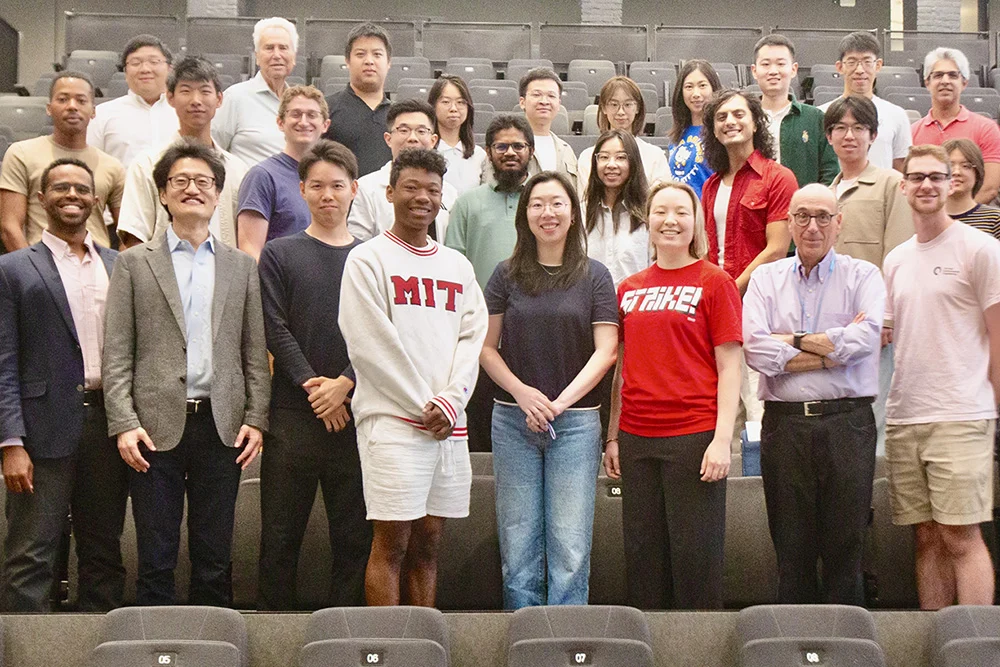
In an era where urban populations are swelling and the demand for efficient, reliable public transit has never been higher, the MIT Transit Lab has emerged as a vanguard for systemic change. On September 15, the lab was announced as a recipient of a $2.1 million grant from Google.org, marking a pivotal moment in the integration of artificial intelligence into the backbone of city infrastructure.
This funding, awarded through the prestigious "Google.org Impact Challenge: AI for Government Innovation," places MIT among a select group of only 15 global projects chosen to pioneer AI solutions for public sector challenges. The grant is designed to bridge the chasm between the theoretical promise of artificial intelligence and the complex, messy realities of daily municipal operations.
The Vision: The Public Transit Intelligence Hub (PTIQ)
At the heart of MIT’s winning proposal is the Public Transit Intelligence Hub (PTIQ). For decades, public transit control centers—the nerve centers of city mobility—have operated under a burden of information overload. Often compared to the high-stakes atmosphere of a NASA mission control room, these centers are physically saturated with radio feeds, dozens of monitors displaying disparate data streams, and fragmented communication channels.
Dispatchers and operations managers are tasked with monitoring real-time camera footage, vehicle locations, station congestion, traffic patterns, and road conditions simultaneously. However, this data currently exists in silos. A bus might be running late due to a localized accident, but that information may not reach the subway station staff or the passenger communication app in time to mitigate a cascading service delay.
The PTIQ aims to dismantle these silos. By utilizing an AI-orchestrated platform, the hub will ingest, process, and unify these fragmented data streams into a single, cohesive interface. The objective is not to replace human decision-makers, but to empower them with a "single source of truth," allowing for immediate, evidence-based responses to transit disruptions.
Chronology of the Initiative
The development of the PTIQ project did not happen in a vacuum. It is the culmination of decades of deep-rooted applied research conducted by the MIT Transit Lab in collaboration with major transit agencies across the globe, including hubs in Washington D.C., Chicago, London, Boston, Tokyo, and Hong Kong.
- Foundational Research: For years, MIT researchers embedded themselves within transit agencies to understand the "institutional reality" of transit management. They moved beyond traditional academic benchmarks to study how staff interact with data under pressure.
- The Google.org Impact Challenge: Recognizing the potential for AI to scale these lessons into a robust, deployable framework, MIT applied for the Google.org challenge, competing against hundreds of global applicants.
- September 15 Announcement: Google.org officially recognized the PTIQ as one of the 15 projects worldwide capable of driving significant societal impact, granting the $2.1 million in funding.
- The Three-Year Roadmap: The project is now entering a three-year implementation phase. Beyond the monetary grant, MIT will receive pro bono technical assistance from Google’s own AI product engineers, providing the lab with access to top-tier machine learning expertise.
The Human-Centric Approach: "Not Automation, but Augmentation"
A recurring theme among the project’s lead researchers is the distinction between automation and augmentation. In many tech-centric narratives, AI is framed as a replacement for human labor. The MIT Transit Lab, however, maintains a firm stance against the total automation of transit control.
"Our goal isn’t to automate those decisions, but to make sure the people making them have the best information possible," says Awad Abdelhalim, associate director of the Transit Lab and co-principal investigator of the PTIQ. Abdelhalim, who serves as the project’s technical lead, emphasizes that the complex, multi-stakeholder nature of transit operations requires human judgment to navigate the ethical and practical trade-offs inherent in crisis management.
The PTIQ interface will leverage advanced technologies, including predictive modeling, optimization engines, and large language model (LLM)-based contextual reasoning. These tools will suggest potential solutions or "solution sets" to control center staff, but the final decision remains squarely in human hands. This design philosophy acknowledges that an AI can calculate the fastest route, but only a human operator can weigh the social and political nuances of a service change during an unexpected event.
Supporting Data and Institutional Reality
The challenge of implementing AI in public sector environments is famously high. As Jinhua Zhao, the MIT Class of 1941 Professor of City and Transportation and founder of the MIT Mobility Initiative, notes, "The hard part of integrating AI in transit is not the technology; it’s the institution."
AI models are traditionally evaluated on deterministic tasks—solving equations or generating code. However, public transit operates in a highly dynamic, stochastic environment where there is rarely a single "correct" answer. When a storm disrupts service or a major event causes a spike in ridership, the response involves complex spatiotemporal variables.
By grounding the PTIQ in the institutional reality of transit agencies, the team aims to overcome the "trust gap." If the workforce does not trust the AI’s suggestions, the system fails, regardless of its computational sophistication. The MIT team has built their reputation on ensuring that machine intelligence and human intuition are not just integrated, but aligned.
Expert Perspectives
The project is backed by a powerhouse of transportation expertise. The leadership team includes:
- Jinhua Zhao: The co-principal investigator and head of the MIT Department of Urban Studies and Planning.
- Awad Abdelhalim: The technical lead who is orchestrating the integration of predictive models into the control center workflow.
- Jim Aloisi: The project manager and director of the Transit Research Consortium. As a former secretary of transportation for the Commonwealth of Massachusetts, Aloisi provides the project with a vital perspective on public policy and administrative reality.
Maggie Johnson, global head of Google.org, highlighted why the PTIQ was chosen for the grant: "AI holds incredible potential to transform public services, but there is often a gap between promise and practice. By equipping the 15 selected organizations with funding and pro bono support… we are empowering the people closest to the problem to show what is truly possible."
Broader Implications for Urban Mobility
The implications of the PTIQ project extend far beyond the control rooms of major cities. If successful, this platform could serve as a blueprint for the future of "Smart Cities."
1. Enhancing the Rider Experience
For the millions of daily commuters, the impact will be felt in real-time. By streamlining communication, riders will receive more accurate, immediate updates during delays, reducing the anxiety and frustration associated with service disruptions. By optimizing operations, the project aims to reduce platform and bus stop crowding, leading to safer and more comfortable travel.
2. Empowering the Transit Workforce
The transit workforce is currently subjected to high-stress, siloed working conditions. By providing dispatchers, vehicle operators, and communications staff with high-quality, reliable, and consolidated data, the PTIQ project aims to reduce burnout and improve the overall efficiency of the transit agency.
3. Strengthening Urban Resilience
As climate change increases the frequency of extreme weather events and unexpected disruptions, the ability of city infrastructure to respond quickly is critical. The PTIQ’s use of AI for predictive modeling and rapid response could be the difference between a minor delay and a complete system collapse, bolstering the resilience of the metropolitan areas that rely on public transit as their economic engine.
Conclusion: A New Standard for AI in the Public Sector
The MIT Transit Lab’s work with the Public Transit Intelligence Hub represents a shift in how we think about artificial intelligence. It moves the conversation away from abstract, futuristic scenarios and into the tangible, vital world of public service. By focusing on the intersection of machine intelligence and human judgment, the team is not just building a better software platform; they are building a more responsive, human-centric model for urban life.
As the three-year project unfolds, the transit world will be watching closely. The partnership between MIT’s deep academic rigor and Google’s technological prowess provides a unique opportunity to demonstrate that when AI is designed with the user—and the institution—in mind, it can indeed make a profound, positive difference in the everyday lives of communities worldwide.