










The landscape of web development is undergoing a profound transformation. As developers move beyond the traditional "browser-only" mindset, the lines between desktop software, high-performance infrastructure, and intelligent tooling continue to blur. Recent developments—ranging from ultra-lightweight desktop runtimes to the optimization of massive CI/CD pipelines—demonstrate a shift toward efficiency, modularity, and a deeper integration of AI into the developer workflow.
Main Facts: The New Frontier of Web Engineering
The current ecosystem is characterized by a "back-to-basics" movement wrapped in modern abstraction. Developers are increasingly demanding tooling that is as performant as it is flexible.
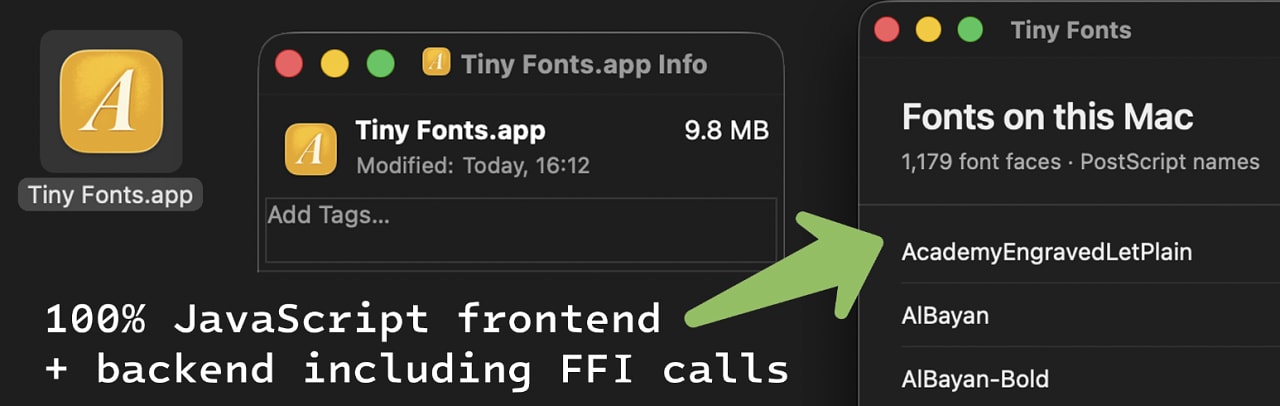
At the forefront of this shift is tinyjs, a new entrant in the desktop application space. By leveraging txiki.js, it allows developers to build cross-platform desktop applications that weigh in at under 10MB. This represents a radical departure from the memory-heavy, Electron-based applications that have dominated the market for the last decade. By providing full system access, including Foreign Function Interface (FFI) capabilities, and native webview rendering, tinyjs offers a compelling alternative for developers who prioritize lean footprints without sacrificing system-level functionality.
Simultaneously, the industry is witnessing a "re-tooling" of core infrastructure. Companies like Linear are proving that even the most established development workflows require constant iteration. By re-engineering their CI/CD pipelines to handle a four-fold increase in test volume, Linear has highlighted the necessity of moving away from traditional, bloated linting processes in favor of AST-based checks and modern, high-speed linters like Oxlint.

Chronology of Recent Ecosystem Shifts
The past few weeks have seen a rapid succession of releases and conceptual shifts that define the current trajectory of web engineering:
- The Desktop Renaissance: The release of
tinyjshas reignited interest in lightweight desktop runtimes, challenging the hegemony of Chromium-based wrappers. - Performance Optimization (Linear): Linear documented its transition to a faster CI pipeline, shifting from standard ESLint rules to high-performance AST checks, marking a turning point in how large-scale teams manage test overhead.
- Framework Evolution: The debate over the necessity of frameworks reached a fever pitch with the release of SolidJS 2.0, which focuses on granular performance improvements ("the little things"), and Brooks Lybrand’s analysis of how AI-driven development is actually increasing our reliance on structured frameworks rather than diminishing it.
- Data Visualization and AI Integration: Plotly.js 4 arrived with a massive feature set, including native TypeScript support and a shift to MapLibre, while Hugging Face expanded the capabilities of the browser by releasing 207 WebGPU-optimized kernels.
- The "DevTools" Framework: Anthony Fu, the mind behind Vitest and Nuxt DevTools, introduced Devframe, a framework designed specifically for creating modular development tools that can run anywhere, signaling a move toward standardized, portable tooling.
Supporting Data and Technical Implications
The shift toward efficiency is not merely anecdotal; it is backed by measurable technical gains.
CI/CD Efficiency
Linear’s recent experience with their CI pipeline serves as a benchmark for modern optimization. By replacing type-aware ESLint rules with plain Abstract Syntax Tree (AST) checks, the team achieved a 55% reduction in linting time. When coupled with the strategic decision to selectively disable Vitest’s isolation—a move that saved an additional 17% in monthly costs—the result was a system capable of handling four times the previous test load without a linear increase in expenditure.
The Rise of WebGPU
Hugging Face’s release of 207 Apache-2.0 WebGPU kernels—covering critical operations like matrix multiplication, attention mechanisms, and quantization—is a milestone for browser-based AI. By providing these kernels, Hugging Face is essentially moving the "heavy lifting" of machine learning from the cloud to the client-side, allowing developers to run inference directly in the browser with native-like performance.
Desktop Footprint Comparisons
Traditional frameworks (like Electron) often require a minimum of 50MB to 100MB for a "Hello World" application due to the inclusion of a bundled Chromium instance and Node.js runtime. In contrast, tinyjs utilizes txiki.js, a project designed for extreme minimalism. This drastic reduction in size not only improves download speeds for end-users but also lowers the entry barrier for building native-feeling applications for Linux, macOS, and Windows.
Official Responses and Expert Perspectives
The industry’s thought leaders have weighed in on these changes, highlighting a broader philosophical shift in what it means to be a "developer."
The "Product Engineer" Mandate
Laurie Voss, in his recent discourse, argued that the industry is moving toward a model where every developer is a "product engineer." He posits that understanding the user’s needs is no longer a "soft skill" but a core technical requirement. As tools become more automated, the differentiator for a developer becomes their ability to map technical solutions to specific business outcomes.
The Framework Debate
Brooks Lybrand addressed the "Do Frameworks Matter Anymore?" question by suggesting that AI agents actually necessitate better frameworks. If an AI is generating code, it is easier for it to generate code within the constraints and patterns of a established framework than to build a bespoke architecture from scratch. This perspective reframes frameworks not as "crutches," but as essential standards for AI-assisted collaboration.
The Evolution of JavaScript Design
Michael Ficarra, a TC39 delegate, recently explored how AI is influencing the design of the JavaScript language itself. His insights suggest that as AI becomes a primary consumer of code, the language may evolve to prioritize features that are easier for LLMs to interpret and verify, rather than just features that are convenient for human developers to write.
Implications for the Future of Web Development
The convergence of these trends suggests a future where web technology is fundamentally more portable and performant.
- The Death of "One-Size-Fits-All" Tooling: The introduction of Devframe and the refinement of charting libraries like Plotly.js 4 suggest that developers are moving toward a modular, "pick-and-mix" architecture. The days of monolithic frameworks are being challenged by granular, pluggable solutions.
- Browser as an Operating System: With the advent of WebGPU kernels, the browser is rapidly becoming a legitimate platform for computationally intensive tasks that were previously reserved for desktop binaries. This will likely lead to a new wave of browser-based professional-grade software (video editors, data science IDEs, and 3D modeling tools).
- Cost-Conscious Development: The success of Linear’s CI optimization proves that "Developer Experience" is inextricably linked to "Cloud Spend." As teams scale, the ability to optimize internal build processes will be as important as the ability to ship new features.
- AI-Native Tooling: We are entering an era where development tools are being designed with AI in mind from the start. Whether it is through AST-based linting that AI can easily parse or framework patterns that AI can reliably replicate, the next generation of software will be built by developers who treat AI as their primary architectural partner.
Conclusion
The current state of the web is one of maturation. We are moving away from the "growth at all costs" mentality of the early 2020s toward a more surgical, performance-oriented approach. Whether through reducing the memory footprint of our desktop apps, optimizing the CI pipelines that drive our deployments, or leveraging the raw power of WebGPU, developers are reclaiming control over the performance and efficiency of their software. The tools of tomorrow are smaller, faster, and more modular, reflecting a industry that is finally prioritizing the fundamental quality of the code we write.



