










Introduction: The Shift from Raw Power to Precision Engineering
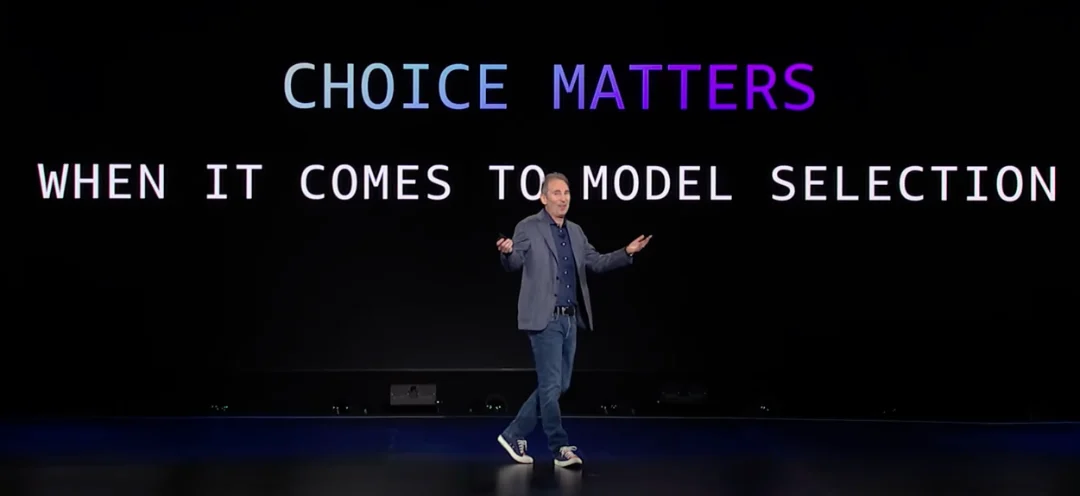
If a single overarching theme defined the technology sector this past week, it is the democratization of architectural choice. As the artificial intelligence landscape matures, the conversation among enterprise architects, developers, and CTOs has fundamentally shifted. The foundational question is no longer simply, “How smart is the model?” Instead, organizations are asking a far more nuanced, cost-conscious question: “Which specific model fits this exact workflow step, at an optimal cost point, and within strict latency thresholds?”
This paradigm shift toward precision deployment arrived in full force on Amazon Bedrock. Over the past few days, Amazon Web Services (AWS) announced the integration of major frontier models into its managed service ecosystem: OpenAI’s GPT-6 Sol and GPT-6 Luna, alongside Anthropic’s Claude Opus 5.5, the inaugural release of the Claude 5.5 model family.
These additions provide developers with granular new data points along the intelligence-versus-efficiency curve. Rather than defaulting to the largest, most computationally expensive model for every single task, organizations are now equipped to tailor their AI infrastructure with surgical precision. Concurrently, the week highlighted a secondary, equally vital trend: the rapid maturation of observability tooling designed to monitor, trace, and audit autonomous multi-agent systems operating at scale.
Main Facts: What Landed on Amazon Bedrock
The latest updates to Amazon Bedrock represent a significant leap forward in how enterprises consume frontier AI models. By integrating high-efficiency and high-reasoning variants from both OpenAI and Anthropic, AWS is cementing Bedrock’s position as a multi-model orchestration hub.
1. OpenAI’s GPT-6 Sol and GPT-6 Luna
OpenAI has introduced two distinct models tailored for contrasting enterprise workloads, both representing a dramatic cost reduction compared to their GPT-5.6 predecessors:
- GPT-6 Sol: Engineered specifically for the demanding, recurring workflows of software development and IT operations (DevOps). Sol is optimized for complex reasoning, multi-file code generation, and deep architectural troubleshooting.
- GPT-6 Luna: Designed for focused, repeatable tasks that must be executed at high volume. Luna balances prompt-response latency with operational economy, making it ideal for high-throughput customer support routing, document classification, and real-time data parsing.
2. Anthropic’s Claude Opus 5.5
As the first entry in the new Claude 5.5 family, Claude Opus 5.5 pushes the boundaries of long-running autonomous operations. Key attributes include:
- Token Efficiency: Opus 5.5 accomplishes significantly more complex analytical and creative tasks while consuming fewer tokens than its predecessor, Opus 5.
- Agentic Specialization: The model is heavily tuned for agentic coding workflows, allowing software agents to autonomously plan, execute, debug, and iterate over extended periods without losing contextual coherence.
Chronology: The Evolution of Managed AI on AWS
To understand the weight of these recent deployments, it is helpful to trace the rapid evolution of Amazon Bedrock and the broader generative AI landscape over recent release cycles:
- Early Generation (Pre-2024): Enterprises relied heavily on self-hosted open-source models or direct, single-provider APIs. Infrastructure management, scaling, and security compliance fell entirely on internal engineering teams.
- The Multimodel Pivot (2024–2025): Amazon Bedrock emerged as a premier managed service, abstracting away underlying infrastructure and offering a unified API to access models from Anthropic, Cohere, AI21 Labs, Meta, and Mistral. The focus during this period was establishing baseline parity and proving that frontier intelligence could be delivered securely within Virtual Private Clouds (VPCs).
- The Reasoning Boom (Late 2025): The introduction of advanced reasoning models (such as DeepSeek-R1 integrations and early OpenAI/Anthropic iterative reasoning architectures) forced a re-evaluation of inference costs. Enterprises discovered that throwing raw compute at every prompt was financially unsustainable.
- The Granular Efficiency Era (Present – 2026): The current wave—exemplified by the simultaneous drops of GPT-6 Sol/Luna and Claude Opus 5.5—marks the transition into architectural granularity. Enterprises no longer view foundation models as monolithic blocks, but as a modular toolkit where different models handle different tiers of a pipeline.
Supporting Data: Intelligence, Cost, and Efficiency Metrics
While raw benchmark scores (such as MMLU-Pro, SWE-bench, and HumanEval) continue to climb, enterprise adoption in 2026 is driven primarily by economic and operational metrics.
The Cost-to-Performance Curve
- Price Compression: OpenAI’s pricing strategy for the GPT-6 Sol and Luna models marks a substantial downward correction. Compared to the GPT-5.6 generation, token costs for equivalent reasoning tiers have decreased by an estimated 35% to 50%, depending on the caching layer utilized.
- Token Economy: Anthropic’s Claude Opus 5.5 achieves a measurable reduction in input/output token overhead for long-context tasks. In internal agentic coding benchmarks, Opus 5.5 completed multi-step refactoring tasks using roughly 22% fewer total tokens than Opus 5, directly translating to lower inference latency and reduced operational expenditure.
Latency Profiles
- Luna’s High-Throughput Edge: By sacrificing a fraction of the deep, recursive chain-of-thought processing found in Sol, GPT-6 Luna achieves time-to-first-token (TTFT) metrics that are well-suited for synchronous user-facing applications.
- Sol’s Asynchronous Depth: GPT-6 Sol is intentionally architected for asynchronous, deep-thinking tasks. It excels where depth of analysis supersedes sub-second response requirements, such as nightly code security audits and database migration planning.
Official Responses and Industry Perspectives
Cloud architects, developers, and platform engineers have responded enthusiastically to the modular flexibility offered by these new integrations.
Industry analysts point out that the availability of these models on Amazon Bedrock removes the administrative friction typically associated with multi-vendor AI strategies. Enterprises can leverage AWS Key Management Service (KMS) for encryption, AWS PrivateLink for secure data transit, and AWS Identity and Access Management (IAM) governance frameworks across both OpenAI and Anthropic endpoints without altering their underlying security posture.
Furthermore, engineering leaders emphasize the importance of observability in managing these complex, multi-model pipelines. As agentic systems—such as those powered by Claude Opus 5.5—begin executing multi-step workflows autonomously, the demand for granular tracing, error logging, and cost attribution has skyrocketed. AWS’s concurrent focus on expanding observability tooling ensures that enterprises maintain total visibility into why an agent made a specific decision, which model handled a given sub-task, and how much the execution cost in real time.
Implications for the Enterprise
The convergence of GPT-6 Sol, GPT-6 Luna, and Claude Opus 5.5 on Amazon Bedrock carries profound implications for software development, enterprise operations, and cloud architecture strategies.

1. The Death of the "One-Size-Fits-All" Prompt Pipeline
Organizations can no longer justify routing all user requests through a single, expensive frontier model. Modern enterprise architectures are shifting toward semantic router patterns. Incoming requests are first analyzed by a lightweight classifier; simple data-retrieval or formatting tasks are routed to efficient models like GPT-6 Luna, while complex system design or advanced coding tasks are dynamically handed off to GPT-6 Sol or Claude Opus 5.5. This cascading architecture drastically lowers the total cost of ownership (TCO) for AI applications.
2. Acceleration of Autonomous Agentic Workflows
With Claude Opus 5.5 optimized for long-running, multi-step agentic execution, businesses can move beyond simple chat interfaces toward fully autonomous digital workers. These agents can manage software release cycles, monitor cloud infrastructure health, and execute self-healing remediation scripts with minimal human intervention.
3. Compliance and Security Continuity
By keeping these workloads within the AWS ecosystem via Amazon Bedrock, regulated industries—such as financial services, healthcare, and government contracting—can adopt the latest advancements from OpenAI and Anthropic without compromising data privacy. Because data processed through Bedrock is never used to train underlying third-party foundation models, enterprises retain absolute ownership and protection of their intellectual property.
Conclusion and Next Steps
The rapid expansion of Amazon Bedrock highlights a mature cloud ecosystem where choice, efficiency, and enterprise-grade security intersect. As builders experiment with GPT-6 Sol, GPT-6 Luna, and Claude Opus 5.5, the focus must remain on intentional architecture: matching the exact intelligence tier to the business problem at hand.
Developers and cloud architects are encouraged to explore the latest documentation on the AWS Builder Center to connect with peers, share architectural patterns, and access tutorials on implementing multi-model cascades. For ongoing updates regarding platform capabilities, feature rollouts, and upcoming virtual or in-person developer events, keep a close eye on the What’s New with AWS portal and the AWS Blogs page.
The frontier of artificial intelligence is no longer defined by who has the biggest model, but by who can deploy the smartest model, at the right time, for the right price.



