










GLOBAL — Nearly seven out of ten WordPress professionals and website owners have fallen victim to at least one security breach, yet fewer than three in ten possess a formalized recovery plan. This stark vulnerability gap sits at the heart of the newly published WordPress Security Survey 2026, shedding light on the persistent paradox defining the world’s most popular content management system.
Published on September 15, the comprehensive report captures the pulse of the WordPress ecosystem through 319 valid responses gathered between March 31 and July 29, 2026. While the data underscores a digital landscape fraught with repeated intrusions, website downtime, and devastating SEO losses, it simultaneously reveals a stubborn cultural inertia: security awareness remains exceptionally high, but proactive preparedness refuses to budge.
Main Facts: The 2026 WordPress Security Landscape
The latest metrics from Melapress, a prominent security plugin developer known for tools like WP Activity Log, paint a sobering picture of digital risk management. The overarching theme of the 2026 survey is not a lack of concern—web professionals are deeply worried—but rather a dangerous disconnect between recognizing threats and executing defensive measures.
Key Data Points at a Glance:
- Incident Frequency: Exactly 67.7% of respondents reported experiencing at least one known security incident. Of those, 32.3% suffered between two and five incidents, while 13.2% endured more than five.
- The Preparedness Gap: Only 27.9% of participants maintain a documented recovery plan to handle a hack—a negligible increase from 27% in 2025.
- Team Training Deficit: The percentage of respondents providing formal cybersecurity training to their teams remains completely flat at 26%.
- Escalating Concern: Anxiety levels are surging. 76.9% of the sample rate their security concern at 7 or higher out of 10, with 37.5% giving it a maximum score of 10 (up from 34% the previous year). For e-commerce operators, concern hits fever pitch, with 85.7% rating their worry at 7 or above.
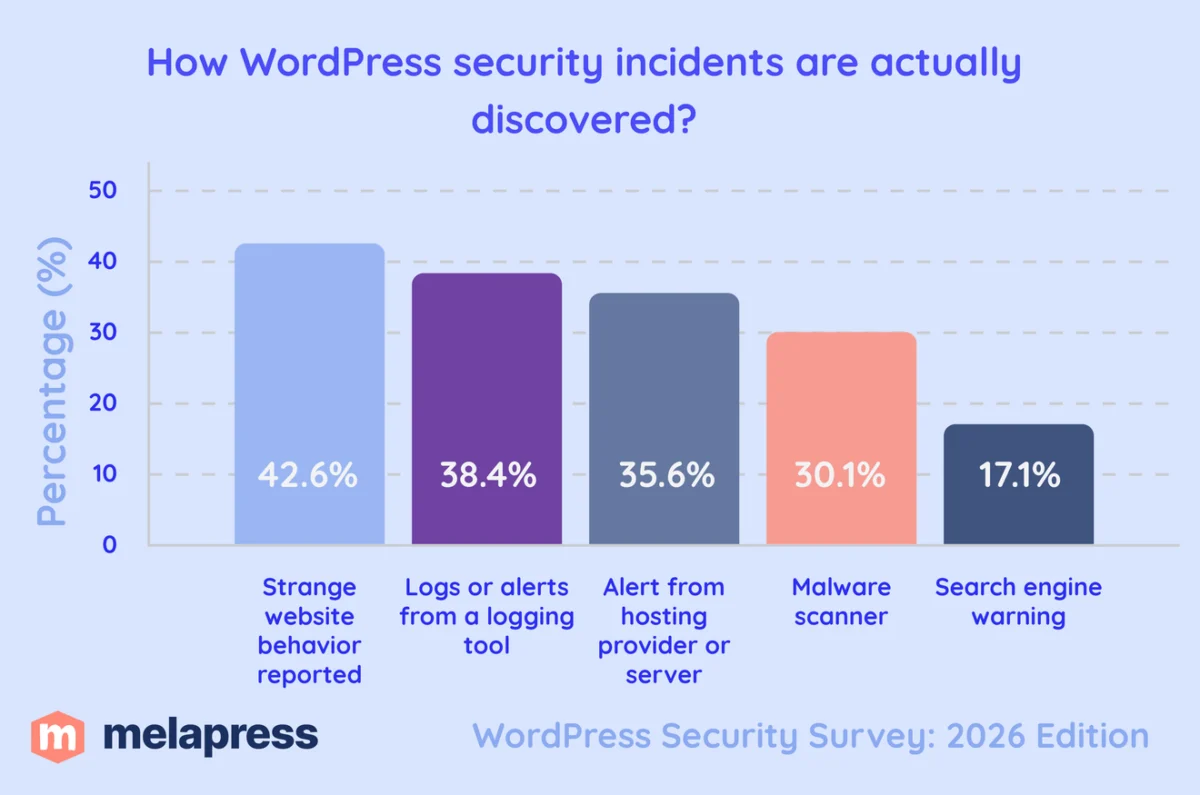
- Detection Failures: The most common method of discovering a hack remains purely reactive—42.6% of victims found out because a third party or user pointed out strange website behavior.
Chronology: How the 2026 Data Was Gathered
Understanding the timeline and methodology of the survey provides essential context for interpreting these sobering statistics.
- March 31, 2026 — Data Collection Opens: Melapress initiates the data-gathering phase for its annual security benchmark, deploying the survey across digital channels, developer communities, and industry events.
- Mid-2026 — WordCamp Europe Influence: A significant influx of responses is collected via third-party channels, most notably during WordCamp Europe. Melapress openly acknowledges that while a relevant minority of answers came directly through its proprietary channels—which could introduce a slight pro-tool bias regarding logging and activity controls—the broader outreach captured a diverse cross-section of global WordPress professionals.
- July 29, 2026 — Survey Closes: The collection period concludes with a total of 319 valid responses logged from developers, designers, agency owners, and e-commerce managers.
- September 15, 2026 — Official Publication: The WordPress Security Survey 2026 is officially released to the public, instantly triggering industry-wide discussions regarding the chronic stagnation of basic security hygiene within the WordPress community.
Supporting Data: Frequency, Impacts, and Discovery Methods
The anatomy of a WordPress security breach involves far more than a momentary glitch; it frequently cascades into existential business crises.
The Developer vs. Designer Divide
When broken down by professional profiles, developers are significantly more likely to encounter security events. 80% of surveyed developers reported experiencing a breach, compared to 63.2% of web designers. This disparity aligns directly with self-reported anxiety scores: developers rated their security concerns at an average of 8.23 out of 10, whereas designers averaged a more complacent 7.03.
Catastrophic Aftermaths
When a security incident strikes, the immediate operational impact is severe:
- Website Outage: 68.4% of affected respondents experienced total site downtime.
- Reputational Damage: 34.9% suffered immediate blows to their public brand image.
- SEO and Trust Deficits: 20.1% reported steep drops in search engine rankings, and an equal 20.1% noted a permanent erosion of customer trust.
- Financial Loss: 16.3% recorded direct, measurable revenue losses.
One surveyed e-commerce store owner shared a harrowing account of post-hack recovery: after suffering an intrusion, their traffic on Google Search Console plummeted nearly to zero. Despite subsequent remediation efforts, the store never fully recovered its former search visibility, plateauing at a mere 65% of its pre-hack traffic levels.
The Perils of Reactive Discovery
How administrators find out they’ve been hacked dictates the severity of the damage. The primary discovery channels include:
- Third-Party Warnings: 42.6% found out because a user or visitor reported erratic site behavior.
- Logging Tools/Alerts: 38.4% relied on security logs or monitoring software.
- Hosting Provider Notifications: 35.6% were alerted by their web host.
- Malware Scanners: 30.1% caught the breach via automated scans.
- Search Engine Warnings: 17.1% discovered the hack only after Google or another search engine flagged the site.
Discovery via search engines is practically synonymous with catastrophic failure. Among sites that discovered breaches through search engine warnings, 45.9% suffered severe ranking drops (compared to just 14.5% for sites that caught intrusions via other means), 51.4% faced reputational damage, and 16.2% encountered legal or compliance penalties. Researchers point out that if an infection persists long enough for a search engine to flag it, the malware has already deeply embedded itself into the site architecture.
Official Responses and Strategic Discrepancies
The report also illuminates critical blind spots in how organizations structure their security management, particularly the divide between internal teams and outsourced agencies.
Internal Staff vs. External Agencies
When a business relies on an in-house developer or system administrator, preparedness metrics improve slightly: 35.5% of such organizations maintain a documented disaster recovery plan. However, when security responsibilities are delegated to an external agency or freelancer, that figure plunges to 22.8%.
While this represents a narrow narrowing of the gap compared to 2025 (where internal vs. agency numbers stood at 31% and 13% respectively), cybersecurity analysts warn that this may point to severe communication breakdowns. Frequently, agencies do have basic recovery measures in place, but fail to adequately communicate their existence or execution strategies to the business owners they serve.
E-Commerce Vulnerabilities
E-commerce platforms represent prime targets for malicious actors. While online stores are marginally better prepared than standard informational sites—35.8% of e-commerce sites maintain recovery plans compared to 23.9% of other sites—they face disproportionate consequences. Among e-commerce operators who suffered breaches, 31.9% lost critical search rankings, and 29.2% watched customer trust evaporate overnight.
Furthermore, a troubling behavioral contradiction persists: among respondents who stated they were deeply concerned about page defacement and reputational damage, 37% admitted they use zero activity logs or monitoring tools—the exact technologies required to detect and thwart such attacks in real-time.
Implications for the WordPress Ecosystem
The findings of the WordPress Security Survey 2026 carry profound implications for developers, agency owners, and digital entrepreneurs alike. As cyber threats evolve—ranging from sophisticated cookie-theft bypasses to zero-day plugin exploits—relying on passive security postures is no longer viable.
Recommended Action Plan for WordPress Administrators
Melapress, alongside independent cybersecurity auditors, outlines several non-negotiable best practices derived from the 2026 data:
- Establish and Test Recovery Plans: Having a disaster recovery plan on paper is insufficient. Teams must regularly test backups, verify that clean recovery points are isolated, and assign explicit, unambiguous roles for crisis management.
- Enforce Real-Time Monitoring: Silence is not security. Organizations must deploy robust activity logs and monitoring systems to ensure that suspicious behavior is caught within minutes, rather than discovered weeks later by a confused customer or a punitive search engine alert.
- Bridge Agency-Client Communication: If security management is outsourced to an agency, business owners must demand absolute clarity regarding who receives alerts, who triggers restorative protocols, and who manages public crisis communications.
- Implement Advanced Access Controls: Minimizing attack vectors requires strict role-based access control, mandatory multi-factor authentication (MFA), and ongoing team training tailored to specific user roles within the WordPress dashboard.
Ultimately, the 2026 survey acts as both an urgent warning mirror and a roadmap. Until the WordPress community bridges the chasm between high threat anxiety and disciplined operational readiness, the platform’s security paradox will continue to claim victims among the unprepared.



