










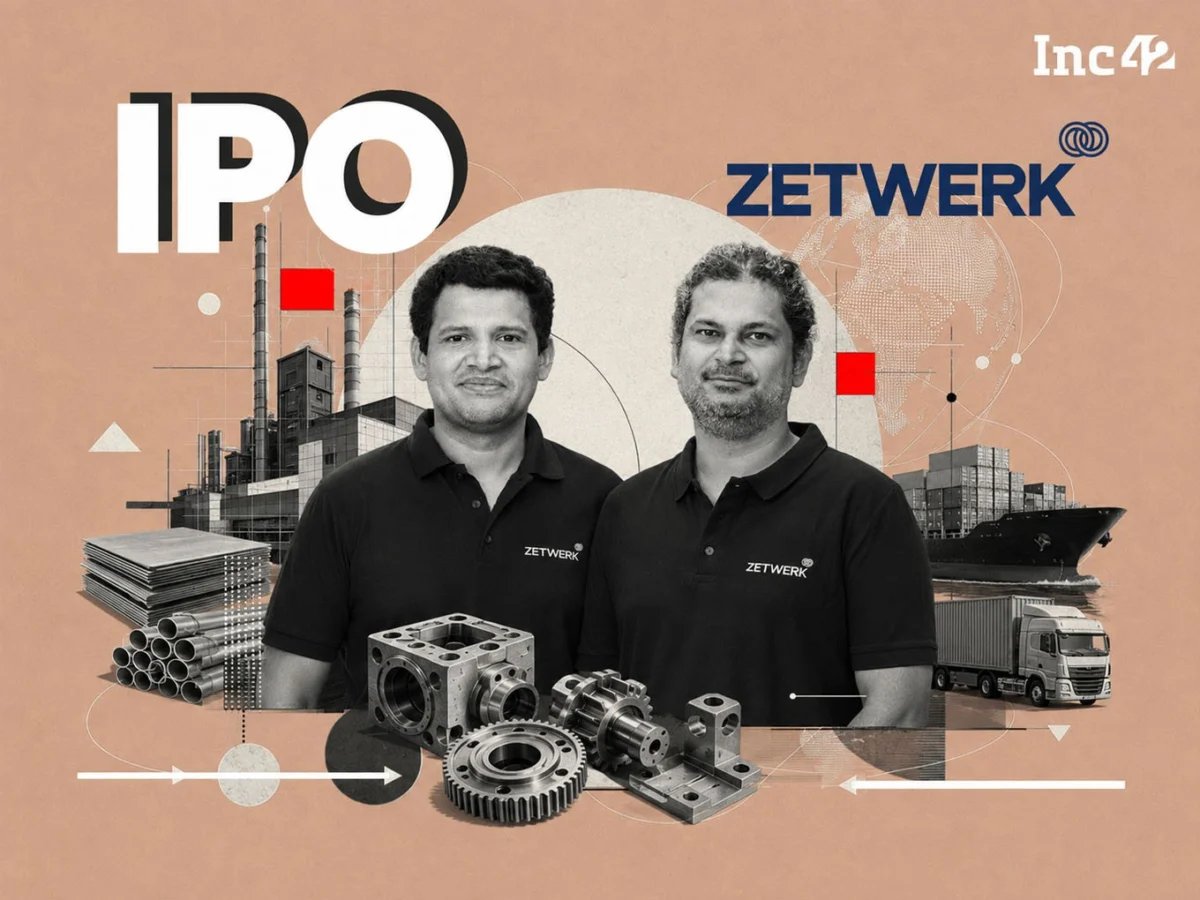
The Indian manufacturing landscape is bracing for a watershed moment as Zetwerk, the B2B manufacturing unicorn, officially sets the stage for its highly anticipated Initial Public Offering (IPO). With a price band finalized between ₹143 and ₹151 per share, the company is aiming to raise a massive ₹5,012.3 crore at the upper end of the valuation. This move marks a significant milestone not just for the startup, but for the "Make in India" initiative, signaling the growing maturity of India’s deep-tech and industrial manufacturing ecosystem.
As the company prepares to hit the primary market, investors are closely examining its aggressive expansion strategy, its balance sheet health, and the backing of global venture capital heavyweights.
The Core Offering: Breaking Down the Numbers
Zetwerk’s public issue is structured as a blend of fresh capital injection and an Offer for Sale (OFS), reflecting both the company’s need for growth capital and the exit strategies of its early backers.
The Financial Architecture
- Total Issue Size: ₹5,012.3 crore (at the upper price band).
- Fresh Issue: ₹2,830 crore, aimed at strengthening the balance sheet and fueling inorganic growth.
- Offer for Sale (OFS): Up to 14.45 crore shares, valued at approximately ₹2,182.3 crore.
- Valuation: At the upper end of the price band, Zetwerk is targeting a post-issue market capitalization of ₹25,583 crore (approximately $2.7 billion).
The scale of this IPO is notable, particularly given that the company has significantly upsized its ambitions since the filing of its Updated Draft Red Herring Prospectus (UDRHP) in August. The fresh issue component has increased from the initially proposed ₹2,600 crore, and the OFS component has seen a substantial 49.2% jump from the 9.7 crore shares originally planned.
Subscription Timeline
- Anchor Investor Bidding: October 14
- IPO Opens for Subscription: October 15
- IPO Closes for Subscription: October 19
Chronology: The Road to the Public Market
Zetwerk’s journey to the stock exchange has been a masterclass in calculated, strategic planning. Unlike many startups that rushed to the market during the 2021 liquidity boom, Zetwerk has opted for a more measured approach, prioritizing operational efficiency and revenue scale before courting public market investors.
- March 2024: The company took the unconventional but increasingly popular route of filing its draft IPO papers confidentially. This allowed the leadership team to engage with regulators without exposing sensitive financial disclosures to the public prematurely.
- August 2024: Following the confidential phase, Zetwerk officially filed its UDRHP, bringing the IPO into the public domain and outlining its initial financial objectives.
- October 2024: The finalization of the price band and the announcement of the subscription dates signal the endgame of the listing process.
Supporting Data: Why Debt Reduction is Priority Number One
One of the most critical aspects of Zetwerk’s IPO strategy is the allocation of proceeds. The company has explicitly stated that ₹2,160 crore—roughly 76% of the fresh issue proceeds—will be directed toward the repayment or prepayment of borrowings.
Capital Allocation Breakdown
- Debt Repayment (₹2,160 Cr): This is the single largest use of capital. By deleveraging its balance sheet, Zetwerk aims to improve its interest coverage ratio and enhance its credit profile, which is essential for sustaining a high-growth B2B manufacturing business.
- Strategic Acquisitions: The remaining net proceeds are earmarked for inorganic growth. Given the fragmented nature of the manufacturing sector, Zetwerk has historically used acquisitions to bolster its capabilities in precision engineering and specialized manufacturing.
- General Corporate Purposes: A standard allocation to ensure operational liquidity and working capital flexibility.
The focus on debt reduction suggests a management team prioritizing long-term stability and profitability over aggressive, debt-fueled expansion—a narrative that is likely to resonate well with institutional investors in the current high-interest-rate environment.
The Stakeholders: Who is Cashing In?
The OFS component of the IPO highlights the massive success of the venture capital firms that identified Zetwerk’s potential early on. The exit list reads like a "who’s who" of the global VC circuit:
- Promoter Participation: Cofounders Amrit Pratik Acharya and Srinath Ramakkrushnan are each selling up to 1.42 crore shares. This partial exit is standard practice for founders and provides a signal of liquidity while maintaining a substantial "skin in the game."
- Institutional Backers: The list of selling shareholders includes prominent entities such as Peak XV Partners (formerly Sequoia India & SEA), Accel India, Lightspeed Venture Partners, and Kae Capital.
- Promoter Group: Creovate Innovation is also among the selling entities.
The divestment by these major players is a natural lifecycle event for early-stage investors looking to provide returns to their Limited Partners (LPs), and it is not typically viewed as a negative sentiment indicator by the broader market.
Implications for the Indian Manufacturing Ecosystem
Zetwerk’s IPO is more than just a financial transaction; it represents the maturation of the B2B "Manufacturing-as-a-Service" (MaaS) model.
1. Validating the "Manufacturing-as-a-Service" Model
For years, the Indian startup ecosystem was dominated by B2C e-commerce and fintech. Zetwerk’s ability to achieve a $2.7 billion valuation validates the B2B manufacturing model, which leverages technology to bridge the gap between demand and fragmented supply chains.
2. The Impact on "Make in India"
As global supply chains look for alternatives to China, Zetwerk sits at the intersection of this global shift. By providing a digitized, transparent, and scalable manufacturing platform, the company is a primary beneficiary of the global "China Plus One" strategy. A successful IPO provides the company with the financial muscle to compete on a global scale.
3. A Test for Market Appetite
With several high-profile IPOs lined up in the coming months, Zetwerk will be a litmus test for investor appetite regarding capital-intensive, industrial-tech companies. While retail investors are often drawn to consumer brands, institutional investors are increasingly looking for companies with deep moats and tangible assets—qualities that Zetwerk possesses in abundance.
The Road Ahead: Challenges and Opportunities
While the valuation and the growth trajectory are impressive, investors must remain cognizant of the inherent risks.
Operational Risks
The manufacturing sector is highly sensitive to input costs, raw material price volatility, and supply chain disruptions. Zetwerk’s ability to pass on these costs to its clients while maintaining its margins will be a key performance indicator (KPI) for public market analysts.
Competitive Landscape
While Zetwerk enjoys a first-mover advantage in the digital manufacturing aggregation space, it faces increasing competition from both traditional manufacturing giants pivoting to digital and new-age tech startups entering the niche.
The Path to Profitability
With the debt burden being addressed by the IPO proceeds, the market will now turn its attention to the company’s bottom-line performance. Post-IPO, the pressure to deliver consistent earnings growth will intensify, moving the focus away from "growth at any cost" toward sustainable, profitable expansion.
Conclusion
Zetwerk’s IPO is a defining moment for India’s industrial tech sector. By clearing a significant portion of its debt and inviting public participation, the company is transitioning from a high-growth startup to a pillar of the Indian industrial economy.
As the October 15 opening date approaches, the eyes of the investment community will be fixed on the subscription levels. If successful, the ₹5,012.3 crore offering will provide Zetwerk with the necessary foundation to scale its operations, expand its global footprint, and redefine the way manufacturing is conceptualized, ordered, and delivered in the 21st century.
Disclaimer: This article is for informational purposes only and does not constitute financial advice. Investors should consult their financial advisors and review the Red Herring Prospectus (RHP) thoroughly before making any investment decisions.



