










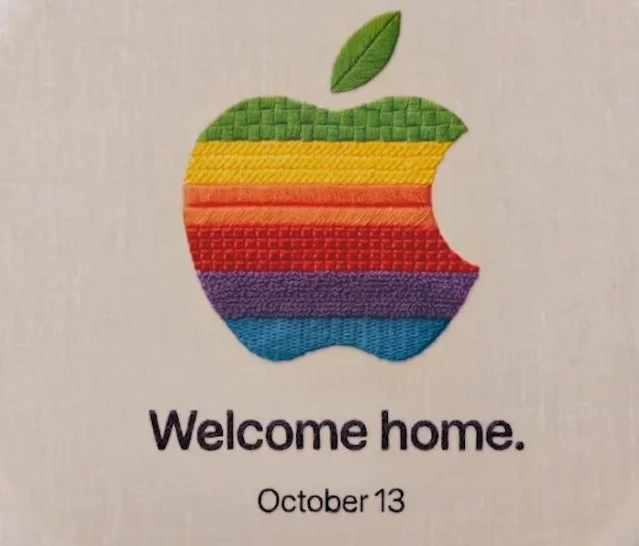
In a strategic maneuver aimed at reclaiming dominance within the domestic sphere, Apple is set to unveil a transformative lineup of smart home hardware on October 13, 2026. According to industry analyst Mark Gurman, this "Welcome Home" event marks the most significant expansion of Apple’s ambient computing strategy in over a decade. By bridging the gap between its highly successful mobile ecosystem and the fragmented smart home market, Apple intends to move beyond mere connectivity to establish a cohesive, AI-driven home environment.
The centerpiece of this announcement is the "HomeView" smart display, a device designed to serve as the long-awaited nerve center for the Apple ecosystem. Supplemented by refreshed iterations of the HomePod mini and the Apple TV, as well as a strategic partnership with LG, Apple is signaling that it is no longer content to play a peripheral role in the modern household.
Main Facts: The "Welcome Home" Product Portfolio
The upcoming product launch reflects a shift in Apple’s design philosophy: moving from isolated accessories toward a centralized, intelligent hub.
The HomeView Smart Hub
The HomeView is expected to be a dedicated smart home display powered by the A18 chip. Unlike the iPad, which is designed for broad media consumption and productivity, HomeView is purpose-built for the wall or tabletop. It will prioritize Siri interactions, acting as a portal for managing HomeKit-enabled devices. While it will feature a touchscreen, its design philosophy emphasizes voice-first interaction, mirroring the way users interact with the current HomePod ecosystem.
Refreshed HomePod mini and Apple TV
The HomePod mini will receive a performance boost with the integration of the S10 chip, ensuring that voice recognition remains snappy and responsive. Beyond performance, Apple is leaning into personalization, with reports indicating a vibrant new color palette: Pink, White, Green, Blue, and Midnight.
Simultaneously, the Apple TV is slated for its first major hardware overhaul in years. Outfitted with an A19 chip, the new unit will reportedly feature integrated microphones, eliminating the dependency on a remote for Siri commands. Furthermore, the accompanying remote is expected to feature a built-in speaker, addressing a common consumer grievance by making the device easier to locate.
Chronology: A Decade of Smart Home Evolution
Apple’s journey into the smart home has been characterized by meticulous—and sometimes cautious—development. Understanding the current launch requires a look back at the company’s trajectory.
- 2014: Apple introduces HomeKit, an iOS framework designed to provide a secure, standardized way to control smart home devices.
- 2016: The official "Home" app is launched, centralizing control for compatible door locks, cameras, and thermostats.
- 2020-2024: During this period, Amazon and Google successfully monopolized the smart home space by offering lower-cost, highly capable hardware like the Echo and Nest series. Apple’s market share remained niche, largely restricted to its existing base of iPhone users.
- September 2024: A shell company files a trademark for "HomeView," hinting at the development of the hardware that would eventually be unveiled this week.
- Late 2024 – 2026: Apple accelerates development of a revamped Siri, intended to be more context-aware and capable, though it remains a "work in progress" compared to generative AI models like ChatGPT.
- October 13, 2026: The "Welcome Home" event.
- October 30, 2026: Expected retail availability for the new HomePod mini and Apple TV.
- Mid-November 2026: Anticipated release of the HomeView smart display.
Supporting Data: The Competitive Landscape
Apple enters a market dominated by incumbents who have spent years lowering the barrier to entry. Amazon’s Echo devices and Google’s Nest hub have become ubiquitous, largely due to their aggressive pricing and open-platform support.
The "Compatibility Gap"
Historically, Apple’s strict security and privacy requirements—while beneficial to the user—made it difficult and expensive for third-party manufacturers to achieve "HomeKit-certified" status. This created a ecosystem where Apple users often found fewer options compared to their Android-using counterparts.
The Rise of Matter and Thread
The introduction of the Matter smart home standard has been a game-changer. By allowing devices to communicate across platforms, Matter has removed the necessity for users to choose "sides." For Apple, this is a strategic tailwind; it allows the company to integrate into homes already populated by a mix of different manufacturers’ products, rather than requiring a complete "rip and replace" of existing hardware.
Strategic Partnerships
Apple’s collaboration with LG for the "Apple Home Collection" is a calculated move. By outsourcing the manufacturing of appliances like doorbells and thermostats to a proven leader like LG, while maintaining control over the software and ecosystem integration, Apple effectively bypasses the logistical hurdles that previously hampered its accessory lineup.
Official Responses and Industry Outlook
While Apple has maintained its traditional wall of silence regarding unreleased products, the industry consensus is that this launch is not necessarily about volume sales. Apple is not expected to try to undercut Amazon on price for a budget-tier smart speaker. Instead, the company is aiming for "ecosystem lock-in."
"Apple’s goal is to make the home a more significant part of its ecosystem," says one analyst familiar with the project. "They want to make it increasingly difficult for a user to move to a competing platform. If your home is fully integrated into the Apple ecosystem—from your thermostat to your front door lock—the ‘switching cost’ becomes astronomical."
The delayed rollout of the "new" Siri remains a point of contention. While Apple’s AI efforts are significant, the report notes that the current iteration of Siri still lacks the advanced conversational logic found in large language models. However, for a home assistant, Apple is betting that reliability, security, and context-awareness will outweigh the "conversational wizardry" of competitors.
Implications: The Future of the Apple Household
The launch of HomeView and its accompanying hardware suggests a pivot toward "Ambient Computing."
A Shift in User Behavior
By pushing the Apple TV as a hub and HomeView as a wall-mounted interface, Apple is attempting to change how we interact with our homes. The goal is to move beyond the smartphone as the primary controller. If a user can simply speak to their wall or their TV to adjust the lighting, security, and climate, the friction of daily home management disappears.
Privacy as a Product
One of the most significant implications of this move is the marketing of privacy. In an era where smart home devices are often criticized for their data collection practices, Apple’s commitment to on-device processing—especially with the powerful A18 and A19 chips—is a major selling point. Users are increasingly wary of cloud-based voice assistants that record every word; Apple’s architecture offers a more secure alternative, which could be the deciding factor for privacy-conscious consumers.
The Challenge Ahead
Despite the optimism, Apple faces a steep climb. The company is entering a market where users are already entrenched in Amazon or Google ecosystems. To succeed, Apple must prove that the "HomeView" experience is not just an extension of the iPhone, but an entirely new, superior way of living.
Furthermore, the lack of an App Store on the HomeView device is a bold choice. By limiting the device to a set of curated, high-performance apps, Apple is prioritizing stability and ease of use over the "do-it-all" functionality of an iPad. Whether this "walled garden" approach will satisfy power users remains to be seen.
Conclusion
The October 13 "Welcome Home" event is more than a hardware refresh; it is a declaration of intent. By refining its smart home portfolio and leveraging strategic partnerships with industry giants like LG, Apple is finally positioning itself to become the central nervous system of the modern home.
Whether these new devices—the HomeView, the updated HomePod mini, and the next-gen Apple TV—can overcome the established dominance of Amazon and Google will depend on how seamlessly they integrate into the daily lives of consumers. If Apple succeeds, the home of 2027 may look very different, with the Apple ecosystem serving as the invisible, intelligent layer that binds our living spaces together. For now, the tech world waits to see if the "Welcome Home" event is the start of a new era or a final attempt to conquer a market that has already moved on.



