WASHINGTON — In a dramatic escalation of a federal cybercrime investigation that has sent shockwaves through the national security apparatus, FBI agents have arrested a prominent Canadian cybersecurity executive in Pennsylvania. The high-profile arrest is directly tied to the notorious ShinyHunters hacking collective—a cybercrime syndicate that recently breached federal networks and relieved the bureau of sensitive personal data belonging to thousands of special agents.
According to multiple sources close to the ongoing investigation and federal court filings, Edward Dubrovsky, co-founder of the Canadian security firm Cypfer and a key figure at CyberSteward, was taken into custody on October 8. The arrest highlights a blurring, and potentially criminal, intersection between the multi-billion-dollar cyber insurance and ransomware negotiation industry and the dark-web threat actors they are ostensibly hired to thwart.
Main Facts
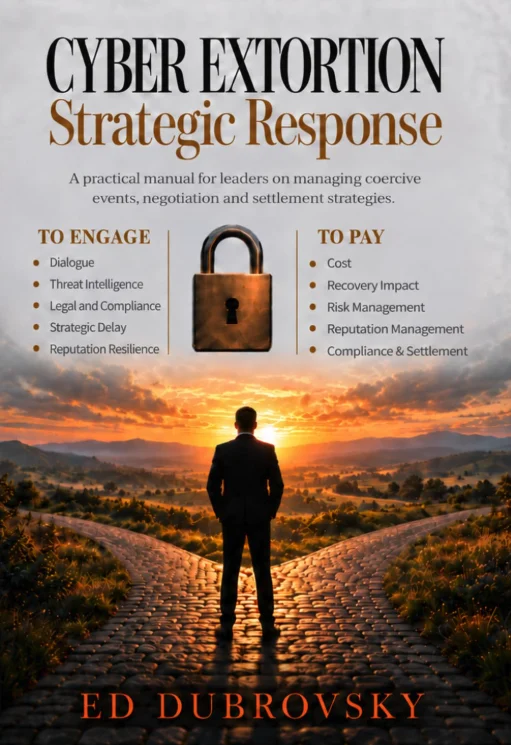
The arrest of Edward Dubrovsky brings the global crackdown on the ShinyHunters ecosystem to the doorstep of the legitimate cybersecurity industry. Dubrovsky, a 54-year-old security professional and author of the 252-page industry text Cyber Extortion Strategic Response, was arrested in Pennsylvania while visiting the state for a major cyber insurance conference.
Federal court records show that Dubrovsky—whose last name is spelled Dobrovsky in official indictments—has been charged with cyber extortion and conspiracy. Specifically, the core complaint filed against him includes counts of "conspiracy to threaten to impair the confidentiality of information with the intent to extort money" and "interference with commerce by threats."
The implications of the arrest extend far beyond a single corporate executive. Sources close to the inquiry indicate that federal investigators are scrutinizing the ecosystem of ransomware negotiators and incident response firms, with additional charges against principals at other security companies reportedly forthcoming.
The investigation has been elevated to a top-tier priority following a devastating breach of the FBI itself. ShinyHunters recently penetrated an online FBI recruitment portal, exfiltrating deeply sensitive records that included internal unit assignments, professional specializations, and confidential medical and psychiatric evaluations of thousands of personnel.

Chronology of Events
The sprawling international crackdown on ShinyHunters and its alleged enablers has unfolded rapidly over the past two months, crossing multiple continents and ensnaring several key figures:
- Early September 2026: Dutch police execute a raid, arresting reformed hacker Pepijn van der Stap in connection with the ShinyHunters investigation. Federal law enforcement begins poring over the vast trove of digital devices seized during the operation.
- Mid-September 2026: Following Van der Stap’s arrest, a high-ranking ShinyHunters operator known by the alias "Rey" assumes operational control of the group. Rey begins publicly taunting the FBI, leaking sensitive stolen data from the bureau’s recruitment portal.
- Late September 2026: Rey attempts to aggressively extort a navigation and digital aviation unit recently spun off from aerospace giant Boeing, a campaign detailed by security researchers just before the suspect’s capture.
- October 5–7, 2026: The annual Cyber Risk Summit takes place at the Loews Philadelphia Hotel. The conference’s largest corporate sponsor is Cypfer, the Canadian security firm co-founded by Edward Dubrovsky. Dubrovsky travels to Pennsylvania to attend the event alongside his CyberSteward team.
- October 7, 2026: Reuters reports that "Rey"—identified as a teenager named Saif Al-din Khader—has been detained by Jordanian authorities and is actively cooperating with FBI investigators.
- October 8, 2026: Federal Bureau of Investigation agents arrest Edward Dubrovsky in Pennsylvania on cyber extortion and conspiracy charges.
- October 9, 2026: U.S. court documents formally initiate the transfer of Dubrovsky’s case to the U.S. District Court for the Eastern District of Texas, which sources confirm has become the central command post for the national ShinyHunters investigation. Concurrently, FBI Director Kash Patel issues a statement acknowledging the arrest of a Canadian national in Pennsylvania, though initially withholding specific names.
Supporting Data & Industry Context
The ShinyHunters syndicate has established itself as one of the most prolific and destructive data-extortion cartels operating in the digital landscape. According to intelligence compiled by federal law enforcement, the group typically relies on sophisticated phishing campaigns and stolen corporate credentials to infiltrate Software-as-a-Service (SaaS) providers and cloud environments. Once inside, they siphon massive volumes of proprietary and personal data, threatening to publish or auction the information on underground forums unless exorbitant cryptocurrency ransoms are met.
The FBI estimates that ShinyHunters has successfully extorted more than $70 million from corporate and institutional victims globally over the course of the year alone.
The arrest of Dubrovsky places a glaring spotlight on the unregulated and secretive world of ransomware negotiation. In his professional writing and public appearances, Dubrovsky frequently championed a nuanced approach to dealing with digital extortionists. In an excerpt from his book, Cyber Extortion Strategic Response, he emphasized a core operational philosophy:
"At the heart of the book is a critical distinction: communicating with a criminal is not the same as negotiating a payment, and negotiating is not a commitment to pay. Engagement can serve other objectives, including testing claims, gathering information, creating time, and preserving options while the organization evaluates its next move."
However, federal investigators are now examining whether certain advisory entities crossed the legal line from legitimate third-party negotiation and risk mitigation into active collusion, profit-sharing, or conspiracy with the very threat actors they were hired to neutralize.

Official Responses and Legal Status
Despite the magnitude of the arrests, official channels have remained tightly managed. FBI Director Kash Patel released a brief statement via social media platform X (formerly Twitter) confirming that a Canadian man had been apprehended in Pennsylvania on suspicion of assisting ShinyHunters. However, the Director’s initial statement did not name Dubrovsky, and the FBI’s press office has officially declined to comment further on the ongoing prosecution.
Judicial records indicate that Dubrovsky is currently being held at a federal detention facility in Philadelphia. Available dockets reveal that he does not yet have a retained defense attorney of record, nor has the court formally appointed a public defender to represent him. Legal experts anticipate a complex multi-jurisdictional trial, given that the case has been reassigned to the Eastern District of Texas, where federal prosecutors have established a specialized task force to handle the fallout of the ShinyHunters compromises.
Meanwhile, representatives for CyberSteward have not yet issued a public statement regarding the arrest of their co-founder, and inquiries directed to the firm’s leadership remained unanswered at the time of publication.
Implications for the Cybersecurity and Insurance Sectors
The unfolding legal drama surrounding the ShinyHunters probe carries profound, long-term implications for the cybersecurity industry, particularly firms specializing in incident response, cyber insurance brokerage, and ransomware negotiation.
- Increased Regulatory Scrutiny: For years, the practice of paying ransoms and utilizing specialized negotiators has operated in a legal and regulatory gray area. Law enforcement agencies have frequently criticized ransom payments for fueling the cybercrime economy. The indictment of a prominent industry author and executive suggests that federal prosecutors are willing to scrutinize the backroom dealings of incident response firms, potentially criminalizing practices previously viewed as standard corporate crisis management.
- The Cyber Insurance Ecosystem: Cyber Risk Summits and insurance providers rely heavily on trusted advisory firms to manage catastrophic breaches. With a primary sponsor of a major industry conference now sitting in a federal detention cell facing conspiracy charges, insurance underwriters are likely to reevaluate their partnerships, risk assessments, and coverage terms regarding ransom reimbursements.
- Vulnerability of National Security Contractors: The unprecedented breach of the FBI’s recruitment database—yielding psychiatric, medical, and operational details of federal agents—has exposed critical vulnerabilities in government-facing digital infrastructure. The cooperation of teenage hacker Saif Al-din Khader and the simultaneous pursuit of alleged enablers like Dubrovsky demonstrate a whole-of-government resolve to dismantle the entire infrastructure of the ShinyHunters enterprise.
As federal authorities continue to comb through the digital evidence seized from Pepijn van der Stap in the Netherlands and analyze the confessions of cooperating co-conspirators, industry insiders warn that this may only be the opening chapter of a much wider reckoning within the global cybersecurity sector.
This is a developing story. Further updates, legal filings, and institutional responses will be added as verified information becomes available.