










In the sprawling digital landscape of search engine optimization (SEO), most websites compete for visibility based on relevance and technical performance. However, a select category of sites faces a much higher hurdle. If your content deals with the critical intersections of human existence—our health, our finances, our legal rights, and our safety—you are operating in the high-stakes realm of YMYL: "Your Money or Your Life."
For these websites, standard SEO tactics are insufficient. Google subjects this content to rigorous, specialized scrutiny, demanding an unparalleled level of accuracy and authority. As the search landscape shifts toward AI-driven results, understanding YMYL is no longer optional; it is the fundamental requirement for survival in organic search.
Main Facts: Defining the YMYL Paradigm
The term "Your Money or Your Life" was coined by Google to categorize content that could potentially impact a user’s future happiness, health, financial stability, or safety. Unlike a blog post about the best local pizza or the latest fashion trends, YMYL content carries significant weight.
What Constitutes YMYL?
YMYL topics are defined by the risk of harm should the information provided be inaccurate or deceptive. Key categories include:
- Financial Advice: Investment strategies, tax guidance, retirement planning, and insurance.
- Medical and Health: Clinical advice, symptom checkers, drug information, and mental health resources.
- Legal and Governmental: Legal rights, voting information, social services, and immigration processes.
- Safety and Civic Information: Disaster response, public safety, and news regarding major civic events.
The core mission of Google’s search algorithm is to ensure that when a user searches for a life-altering question—such as "how to manage a medical crisis" or "how to file for bankruptcy"—they are met with professional, verified, and reliable information.
Chronology: The Evolution of Search Standards
The rise of YMYL did not happen overnight. It is the result of a long-term evolution in how Google manages the relationship between information and user welfare.
- Pre-2015: The Wild West of Content. Early SEO focused primarily on keyword density. While Google attempted to penalize "thin" content, the distinction between lifestyle blogs and professional medical advice was blurred.
- 2015–2018: The Emergence of Quality Raters. Google introduced and later formalized the Search Quality Evaluator Guidelines. This was the first major step in human-in-the-loop assessment, where human testers provided feedback on page quality, specifically flagging "harmful" content.
- 2019: The "Medic" Update. This algorithm update sent shockwaves through the SEO community, disproportionately impacting health and wellness sites. It signaled that Google was prioritizing scientific consensus and professional credentials over mere content length.
- 2022: The "E" is Added. Google expanded the E-A-T framework (Expertise, Authoritativeness, Trustworthiness) to E-E-A-T, adding the first "E" for Experience. This acknowledged that first-hand experience (e.g., a patient sharing their treatment journey) is as valuable as theoretical expertise.
- 2024 and Beyond: The AI Integration. With the rise of AI Overviews and LLM-generated search responses, Google has tightened its requirements. AI can hallucinate; therefore, human-verified, transparent sourcing has become the ultimate safeguard for YMYL sites.
Supporting Data: Why Trust Matters
The statistical reality of YMYL content is simple: users do not tolerate inaccuracy in these fields. Research into search behavior consistently shows that users abandon sites that feel "amateurish" when seeking medical or financial guidance.
The E-E-A-T Framework in Action
Google’s Quality Raters use E-E-A-T as a mental model. While not a direct "ranking signal" in the traditional sense, it is the primary benchmark for the algorithms that do determine rankings.

- Experience: Does the content creator have real-world exposure to the topic?
- Expertise: Does the author hold relevant certifications or professional standing?
- Authoritativeness: Is the website a known, respected entity in its industry?
- Trustworthiness: Is the site secure, transparent, and factual?
Data suggests that sites with clearly marked author biographies, professional peer-review processes, and visible "about us" pages (outlining editorial policy) see higher long-term retention and stability in search results compared to anonymous or low-authority blogs.
Official Responses and Industry Standards
Google’s stance remains consistent: "We want to provide the most reliable information possible." In their official Search Quality Evaluator Guidelines, Google explicitly states that they use human raters not to influence individual rankings directly, but to grade the search engine’s performance.
The Role of Human Oversight
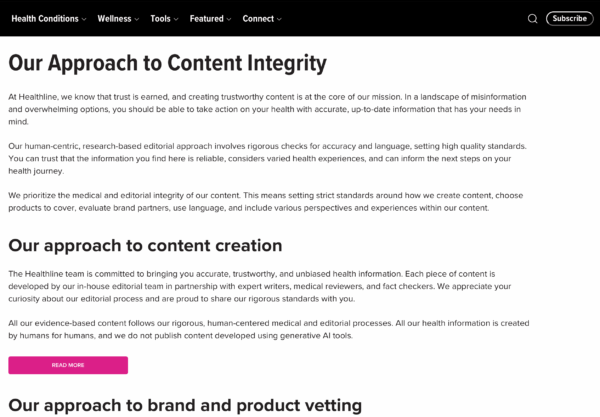
Despite the efficiency of AI, Google has been clear in its public statements: AI is a tool, not a source of truth. For YMYL topics, Google’s algorithms look for indicators that a human expert has verified the AI’s output. This is why major platforms like Healthline or Investopedia maintain strict editorial boards where medical doctors or certified financial planners review every piece of content.
The Shift Toward Structured Data
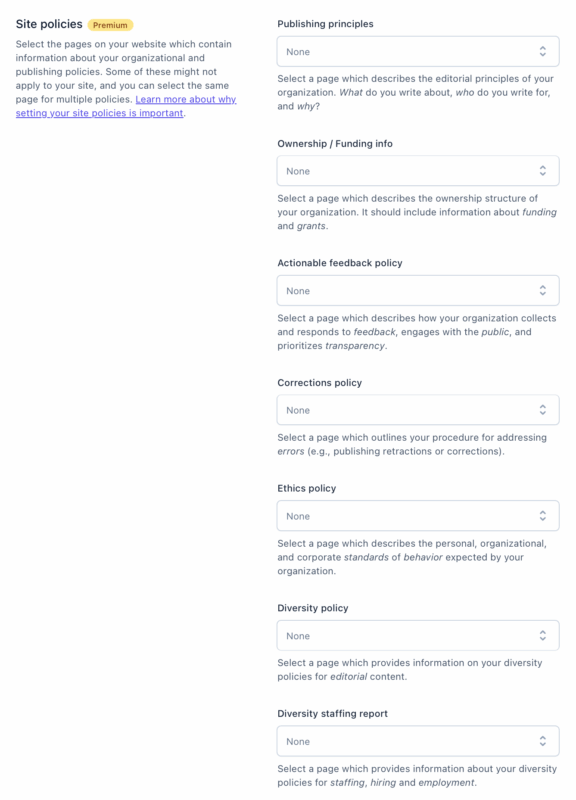
Google now relies heavily on schema markup—specifically publishingPrinciples—to interpret a site’s intent. By utilizing structured data, site owners can programmatically tell Google who wrote the article, who verified it, and what the editorial standards of the publication are. This machine-readable transparency is becoming the gold standard for high-ranking YMYL pages.
Implications for Content Creators
If you manage a website in the YMYL sector, the path forward is clear. You must transition from a "content farm" mentality to a "publishing house" mentality.
1. Transparency is Non-Negotiable
You must be transparent about your editorial process. If you provide financial advice, you must disclose your funding sources and potential conflicts of interest. If you provide health advice, you must state your medical review process.
2. Invest in Expert Contributors
Gone are the days when a generalist writer could produce "good enough" content on complex topics. You need subject matter experts (SMEs). If you cannot hire them full-time, consider a contributor model where experts review and sign off on content, with their credentials prominently displayed.
3. Leverage Structured Data (Schema)
Using tools like Yoast SEO Premium, site owners can implement schema markups for publishingPrinciples, correctionsPolicy, and medicalAudience. These aren’t just technical checkboxes; they are signals to Google that your site is a legitimate, accountable organization.
4. The "AI + Human" Synergy
AI can help with the heavy lifting of drafting, but it should never be the final publisher for YMYL content. The "human-in-the-loop" model—where AI generates, and a qualified expert reviews—is the only way to satisfy both the user’s need for information and Google’s need for accuracy.
5. Continuous Improvement
YMYL sites should not "set and forget." Content should be periodically audited for relevance. If a tax law changes or a medical guideline is updated, the content must be updated immediately. Google rewards "freshness" in YMYL categories because the cost of outdated information is far higher than in other niches.
Conclusion: The Future of YMYL
The digital landscape is moving toward a future where "content" is cheap and ubiquitous, but "truth" is a premium commodity. By embracing the principles of YMYL, you are not just optimizing for a search engine; you are building a brand rooted in integrity.
The intersection of E-E-A-T and technical SEO is where the winners of the next decade will be decided. By prioritizing your audience’s well-being and backing your claims with professional expertise, you satisfy the requirements of Google’s algorithms while building a loyal, trusting audience. In the world of YMYL, trust is not just a moral imperative—it is your most valuable asset.



