











In a startling breach of corporate security that highlights the intense, high-stakes nature of the artificial intelligence industry, a 35-year-old software engineer at OpenAI has been arrested by federal authorities. Abdulrahman Alfozan, a Saudi national who joined the company in July 2025, is accused of orchestrating a clandestine surveillance operation within the company’s San Francisco headquarters. The incident, which reads like a plot from a corporate thriller, has sent shockwaves through Silicon Valley and prompted a swift, aggressive response from both the company and the U.S. Department of Justice (DOJ).
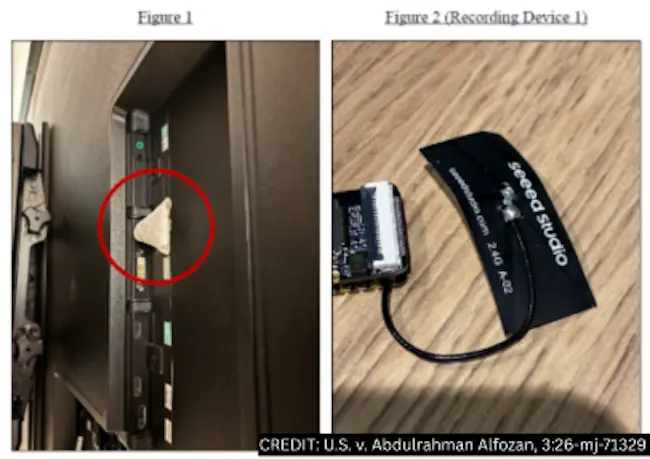
The core of the allegations centers on the discovery of a crude yet calculated surveillance device—a recorder wrapped in toilet paper and tucked behind a television in a high-security executive conference room. The arrest marks a rare and chilling intersection of advanced AI technology and old-fashioned corporate espionage.
The Discovery: A Breach in the Inner Sanctum
The security breach was identified on September 30, when OpenAI staff discovered an unauthorized device plugged into a USB port on the back of a television set in a primary executive conference room. According to court documents filed by the Department of Justice, the room was a hub for sensitive discussions, frequently playing host to meetings involving proprietary research, future product roadmaps, high-level government engagements, and confidential commercial partnerships.
OpenAI’s internal security apparatus swung into action immediately. Utilizing the company’s own sophisticated AI models to analyze the provenance and digital footprint of the device, the security team successfully traced the hardware back to a specific employee: Alfozan. The company quickly escalated the matter, referring the case to the Federal Bureau of Investigation (FBI).
“We discovered a sophisticated recording device that was hidden inside one of our offices,” OpenAI stated in a post on X. “We used our models to understand the device and where it had come from, identifying that a specific employee had planted it a few days earlier.”
Chronology of a Failed Espionage Operation
The trail of evidence leading to Alfozan’s October 9 arrest is as damning as it is detailed. Investigators have reconstructed a timeline that suggests a premeditated, multi-day effort to undermine the company’s internal security.
Pre-Installation Reconnaissance
Prior to September 28, Alfozan reportedly utilized internal company productivity tools to conduct a series of tactical inquiries. These searches were not related to his engineering responsibilities; rather, they focused on mapping out the physical security and administrative rhythm of the office. He allegedly queried building addresses, the seating capacity and scheduling calendars of various meeting rooms, and—most tellingly—the specific locations where company leadership and executives conducted their business.

The Planting of the Device
The DOJ alleges that the primary recording device was installed on September 28. Security camera footage obtained by investigators showed Alfozan lingering in the vicinity of the conference room on multiple dates prior to the discovery, despite having no legitimate business or authorization to be in that space or to attend the meetings held within.
The Second Device and the Smoking Gun
The investigation took a dramatic turn on October 5. Security footage captured Alfozan entering the same conference room and appearing to inspect the area behind the television where the first device had been discovered. That same day, he inadvertently provided investigators with a secondary piece of evidence.
Security staff discovered a bag left unattended in a different room within an OpenAI facility. Upon inspecting the bag to determine its owner, they found Alfozan’s wallet and official company identification, along with a second recording device that matched the technical specifications of the one recovered from the conference room.
Supporting Data: The Digital Footprint
Perhaps the most significant evidence against Alfozan lies in his digital history. Prosecutors have highlighted a chatbot account associated with Alfozan’s spouse, which they argue was used as a tool to facilitate the surveillance plot. The account shared numerous identifiers with Alfozan’s own professional chatbot account, and the query history between September 24 and September 30 reveals a clear trajectory of intent.
According to court filings, the account submitted a series of highly specific prompts:
- Building and Customization: Requests were made for instructions on how to build a continuous audio recorder, customize Wi-Fi connectivity, and improve the quality of live audio streaming.
- Obfuscation: The user requested techniques to encrypt the SD card to prevent unauthorized access to the recordings.
- Technical Specifics: On September 27 and 28—the days immediately preceding the installation of the bug—the account submitted queries specifically related to the hardware found in the conference room, including its unique Media Access Control (MAC) address and its custom header.
These prompts paint a picture of an individual attempting to leverage AI to refine a manual spying operation, effectively using the technology he was hired to build against his own employer.
Official Responses and Corporate Stance
The response from OpenAI has been measured but firm. The company confirmed that Alfozan was terminated immediately following the discovery. In an effort to reassure stakeholders, partners, and the public, OpenAI emphasized the limited scope of the breach.
“At this time, we have no indications of this individual inappropriately accessing or exfiltrating model weights, source code, or customer data,” the company stated. By drawing a clear line between the physical surveillance of meetings and the digital theft of intellectual property, OpenAI is attempting to maintain confidence in the integrity of its core AI assets.
The federal government, however, is treating the incident with the gravity of a national security threat. FBI Director Kash Patel issued a pointed statement following the arrest, noting, “Protecting American AI innovation is essential to safeguarding our nation’s economic strength and national security, and the FBI views that mission as one of our highest counterintelligence priorities.”
Implications for the AI Industry
The arrest of Alfozan serves as a wake-up call for the entire tech sector. As AI companies become the new "national champions" of the global economy, the competitive pressure to stay ahead has created a culture where the value of information is astronomical.
The Human Element of Cybersecurity
For years, the cybersecurity conversation in AI has focused on defending against external hackers, state-sponsored cyberattacks, and prompt injection vulnerabilities. The Alfozan case is a stark reminder that the "insider threat"—a trusted employee with authorized access to physical facilities—remains one of the most difficult vectors to defend against.
The Normalization of AI-Assisted Crime
The use of chatbot queries to research the technical specifications of surveillance hardware represents a chilling evolution in criminal activity. As these tools become more capable, the barrier to entry for conducting sophisticated corporate espionage is lowered. If an employee can use an AI model to troubleshoot the construction of an illegal listening device, it forces companies to reconsider not only their physical security but also their internal monitoring of employee search and query behaviors.
Future Legal Consequences
Alfozan currently faces a charge of using or endeavoring to use a device to intercept oral communications. If convicted, he faces a potential sentence of up to five years in federal prison and a fine of up to $250,000, along with three years of supervised release. Legal experts suggest that the DOJ may look to make an example of this case to deter others who might consider leveraging their positions within critical technology firms to facilitate industrial or state-sponsored espionage.
As the investigation continues, the tech community will be watching closely to see if additional evidence emerges regarding the motive. For now, the case of the toilet-paper-wrapped bug serves as a sobering reminder that even in the most futuristic of industries, human greed and curiosity remain the ultimate variables in the security equation. OpenAI, for its part, remains in the crosshairs of scrutiny, tasked with proving that it can secure not just its algorithms, but its hallways as well.



