









For nearly two decades, the meta description was the "holy grail" of search engine optimization (SEO). Webmasters spent countless hours crafting the perfect 160-character blurbs, meticulously injecting primary keywords to entice users to click on their search results. It was a golden rule of the industry: write a compelling meta description, and the search engine will reward you with higher click-through rates (CTR).
However, the landscape of search has shifted dramatically. Google’s algorithms have evolved from simple crawlers to sophisticated AI-driven entities capable of parsing page content in real-time. In many cases, Google now entirely ignores the meta description provided in the HTML, opting instead to generate dynamic snippets based on the specific query a user types into the search bar. This evolution has left many marketers questioning the value of meta descriptions in 2026. Are they a relic of the past, or do they still hold utility in a world dominated by Large Language Models (LLMs) and search generative experiences?
The Evolution: From Static Snippets to Dynamic Synthesis
To understand the current state of meta descriptions, one must look at the chronology of Google’s search results. In the early 2000s, search engines were largely static. A meta description served as the definitive "ad copy" for a page. If you told Google that a page was about "discount running shoes," it would faithfully display that text to the user.
As the search engine matured, Google began prioritizing relevance over manual input. If the text on your page was more descriptive of a user’s specific query than your meta description, Google would slice the page content to create a bespoke snippet. This was the first major blow to the "meta description strategy."
Today, we have entered the era of Generative AI. Platforms like ChatGPT, Claude, and Google’s own Gemini are not just indexing pages; they are synthesizing information. This transition has fundamentally changed the criteria for how a snippet is chosen. It is no longer about matching a keyword; it is about providing the most accurate summary of the user’s intent.
Official Guidance: What Does Google Actually Say?
Despite the rise of AI-generated snippets, Google has not officially deprecated the meta description tag. According to the Google Search Central documentation, the search engine still explicitly acknowledges the role of these tags:
"Google primarily uses the content on the page to automatically determine the appropriate snippet. We may also use descriptive information in the meta description element when it describes the page better than other parts of the content."
This nuance is critical. Google treats the meta description as a "hint" or a "fallback." If your page is a complex, data-heavy product page—where the content might be a jumble of technical specifications, reviews, and dynamic pricing—the AI might struggle to extract a cohesive summary. In these instances, a well-written meta description acts as an anchor, providing the search engine with a clear, human-authored summary that it can trust.
John Mueller, Google’s Search Advocate, recently reinforced this perspective on industry forums. Mueller noted that while meta descriptions are "definitely not a requirement" for ranking, they remain "worthwhile" for pages that you care about. He suggested that writing a meta description often forces the content creator to clarify the focus of the page, which inadvertently leads to better content structure.
The Role of AI Crawlers and Semantic Search
One of the most compelling arguments for continuing to write meta descriptions lies in the rise of AI search crawlers. Unlike traditional search bots that look for keyword density, AI models are trained on semantic understanding. When a generative AI model crawls your site to answer a user’s query, it looks for "ground truth" labels.
A meta description serves as a high-level summary that helps the AI model understand the context of a page quickly. If your product page is dense with 5,000 words of specs and customer testimonials, the AI needs a "North Star" to determine the primary value proposition of that page. By providing a clear meta description, you are effectively "spoon-feeding" the AI the exact summary you want it to associate with your brand.

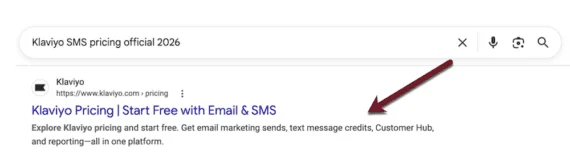
Consider the case of Klaviyo’s SMS pricing page. When a user searches for "Klaviyo SMS pricing official 2026," both Google and ChatGPT surface the specific meta description provided by the company: "Explore Klaviyo pricing and start free. Get email marketing sends, text message credits, Customer Hub, and reporting — all in one platform." By crafting this snippet, Klaviyo ensured that its brand messaging—not a random selection of pricing table cells—was what the user saw first.
Implications for Content Strategy
If you are a site owner or an SEO professional, the strategy for meta descriptions must pivot from "keyword stuffing" to "user-centric summarizing." Here is how you should approach them in the current environment:
1. Prioritize High-Intent Pages
You do not need to write unique meta descriptions for every single page of a 50,000-page e-commerce site. Instead, focus your human efforts on:
- Homepages: The front door of your brand.
- Category Pages: These often act as landing pages for broad searches.
- Product Detail Pages (PDPs): High-intent pages where the conversion happens.
- Service Pages: Where you need to communicate a specific value proposition.
2. The "Snippet-First" Approach
When writing, assume the user is asking a question. Your description should answer that question within 155–160 characters. Avoid repeating the page title; instead, provide the benefit of the page. If the page is a guide, mention what the reader will learn. If it is a product, mention why it solves the user’s problem.
3. Programmatic Generation for Scale
For large, database-driven sites, manual writing is impossible. However, the solution is not to ignore the tags. Use Generative AI (via APIs from OpenAI or Anthropic) to generate meta descriptions based on your product data.
- The Workflow: Feed the AI your product specs, features, and key benefits.
- The Constraint: Instruct the AI to adhere to a specific character count and tone.
- The Human Audit: Always perform a spot-check on your top 10% of high-traffic pages. AI can hallucinate or produce generic, repetitive text; manual review ensures your brand voice remains intact.
The Future of Search: Beyond the Blue Link
As we look toward 2027 and beyond, the "blue link" search result is becoming a smaller part of the ecosystem. We are moving toward an "answer-first" model. In this environment, your meta description is not just an invitation to click; it is a piece of data that helps AI platforms categorize your expertise.
If your meta description is poor, the search engine might generate an inaccurate snippet, which could lead to lower CTRs or, worse, users bouncing because the snippet didn’t match their expectations. If your meta description is excellent, you gain a small but significant degree of control over how your brand is presented in an AI-synthesized world.
Conclusion: The "No Downside" Policy
Ultimately, the debate over whether meta descriptions are "necessary" misses the point. There is zero downside to including them. They do not negatively impact your SEO, they provide metadata that helps search engines understand your site, and they offer a safety net for those instances where Google’s AI might otherwise pull a disjointed sentence from your footer or sidebar.
In the modern SEO toolkit, the meta description is not a magic lever for rankings, but it remains a vital component of user experience and brand communication. By treating them as high-level summaries rather than keyword playgrounds, you ensure that your site remains optimized for both the search engines of today and the generative AI platforms of tomorrow.
Invest the time in your most critical pages, leverage AI for the long tail, and maintain a human-centric approach to your content. In the end, the goal of search remains the same: to connect a user’s intent with the perfect answer. A well-crafted meta description is often the bridge that makes that connection possible.