









A decade ago, launching a professional website was a significant barrier to entry for many entrepreneurs. It required either a steep learning curve in HTML, CSS, and JavaScript or a hefty investment to hire professional web developers. Today, the landscape of the digital world has been fundamentally altered by generative AI. With a simple string of text prompts, users can now generate a high-end, functional website in minutes. This shift represents more than just a technological convenience—it is a democratization of the internet.
The Evolution of Web Creation: What is an AI Website Builder?
An AI website builder is a sophisticated generative AI platform specifically engineered to handle the complexities of web architecture. Unlike standard automation tools that simply schedule social media posts or perform basic maintenance, these builders function as collaborative design partners.
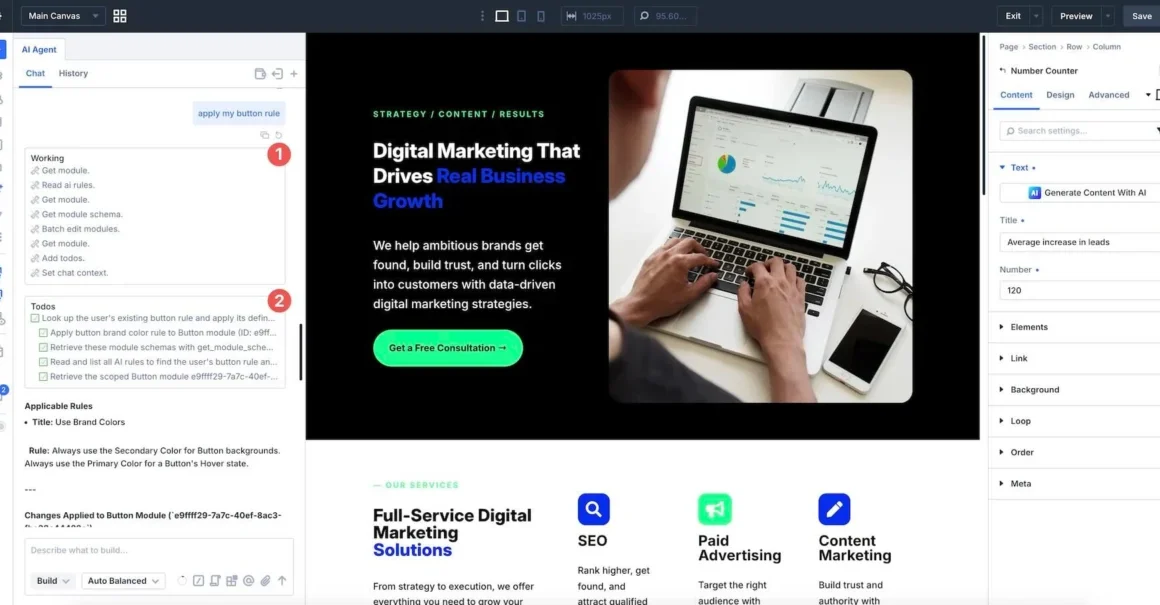
When a user interacts with an AI builder, they are not merely filling out a template. Instead, they provide context—describing their business model, target audience, preferred brand aesthetics, and primary goals. The AI then synthesizes this information to generate a comprehensive, professional-grade first draft. This draft includes responsive layouts, color palettes, typography, and even context-aware placeholder copy. It is not just about automation; it is about providing a visual editor that grants the user full creative control over the AI-generated foundation.
Chronology of Adoption: The Rise of No-Code Solutions
The rapid rise of AI-powered design tools follows a clear trajectory of industry transformation:
- Pre-2015: The "Hard-Coded" Era, where custom websites required manual programming or expensive agency work.
- 2015–2020: The Rise of Drag-and-Drop, where platforms like WordPress and Squarespace made design easier but still time-consuming to structure correctly.
- 2021–2024: The Emergence of Generative AI, where LLMs began to interpret user intent to build site structures.
- 2025 and Beyond: The "Vibe Coding" Era, where natural language processing allows users to build functional sites by describing their vision in plain English.
Market research from Custom Market Insights underscores this rapid transition, forecasting that the global AI-powered website builder market will surge from $3.41 billion in 2026 to $14.78 billion by 2035. Precedence Research offers an even more aggressive outlook, projecting growth toward $17.4 billion within the same timeframe. This exponential growth is driven by a singular demand: businesses want to get online faster, cheaper, and with less technical overhead.
Supporting Data: Why Businesses are Migrating to AI
The transition to AI-integrated development is not merely a preference; it is a strategic business decision. The primary drivers behind this migration include:
- Vibe Coding (No-Code Development): The removal of technical barriers. Users no longer need to debug scripts. They focus on brand strategy while the AI handles the "heavy lifting" of the codebase.
- Drastic Time-to-Market Reduction: A project that previously required weeks of prototyping can now be achieved in minutes. This agility allows small businesses to pivot their branding and digital presence in real-time.
- Context-Aware Personalization: Modern AI does not just output "generic" templates. By analyzing industry-specific data, it creates functional distinctions—such as an e-commerce storefront for a retail shop versus an interactive portfolio for a photographer—based on the user’s specific input.
Official Perspectives: Industry Insight
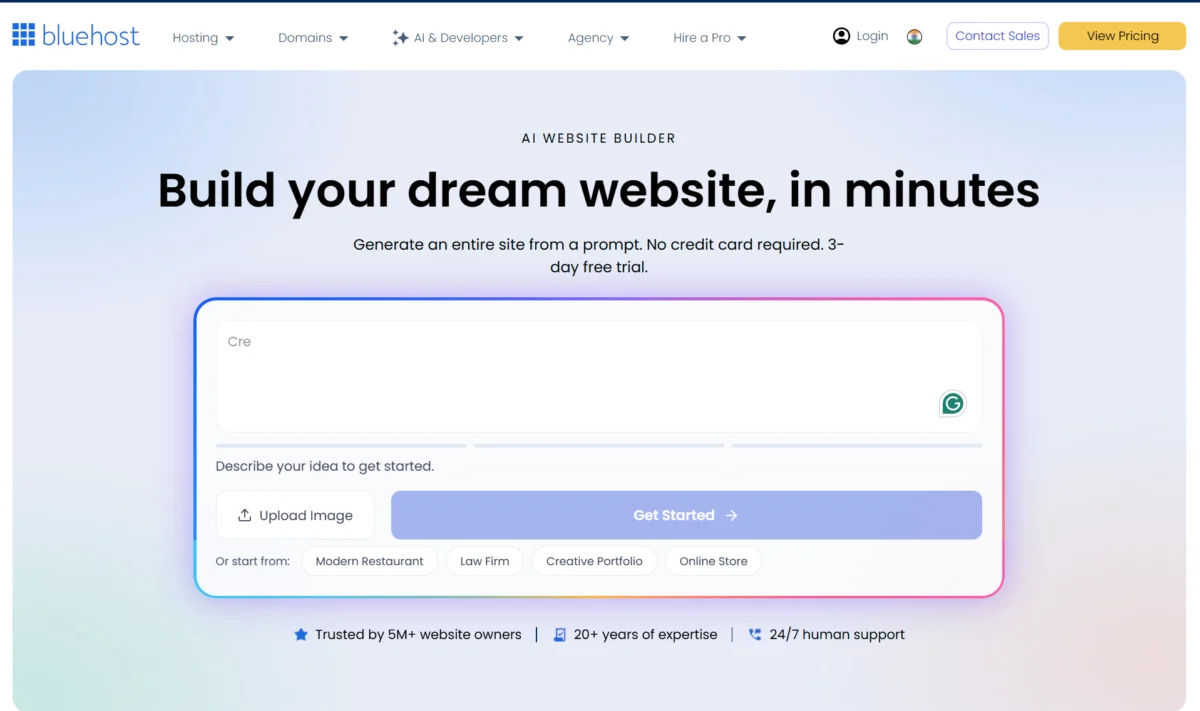
The industry shift is being championed by leaders who view AI as a tool to remove friction. Sachin Puri, CEO of Bluehost, has emphasized that the true power of AI lies in "removing complexity for users." By centralizing domain registration, managed WordPress hosting, and design generation, platforms like Bluehost are streamlining the process.
According to experts, the goal is to allow creators to focus on their unique value proposition—their story, their products, and their service—rather than the technical configuration of servers, SSL certificates, or responsive media queries.
Step-by-Step: The Modern Workflow
To move from an idea to a live, functional website, the workflow has been simplified into five distinct stages:
1. Preparing the Foundation
Before engaging the AI, a user must have their prerequisites in order. This includes a registered domain name (the digital address), reliable web hosting, and an SSL certificate for security. A robust Content Management System (CMS), such as WordPress, is still recommended for long-term scalability and data ownership.
2. Strategic Prompting
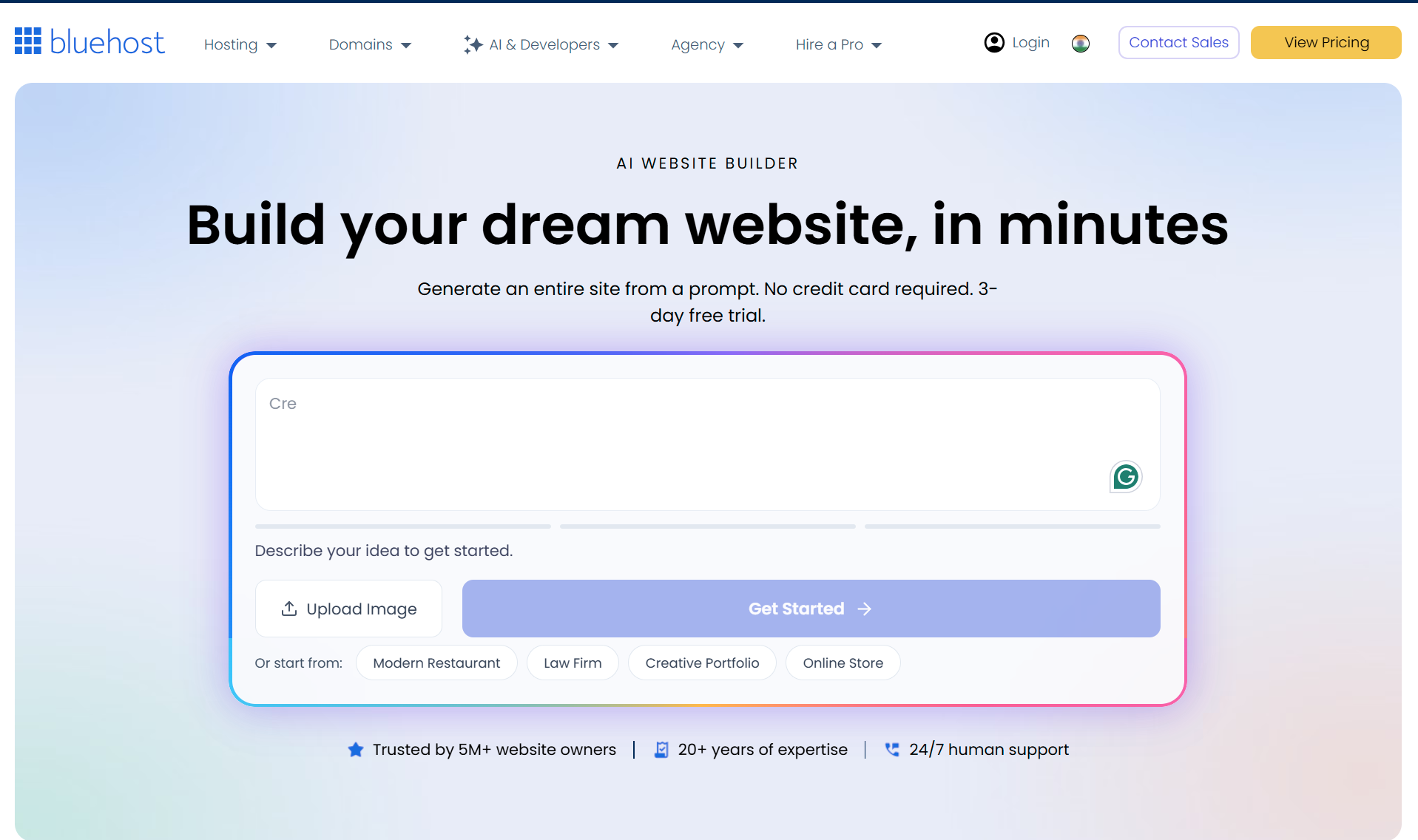
The quality of the website is directly proportional to the quality of the prompt. Instead of generic descriptions, users should define their target demographic, brand tone, and core business goals. The more detailed the context, the less "post-generation" editing is required.
3. Automated Generation
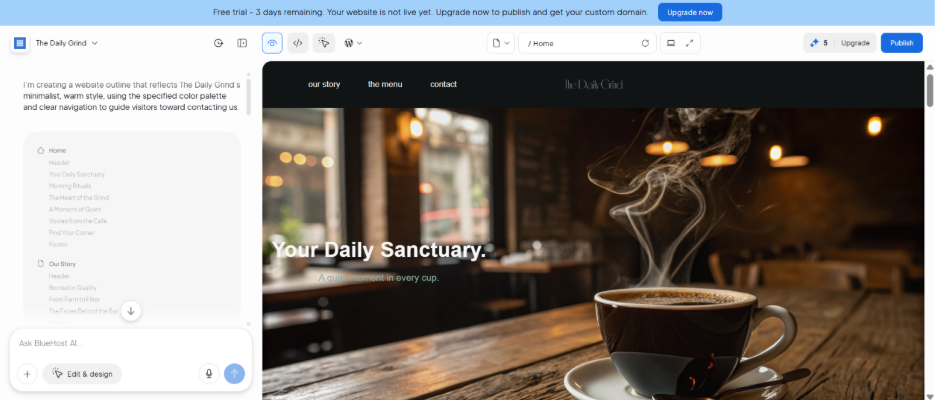
The builder analyzes the prompt to organize site structure, generate page layouts, and suggest relevant imagery. This creates a cohesive "skeleton" of the site in minutes.
4. Human-in-the-Loop Refinement
This is the most critical stage. The AI provides a draft, but the user provides the "human touch." This involves replacing placeholder text with authentic brand messaging, uploading unique images, and refining the color scheme to ensure the site reflects a unique identity rather than an algorithmically generated output.
5. Launch and Optimization
Once live, the process shifts from creation to maintenance. This involves checking for broken links, ensuring mobile responsiveness, and implementing an SEO strategy.
Implications: The New Standard for Digital Presence
The integration of AI into web design has profound implications for the digital economy.
Accessibility and Inclusion
AI builders have made it possible for individuals with disabilities or those without a computer science background to participate in the digital economy. With tools that assist in generating alt text and suggesting accessible design structures, the web is becoming more inclusive.
The Quality vs. Quantity Paradox
A potential implication of this shift is the saturation of the web with "AI-bland" content. Because AI often relies on existing patterns, there is a risk that sites may begin to look identical. The "best practice" for the future, therefore, is to use AI for the structure and foundation, while injecting human-led creativity for the content, testimonials, and brand narrative.
SEO and Technical Sustainability
While AI can build a site, it cannot build an authority. An SEO strategy remains a manual, human-centric endeavor. Users must ensure their sites are crawlable, their XML sitemaps are active, and their metadata is optimized. Tools like Yoast SEO Premium, when paired with AI builders, provide the necessary guardrails to ensure that a fast-launched site is also a discoverable one.
Conclusion: Build Smarter, Not Harder
The era of "coding to build" is rapidly giving way to the era of "designing to express." By leveraging AI, the barrier to entry for professional web development has been lowered to a point where the only limit is the user’s vision. Whether you are a small business owner, a freelance creative, or an entrepreneur, the ability to generate a professional, secure, and SEO-friendly website in minutes is now a standard tool in the modern digital toolkit.
As the technology continues to evolve, the distinction between a "developer-built" site and an "AI-assisted" site will continue to blur. The winners in this new digital landscape will be those who balance the speed of AI generation with the unique, authentic insights that only a human creator can provide.