










By Global Cybersecurity Desk
Published: September 25, 2026
Executive Summary
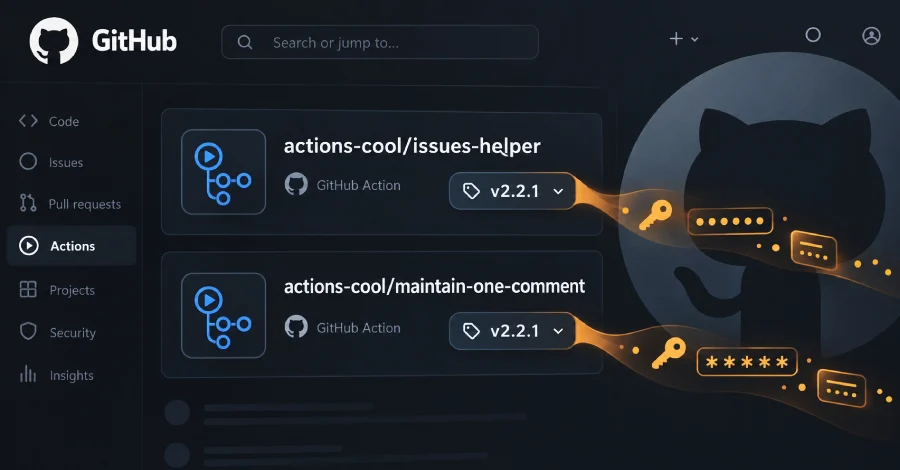
In a startling display of persistent software supply chain vulnerabilities, two popular GitHub Actions repositories associated with the infamous "Mini Shai-Hulud" threat campaign were briefly brought back to life this September, months after being flagged and disabled for malicious activity. Security researchers at software supply chain firm Socket revealed that the repositories—initially compromised during a wave of attacks in May 2026—mysteriously regained public accessibility on September 16, 2026, without having their malicious version tags cleaned up or remediated.
Because the release tags still pointed directly to the malicious payloads injected months prior, any external CI/CD pipeline referencing these actions by mutable version tags automatically resumed downloading and executing the unauthorized code. The incident highlights a frightening reality in modern software development: remediation efforts that rely solely on temporary takedowns or account suspensions can fail if upstream repositories are reinstated without fundamental code sanitization. Security experts are once again urging development teams to abandon mutable version tagging in favor of strict cryptographic pinning via full commit SHAs to defend against "sleeping" supply chain payloads.
Chronology of the Threat: From May to September 2026
To fully understand the gravity of the September re-exposure, it is necessary to examine the timeline of the Mini Shai-Hulud campaign, which has continually tested the resilience of open-source ecosystems.
May 18, 2026: The Initial Compromise
The roots of this security failure trace back to May 18, 2026. Threat actors successfully breached two widely used GitHub Actions repositories designed for routine repository housekeeping—such as managing, closing, or commenting on GitHub issues and pull requests. Once inside, the attackers inserted malicious code into the codebase.
Rather than deploying complex zero-day exploits, the injected code was designed for silent reconnaissance and credential theft. Whenever a developer’s CI/CD pipeline executed the compromised action, the payload harvested sensitive environment variables, API tokens, and credentials from the pipeline environment, instantly exfiltrating them to an attacker-controlled infrastructure server (t.m-kosche[.]com).
May 2026: Linking to the Mini Shai-Hulud Cluster
Shortly after the GitHub Actions compromise, threat intelligence analysts at Socket and other security firms connected the dots between the exfiltration domain used in the CI/CD scripts and a concurrent supply chain attack targeting the npm ecosystem, specifically malicious packages disguised within the @antv ecosystem.

Philipp Burckhardt, Head of Threat Intelligence at Socket, noted at the time that the shared infrastructure pointed squarely to a unified threat cluster dubbed "Mini Shai-Hulud," dismissing theories that the incidents were isolated, platform-specific occurrences. Following these disclosures, GitHub Security staff stepped in, taking down the compromised repositories and cutting off the immediate threat.
September 16, 2026: The Accidental Resurrection
For nearly four months, the threat remained dormant while the repositories sat disabled. However, on September 16, 2026, between 11:09 a.m. and 6:16 p.m. GMT+2, both repositories mysteriously became accessible once again.
As Socket researcher Karlo Zanki detailed in an advisory, the reinstatement happened without the upstream release tags being audited, purged, or cleaned. The tags continued to point explicitly to the malicious content introduced back on May 18. Consequently, any automated GitHub Actions workflow configured to fetch the actions via these version tags automatically pulled down the malicious payload upon its next scheduled run or trigger event (such as a new pull request or daily housekeeping schedule).
September 25, 2026: Secondary Takedown and Industry Wake-Up Call
Following alerts and rapid analysis by the cybersecurity community, GitHub Staff intervened for a second time, disabling access to the repositories once again. Visitors attempting to access the pages were met with the standard platform error message:
"Access to this repository has been disabled by GitHub Staff due to a violation of GitHub’s terms of service. If you are the owner of the repository, you may reach out to GitHub Support for more information."
Supporting Data and Technical Mechanics
The mechanics of the Mini Shai-Hulud GitHub Actions attack underscore a unique vulnerability vector in modern DevOps environments. Traditional supply chain security thinking assumes that a malicious actor must constantly innovate—publishing new malicious package versions, taking over fresh developer accounts, or injecting novel workflow scripts to maintain momentum.
The September 2026 incident flipped this assumption on its head. The threat actors did not need to write a single line of new code, set up new command-and-control infrastructure, or launch a new exploit. The existing, unpurged malicious tags served as a time-delayed trigger mechanism.

The Role of Housekeeping Actions
The targeted GitHub Actions perform routine automation tasks that developers often overlook in terms of security scrutiny:
- Closing stale or inactive issues.
- Validating newly opened pull requests.
- Maintaining a single, dynamic bot comment on tracking threads.
Because these tasks run frequently—often on a daily cron schedule or automatically upon repository events—most affected open-source or enterprise repositories likely executed the malicious payload within 24 hours of the repositories being re-enabled.
The Vulnerability of Mutable Tags
The core systemic vulnerability exposed by this incident is the reliance on mutable tags (such as @v1 or @v1.2.0). When developers reference an action using a semantic version tag, they are placing blind trust in the upstream repository owner—or anyone who manages to hijack that account—not to alter the code tied to that tag, or in the platform to properly scrub assets before restoring them.
# VULNERABLE CONFIGURATION: Relies on a mutable version tag
steps:
  - name: Run Housekeeping Action
    uses: username/action-name@v1
If the upstream maintainer or platform restores a repository without ensuring historical tags are cryptographically decoupled from past malicious commits, the mutable tag automatically serves whatever code is currently bound to it at that release reference.
Implications for Software Supply Chain Security
The resurrection of the Mini Shai-Hulud actions serves as a harsh wake-up call for platform administrators, security teams, and software engineers alike. It shatters the illusion of safety provided by temporary remediation measures.
1. The Gaps in Platform Reinstatement Protocols
When cloud hosting and code-hosting platforms take down malicious repositories, standard operating procedures generally focus on immediate containment (stopping the bleeding). However, this incident reveals a potential blind spot in lifecycle management: the lack of systematic payload purging during account or repository restorations. If a repository is flagged for severe terms-of-service violations involving malware, its release history and tagging mechanisms require rigorous sanitization before public accessibility can safely be restored.
2. Blind Trust in CI/CD Ecosystems
CI/CD pipelines have become the preferred soft underbelly for modern cyberattacks. Because build servers operate with elevated privileges, access tokens, and cloud deployment secrets, compromising a single widely used action can yield a massive harvest of credentials across hundreds of downstream projects. Developers frequently audit their application source code while paying scant attention to the third-party actions running inside their workflows.

3. The Necessity of Cryptographic Pinning
Security researchers have long advocated for a shift in how GitHub Actions are consumed. This incident proves that cryptographic pinning is no longer just a "best practice"—it is an absolute necessity for enterprise-grade security.
# SECURE CONFIGURATION: Pinned to a specific commit SHA
steps:
  - name: Run Housekeeping Action safely
    uses: username/action-name@a1b2c3d4e5f67890123456789abcdef012345678
By pinning an action to a full 40-character commit SHA corresponding to a verified, pre-compromise state (in this case, prior to May 18, 2026), developers completely isolate their pipelines from upstream repository tampering, account takeovers, or accidental re-enablement errors. Even if an upstream repository is compromised or goes rogue, a SHA-pinned workflow will refuse to execute unauthorized changes.
Recommendations and Remediation Steps
Security advisory boards, including Socket and independent DevOps watchdogs, have outlined urgent steps that engineering teams must take immediately to verify their CI/CD security posture:
- Audit Workflow Files: Inspect all
.github/workflows/YAML configuration files across all organizational repositories to identify any actions using mutable version tags (@v1,@main,@master, etc.). - Implement SHA Pinning: Convert all third-party GitHub Action references from version tags or branch names to immutable, full commit SHAs.
- Rotate Compromised Secrets: If any workflows executed the affected housekeeping actions during the windows of vulnerability (May 18–May [X], 2026, or September 16–September 25, 2026), immediately rotate all API keys, GitHub Secrets, npm tokens, and cloud deployment credentials exposed to those pipelines.
- Enforce Policy-as-Code: Utilize automated security scanners and linters (such as GitHub Actions security linters) to block the merging of workflow files that fail to utilize commit SHA pinning.
- Monitor Upstream Dependencies: Maintain a software bill of materials (SBOM) and continuous monitoring for CI/CD components, treating pipeline code with the same rigorous scrutiny applied to production application dependencies.
Conclusion
The second takedown of the Mini Shai-Hulud GitHub Actions repositories is more than just a footnote in a seasonal threat report; it is a critical diagnostic of modern software engineering dependencies. It demonstrates that cyber threats in the supply chain do not always announce themselves with novel malware variants or sophisticated zero-days. Sometimes, they simply wait for an open door. By shifting toward immutable infrastructure practices like commit SHA pinning and demanding rigorous platform-level hygiene, the developer community can close these silent doors and build a more resilient digital future.
Found this article insightful? Follow The Hacker News and our Global Cybersecurity Desk on Google News, Twitter, and LinkedIn for ongoing exclusive investigative reports and breaking security intelligence.



