










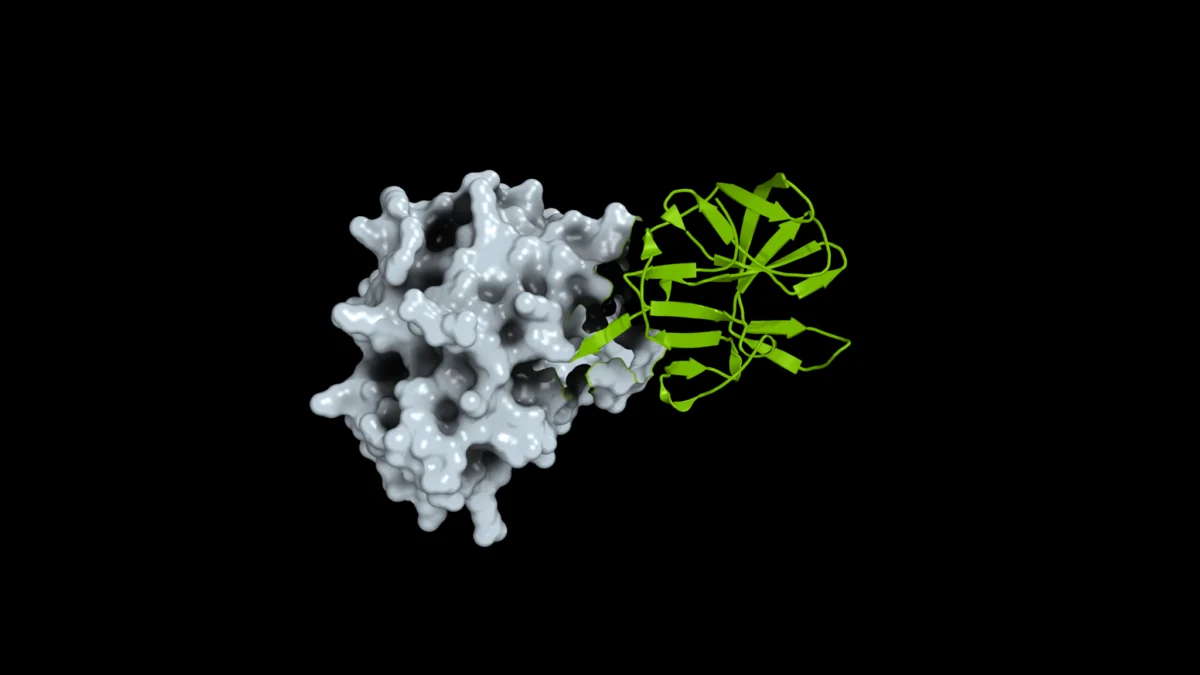
NEW YORK — When the SARS-CoV-2 virus brought the world to a standstill in early 2020, global health researchers possessed a crucial, hard-won advantage: decades of prior academic and clinical research on coronaviruses. Because scientists already understood the fundamental architectures of key viral proteins, they were able to design, test, and manufacture effective vaccines in record-shattering timeframes.
However, public health experts and virologists warn that humanity may not be afforded the same strategic head start when the next novel pathogen emerges. According to risk models from the Center for Global Development, the global community faces a roughly 50% probability of enduring another pandemic as severe as COVID-19 by the year 2050.
In a decisive preemptive strike against future biological threats, an unprecedented coalition of elite research organizations—including NVIDIA, Google DeepMind, and the European Bioinformatics Institute (EMBL-EBI)—has announced the public release of predicted three-dimensional structures for the protein complexes of more than 2,800 viruses. Published openly through the AlphaFold Database, this massive biological dataset aims to transform how the world prepares for, detects, and combats emerging infectious diseases before they can evolve into global crises.
Main Facts
The newly unveiled dataset represents a monumental leap forward in computational structural biology. Inferred using Google DeepMind’s advanced AlphaFold2 artificial intelligence model, the project maps out complex groups of interacting proteins encoded within thousands of viral proteomes. The computational workload was supercharged and scaled using the NVIDIA BioNeMo Inference Runtime, optimizing the pipeline to process thousands of complex protein folding geometries with unprecedented speed.
Crucially, roughly 30% of the protein interactions mapped within this release are completely novel to science, displaying geometrical configurations and spatial interaction shapes that have never before been documented in the Protein Data Bank, the historical repository of experimentally determined protein structures.
To ensure that the global scientific community can build upon these foundations, NVIDIA is also openly releasing the BioNeMo Structure Prediction Pipeline—the exact GPU-accelerated workflow utilized to generate the dataset. This allows independent researchers, academic labs, and biotech startups everywhere to take raw protein sequences and translate them into predicted 3D structures for their own specific research targets.
Chronology of a Breakthrough: From Concept to Global Database
The creation of this expansive viral database is the culmination of years of rapid advancements in artificial intelligence, high-performance computing, and international scientific cooperation.
- The AI Revolution in Biology: The structural biology landscape was radically altered when Google DeepMind introduced AlphaFold, solving the decades-old "protein folding problem" by accurately predicting a protein’s 3D shape from its amino acid sequence.
- The Pandemic Awakening: Following the rollout of COVID-19 vaccines, researchers recognized an urgent need to apply structure-prediction AI not just to known pathogens, but to the vast, largely uncharted universe of viral families capable of jumping species barriers.
- The Computational Scaling Phase: Leveraging NVIDIA’s BioNeMo framework and accelerated GPUs, researchers systematically processed the proteomes of viral families known to infect humans—spanning everything from common-cold coronaviruses and influenza variants to dangerous emerging threats like Mpox.
- Global Coalition Alignment: Organizations including the Coalition for Epidemic Preparedness Innovations (CEPI), EMBL-EBI, Seoul National University, Sungkyunkwan University, the Swiss Institute of Bioinformatics, and the University of Glasgow joined forces to curate, validate, and host the data.
- The United Nations General Assembly Rollout: Coinciding with a high-profile United Nations General Assembly meeting convened by the World Economic Forum in New York City focusing on pandemic preparedness, the dataset officially went live. This expansion brings the total contents of the AlphaFold Database to more than 260 million protein and protein-complex predictions, covering nearly every cataloged protein known to science.
Supporting Data and Technical Architecture
Proteins rarely operate in isolation. In nature, they assemble into complex multi-molecular structures to execute the sophisticated biological functions required for cellular life—and, in the case of viruses, to hijack host cells, evade immune systems, and replicate. Understanding these precise 3D architectures is paramount, as they serve as the exact physical blueprints that targeted vaccines and small-molecule therapeutics must disrupt.
The Bottleneck of Traditional Methods
Historically, determining the atomic structure of a protein required exhaustive experimental techniques such as X-ray crystallography, nuclear magnetic resonance (NMR) spectroscopy, or cryogenic electron microscopy (cryo-EM).
- Time and Cost: Isolating, crystallizing, and analyzing a single protein complex could take years of painstaking laboratory work and cost thousands of dollars per structure.
- The Blind Spots: For thousands of lesser-studied viruses, tropical pathogens, and wildlife-borne vectors, zero structural data has existed—leaving scientists working entirely in the dark when localized outbreaks occur.
The AI Advantage
By contrast, AlphaFold2 optimized with NVIDIA BioNeMo can generate high-confidence structural predictions in mere minutes. While computational predictions do not permanently replace empirical laboratory testing, they fundamentally change the research pipeline. Scientists can now bypass years of trial-and-error guesswork, using AI-generated models as high-precision maps to direct their experimental validation efforts instantly.
The dataset covers an extensive phylogenetic breadth, cataloging viruses that systematically target human populations, ensuring that researchers in low-resource settings—who are frequently on the front lines of novel disease outbreaks—have immediate, barrier-free access to critical structural insights.
Official Responses and Perspectives
Leaders across the technology, academic, and public health sectors have hailed the dataset as a watershed moment for global biosecurity and open science.
"Our ambition with the AlphaFold Database has always been to democratize access to foundational biology at scale," said Risha Patel, life sciences partnerships manager at Google DeepMind. "This collaboration to bring thousands of viral complexes into the database will equip scientists around the world with insights they need to help prepare for future outbreaks."
For academic virologists who spent decades navigating the pre-AI era of structural biology, the impact is deeply personal.
"When I did my Ph.D., there were no structures for any of the proteins we were investigating. It was like working in the dark—we had to guess what was going on," recalled Joe Grove, professor of molecular virology at the Medical Research Council-University of Glasgow Centre for Virus Research. "What we’re trying to do is stockpile some of that knowledge ahead of time. This dataset is a powerful tool for all the researchers doing their Ph.D.s now, giving them high-quality structural data that’s going to accelerate fundamental science."
The technological infrastructure enabling this leap was emphasized by NVIDIA’s research division.
"This database is an engine for hypothesis generation," noted Chris Dallago, applied research science team lead in digital biology at NVIDIA. "We’re enabling biologists and the AI community to investigate protein interactions, not just as single molecules but as complexes, so the whole field can move forward."
Public health institutions also stressed the democratization of data as a vital tool for global health equity.
"Making this data open is critical for understanding viral diagnostics and developing treatments and vaccines," stated Jo McEntyre, interim director of EMBL-EBI. "The dataset also covers lesser-studied viruses and lowers the barriers for scientists in low-resource settings who are confronting outbreaks firsthand."
Implications for Global Health and Future Biodefense
The release of these 2,800+ viral protein complexes marks a paradigm shift from reactive medical countermeasures to proactive biological intelligence gathering.
1. Accelerating Vaccine and Drug Discovery
When a novel pathogen emerges, time is the single most critical variable. Armed with instant structural models of viral complexes, pharmaceutical researchers and academic institutions can immediately design monoclonal antibodies or mRNA vaccine candidates tailored to disrupt viral entry mechanisms, rather than waiting months to visualize the target pathogen in a lab.
2. Empowering Decentralized Science
Historically, structural biology has been concentrated within heavily funded laboratories in wealthy nations. By placing millions of structural predictions into an open-access global database—and open-sourcing the underlying prediction pipelines via GitHub—the coalition is decentralizing biodefense. Researchers in developing nations can now analyze local pathogens with world-class computational precision.
3. Hypothesis Generation at Scale
Because nearly 30% of the mapped protein interactions are entirely unprecedented, the dataset serves as an open canvas for computational biologists, virologists, and machine learning researchers. It provides an endless stream of structural anomalies to study, helping humanity map the evolutionary mechanics of viral families long before they cross over into human populations.
Looking Ahead
As the world confronts an uncertain epidemiological future defined by climate change, shifting animal habitats, and accelerated global travel, initiatives like the AlphaFold Database Pandemic Preparedness Portal offer a powerful countermeasure. By leveraging the combined might of artificial intelligence, accelerated computing, and open-source global collaboration, science is building a digital fortress—stockpiling biological knowledge today so humanity is never caught unprepared tomorrow.
To explore the viral protein complex dataset, visit the AlphaFold Database Pandemic Preparedness Portal. Researchers interested in running their own structural predictions can access the BioNeMo Structure Prediction Pipeline on GitHub.



