










Main Facts
Seven and a half years after the Gutenberg block editor fundamentally reshaped the WordPress landscape, core developers have introduced a long-awaited paradigm shift. WordPress 7.0 officially rolls out PHP-only block registration, a feature that allows developers to build and register custom WordPress blocks using exclusively PHP.
For the first time since the inception of the block architecture, developers can bypass the steep learning curve of React, forgo setting up complex Node.js build pipelines, and ignore the tedious management of NPM packages. By introducing an autoRegister => true flag within the backend register_block_type() function, WordPress now automatically generates the necessary client-side JavaScript required for editor previews and block interactions.
While the feature introduces significant architectural limitations—such as a lack of real-time data reactivity, stateless REST API rendering, and restricted attribute types—it provides a vital lifeline for developers looking to transition legacy PHP projects into modern block-based themes.
Chronology
The journey toward PHP-only block registration spans more than half a decade of core development and community feedback.
- December 2018 (WordPress 5.0): The Gutenberg block editor is introduced to WordPress Core. Traditional block development is established with a dual-registration requirement, forcing developers to write code in both PHP and JavaScript. This immediately alienates a vast portion of the classic PHP-centric developer community.
- 2019–2021: As Full Site Editing (FSE) matures, the community begins heavily debating the barrier to entry for block themes. Complex build tools (like
@wordpress/scripts) and modern JavaScript requirements become major friction points for boutique agencies and solo developers. - 2022: Developers begin experimenting with hybrid themes—wrapping legacy PHP headers, footers, and custom functionality inside rudimentary server-side rendered blocks. However, these workflows require advanced JavaScript knowledge and boilerplate overhead.
- 2023–2025: Discussions within the core contributor team intensify regarding developer experience (DX). The demand for a streamlined approach to server-side rendering without front-end build steps reaches a peak.
- Mid-2026 (WordPress 7.0 Release): WordPress officially ships PHP-only block registration. The feature lands as a game-changing utility designed specifically to solve the legacy migration bottleneck, altering how classic themes transition to modern block-based architectures.
Supporting Data and Technical Realities
To understand the scope of WordPress 7.0’s new feature, one must examine how traditional blocks compare to the new PHP-only approach.
Traditional vs. PHP-Only Registration
Traditionally, registering a custom block required maintaining a block.json file, executing client-side registration via JavaScript (registerBlockType), and managing a separate server-side rendering script in PHP.
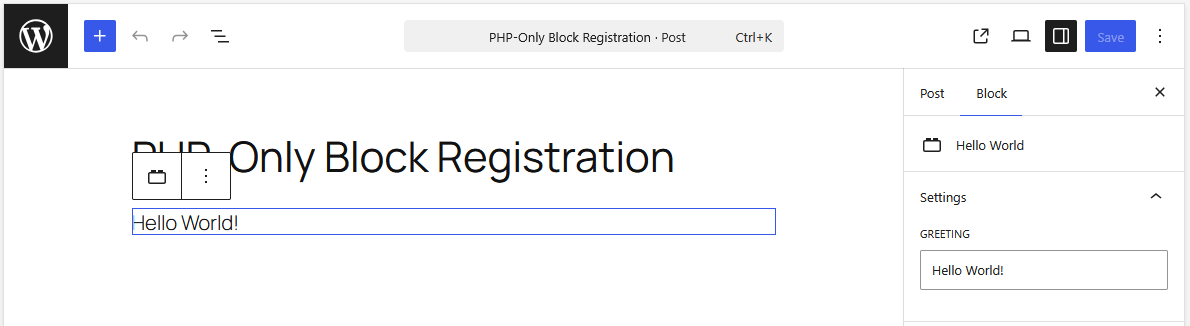
Under WordPress 7.0, a fully functional "Hello World" block requires only a single PHP snippet hooked into the init action:
function css_tricks_hello_world_block()
  register_block_type(
    'css-tricks/hello-world',
      [
        'title' => 'Hello World',
        'render_callback' => function ()
          return sprintf(
            '<div %s>Hello World!</div>',
            get_block_wrapper_attributes()
          );
        ,
        'supports' => [
          'autoRegister' => true,
        ],
      ]
  );

add_action('init', 'css_tricks_hello_world_block');
Architectural Limitations
Despite its simplicity, the feature comes with strict technical boundaries driven by the underlying architecture of the block editor:
- No Live Data Reactivity: Because PHP-only blocks bypass the client-side JavaScript data store, they query the database directly during rendering. If a user alters a post title or custom field inside the editor, the PHP block will display stale data until the post is saved and the page is fully reloaded.
- Stateless REST API Previews: Editor previews are rendered via stateless REST API endpoints (
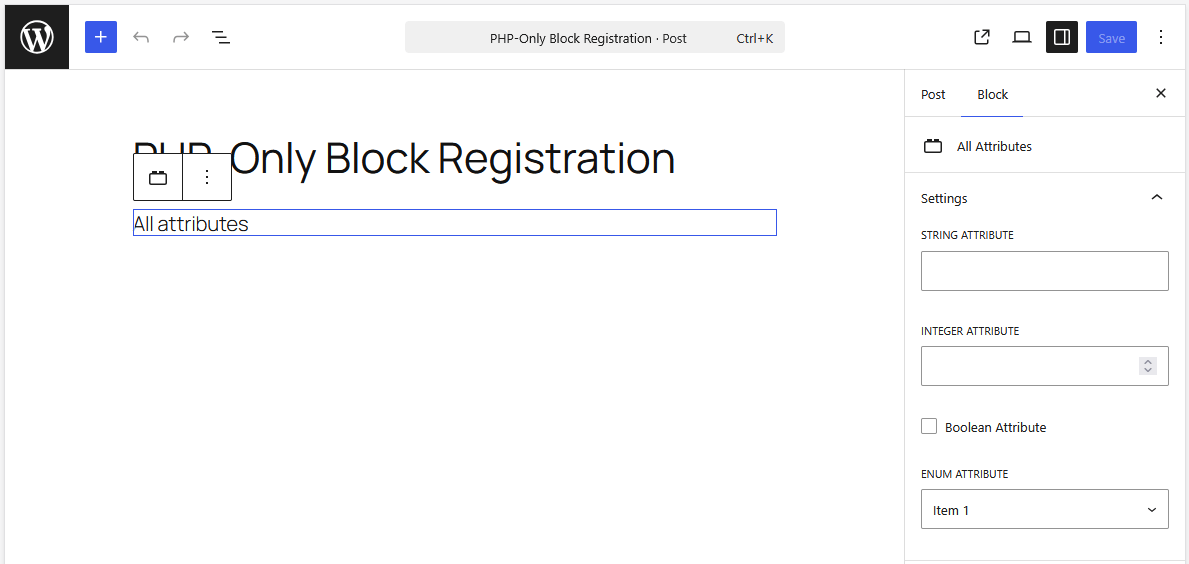
v2/block-renderer/). Consequently, the render callback cannot inherently access global post states or handle dynamic context without manual workarounds (such as extracting post IDs from URL GET parameters during initialization). - Restricted Attribute Types: WordPress 7.0 officially supports only three attribute types for PHP-only blocks: strings, numbers, and booleans. This limits the available editor controls to basic text inputs, number fields, checkboxes, and simple dropdowns—completely omitting rich-text editors, native media uploaders, and advanced date pickers.
Official Responses and Developer Perspectives
The reception within the WordPress ecosystem has been pragmatic. Core maintainers acknowledge that PHP-only blocks are not intended to replace JavaScript-powered interactive components. Instead, the feature is framed as an intentional bridge to lower the technical debt associated with theme migrations.
Prominent theme developers and core contributors have noted that while the limitations rule out building complex, application-like blocks—such as dynamic sliders or rich interactive dashboards—they completely eliminate the friction of porting static components.

Furthermore, community feedback highlights a broader cultural shift within WordPress Core: a renewed focus on developer experience (DX). For years, the push toward modern JavaScript tooling left a vast segment of backend-focused developers behind. PHP-only registration signals an institutional acknowledgment that lowering barriers to entry is essential for the long-term health of the platform’s theme ecosystem.
Implications for the WordPress Ecosystem
The arrival of PHP-only block registration in WordPress 7.0 carries profound implications for theme authors, agencies, and the broader market share of block themes.

Unlocking Legacy Code Migration
The primary victory of this release lies in theme modernization. Thousands of classic WordPress sites remain anchored to older architectures simply because the cost and complexity of rewriting custom shortcodes, widgets, and template parts into React-based blocks are too high.
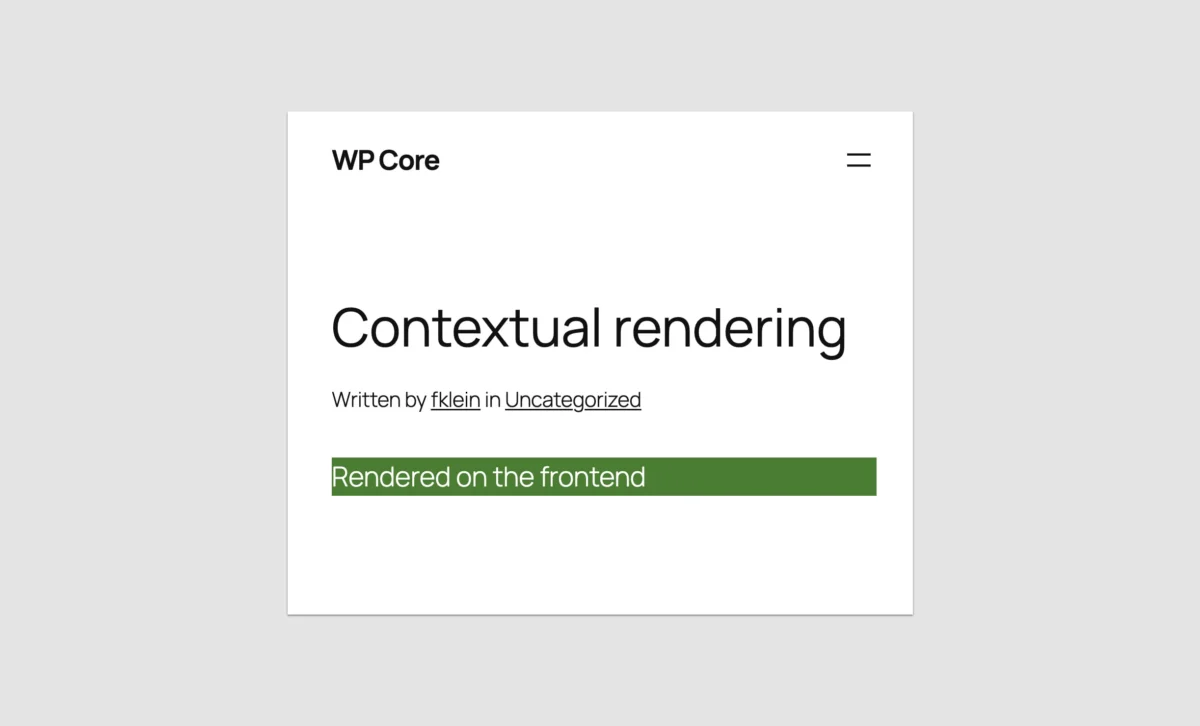
With PHP-only blocks, developers can encapsulate legacy PHP codebases into block types within hours rather than weeks. The editor preview does not need to be pixel-perfect; as long as the block inserts cleanly into the editor and renders flawlessly on the front end, the migration objective is met.

Advanced Workarounds for Edge Cases
Resourceful developers have already begun developing tactical workarounds for the feature’s limitations. By utilizing wp_is_rest_endpoint() and evaluating REST route query variables, developers can conditionally alter output depending on whether a block is rendering in the editor or on the front end.
Similarly, capturing post IDs via URL parameters during the init hook allows developers to inject local attributes that feed necessary context to server-side functions.

Preparing for the Future of Iframed Editors
As WordPress continues to optimize the editing experience—enforcing iframed post editors in upcoming minor releases like WordPress 7.1 to prevent administrative CSS conflicts—adopting Block API Version 3 standards via these streamlined methods ensures long-term compatibility. Developers can cleanly enqueue front-end styles and scripts using native functions like wp_register_style() and view_script, leveraging block supports for spacing, colors, and alignments without touching a single NPM package.
Conclusion: Was the Wait Worth It?
For developers seeking to build rich, native-feeling, interactive user interfaces from scratch, PHP-only block registration falls short. JavaScript remains the undisputed king of complex block architecture.
However, for the agency developer staring down a massive classic-to-block theme migration, WordPress 7.0 is nothing short of a revelation. By removing the mandatory build pipeline and honoring the deep PHP roots of the platform, WordPress has delivered a pragmatic solution to its biggest adoption hurdle. The wait for a simplified block-building experience was long, but for legacy migration, it has officially proven worth it.



