In the modern enterprise landscape, the mandate for "cloud-first" has evolved into a more nuanced reality: "cloud-consistent." While the centralized public cloud continues to power global digital transformation, a significant segment of critical business operations remains tethered to specific physical locations—whether due to the laws of physics, the requirements of data sovereignty, or the imperative of operational continuity.
Microsoft has addressed this tension with the general availability of SQL Server on Azure Local, a strategic expansion that allows organizations to run mission-critical SQL workloads in their own datacenters and at the extreme edge. By bridging the gap between disconnected, high-stakes environments and the benefits of Azure’s management ecosystem, Microsoft is fundamentally changing how industries—from defense to manufacturing—handle data gravity and AI integration.
Main Facts: A Hybrid Evolution
The core value proposition of SQL Server on Azure Local is the decoupling of infrastructure management from the constraint of constant internet connectivity. Historically, organizations needing to run SQL Server in isolated environments—such as remote drilling rigs, secure government facilities, or high-speed manufacturing floors—faced a binary choice: either sacrifice modern cloud-native tooling or risk downtime by relying on unstable WAN connections.
With this release, Microsoft provides a platform that offers the best of both worlds. The solution supports:
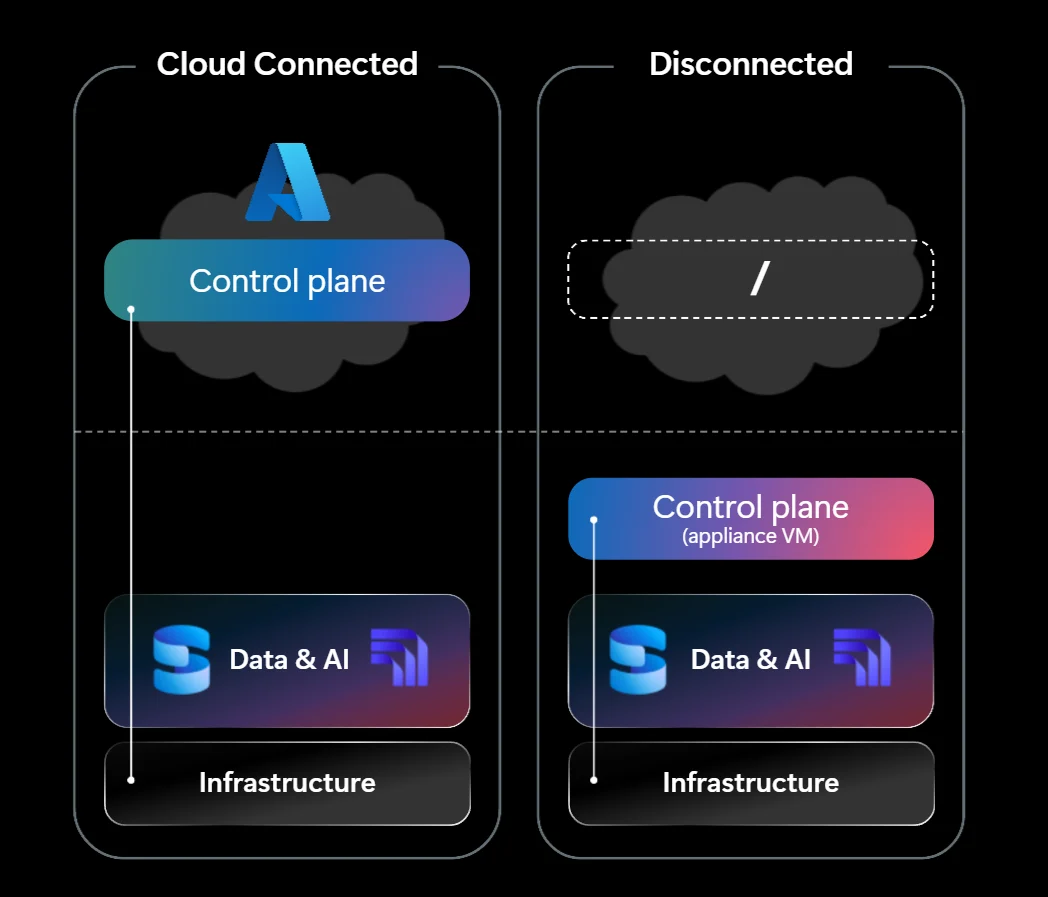
- Flexible Connectivity: Organizations can now deploy SQL Server in either "connected" mode—leveraging Azure Arc for centralized management and monitoring—or "disconnected" mode for environments where external connectivity is restricted, intermittent, or entirely unavailable.
- Data Sovereignty: By keeping data strictly on-premises, organizations can meet stringent regulatory requirements that mandate sensitive information remain within specific geographic or physical boundaries.
- Infrastructure Consistency: Azure Local acts as a unified fabric. Whether a team is deploying in a cloud region or a local factory floor, the operational experience, high-availability configurations, and management paradigms remain consistent.
Chronology: The Road to Hybrid Autonomy
The path to this release marks a multi-year effort by Microsoft to synthesize its Azure infrastructure with the legacy of its enterprise SQL Server product line.
- Pre-2024: The industry struggled with "Edge Anxiety," where the need for data processing at the source conflicted with the need for enterprise-grade database management.
- 2024–2025: Microsoft expanded its Azure Arc capabilities, slowly building the bridges necessary to manage local infrastructure as if it were a cloud resource. This period saw the integration of Windows and Linux-based SQL Server workloads into the Azure ecosystem.
- September 2026: The official announcement of the general availability of SQL Server on Azure Local. This milestone serves as the capstone to these efforts, officially sanctioning disconnected operation as a first-class citizen in the Azure portfolio.
- Current Status: Concurrent with the GA release, Microsoft has introduced the preview of Foundry Local on Azure Local, signaling the next phase: bringing AI inference directly to the data.
Supporting Data: Addressing the Edge Imperative
Market research underscores why this shift is essential. According to industry analysts, nearly 75% of enterprise-generated data is expected to be created and processed outside of centralized data centers or cloud environments by 2027.
The technical requirements for these environments are rigorous:
- Latency: In industrial automation, even a millisecond of latency caused by a round-trip to the cloud can result in safety hazards or product defects.
- Sovereignty: Countries with strict GDPR-like regulations or national security mandates require that databases storing citizen or defense data never traverse public networks.
- Resilience: For sectors like energy and maritime, the ability to operate for weeks without a handshake from an external server is not a feature—it is a survival requirement.
SQL Server on Azure Local directly mitigates these risks by ensuring that the database engine—the "brain" of the operation—remains physically adjacent to the data source.
Official Responses and Strategic Vision
Microsoft’s leadership has positioned this release not merely as a software update, but as a commitment to the "sovereign cloud" philosophy.
"The goal is simple," a Microsoft spokesperson noted during the launch. "Customers should not have to move sensitive data somewhere else simply to begin building intelligent applications around it."
This philosophy underpins the introduction of Foundry Local. By allowing AI models to run on the same infrastructure as the SQL databases, Microsoft is solving the "AI data gravity" problem. Enterprises no longer need to export anonymized, truncated, or potentially insecure datasets to the cloud to train or run inference models. Instead, they can bring the "intelligence" to the "data," keeping intellectual property and PII (Personally Identifiable Information) locked safely within their own perimeter.
Implications: The Future of the Intelligent Edge
The implications of this move are far-reaching, particularly for sectors that have been traditionally slow to adopt cloud-native technologies due to security concerns.
1. The Manufacturing Revolution
In the context of Industry 4.0, SQL Server on Azure Local allows factories to perform real-time predictive maintenance. Data from thousands of IoT sensors can be ingested into a local SQL instance, processed by local AI models, and acted upon by robotic systems without a single packet leaving the facility. This creates a closed-loop system of extreme reliability.
2. Defense and Public Sector
For the public sector, the ability to deploy "sovereign-ready" databases is transformative. Governments can now deploy consistent, standardized, and fully supported SQL environments in remote or highly secure sites, knowing that they can be managed using the same automation templates used in their primary data centers, all while maintaining a "zero-trust" stance toward external connectivity.
3. Financial Services and Healthcare
These sectors are heavily regulated and often require data to be stored within specific legal jurisdictions. With this platform, a hospital can run its SQL-based Electronic Health Records (EHR) system on Azure Local, ensuring that even if the facility’s internet backbone is severed, doctors and nurses maintain uninterrupted access to critical patient data, all while keeping that data within the physical walls of the hospital.
4. Licensing and Economic Efficiency
Microsoft has deliberately structured the licensing to encourage this transition. By allowing the use of existing SQL Server licenses—including those with Software Assurance—and offering the Azure Hybrid Benefit for disconnected environments, Microsoft is lowering the total cost of ownership. For customers already invested in the Microsoft ecosystem, the transition to Azure Local is not a "rip-and-replace" project, but an architectural optimization.
Frequently Asked Questions (FAQ)
What defines "Disconnected Operations"?
Disconnected operations refer to environments where the infrastructure does not have a persistent or reliable connection to the public Azure cloud. SQL Server on Azure Local is specifically architected to run these instances autonomously, ensuring that local transactions, high availability, and database performance are not dependent on an internet handshake.
How does Foundry Local change the AI landscape?
Foundry Local is designed to run AI inference models directly on the Azure Local infrastructure. By moving the model to the data—rather than moving the data to the model—organizations can execute complex analytical tasks while keeping proprietary data in situ.
Is this a replacement for the Public Cloud?
No. SQL Server on Azure Local is a complement to the public cloud. It is designed for the "intelligent edge," whereas public cloud remains the preferred destination for massive-scale analytics, multi-region application delivery, and data that is not subject to strict residency requirements.
How is security managed in a disconnected state?
Security in disconnected environments relies on standard enterprise-grade practices, including hardware-based security, local identity management, and physical access controls. Because Azure Arc is not required for the operation of the database in a disconnected state, the security perimeter is defined by the customer’s own infrastructure policies.
Conclusion: A Consistent Path Forward
As the data estate continues to fracture across cloud, edge, and sovereign environments, the complexity of managing these environments could have become a bottleneck for innovation. With SQL Server on Azure Local, Microsoft has provided a common language for database management.
By removing the connectivity tax and empowering organizations to keep their data where it belongs, Microsoft has signaled that the future of enterprise computing is not just "in the cloud," but wherever the business happens to be. Whether on a server rack in a quiet office or a ruggedized unit in the middle of a remote site, the capability to run the world’s most critical databases remains the cornerstone of digital resilience.
Organizations looking to modernize are now empowered to do so at their own pace and on their own terms, ensuring that the next generation of intelligent applications is built on a foundation of reliability, security, and local control.