










In the rapidly evolving digital landscape of 2026, getting your brand noticed requires far more than traditional keyword optimization. As artificial intelligence transforms how consumers discover products and services, a new paradigm has taken center stage: Answer Engine Optimization (AEO).
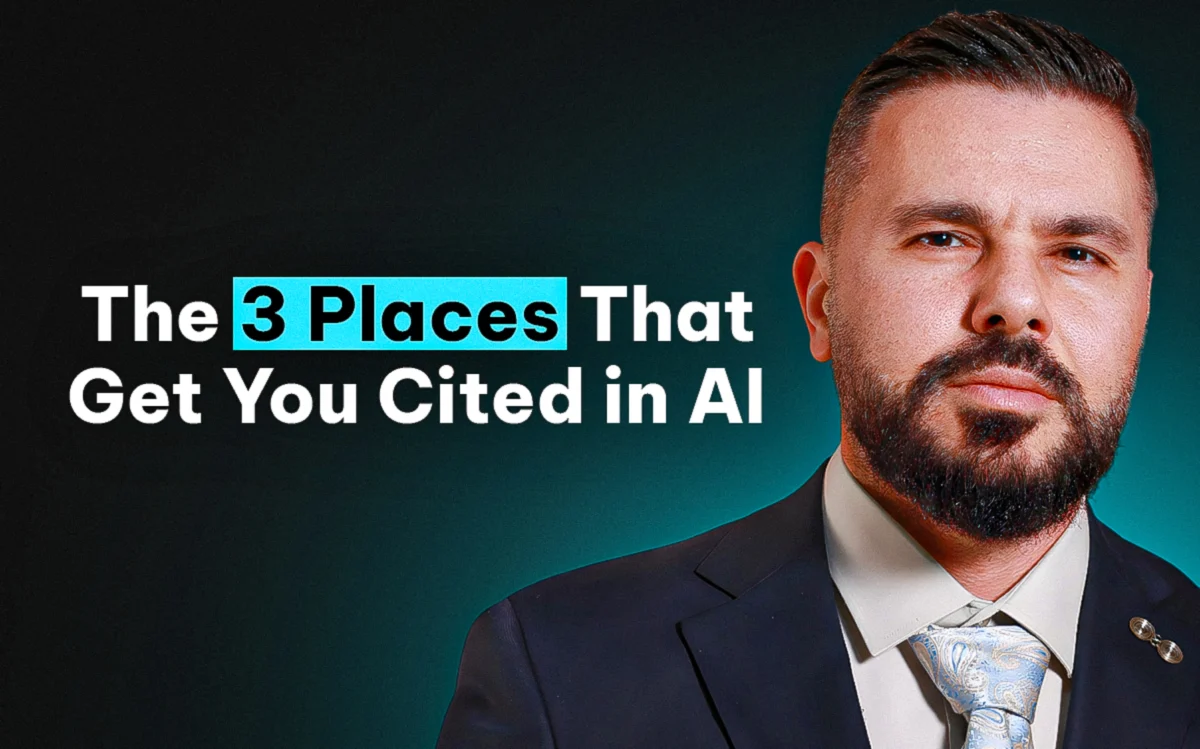
Recently, digital marketing veteran Besmir Bregasi sat down to discuss the inner workings of LLM-driven search experiences—such as ChatGPT and Google AI Overviews—and how brands can secure citations in an era dominated by large language models. Bregasi, the founder of the visibility intelligence platform ZeroRank, shared insights gleaned from analyzing massive datasets across diverse brands, geographic locations, prompts, and platforms.
His journey, from an early-career SEO practitioner to scaling a mid-six-figure Annual Recurring Revenue (ARR) SaaS startup in just months, offers a masterclass in adapting to tectonic shifts in digital marketing.
The Main Facts: Transitioning from Traditional SEO to AEO
The fundamental thesis emerging from ZeroRank’s visibility data is clear: on-site optimization is no longer enough. While a technically sound website remains a baseline requirement, modern AI search engines place an overwhelming amount of weight on off-site activity, third-party sentiment, and dynamic discussions.
Key takeaways from Bregasi’s analysis include:
- The Off-Site Dominance: LLMs heavily favor platforms where real people discuss, review, and react to brands—namely Reddit, X (formerly Twitter), YouTube, and niche editorial sites.
- The Freshness Factor: Recent, highly engaging content frequently outweighs an extensive archive of older, static brand mentions.
- The 70/30 Rule of Influence: Bregasi estimates that user-generated and third-party content accounts for roughly 60% to 70% of an LLM’s citation decisions, with traditional SEO and conventional website authority making up the remaining 30%.
- Geographic and Linguistic Nuances: AI visibility varies wildly by region and language, creating distinct opportunities for local businesses that tailor their off-site community engagement.
Chronology: From SEO Origins to a Rapid Three-Month SaaS Launch
A 20-Year Evolution
Besmir Bregasi’s career mirrors the modern history of digital marketing. He began in traditional SEO nearly 20 years ago before spending roughly 15 years deeply entrenched in paid advertising and affiliate marketing. When LLM-driven traffic began surging, Bregasi recognized a familiar pattern: a massive paradigm shift offering immense opportunity with relatively low initial competition. This realization sparked the idea for ZeroRank.
Building ZeroRank in 90 Days
Determined to capitalize on the nascent AEO market, Bregasi teamed up with co-founder and CTO Kelvin Çobanaj. Kelvin left a lucrative executive role at a major cryptocurrency company to commit full-time to the project. Operating under an aggressive timeline, the duo gave themselves just three months to engineer and launch the first iteration of ZeroRank.
Recognizing that standard LLM APIs failed to capture localized search variations accurately, the team engineered proprietary methods to track how brand citations differed across global markets like Italy, Germany, and the United States.
The AppSumo Acceleration Strategy
To rapidly stress-test the platform and gather qualitative feedback, ZeroRank launched an aggressive customer acquisition campaign via AppSumo. The strategy yielded immediate results:
- The platform surpassed 1,000 customers rapidly.
- ZeroRank became one of the top-selling products on AppSumo during its inaugural month.
- The company rapidly expanded its core team to handle the influx of users and support tickets.
Rather than treating the campaign as an immediate profit center—the software was priced around break-even—Bregasi viewed the initiative as a high-impact marketing expense. The real ROI came in the form of widespread product awareness, invaluable user feedback, and a built-in referral engine. Within a little over a year of its conceptualization, ZeroRank successfully scaled to mid-six figures in ARR.
Supporting Data: Where AI Systems Find Their Answers
To understand how ZeroRank measures visibility, one must first understand the primary platforms driving LLM citations. Because AI outputs are highly personalized—varying based on user location, device, account history, and prompt phrasing—ZeroRank avoids relying on single-query snapshots. Instead, the platform executes high-volume query matrices across numerous accounts to establish a reliable visibility baseline.
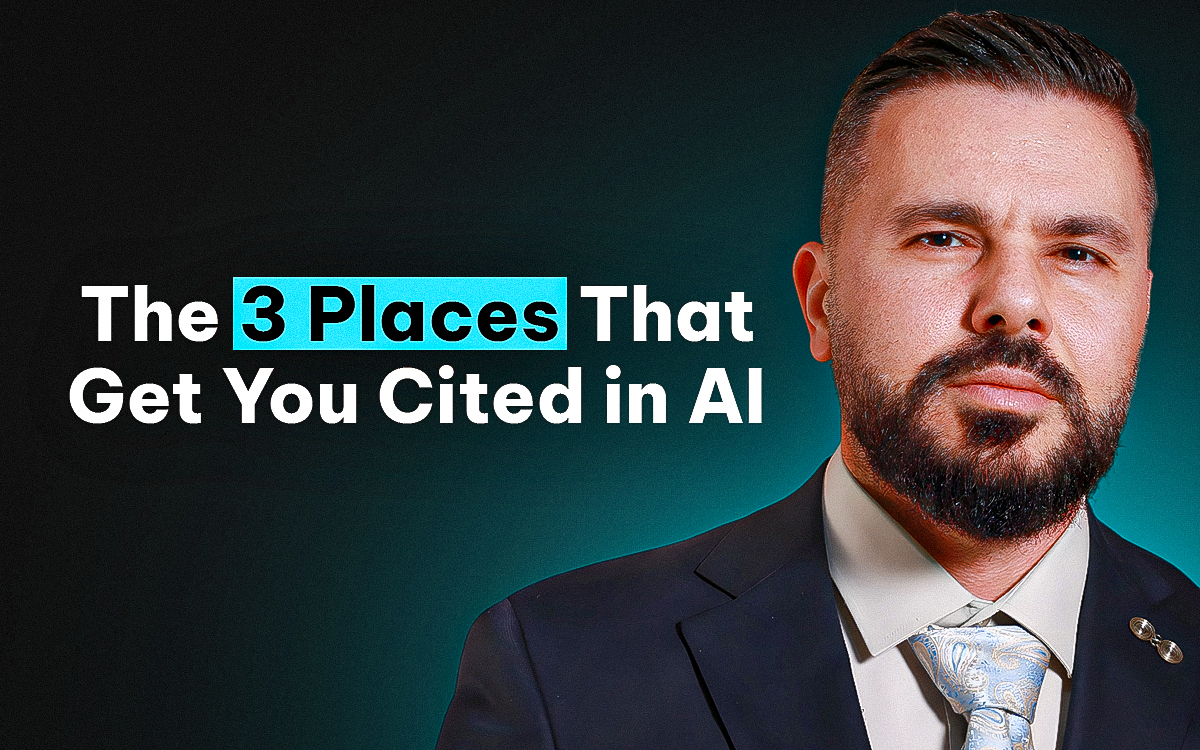
According to ZeroRank’s client data, three major platforms wield disproportionate influence over AI search results:
1. Reddit
Despite algorithmic fluctuations and changes in platform prominence over the years, Reddit remains a titan of AI citations. LLM crawlers frequently index Reddit discussions because they represent authentic, peer-to-peer user experiences. However, Bregasi notes that raw promotional spam is increasingly ineffective; brands must earn organic mentions within credible, relevant conversation threads.
2. X (Formerly Twitter)
X acts as a powerful catalyst for real-time information and rapid engagement. ZeroRank’s internal experiments demonstrated that strategically using paid promotion to kickstart fresh content can break an account out of obscurity. When a post generates immediate, genuine interaction, the platform’s cascading reach signals to LLMs that the topic is culturally and contextually relevant right now.
3. YouTube
Particularly dominant within Google AI Overviews, YouTube serves as a vital bridge between video content and textual AI summaries. Fresh videos that accumulate likes, comments, and high watch-time metrics shortly after publication act as authoritative third-party validation sources for LLM systems.
4. Niche Editorial Mentions
While user-generated content commands a large share of visibility, niche blogs, specialized industry news sites, and digital publications retain significant weight. A single citation from a hyper-targeted industry publication often outweighs dozens of generic mentions from broad, unrelated domains. Notably, ZeroRank’s data indicates that professional networks like LinkedIn currently carry far less citation weight for B2B LLM visibility than Reddit, X, or YouTube.
Official Responses and Strategic Implications
For online publishers, agency owners, and digital marketers, the rise of AEO demands a structural pivot in resource allocation. Abandoning traditional SEO entirely would be a critical mistake, but doubling down exclusively on on-page keyword optimization is no longer sufficient.
Rethinking Local and Niche Markets
One of the most striking case studies shared by Bregasi involved a vacation rental company struggling to outrank legacy competitors through conventional local SEO. By shifting their strategy to active, native-language community engagement—specifically participating in local Italian subreddits and X discussions—the business successfully captured top-tier visibility in AI-driven travel queries. This proves that smaller, highly targeted brands can outmaneuver enterprise giants by focusing on linguistic and geographic relevance where competitors are asleep at the wheel.
The On-Site Baseline
On-site technical optimization should now be viewed as table stakes rather than a primary growth lever. Ensuring a website features clean architecture, readable semantic structures, schema markup, and fast load times simply removes friction for LLM scrapers. Once these technical parameters are met, time and capital are far better spent building off-site brand authority.
Future Outlook: The Next Phase of Growth for AEO
As ZeroRank looks toward its next growth phase, Bregasi plans to diversify customer acquisition channels beyond the initial AppSumo boost. Future expansion initiatives include:
- Implementing traditional organic SEO and targeted paid search campaigns.
- Launching a comprehensive affiliate program on major networks to harness the power of experienced digital marketers.
- Expanding podcast tours, case study publishing, and editorial outreach.
- Deploying a viral referral program built around free AI query credits, encouraging existing users to advocate for the platform.
Conclusion: Actionable Takeaways for Brand Builders
The overarching lesson from Besmir Bregasi’s data is clear: AI visibility is an ecosystem-wide challenge.
Publishers must treat AI search optimization as an ongoing, scientific experiment. By establishing visibility baselines, iterating off-site engagement strategies, and prioritizing content that sparks genuine community discourse across Reddit, X, and YouTube, brands can systematically train LLMs to recognize them as trusted industry authorities. In the age of AEO, writing another standard blog post may help, but creating a brand worth talking about everywhere else is what truly wins the day.



