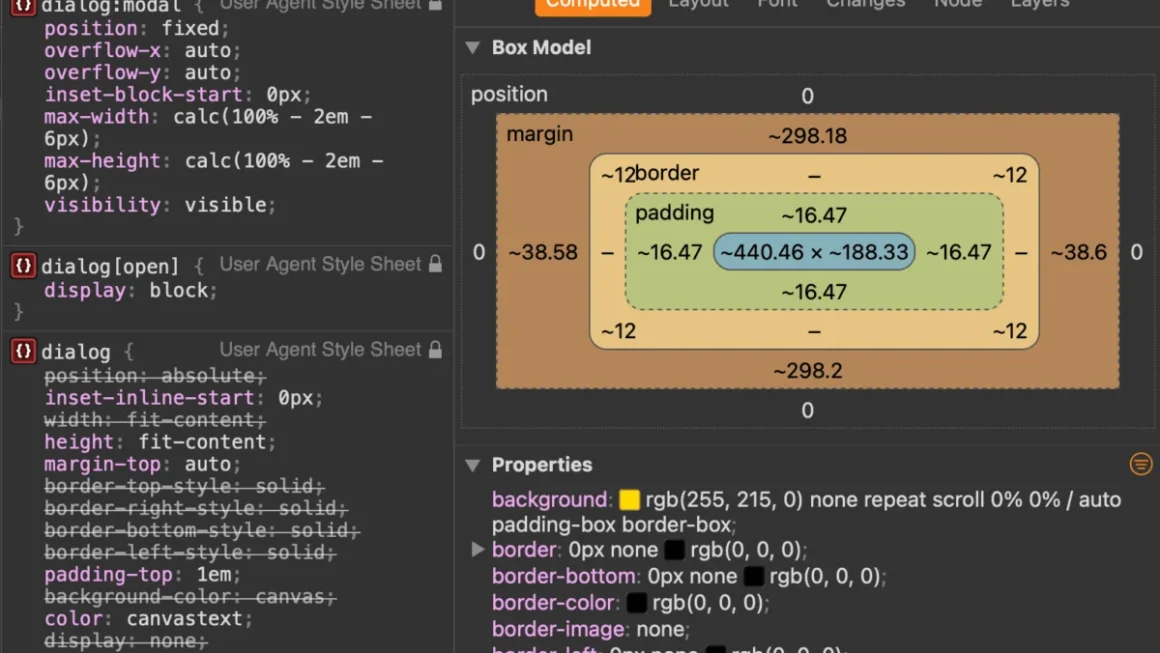
The modern web browser is evolving from a mere document reader into a robust, multi-tasking operating system. With the recent rollout of Firefox 151, the web development community has received a powerful new capability: the Document Picture-in-Picture (DPIP) API. Unlike its predecessor, the traditional Picture-in-Picture API—which restricts users to floating isolated video elements—the Document Picture-in-Picture API allows developers to place arbitrary HTML, CSS, and JavaScript into a always-on-top, resizable browser window.
This technological leap transforms how web applications handle persistent utilities. Developers can now construct native-feeling web widgets, ranging from floating stock tickers and live chat interfaces to persistent playlists, interactive to-do lists, notes, and spreadsheets. As browsers increasingly blur the line between desktop applications and web pages, DPIP stands out as a defining feature for productivity-focused web design.
Main Facts: What is the Document Picture-in-Picture API?
The Document Picture-in-Picture API is an emerging web standard that lets developers spawn an entirely separate, top-level browsing context. This window remains visible even when the user switches browser tabs or navigates to other native desktop applications.
Key Characteristics of DPIP:
- Arbitrary Content: Unlike standard video PiP, DPIP accepts any standard DOM tree, including complex HTML layouts, dynamic components, and interactive frameworks.
- Full Styling Control: Developers can inject custom stylesheets and scripts directly into the new context, ensuring the isolated window maintains brand consistency and visual integrity.
- Desktop-First Design: The API is primarily engineered for desktop computing environments where multi-window workflows and floating panels are commonplace.
- Contextual Adaptation: Using modern CSS media queries, developers can dynamically restyle elements depending on whether they reside in the primary document or the floating PiP frame.
Chronology: The Evolution Toward Universal PiP
The journey toward flexible, document-level picture-in-picture functionality has been a gradual process driven by W3C working groups and browser vendors striving to bridge the gap between web and desktop software.
- Early Video PiP Era: The original Picture-in-Picture API launched to widespread adoption, allowing users to pop video elements out of web pages into small, floating overlays. While successful for media consumption, developers quickly demanded similar functionality for utility widgets.
- Standardization and WICG Proposals: The Web Incubator Community Group (WICG) drafted the initial specifications for the Document Picture-in-Picture API, establishing a standardized method for requesting custom top-level browsing contexts via JavaScript.
- Chromium Adoption: Google Chrome was an early adopter of the DPIP specification, paving the way for developers to experiment with floating web components in production environments.
- Firefox 151 Integration: Mozilla officially shipped support for the Document Picture-in-Picture API in Firefox 151, significantly expanding the cross-browser viability of the technology.
- Subsequent CSS Enhancements: Browser vendors concurrently worked on native feature queries and at-rule detection (
@supports at-rule()), with Safari Technology Preview and Firefox continuously refining how developers detect and style picture-in-picture contexts.
Supporting Data: Implementing DPIP in Code
To understand how the Document Picture-in-Picture API operates in practice, it is helpful to examine a realistic implementation scenario—such as extracting a live stock ticker from a main document and rendering it inside a DPIP window.
1. Feature Detection and JavaScript Logic
Because support varies across legacy browsers and mobile environments, developers must first check for the existence of the documentPictureInPicture property on the global window object.
if (!("documentPictureInPicture" in window))
  // DPIP is not supported; gracefully remove or hide the trigger button.
  document.querySelector("button").remove();
 else
  // DPIP is supported; set up event listeners.
  document.querySelector("button").addEventListener("click", async () =>
    // If a DPIP window is already open, close it to act as a toggle.
    if (window.documentPictureInPicture.window)
      window.documentPictureInPicture.window.close();
      return;


    // Request the picture-in-picture window with specific dimensions.
    const DPIP = await window.documentPictureInPicture.requestWindow(
      width: 600,
      height: 400,
      preferInitialWindowPlacement: true
    );

    // Select and clone the target component from the main document.
    const stock = document.querySelector("#stock");
    DPIP.document.body.append(stock.cloneNode(true));

    // Gather and clone all stylesheets to preserve styling inside the DPIP window.
    const styles = document.querySelectorAll("style, [rel=stylesheet]");
    const documentFragment = document.createDocumentFragment();

    styles.forEach((element) =>
      documentFragment.append(element.cloneNode(true))
    );

    DPIP.document.head.append(documentFragment);
  );
2. Handling CSS and Responsive Contexts
When elements are extracted from their original DOM tree and placed into an isolated window, layout bugs can occur if CSS selectors rely too heavily on specific parent containers. To combat this, developers can leverage the display-mode media query to apply targeted styles when an element is rendered inside a picture-in-picture context.
#stock
  width: fit-content;
  border-radius: 0.7rem;

  @media (display-mode: picture-in-picture)
    width: 100%;
    height: 100%;
    border-top-left-radius: 0;
    border-top-right-radius: 0;
Note: Developers should avoid confusing the display-mode: picture-in-picture media query with the :picture-in-picture pseudo-class, which remains strictly tied to the traditional video-only Picture-in-Picture API.
Official Responses and Standards Perspective
Browser engine architects and standards bodies have lauded the Document Picture-in-Picture API as a major step forward for user-customizable web interfaces. Representatives from Mozilla and the WICG have emphasized that web applications deserve the same window-management flexibility traditionally reserved for native desktop applications.
However, browser vendors have also exercised caution regarding security and user experience. Because floating windows can potentially be abused to obscure critical UI elements or simulate phishing overlays, strict constraints govern how DPIP windows are spawned. For instance, a DPIP window must be initiated via a transient user activation gesture—such as a explicit click or tap on a button. Script-initiated popups without user interaction are strictly blocked.
Furthermore, API discussions highlight ongoing efforts to improve feature queries. While traditional CSS @supports blocks struggled to evaluate advanced display-mode rules without experimental at-rule functions, modern browser updates are steadily closing the gap to ensure seamless progressive enhancement.
Implications for the Future of Web Development
The widespread availability of the Document Picture-in-Picture API across engines like Blink (Chrome) and Gecko (Firefox) carries profound implications for software architecture on the web.
1. Redefining Productivity Tools
Web-based project management tools, communication suites, and financial dashboards no longer need to compromise with cramped multi-pane layouts inside a single browser tab. Users can break out critical modules—such as a real-time chat client or a live stock portfolio—and dock them anywhere on their desktop while browsing unrelated websites or working in native software.
2. Architectural Challenges for Frontend Engineers
While powerful, DPIP introduces new challenges for frontend state management. When an HTML component is cloned into a separate window, event listeners attached to the original DOM node do not automatically transfer over. Developers must ensure that application state remains synchronized between the primary application context and the floating DPIP window, often requiring robust state management patterns or Web Workers.
3. Cross-Browser Parity and Progressive Enhancement
With Firefox joining Chrome in supporting the API, developers can safely build DPIP features for a massive share of desktop users. As Safari and other engines evaluate adoption timelines, web developers must implement graceful degradation strategies—ensuring that users on unsupported browsers experience clean fallback behaviors rather than broken interface elements.
Conclusion
The Document Picture-in-Picture API represents a maturation of web platform capabilities. By breaking free from the rigid confines of the browser tab and the video-only limitations of legacy PiP, developers can craft deeply integrated, highly flexible desktop-class experiences entirely using open web standards. As adoption grows and tooling matures, floating web widgets are poised to become a standard pattern in modern application design.