










NEW DELHI — The Indian government has firmly rejected accusations that satellite communication (satcom) services are being deliberately delayed to protect local corporate monopolies, insisting instead that pending security clearances from the Ministry of Home Affairs (MHA) are the sole reason operations have not yet commenced.
The clarification from Minister of State for Communications Chandra Sekhar Pemmasani came amid a high-stakes diplomatic and corporate standoff sparked by billionaire entrepreneur Elon Musk. Speaking on the sidelines of the India Mobile Congress (IMC) 2026, Pemmasani sought to defuse a controversy that erupted after Musk accused unnamed domestic "oligarchs" of orchestrating a regulatory blockade against his satellite internet venture, Starlink.
The unfolding saga has placed India’s rapidly expanding space-based communications market under intense global scrutiny, balancing the imperatives of digital inclusion for millions of unconnected citizens against strict national security and regulatory frameworks.
Main Facts
The core of the current controversy revolves around the deployment of Low Earth Orbit (LEO) satellite communication services in India—a lucrative and transformative frontier for telecommunications.
- Regulatory Status: The Department of Telecommunications (DoT) has successfully issued operational licences to all major prospective satcom providers, including Starlink, alongside provisional spectrum allocations.
- The Stumbling Block: Final deployment remains frozen, pending exhaustive security clearances from the Ministry of Home Affairs. Government officials have emphasized that this protocol applies uniformly to all applicants and is not targeted at any single corporation.
- SpaceX’s Readiness: SpaceX’s Vice President of Starlink Business Operations, Lauren Dreyer, confirmed at the IMC 2026 that the company has completed its localized infrastructure buildout. This includes 20 gateway sites equipped with hundreds of antennas, built specifically to comply with Indian data localization laws and national security guidelines.
- The Allegations: Elon Musk launched a scathing attack on social media platform X, claiming that "certain oligarchs" are maintaining a "monopolistic chokehold" by blocking Starlink, describing the delay as "a crime against the people of India." He also refuted counter-allegations that Starlink terminals had been utilized by insurgent groups in Manipur, stating that the company’s beams over Indian territory remain inactive.
Chronology of Events
The tensions surrounding the rollout of satellite broadband in India have accumulated over several years, culminating in a dramatic escalation during the opening week of the India Mobile Congress 2026.
October 7, 2026 (Day 1 of IMC 2026)
- Infrastructure Readiness Announced: During a panel discussion at the India Mobile Congress, SpaceX’s Lauren Dreyer takes the stage to announce that Starlink is fully prepared to launch services. She details the physical investments made within the country, assuring regulators of complete compliance with local data storage and security requirements.
- Musk’s Outburst on X: Responding to a post highlighting mobile connectivity gaps across more than 11,000 Indian villages, Elon Musk posts that Starlink is being actively blocked by local "oligarchs." He follows up by denying security concerns regarding the alleged misuse of his terminals in Manipur, asserting that Starlink beams are currently switched off over India.
- Industry Silence and Initial Reactions: Major domestic telecom operators—Reliance Jio, Bharti Airtel, and Vodafone Idea—initially decline to comment on Musk’s inflammatory remarks. However, Bharti Airtel founder Sunil Bharti Mittal notes that his own enterprise is likewise navigating the standard queue for final regulatory clearances. Reliance Jio Chairman Akash Ambani states he has not reviewed the comments and declines to offer an immediate evaluation.
October 8, 2026 (Day 2 of IMC 2026)
- Government Pushback: Minister of State for Communications Chandra Sekhar Pemmasani addresses the media on the sidelines of the conference. He clarifies the procedural standing of satcom licenses, reassuring the public and international investors that the delays are purely administrative and security-driven, rather than protectionist.
Supporting Data and Technical Realities
To understand the friction between global satcom providers and the Indian telecommunications ecosystem, one must examine the scale of the market and the technical architecture being deployed.
The Connectivity Gap
India boasts one of the largest mobile subscriber bases in the world, yet deep digital divides persist. Government and industry data indicate that thousands of remote, mountainous, and densely forested villages remain entirely cut off from reliable terrestrial mobile coverage. Traditional fiber-optic cable deployment to these regions is often economically unviable and technically grueling.
Satellite Infrastructure
LEO satellite constellations operate much closer to the Earth’s surface than traditional geostationary satellites, offering significantly lower latency and higher speeds. SpaceX’s deployment strategy in India includes:
- Gateway Sites: Establishing 20 ground gateway stations across the subcontinent to anchor satellite traffic to terrestrial fiber networks.
- Data Localization: Ensuring that all data traffic originating from Indian users is processed and stored within domestic borders, meeting the stringent stipulations set by Indian regulatory bodies.
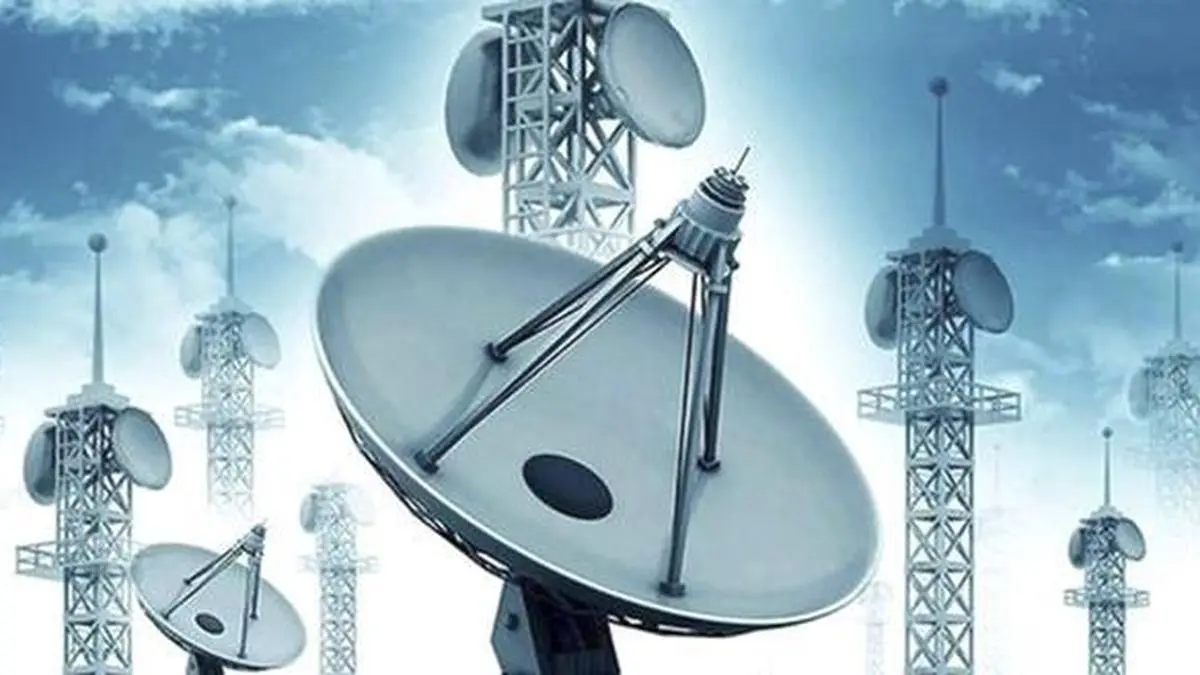
- Antenna Arrays: Hundreds of high-frequency antennas designed to seamlessly hand off user data between fast-moving satellites overhead.
The Competitive Landscape
India’s domestic telecom sector is dominated by a powerful duopoly/triopoly consisting of Reliance Jio, Bharti Airtel, and Vodafone Idea. These legacy giants have invested billions of dollars in rolling out nationwide 4G and 5G networks. The entry of global LEO operators introduces a disruptive competitive dynamic, particularly in enterprise connectivity, aviation, maritime sectors, and remote rural broadband.
Official Responses and Stakeholder Positions
The public disagreement has drawn sharp contrasts between the rhetoric of Silicon Valley leadership and the measured, bureaucratic responses of New Delhi and Indian corporate titans.
The Ministry of Communications
Minister Chandra Sekhar Pemmasani sought to calm foreign investor anxieties by maintaining complete transparency regarding the bureaucratic pipeline.
"Now the issue is pending with MHA for security clearance. As soon as it is cleared, they will get it. It has nothing to do with one company," Pemmasani stated firmly.
His comments underline the government’s stance that national security vetting cannot be fast-tracked or bypassed, regardless of corporate lobbying or public pressure from high-profile billionaires.
SpaceX and Starlink
SpaceX has attempted to prove its absolute compliance with Indian law. By emphasizing localized gateway construction and data sovereignty, executives like Lauren Dreyer have sought to disarm traditional arguments regarding foreign data surveillance. Musk’s hard-hitting public statements, meanwhile, reflect mounting frustration with a regulatory timeline that has tested the patience of international space-tech firms eager to tap into emerging markets.
Domestic Telecom Giants
Indian industry leaders have largely chosen to take the high road, avoiding direct verbal sparring with Musk.
- Sunil Bharti Mittal (Bharti Airtel): Pointed out that the regulatory bottlenecks affect domestic applicants just as much as foreign entrants, framing the clearance process as an even-handed national security protocol.
- Akash Ambani (Reliance Jio): Maintained a diplomatic silence, indicating that corporate strategies will be fought in the marketplace and regulatory chambers rather than through social media exchanges.
Implications for India’s Digital Economy
The collision between Elon Musk’s impatience and India’s methodical security apparatus carries profound implications for the country’s technological future.
1. Reassurance to Foreign Investors
While Musk’s accusations of a "monopolistic chokehold" threaten to paint India’s regulatory environment as hostile, the Ministry of Communications’ swift clarification helps restore confidence. By confirming that provisional spectrum and foundational licenses have already been granted, the government signals that India remains open for business—provided foreign entities respect local security frameworks.
2. Balancing Security and Innovation
India sits at a unique geopolitical crossroads where national security concerns—particularly regarding cross-border communications, encryption, and intelligence operations—are exceptionally high. The government’s cautious approach with the MHA security clearances underscores that state sovereignty and intelligence oversight will not be compromised for the sake of rapid technological deployment.
3. The Future of Rural Connectivity
Ultimately, the resolution of this standoff will dictate how quickly millions of citizens in remote regions can access high-speed broadband. If security clearances are granted in the near future, India could witness a massive acceleration in digital inclusion, bridging the gap between urban centers and isolated communities. Conversely, protracted delays risk alienating global investors and slowing the integration of next-generation space technologies into the national infrastructure.
As the India Mobile Congress 2026 draws to a close, all eyes remain fixed on the Ministry of Home Affairs. Whether Starlink and its competitors receive the green light in the coming weeks will serve as a critical benchmark for how India manages the delicate intersection of global tech ambition and national sovereignty.



