











Executive Summary & Main Facts
For years, Sprout Social has occupied the gold-standard throne of enterprise social media management. Renowned for its robust analytics, deep social listening capabilities, and seamless cross-departmental collaboration, it has long been a favorite of large marketing departments with deep pockets. However, that prestige comes with a steep price tag. With solo plans starting near $100 a month and team tiers leaping past $200 per user monthly, Sprout Social has increasingly become an exclusive luxury reserved for corporate behemoths.
For solo creators, startup marketers, and small-to-mid-sized agencies, justifying that kind of monthly capital expenditure requires an uphill battle against company accountants. As a result, a massive migration is underway. A growing wave of digital marketers is looking past the industry giants toward agile, cost-effective, and specialized alternatives.

This shift is not merely about trimming corporate budgets. Modern social media management requires specialized agility—whether that means deep video workflow integration, unified cross-channel content calendars, robust influencer marketing tracking, or seamless ad-campaign management.
The Economics of Social Media Management: A Chronological Shift
To understand the current rush toward alternative platforms, we must look at how the social media tool market has evolved over the past decade:

- The Early Era (Pre-2015): Basic schedulers dominated. Tools were largely built to push out static updates to a single network, requiring manual tracking and disjointed workflows.
- The Enterprise Consolidation (2015–2022): Platforms like Sprout Social and Hootsuite expanded rapidly, adding deep analytics, complex multi-tier approval systems, and expensive social listening tools. Prices climbed to reflect enterprise needs, effectively pricing out smaller players.
- The Creator & Specialization Boom (2022–Present): The explosive growth of short-form video (TikTok, Instagram Reels, YouTube Shorts) and creator-led marketing changed the game. Marketers no longer wanted bloated, one-size-fits-all suites; they demanded specialized tools optimized for specific workflows, multi-platform video management, and hyper-targeted advertising.
Supporting Data: Comparing the Market Leaders
Choosing the right social media management tool requires balancing features, team structures, and budget constraints. Below is a comprehensive breakdown of the leading alternatives to Sprout Social, categorized by their core strengths and pricing structures.
| Tool | Best For | Starting Price | Free Tier/Trial |
|---|---|---|---|
| Buffer | Creators, small-to-mid businesses, and growing agencies wanting flexible, affordable management. | Free (Paid plans from $6/channel/month) | Free Plan available; 14-day trial on paid. |
| Hootsuite | Large teams handling high volumes of inbound messages, comments, and support requests. | $149/user/month | 14-day free trial. |
| Agorapulse | Marketing teams needing to tie social media performance directly to ROI and leadership reporting. | $99/user/month | 30-day free trial. |
| Sendible | Growing agencies managing multiple brands and client workspaces on a budget. | $35/month (unlimited users) | 14-day free trial. |
| CoSchedule | Creators and teams juggling blogs, newsletters, events, and social media under one roof. | Free (Paid plans from $39/month) | Free Plan available; 14-day trial. |
| Later | Brands combining an Instagram-heavy visual presence with structured influencer marketing campaigns. | Free (Paid plans from $25/month) | Free Plan available; 14-day trial. |
| Metricool | Creators and marketing teams managing organic social media alongside paid ad campaigns. | Free (Paid plans from $25/month) | Free Plan available; 14-day trial. |
| RecurPost | Video-heavy creators and teams relying on evergreen content libraries and automated workflows. | $9/month | 14-day free trial. |
Detailed Breakdown of Top Alternatives
1. Buffer: The Agile Choice for Lean Teams
Long considered the darling of lean creators and agile teams, Buffer offers a streamlined approach without sacrificing core functionality. Its Free plan is remarkably robust, offering connection for up to three channels, a zero-cap AI assistant for generating ideas, and comprehensive data exports. For growing teams, paid tiers scale affordably starting at $6 to $12 per channel per month, emphasizing straightforward collaboration and intuitive design.
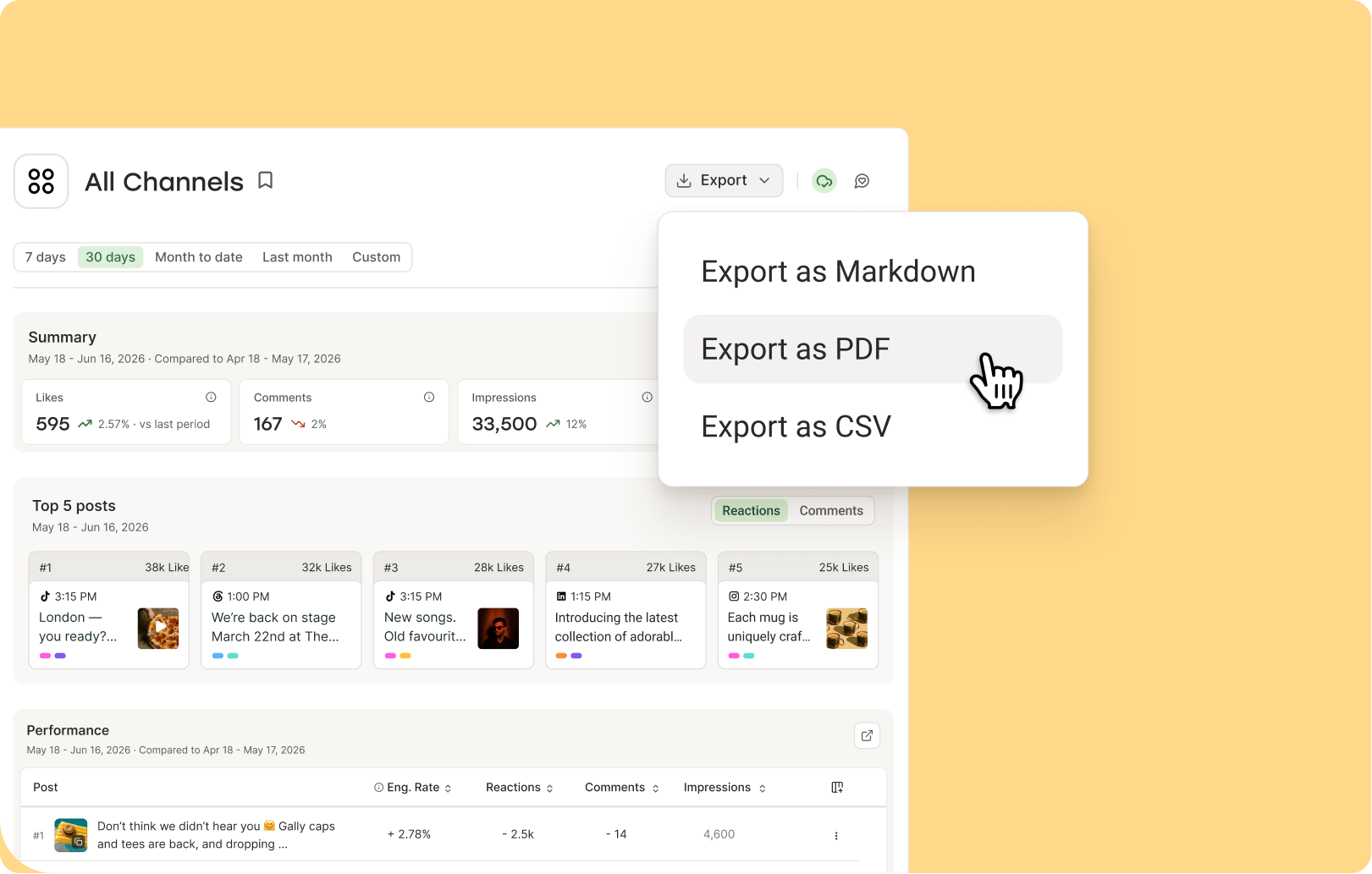
2. Hootsuite: The Enterprise Heavyweight for Inbound Support
For organizations where social media doubles as a customer service frontline, Hootsuite remains a formidable competitor to Sprout Social. Priced starting at $149 per user monthly, it offers deep integrations with customer support tools like Zendesk, advanced social listening modules, robust approval workflows, and a unified inbox capable of managing massive streams of public comments and direct messages.
3. Agorapulse: Proving Social ROI to the C-Suite
When corporate leadership demands hard numbers, Agorapulse bridges the gap. Positioned at $99 per user per month, its standout feature is its rigorous focus on return on investment (ROI). By drilling down into which specific posts, campaigns, and channels drive actual leads and sales, Agorapulse empowers marketers to present concrete financial proof of their social strategy’s value.

4. Sendible: The Agency Multi-Tool
Agencies managing disparate clients face a unique budgetary challenge: user seat limits can quickly inflate software costs. Sendible solves this by offering unlimited users across all plans starting at $35 a month. Featuring clean client workspaces, a white-label reporting option, and the Client Connect portal, it is purpose-built for agencies looking to scale operations without financial strain.
5. CoSchedule: The Content Marketing Powerhouse
Social media rarely exists in a vacuum. For teams running parallel content engines—such as newsletters, blogging schedules, and live events—CoSchedule unites everything under a single marketing calendar. Starting at $39 a month, it acts essentially as a high-level project management system for content marketers and full-time digital creators.

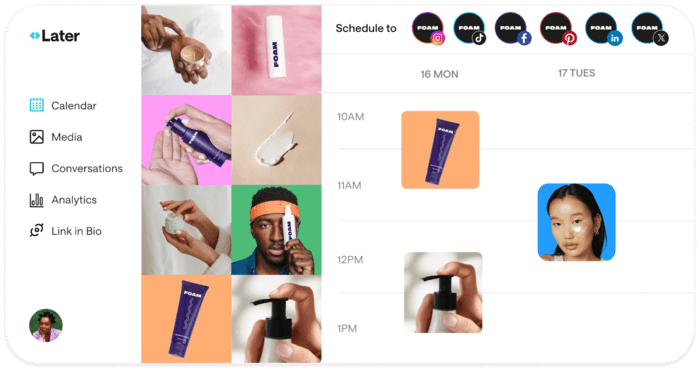
6. Later: The Visual and Influencer Hub
Born as an Instagram scheduler, Later remains the premier choice for brands prioritizing aesthetic grid planning and visual content. Beyond core scheduling across major networks, Later has aggressively expanded into influencer marketing infrastructure, providing specialized tools for brands and creators to run end-to-end influencer campaigns and performance tracking.
7. Metricool: The Paid-Social and Analytics Specialist
For marketers running organic content hand-in-hand with paid digital advertising, Metricool offers a unified dashboard starting at $25 a month. Alongside standard multi-channel publishing, it supports Meta, Google, and TikTok ad management, paired with advanced analytical features like heat-map posting-time recommendations and competitor benchmarking.
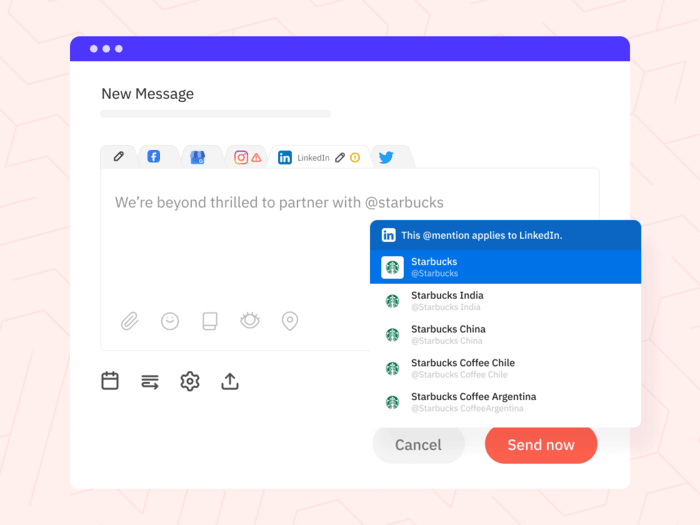
8. RecurPost: The Video and Evergreen Specialist
Video-centric creators and brands will find RecurPost exceptionally tailored to their workflow. Starting at $9 a month, it excels at managing evergreen content libraries while offering deep platform-specific controls for TikTok (managing comments, duets, and stitches), YouTube (full video publishing), and Instagram (reels, licensed audio, and automated direct message triggers).
Official Industry Responses & Expert Insights
Industry consultants and former enterprise software users emphasize that tool selection has become an increasingly personal, highly tactical decision.

"There is no universal winner in social media management anymore," notes a veteran digital marketing consultant and former Sprout Social power user. "The era of the bloated, all-in-one corporate suite is giving way to specialized tooling. Marketers are realizing they would rather pay a fraction of the cost for a tool that excels precisely at what their workflow demands—whether that’s video scheduling, ROI tracking, or ad management."
Furthermore, platform developers note that migrating away from legacy systems like Sprout Social no longer requires sacrificing historical data. Modern APIs allow newer tools to sync past performance metrics seamlessly, enabling brands to pivot without losing valuable analytics continuity.
Implications for Marketers and Enterprises
The mass re-evaluation of software spending has several vital implications for the digital marketing landscape:
- Democratization of Enterprise Features: Advanced features once locked behind $200+ enterprise paywalls—such as AI-driven content generation, custom analytics reporting, and automated workflows—are now standard on mid-tier and budget-friendly platforms.
- Shift Toward Modular Tooling: Rather than relying on a single comprehensive suite, smaller agencies and mid-sized businesses are increasingly assembling a stack of specialized tools (e.g., using Buffer for scheduling, Metricool for ads, and Later for visual assets) to maximize efficiency while keeping overhead low.
- The Rise of Creator-First Platforms: As individual creators and small teams outpace traditional corporate publishing volumes, software companies are forced to design interfaces that prioritize speed, mobile responsiveness, and video-first capabilities over heavy desktop-bound corporate hierarchies.
Final Recommendation
Before canceling an existing subscription or committing to a new annual contract, marketers should audit their actual daily workflows. Utilize the widespread availability of free trials and freemium tiers—such as those offered by Buffer, Metricool, and CoSchedule—to test a platform for at least one full week. Finding the right fit is an exercise in trial and error, but the potential savings and workflow optimizations make the transition well worth the effort.



