










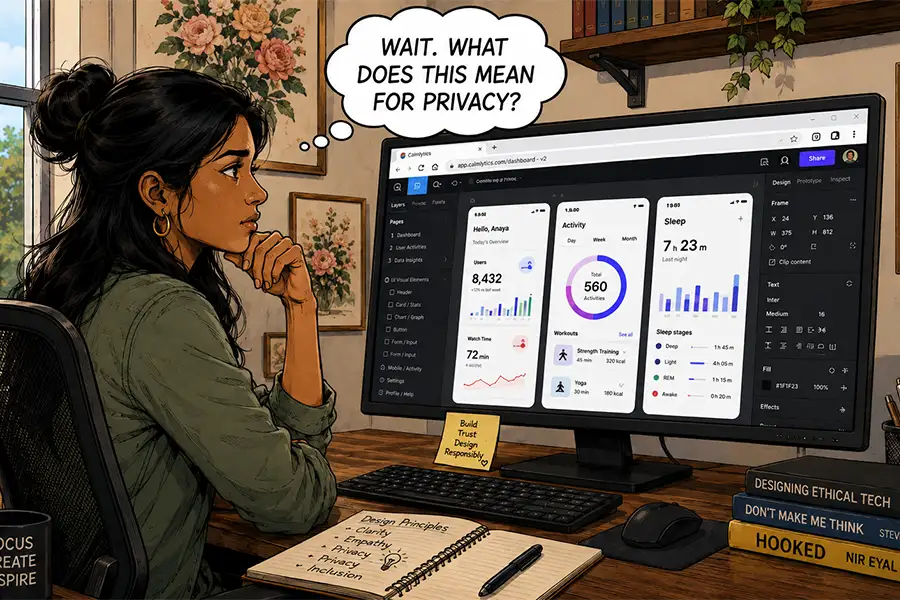
Setting up a new computer has long been a sacred rite of passage for the digital creative. There is an undeniable thrill in unboxing a machine with top-tier specifications, knowing that your new hardware is not just a tool, but a catalyst for your business’s next evolution. Historically, this ritual has involved a grueling marathon of software installation: Adobe’s creative suite, Microsoft’s productivity pillars, local development environments, FTP clients, and a sprawl of media conversion utilities.
However, as I prepare to migrate to my next workstation, I am struck by a radical thought: the vast majority of these "essential" apps are becoming redundant. In an era dominated by high-speed internet and sophisticated web standards, the humble web browser is transforming from a simple document viewer into a full-fledged professional workstation. But as we stand on the precipice of a browser-based future, the question remains—are we ready to surrender the control of desktop software for the convenience of the cloud?
The Evolution of the Web-Based Workspace
For those of us who cut our teeth in the industry before the dominance of Netscape, the browser was once a sandbox—a place to view content, not to create it. For decades, the "browser-based" label was a euphemism for "underpowered" or "clunky." If you needed to edit high-resolution video or build complex architectural mockups, you went to your desktop. Professional-grade software like Photoshop, Excel, and Dreamweaver were not just preferred; they were the only viable options.
That paradigm has shifted decisively. Modern web standards—powered by WebAssembly, WebGL, and advancements in server-side computing—have erased the performance gap. Today, tools like Figma have redefined UI/UX design by making collaboration the primary feature, not an afterthought. Google’s Workspace suite provides enterprise-level productivity that competes head-to-head with local alternatives, and even Adobe has migrated significant portions of its creative engine to the browser.
The Chronology of Browser Capability
- The Early 2000s: The browser as a "View Only" portal. Dynamic content was limited to Flash, which was notorious for crashes.
- The Mid-2010s: The rise of SaaS (Software as a Service). Tools like Google Docs demonstrated that real-time collaboration could outperform local file-sharing.
- The 2020s: The "Pro-Browser" Era. With the introduction of hardware-accelerated graphics in browsers, complex editing suites—video, 3D modeling, and vector design—are now fully functional within a tab.
The Pillars of the Browser-Based Shift
The transition toward browser-based applications is not merely a trend; it is a fundamental shift in how we conceive of hardware and software ownership.
1. Collaboration and Efficiency
The greatest advantage of the browser is the death of the "email attachment" workflow. By moving projects to a shared cloud environment, teams can work concurrently. This eliminates version control conflicts—no more Project_Final_v2_REAL_FINAL.psd—and keeps stakeholders in the loop, significantly accelerating project turnaround times.
2. Device Agnosticism
In the desktop era, your workflow was tethered to your operating system. If you worked on a Windows machine, you were locked into a specific ecosystem of installers and registries. Today, if you have a modern browser, you have your entire office. Whether you are on a high-end workstation, a tablet, or a borrowed laptop, your environment remains consistent.

3. Reduced Hardware Overheads
While a powerful CPU and GPU are still necessary for rendering and local processing, the need for massive, high-speed internal storage has diminished. With files stored in the cloud, the "hard drive footprint" of a professional creative has shifted from gigabytes of installed bloatware to a lean, efficient browser cache.
The Dark Side of Convenience: Privacy and Ownership
Despite the undeniable efficiency, the migration to the cloud introduces a host of systemic risks. When we move our workflows into the browser, we are effectively renting our ability to work from third-party corporations.
Data Sovereignty and Exit Strategies
The most immediate risk is the loss of data control. We have already seen instances where cloud providers have ghosted clients, leaving massive amounts of proprietary data locked behind unreachable servers. When you rely on a browser-based tool, you are beholden to that company’s financial health and their shifting terms of service. If a service provider goes bankrupt or decides to sunset a product, your data—and your ability to access your work—may disappear overnight.
The AI Training Dilemma
The rise of Artificial Intelligence has introduced a new layer of concern regarding intellectual property. Many online platforms now include clauses in their terms of service that allow them to use user-generated content to train their AI models. For creative professionals, this poses an existential threat. Are you unwittingly feeding your client’s proprietary designs into an engine that will eventually learn to mimic your style?
Tracking and Surveillance
Desktop applications are generally isolated. While they may "phone home" for license verification, browser-based tools exist within an ecosystem designed to track user behavior. Ad networks, analytics trackers, and cross-site scripting all pose potential privacy risks. For agencies handling sensitive client data, the browser represents a significantly larger attack surface than a firewall-protected desktop machine.
Official Responses and Industry Sentiment
Major software vendors have responded to these concerns with a "hybrid" narrative. Adobe, for instance, maintains that their cloud offerings are secure and encrypted, emphasizing the enterprise-grade compliance measures they have implemented.
However, privacy advocates argue that "encryption" does not equate to "ownership." In a recent roundtable on digital ethics, several cybersecurity experts noted that while cloud providers are becoming better at data security, they are becoming increasingly opaque about data usage. "The convenience of the cloud is the bait," noted one analyst. "The hook is the loss of your right to control how your data is utilized for future algorithmic training."

The Case for the "Old-School" Beast
So, does this mean the desktop app is dead? Far from it. The desktop remains the sanctuary of the professional who requires absolute control.
There is a tactile, psychological benefit to local storage. When a file is on your hard drive, it is yours. You are not subject to the latency of a server, the whims of an internet connection, or the potential for a "404 Not Found" error on your own creative work. Furthermore, local software allows for a level of customization—plugins, custom scripts, and workflow macros—that is often restricted in a locked-down browser environment.
For industries requiring high-security standards, such as government contracting, high-end film production, or sensitive data analysis, the "work-from-anywhere" model is not just a convenience—it’s a liability. In these fields, the ability to "air-gap" your workstation is a mandatory feature, not a bug.
Conclusion: Finding the Equilibrium
As I look at my new, unboxed computer, I realize I will not be abandoning desktop apps entirely. Instead, I am moving toward a hybrid model. I will utilize the browser for the collaborative, high-velocity aspects of my business—client communication, quick mockups, and administrative tasks.
However, for the core of my creative work—the heavy lifting, the high-fidelity design, and the sensitive data—I will remain tethered to the desktop. The browser has matured into a powerful, indispensable utility, but it is not a replacement for the sovereignty of local hardware.
The future of professional work is not about choosing between the desktop and the browser; it is about knowing which tool to use, and when, to ensure that your business remains both efficient and, most importantly, under your control. We are not entering a "post-desktop" era; we are entering an era of professional diversification, where the most successful creatives will be those who can navigate both the boundless cloud and the secure, local sanctuary of the desktop.



