










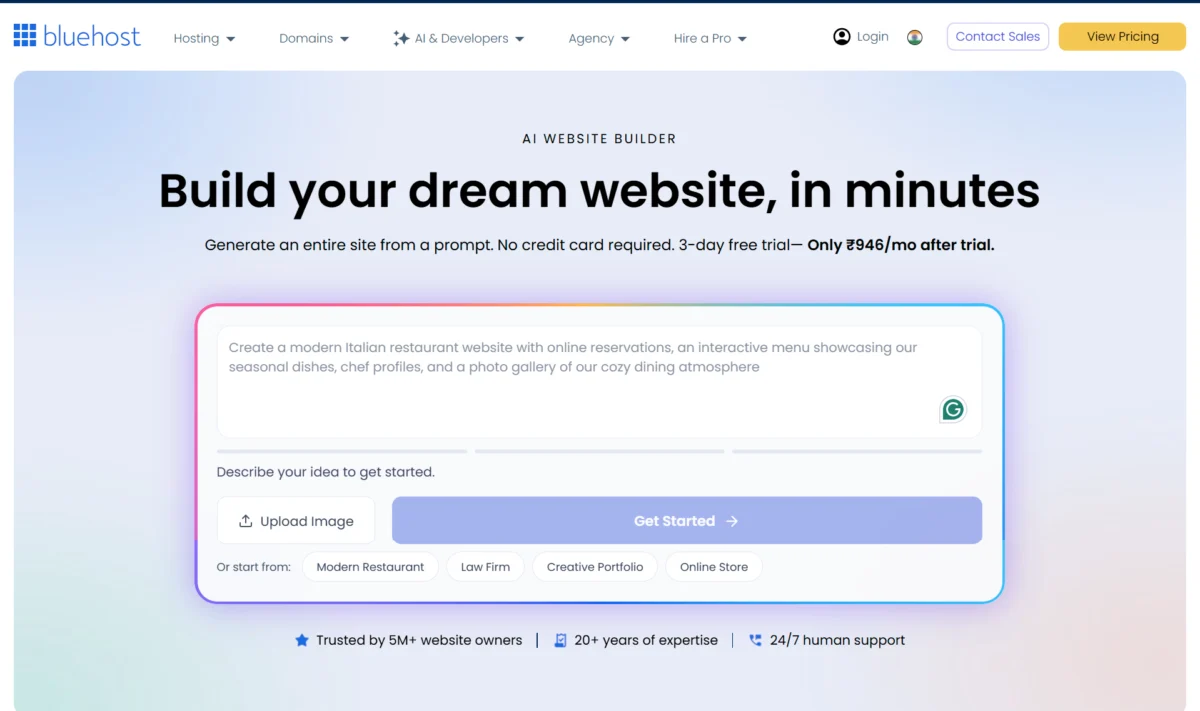
The promise of modern AI website builders is seductive: "Build your dream website in minutes." For millions of small business owners, freelancers, and creative professionals, this claim represents a turning point in digital accessibility. No longer is a professional online presence gated behind expensive development fees or the steep learning curve of coding.
However, as the dust settles on the initial hype, a more nuanced reality has emerged. While AI can undoubtedly accelerate the technical heavy lifting of site creation, the journey from a concept to a high-performing, revenue-generating website is more complex than a "one-click" solution. To succeed in the digital marketplace, users must distinguish between the speed of construction and the time required for strategic development.
The Core Reality: Beyond the Marketing Hype
When we talk about building a website with AI, we must differentiate between the infrastructure and the substance. AI tools are exceptionally adept at generating the "bones" of a site—the layout, the navigation menus, the color schemes, and even the preliminary draft of the page copy. By turning the daunting "blank canvas" syndrome into a guided, interactive onboarding process, AI builders have effectively slashed the time required to stand up a functional, professional-looking framework.
Yet, a website is not merely a collection of pixels and code; it is a communication channel. The time you save in the "setup phase" should, ideally, be reinvested into the "refinement phase." True success in the digital space requires meticulous attention to branding, user experience (UX), and search engine optimization (SEO)—areas where human intuition and strategy still outperform automated generation.
A Chronological Breakdown: From Concept to Launch
Every successful website follows a predictable life cycle. Whether you are launching a personal portfolio or a sophisticated eCommerce hub, the timeline is influenced by your preparation and the complexity of your goals.
The Planning and Strategy Phase (30 Minutes – 4 Days)
Before a single line of code is generated, you must define your purpose. Who is your target audience? What action do you want them to take? Investing time in market research—studying competitors and industry trends—is the most significant differentiator between a generic site and one that converts.
The Foundation Phase (1 – 2 Days)
Choosing a domain name and setting up secure, reliable hosting are the "digital real estate" components of your project. Utilizing integrated platforms—such as Bluehost’s all-in-one solutions—can significantly streamline this by bundling hosting, SSL certificates, and domain management.
The Construction Phase (1 – 7 Days)
This is where AI excels. Instead of spending days manually creating page structures and navigation, AI builders process your business requirements and generate a functional draft in minutes. However, the time spent here varies based on how much customization you apply to the AI-generated layout.
The Refinement Phase (2 Hours – 8 Days)
This is the most critical stage. You must replace placeholder images with your own high-quality photography, refine the AI-generated copy to match your unique brand voice, and ensure that your contact forms and CTAs (Calls to Action) are functioning correctly.
The Launch Phase (30 Minutes – 2 Hours)
Connecting your domain and conducting final cross-device testing ensures that your site is ready for the public. This is the final polish before you transition from "builder" to "operator."
Supporting Data: Complexity vs. Timeline
The following table illustrates how specific requirements can influence your development timeline:
| Requirement | Estimated Additional Time |
|---|---|
| Basic Informational Site | 30 minutes – 2 hours (post-AI draft) |
| E-commerce Setup | 1 – 5 days |
| Product Variations & Inventory | 2 hours – 2 days |
| Payment & Tax Configuration | 1 – 3 days |
| Multilingual Implementation | Several days to weeks |
| Third-Party Integrations (CRM/Booking) | 2 hours – 2 days |
The AI Advantage: What Manual Labor Has Been Eliminated?
In the traditional development model, a significant amount of time was lost to repetitive, non-creative tasks. Building from scratch required:
- Template selection paralysis: Manually browsing hundreds of themes.
- Grid and layout construction: Manually defining sections, rows, and columns.
- Initial copy creation: Writing generic filler text to test spacing.
- Navigation mapping: Manually linking pages and setting up hierarchies.
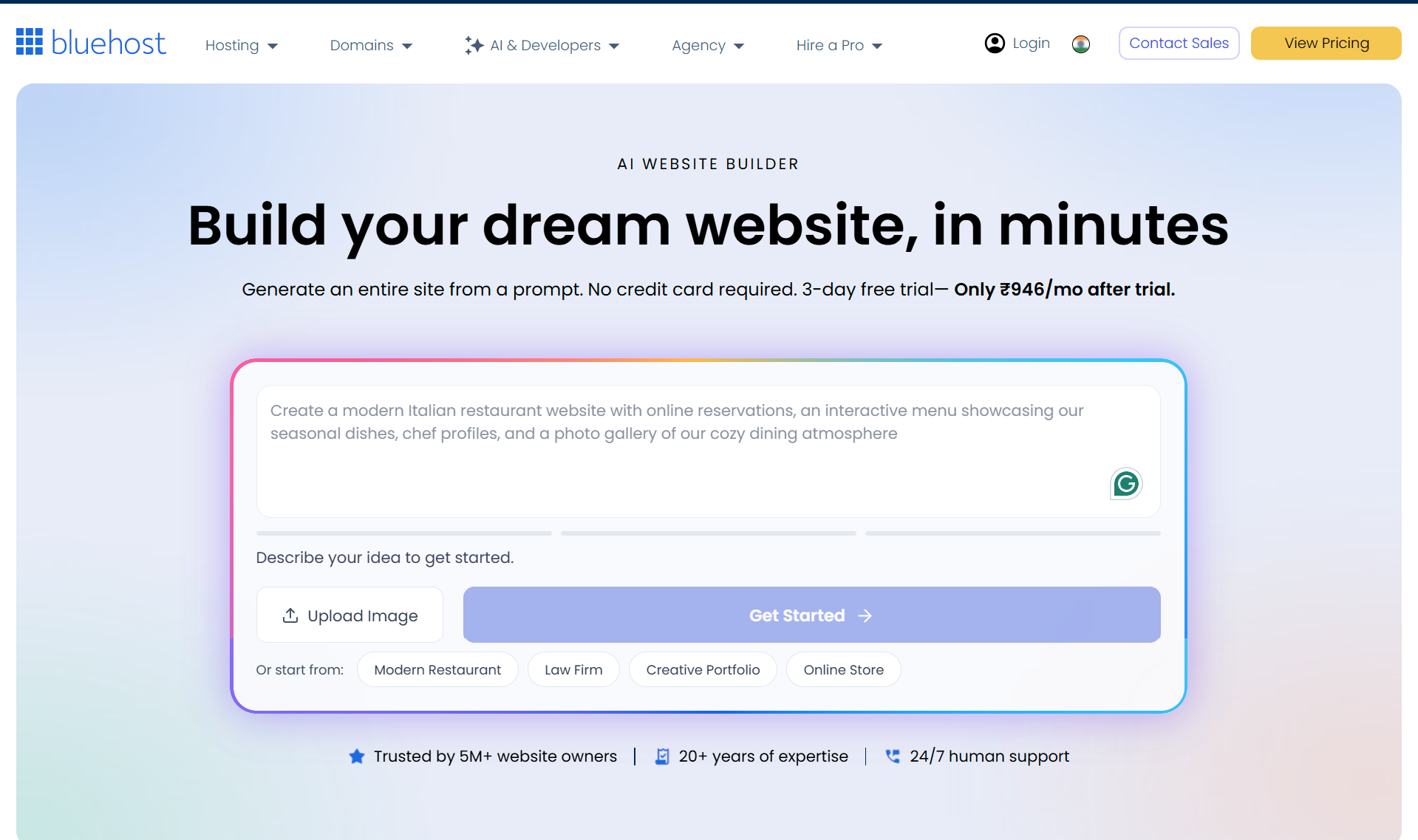
AI builders have effectively commoditized these steps. By using a "guided onboarding" approach, the AI acts as a digital architect. It understands that a law firm needs a different layout than a local bakery. Consequently, when you finish the onboarding questionnaire, you aren’t just getting a template; you are getting a tailored structure that adheres to industry best practices.
The "WordPress" Factor: Flexibility vs. Simplicity
A crucial distinction exists between "walled garden" AI builders and AI tools built on robust platforms like WordPress. The latter offers a distinct advantage: scalability.
When you use an AI builder on top of WordPress, the AI provides the head start, but the WordPress ecosystem provides the finish line. You are not locked into a proprietary editor. As your business grows, you retain full access to the WordPress dashboard, allowing you to install plugins for advanced SEO, analytics, or complex store functionality. This bridge between "ease of start" and "professional capability" is vital for long-term growth.
Implications for Business Growth: The Post-Launch Reality
Launching your website is not the end of the project; it is the beginning of an ongoing dialogue with your audience. The time you save using AI must be pivoted toward long-term maintenance and growth strategies.
1. SEO as an Ongoing Commitment
Search engines do not reward sites that remain static. To maintain visibility, you must continuously optimize your content. This involves updating meta descriptions, monitoring your XML sitemap, and ensuring that your technical foundation remains sound as search algorithms evolve.
2. The Role of Content Strategy
While AI can help draft a blog post, it cannot replace your unique insights. Regularly publishing high-quality, helpful content—specifically designed to answer your customers’ questions—is the most effective way to build authority in your niche.
3. Monitoring Performance
Using tools like Google Search Console and Google Analytics is no longer optional for serious businesses. Understanding how users interact with your site—where they drop off, what they click, and how they arrive—is the fuel for your next round of site optimizations.
4. AI and Brand Perception
As AI-powered search (like Google’s AI Overviews) becomes the norm, your brand’s presence needs to be "AI-ready." Utilizing tools like Yoast SEO AI+ allows you to understand how these systems perceive your brand, helping you optimize your structured data so that AI crawlers can accurately represent your business to the world.
The Final Verdict
Does AI make building a website faster? Unequivocally, yes. It has successfully compressed the most frustrating, time-consuming phase of the development lifecycle—the foundation—into a few minutes of interaction.
However, we must avoid the trap of believing that speed equals success. A website is a dynamic, living asset. If you spend 15 minutes generating a site but neglect the subsequent hours of refining, testing, and content strategy, you will have a digital presence that is technically "live" but strategically dead.
The true power of AI is not in replacing the creator; it is in removing the friction that prevents people from starting. By automating the technical setup, AI gives you the gift of time—time that you can now spend crafting a brand voice, refining your user experience, and building a strategy that ensures your website does more than just exist; it excels.
If you have been hesitant to start because of the technical complexity, those barriers have effectively vanished. The tools are ready, the framework is accessible, and the only remaining requirement is your unique vision. Start building today, not because it’s fast, but because your business deserves a space to grow.



