











In a significant pivot to its consumer-facing artificial intelligence strategy, Google has begun deploying a major update to the Gemini app experience. This rollout, which began reaching users globally this week, fundamentally changes how free-tier users interact with the platform while introducing a sophisticated new "effort level" system for subscribers. The update marks a departure from manual model selection for non-paying users, signaling Google’s intent to prioritize automated, context-aware AI performance over granular user control.
Main Facts: A Shift Toward Automated Intelligence
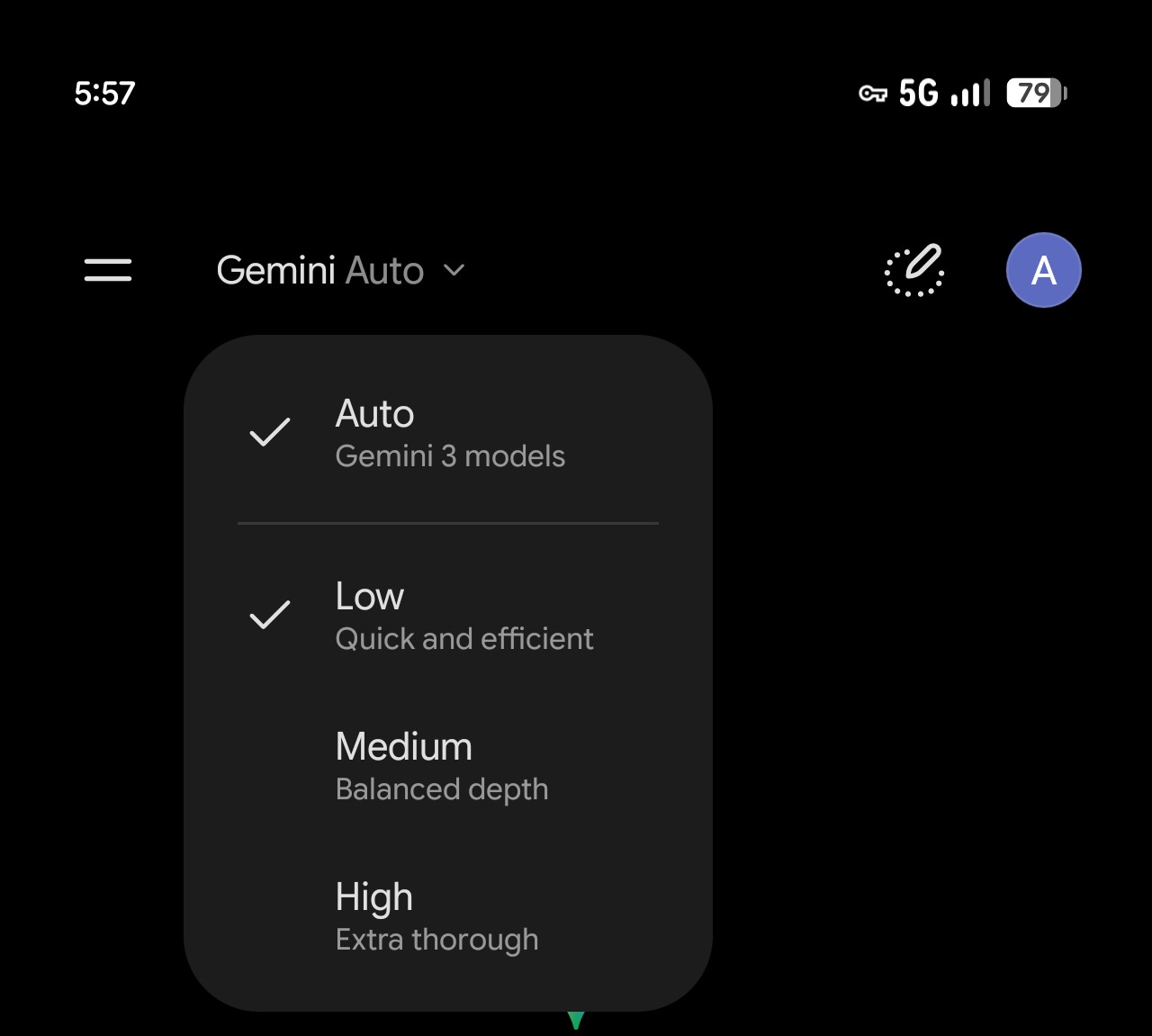
The core of the recent update is the transition to "Auto" model selection for users on the free Gemini plan. Previously, users could toggle between different iterations of the Gemini model to suit their specific task requirements. That control has been rescinded in favor of a centralized system where Gemini autonomously determines which model is best suited for a given prompt.
According to Google’s updated support documentation, the "Auto" setting utilizes Gemini 3-class models. Specifically, the system prioritizes "Flash-Lite" for the majority of standard queries, leveraging its speed and efficiency. When a user inputs a prompt that requires more complex reasoning or a deeper understanding of context, the system is designed to dynamically route the query to more capable models, such as Flash or Pro.

For users who prefer consistency over the automated approach, there is a caveat: if the "smart model selection" feature is disabled, the system defaults entirely to the Flash-Lite model for every response. This ensures that users who want to avoid the "Auto" logic are still able to access a stable, albeit more limited, version of the AI.
Chronology: The Path to the October Update
The evolution of these changes has been rapid, reflecting the fast-paced development cycle of Google’s AI division.
- Late September 2026: Initial reports began circulating regarding upcoming limitations on model selection, foreshadowing the shift away from manual toggling.
- Early October 2026 (Oct 3): Google formally announced the upcoming changes to model limits, confirming that a major restructuring of the Gemini interface was imminent.
- Mid-October 2026: The rollout began in earnest. Users across various regions started reporting the disappearance of the manual model picker in their apps, replaced by the "Auto" designation.
- Present Day: The "effort levels" feature—designed to replace the older "Extended" reasoning option—is currently in the process of reaching both free and paid subscriber accounts globally.
This aggressive rollout schedule suggests that Google is eager to align its consumer products with the advancements made in its backend infrastructure, specifically those seen in Google AI Studio and the internal "Antigravity" projects.
Supporting Data: Understanding "Effort Levels"
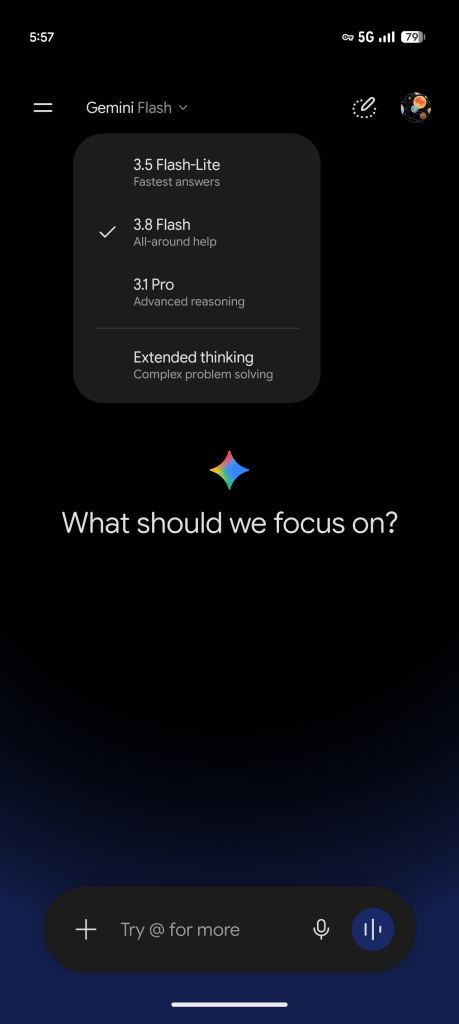
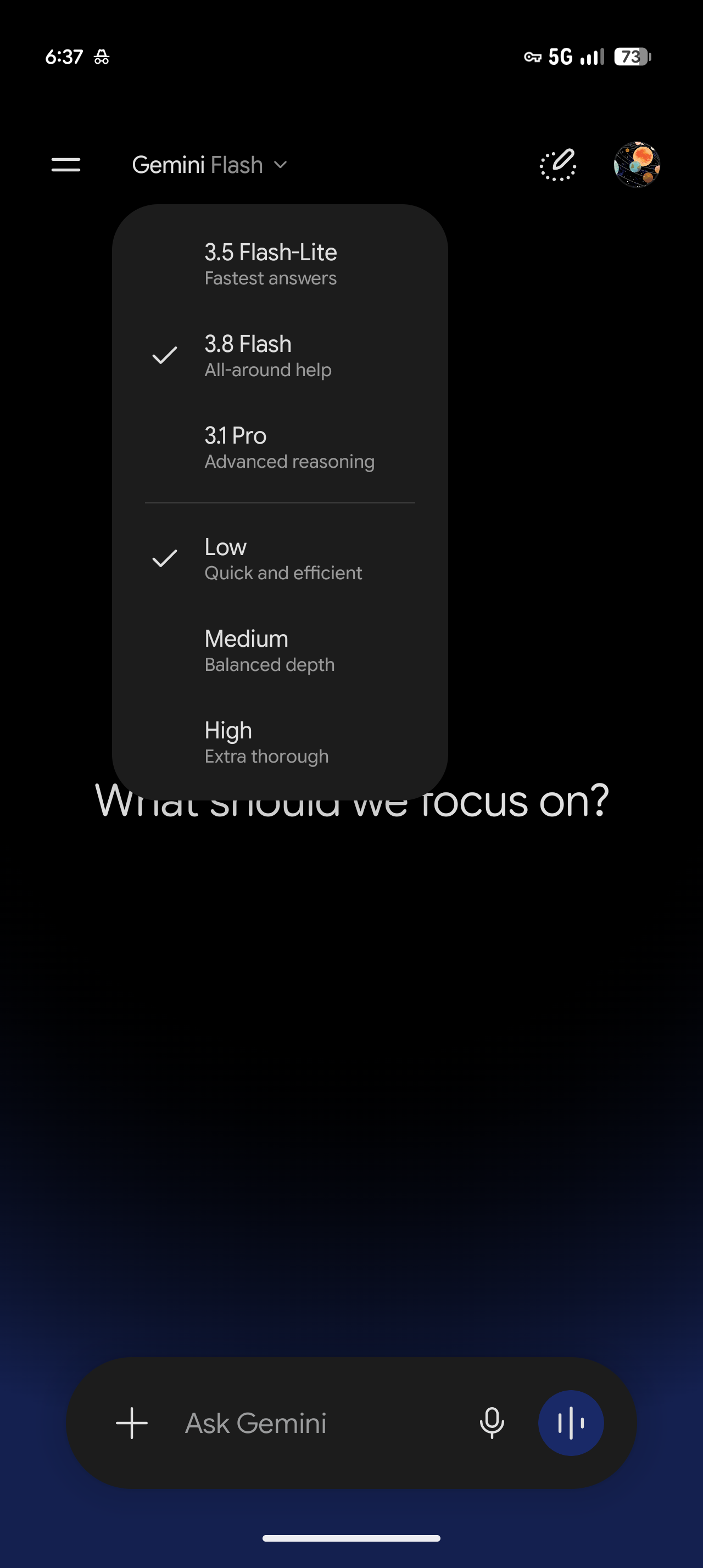
Perhaps the most intriguing addition to the platform is the introduction of "effort levels." This feature replaces the previous "Extended" option, providing users with a more granular way to dictate how much "thinking" the AI should perform before generating an output.
These three distinct effort levels are designed to mirror the "thinking levels" found in Google AI Studio. By adjusting these settings, users can effectively tell the model to dedicate more computational resources to a prompt, which is particularly useful for tasks involving complex coding, multi-step logic, or nuanced creative writing.
While the "Auto" mode handles model selection for free users, the effort levels offer a new layer of control for subscribers. It represents a shift from model selection (which is becoming a backend task) to intent signaling (where the user tells the model how hard to work). This is a vital distinction in the current AI landscape, where the underlying architecture is becoming increasingly opaque to the average user, but the performance parameters remain within their reach.
Official Responses and Strategic Implications
Google’s stated rationale for these changes is rooted in user experience and performance optimization. By moving to an automated model picker, Google claims it can ensure that users get the best possible response times for simple queries while reserving more powerful, compute-heavy models for tasks that actually require them.
However, the change has drawn scrutiny regarding the transparency of the "AI Plus" tier. New information indicates that even those paying for premium access will soon be restricted to a subset of the company’s newest models—specifically Flash-Lite and the (3.8) Flash variant. This implies that Google is attempting to create a more distinct hierarchy between its standard consumer Gemini and its developer-focused tools.
Implications for the Power User
For the "power user," the loss of manual model selection is a significant blow. In the past, users could force the system to use a "Pro" or "Ultra" model to ensure higher quality output for complex prompts, even if it took longer. By taking that choice away, Google is essentially "black-boxing" the decision-making process. The user must now trust that the "Auto" algorithm correctly identifies the complexity of the request. If the algorithm fails to escalate a complex query to a "Pro" model, the quality of the response will inevitably suffer.
Implications for the Casual User
For the average user, this change will likely be perceived as an improvement. Most casual users do not want to manage model versions; they want the quickest, most accurate answer possible. If Google’s "Auto" logic is as efficient as promised, it should result in a snappier experience across the board, with fewer instances of the system "hanging" while loading a heavy-duty model for a simple "What is the weather?" query.
The Broader AI Landscape: Why Now?
This move aligns with a broader industry trend toward "intelligent routing." As AI models become more specialized—some being highly efficient for code, others for language, others for mathematical reasoning—the complexity of choosing the right model becomes a barrier to entry. By automating this, Google is positioning Gemini as a seamless service rather than a suite of tools.
Furthermore, the introduction of effort levels suggests that Google is attempting to manage the immense computational cost of running large language models. By forcing most queries through "Flash-Lite," Google is effectively reducing its server-side energy consumption and costs. When a user specifically requests a higher "effort level," they are essentially "opting in" to a more expensive, compute-heavy process.

Conclusion: A More Controlled Future
The update to the Gemini app represents a maturation of Google’s AI product. It is moving away from the "choose your own adventure" model of the early days of generative AI and toward a more streamlined, managed service.
While the loss of manual control may frustrate those who enjoyed tinkering with the engine under the hood, the new effort levels provide a necessary middle ground. As Google continues to roll out these updates, the success of the platform will depend entirely on the efficacy of its "Auto" selection algorithm. If the system can accurately judge when a query needs the "big guns" and when it doesn’t, the user experience will be significantly enhanced. If not, the platform risks appearing less capable than its predecessors.
For now, the transition to Gemini 3-class models and the shift to effort-based prompting signals that the "AI wars" have moved beyond simply having the largest model, and into the era of operational efficiency and intelligent, automated resource management. Users are advised to monitor their app settings as the rollout completes to ensure they are getting the performance they expect, particularly if they rely on the platform for professional or high-stakes reasoning tasks.



