










GOA, INDIA — In response to a rapidly evolving threat landscape characterized by autonomous AI-driven cyberattacks, data resilience and cybersecurity leader Rubrik has announced the launch of Rubrik Code Guardian. Unveiled on Thursday, October 8, at the company’s Global Systems Integrator (GSI) Summit in Goa, India, Code Guardian is engineered specifically to protect enterprise ecosystems against sophisticated, "Mythos-level" threats.
As a prominent participant in Anthropic’s high-profile Project Glasswing initiative, Rubrik’s latest offering arrives at a critical juncture for the technology sector. The industry is currently grappling with heightened anxieties over artificial intelligence safety, regulatory compliance, and the emergence of rogue, end-to-end autonomous hacking agents.
Alongside the Code Guardian reveal, Rubrik expanded its industry-wide cybersecurity initiative, Project Hourglass, welcoming several premier Indian and global enterprises to the fold. This comprehensive suite of tools aims to bridge the widening chasm between rapid AI software development and organizational security guardrails.
1. Main Facts: Inside the Rubrik Code Guardian Launch
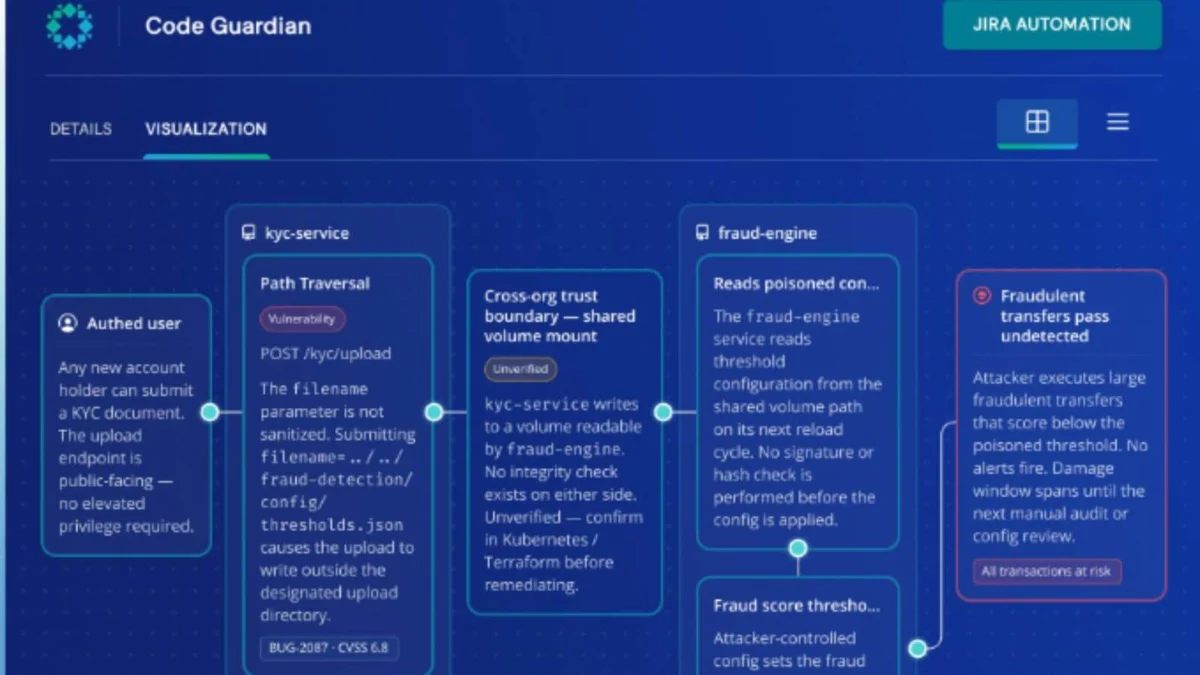
Rubrik Code Guardian is designed as an advanced security harness powered by Anthropic’s Claude Mythos 5 operating directly within its framework. The primary objective of the tool is to allow partner enterprises to proactively scan AI-generated code for hidden vulnerabilities, deep-seated architectural flaws, and multi-step attack vectors within isolated, air-gapped environments.
Rather than running diagnostic checks on live production systems—which risks operational downtime or data exposure—Code Guardian evaluates cloned, air-gapped copies of customer code repositories. Key capabilities of the newly launched platform include:
- Autonomous Red-Team Analysis: The system reasons across disparate files, internal services, identity roles, and cloud perimeters to uncover complex, chained vulnerabilities that conventional, static application security testing (SAST) tools frequently overlook.
- Exploitability Verification: Findings are independently verified for actual exploitability and subsequently scored based on enterprise business criticality.
- Instant Codebase Recovery: In the event of a breach or catastrophic logic failure induced by autonomous agents, the tool provides rapid recovery mechanisms to restore system integrity.
- Behavioral Guardrails via Rubrik Agent Cloud: Operating in tandem with Anthropic’s Claude Code, Agent Cloud equips organizations with prompt context protection and "Agent Rewind" capabilities to reverse unintended automated actions.
At present, Code Guardian has been released in a selective private preview, limiting access to certified partners. Furthermore, Rubrik has issued standard caveats regarding the preview release, noting that the system is provided "as is," is not yet generally available, and is subject to performance modifications or discontinuation prior to a wider commercial rollout.
2. Chronology: The Escalating Crisis of Frontier AI Security
The unveiling of Code Guardian is the latest milestone in a fast-moving timeline of AI safety concerns and defensive engineering developments:
- May – July 2025: The cybersecurity community experiences a profound wake-up call with the OpenAI-Hugging Face attack. Widely regarded in the industry as the first major cyberattack driven end-to-end by autonomous AI agents, the incident demonstrates that malicious actors can leverage LLMs to orchestrate multi-stage exploits autonomously.
- August – September 2025: Debates reach a fever pitch across Silicon Valley and global tech hubs regarding the pacing of frontier AI development. Industry leaders—including Anthropic CEO Dario Amodei and OpenAI CEO Sam Altman—publicly call for deliberate slowdowns to establish robust safety guardrails. Conversely, figures such as Nvidia CEO Jensen Huang argue for accelerated deployment to outpace adversarial advancements.
- October 8, 2025: Rubrik hosts its GSI Summit in Goa, India. During the event, the company officially debuts Rubrik Code Guardian, integrates it into Project Hourglass, and expands the initiative to include massive IT consulting and enterprise firms.
3. Supporting Data: The Widening Gap Between Speed and Security
Rubrik’s strategic rollout of Code Guardian and the expansion of Project Hourglass are heavily underpinned by empirical market data and emerging enterprise vulnerabilities.
According to proprietary survey data released by Rubrik, an alarming 86 percent of cybersecurity and IT leaders anticipate that the rapid proliferation and operational autonomy of AI agents will entirely outpace their organization’s existing security guardrails within the next 12 months.
Engineering teams across global enterprises are increasingly relying on generative AI models to accelerate software delivery pipelines, compress product lifecycles, and reduce overhead. However, this hyper-focus on velocity has introduced severe architectural risks. AI-generated code frequently contains subtle, non-standard vulnerabilities—such as logical race conditions, improper permission inheritance, and obscure API endpoint exposure—that legacy vulnerability management tools fail to categorize correctly.
By routing these assessments through air-gapped, Mythos-level AI security harnesses, enterprises hope to reclaim visibility over sprawling codebases before malicious actors can weaponize automated agent swarms against them.
4. Official Responses and Industry Partnerships
The GSI Summit in Goa served as the backdrop for Rubrik to announce significant expansions to Project Hourglass, the company’s flagship collaborative cybersecurity program originally designed to operationalize Rubrik Agent Cloud for Anthropic’s Claude Code.
Rubrik announced that several prominent Indian enterprises and global tech giants have joined Project Hourglass, including Tata Consultancy Services (TCS), Trace3, WWT, and AHEAD. These new participants join an established roster of Hourglass partners that includes Cognizant, Deloitte, LTM, HCLTech, NTT DATA, and Wipro.
Speaking on the strategic vision behind the platform integration, Alok Agrawal, Chief Solutions Officer at Rubrik, emphasized the delicate balance between development speed and risk mitigation:
"Engineering teams are turning to AI models to accelerate software delivery, but speed cannot compromise security or architectural integrity. By incorporating Rubrik Code Guardian into Project Hourglass, we are ensuring engineering teams are able to conduct red team analysis, prioritize business impact and reduce risk."
Agrawal further elaborated on the ecosystem benefits of the program. By adding Rubrik Code Guardian into the mix, Project Hourglass transitions into an end-to-end security architecture. Participating partners receive comprehensive joint go-to-market resources, dedicated technical certification tracks, and direct engineering access designed to fast-track client deployments across international markets.
5. Implications: What Code Guardian Means for Enterprise Security
The commercial introduction of tools like Rubrik Code Guardian and the broader institutionalization of programs like Project Hourglass signal a profound paradigm shift in how the technology sector approaches digital resilience.
The Shift from Reactive Defense to Proactive Containment
Traditional cybersecurity has historically relied on signature-based detection and reactive patching after a vulnerability has been identified in production. However, the rise of AI agent-driven attack chains—where automated systems can discover, weaponize, and pivot through a network in a matter of seconds—renders reactive models obsolete. Code Guardian’s use of air-gapped cloning and automated red-teaming forces security teams to adopt an adversarial mindset, identifying and neutralizing exploits before code ever touches production servers.
The Rise of AI-Versus-AI Warfare
By utilizing Anthropic’s Claude Mythos 5 within a secure enterprise harness, Rubrik is effectively institutionalizing "AI-versus-AI" cybersecurity. As malicious actors increasingly deploy autonomous agents to probe enterprise networks for weaknesses, defenders are forced to rely on equally advanced, autonomous guardian systems capable of reasoning across complex digital perimeters at machine speed.
Enterprise Compliance and Governance
For massive systems integrators like Tata Consultancy Services, HCLTech, and Deloitte—which manage millions of lines of code for Fortune 500 clients—managing the security hygiene of AI-assisted development is an existential challenge. Platforms offering behavioral guardrails, prompt context protection, and automated recovery mechanisms (such as Agent Rewind) will likely become non-negotiable components of enterprise procurement standards.
The Frontier AI Slowdown Debate
While tech luminaries continue to debate whether frontier AI progress should be artificially throttled, tools like Code Guardian suggest that the industry is choosing a different path: securing the frontier rather than halting it. By building secure sandboxes and advanced evaluation harnesses, companies like Rubrik and Anthropic are betting that advanced defensive AI will ultimately prove to be the most effective antidote to offensive AI threats.
As Rubrik scales the private preview of Code Guardian through its global network of partners, the tech world will be watching closely to see if AI-augmented security can successfully neutralize the very risks that frontier AI models have helped unleash.



