










By Global Tech & Marketing Desk
Published: October 24, 2026
Main Facts
The traditional B2B marketing funnel—built on the foundational assumption that prospective buyers will naturally gravitate toward a brand’s website via traditional search engines, paid advertisements, or gated content—is undergoing a profound structural evolution. Today, modern buyers are bypassing standard search interfaces altogether, initiating their deep-dive research inside complex artificial intelligence interfaces, large language models (LLMs), and dedicated answer engines.
These users pose nuanced queries, receive synthesized, highly curated answers, and frequently establish firm opinions about entire product categories long before they ever interact with a vendor’s digital front door. Consequently, traditional demand generation strategies are no longer sufficient on their own. If a brand fails to secure visibility within these initial AI-generated narratives, it risks complete exclusion from the critical shortlist phase of the modern buyer’s journey.
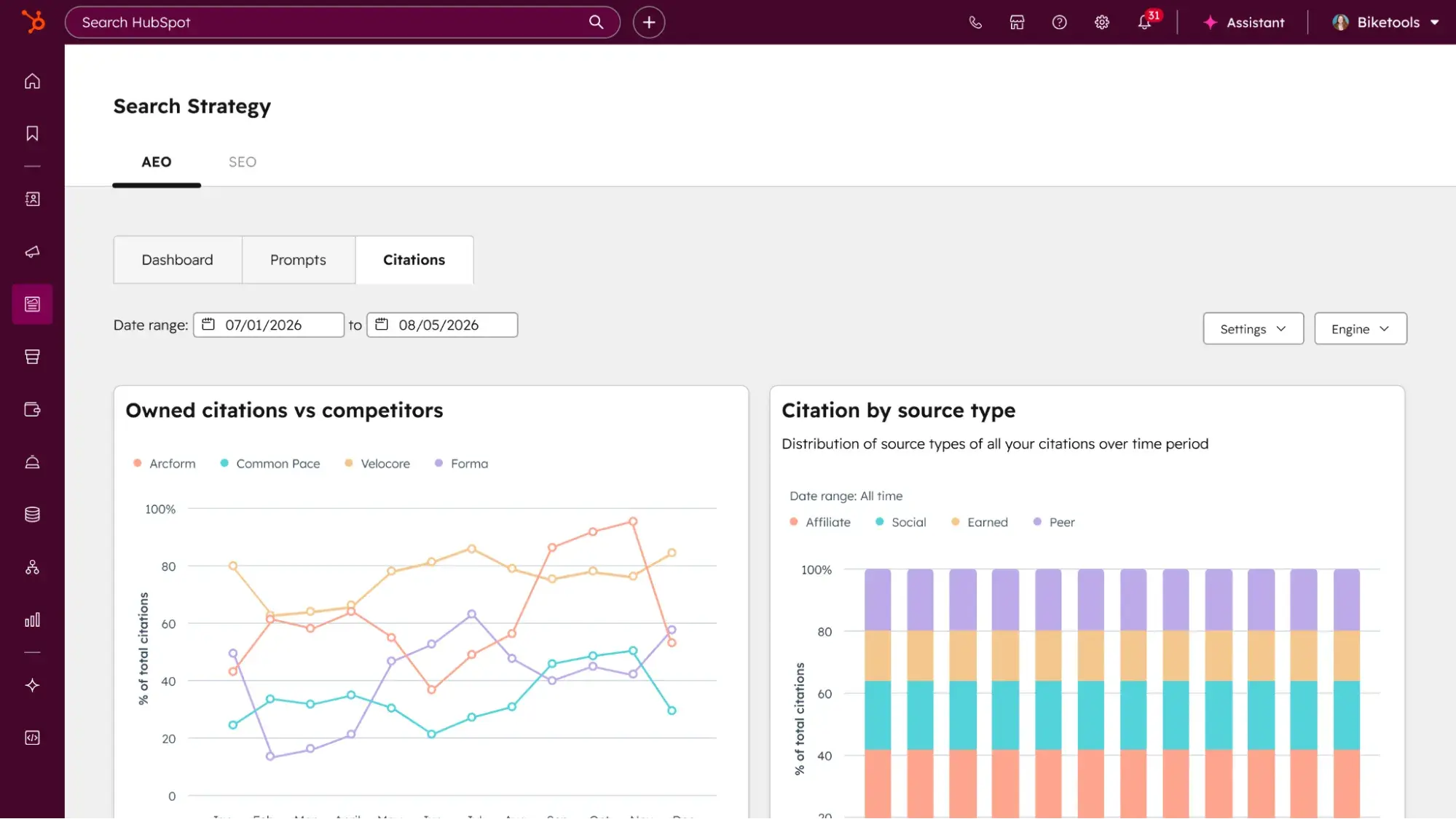
To combat this emerging blind spot, progressive demand generation teams are expanding their funnels upstream. Rather than replacing legacy channels entirely, organizations are adopting Answer Engine Optimization (AEO) to capture targeted demand at its inception. Industry leaders, including HubSpot, are pioneering dedicated ecosystems—such as HubSpot AEO, Brand Visibility Dashboards, and AI-driven Content Agents—to help marketers monitor prompt-based citations, identify missing content gaps, and directly connect AI-assisted visibility to Marketing Qualified Leads (MQLs) and enterprise revenue.

Chronology: The Evolution of Search to AI-Driven Discovery
To understand the urgency behind the shift toward AEO, it is essential to trace how modern buyer discovery has transformed over the past two decades:
- The Era of Keyword Search (Late 2000s–2010s): For over a decade, digital marketing was dominated by Search Engine Optimization (SEO) and Pay-Per-Click (PPC) campaigns. Brands optimized their web properties for specific keywords, aiming to capture high-intent traffic through blue-link search engine results pages (SERPs). The buyer’s journey began with a manual search, followed by clicking through multiple vendor sites to compare features.
- The Rise of Content Hubs and Gated Funnels (2015–2022): Demand generation matured into a science of inbound marketing. Funnels were meticulously mapped: top-of-funnel awareness content (blogs, social media) funneled prospects into middle-of-funnel consideration assets (whitepapers, webinars), eventually converting them into MQLs via forms and landing pages. Every touchpoint was measurable through traditional last-touch or multi-touch attribution models.
- The Generative AI Disruption (2023–2024): The mainstream proliferation of generative AI tools fundamentally altered consumer and B2B behavior. Instead of browsing ten different search results to compile a list of software vendors, buyers began asking conversational agents complex, multi-variable questions: "What are the top three enterprise CRM solutions for a mid-market healthcare company with strict compliance requirements?" The AI interface synthesized the answer instantly, naming specific vendors and effectively establishing the evaluation shortlist in a single step.
- The Modern AEO Imperative (2025–Present): Recognizing that a massive portion of the buying cycle now occurs entirely within opaque AI environments, enterprise software and marketing platforms began launching specialized Answer Engine Optimization tools. Marketers transitioned from merely tracking keyword rankings to auditing how AI engines cite, recommend, and contextualize their brands against competitors during the earliest stages of buyer research.
Supporting Data and Market Insights
The quantitative reality of AI-assisted discovery underscores why demand generation budgets are rapidly shifting toward upstream optimization. Modern enterprise data reveals stark contrasts in how buyers behave today versus just a few years ago:
- The Shortlist Effect: Studies on B2B buying behavior indicate that over 65% of the software evaluation criteria and vendor shortlists are formed during the initial research phase—an area now heavily dominated by AI summary engines and conversational assistants.
- Conversion Multipliers: According to recent platform performance benchmarks released by HubSpot, businesses actively utilizing specialized AEO toolsets generate 2.7x more Marketing Qualified Leads (MQLs) compared to organizations relying solely on legacy, downstream-optimized inbound strategies.
- The Attribution Gap: Despite these impressive conversion lifts, enterprise analytics teams report that over 70% of AI-influenced buyers interact with multiple touchpoints before converting, highlighting the critical need for advanced journey-phase prompt tracking to properly credit upstream visibility.
Official Responses and Industry Perspectives
As the marketing landscape adapts to the dominance of answer engines, industry executives and platform developers are speaking out about the necessity of rewriting standard go-to-market playbooks.
"Demand generation has long been tethered to the physical metrics we can instantly see and measure on our own web domains," explains a senior product strategist at HubSpot. "However, the reality of modern buying behavior dictates that the conversation—and the persuasion—happens long before a prospect ever fills out a form. If you aren’t part of the synthesis generated by an AI model, you are fighting an uphill battle downstream."

Marketing operations leaders are echoing this sentiment, emphasizing that AEO is not a replacement for high-performing content marketing or SEO, but rather its logical upstream extension.
"We had to completely rethink our content architecture," notes a VP of Demand Generation at a leading SaaS enterprise. "In the past, we fed top-of-funnel visitors generic introductory ebooks. But an AI-assisted buyer arrives on our site with a sophisticated level of context already established by an LLM. Treating them like a cold visitor creates friction. By leveraging automated content agents and AEO insights, we can immediately serve them deep comparison matrices, architectural overviews, and use-case validations that match the maturity of their research."
Furthermore, platform architects stress that measurement must evolve alongside tactics. "Marketers are accountable to pipeline and revenue, not vanity visibility scores," emphasizes a lead developer of AI marketing solutions. "By grounding prompt-tracking dashboards directly in CRM data, we can finally bridge the gap between abstract AI citations and hard-dollar pipeline impact."
Implications for Modern Demand Generation Teams
The transition toward Answer Engine Optimization carries sweeping implications for marketing departments, sales alignment, and organizational budgeting.

1. The Redefinition of Top-of-Funnel Content
Traditional blog posts optimized solely for search volume and basic keyword density are losing efficacy. Because AI search engines summarize information across the web to provide direct answers, content must be structured to be citation-worthy. This means publishing authoritative, highly specific, data-backed insights that LLMs can easily parse, attribute, and recommend to users seeking expert consensus.
2. Elimination of Friction in the Hand-Off to Evaluation
When an AI-influenced buyer finally clicks through to a vendor website, their expectations are elevated. They have already moved past the "what is this category?" phase and are actively asking "how does this specific vendor solve my exact problem compared to competitors?" Demand generation teams must audit their web experiences to ensure that traffic arriving via AI citations is greeted with advanced comparison pages, technical specifications, and transparent ROI frameworks rather than elementary introductory material.
3. Cross-Functional Collaboration and Attribution Reform
Because AI discovery is inherently non-linear, demand generation teams must work closely with data science and marketing operations to build more sophisticated attribution models. Moving beyond simplistic last-click tracking allows organizations to accurately measure the compounding value of winning visibility across various LLMs, prompt types, and buyer journey phases.
4. Budget Realignment for the AI Era
Securing a permanent line item for AEO tools and AI-driven content generation workflows is becoming a non-negotiable priority for CMOs. As the volume of B2B pipeline originating from AI research continues its inevitable upward trajectory, companies that fail to invest in upstream optimization will find their inbound channels steadily drying up—not because their product is inferior, but because their brand was never invited into the room where the AI made its recommendations.

Conclusion
The rise of Answer Engine Optimization marks a defining inflection point in the history of digital marketing. The rules of engagement have shifted upstream, forcing demand generation teams to evolve from reactive web-traffic collectors into proactive architects of AI visibility. By mapping where their brands appear in AI research, deploying structured content tailored to evaluation-ready mindsets, and tightly coupling AEO performance with core revenue metrics, modern enterprises can successfully turn the AI discovery revolution into a predictable, scalable engine for long-term growth.



