










SAN CAMBRIDGE, MA — For the past two decades, the anatomy of marketing leadership has been anchored in a predictable, spreadsheet-driven routine. Chief Marketing Officers and demand generation leads operated within a well-charted ecosystem: allocating budgets across paid acquisition, organic content, live events, and email campaigns. Each of these channels came with decades of historical benchmarks, established attribution models, and reliable Customer Acquisition Cost (CAC) ranges.
Today, that foundational playbook is fracturing. As modern buyers pivot away from traditional keyword-based search engines and toward conversational AI and answer engines, the entire discovery phase of the buyer’s journey has been rewritten. Marketing strategies that once relied on capturing attention via page-one search rankings are finding themselves sidelined as generative AI platforms deliver direct summaries, problem framing, and curated vendor shortlists before a user ever steps foot on a brand’s website.
In response to this structural shift, platforms like HubSpot are rolling out specialized Answer Engine Optimization (AEO) tools designed to give marketing executives the visibility, competitive intelligence, and revenue attribution metrics they need to survive and scale in an AI-first economy.
Main Facts: The Paradigm Shift from SEO to AEO
The fundamental change facing modern marketing is deceptively simple: buyers are no longer searching; they are asking.
When a high-value enterprise decision-maker or an everyday consumer looks for a solution in a crowded category, they increasingly turn to conversational answer engines. Rather than presenting a sprawling list of blue links that users must sift through, these AI systems synthesize information on the fly. They provide an executive summary of the problem, outline the criteria for evaluation, and hand down a short, highly credible list of recommended vendors.
If a brand fails to appear accurately, contextually, and favorably within those synthesized AI responses, it is effectively invisible to the most intent-driven buyers in the market.

- The Problem: Traditional search engine optimization (SEO) focuses on keyword rankings, backlinks, and web traffic. AEO, by contrast, focuses on semantic authority, citation frequency, and algorithmic trust within large language models (LLMs).
- The Blind Spot: While traditional competitive intelligence has mature tooling and clear benchmarks, AEO competitive intelligence is in its infancy. Most marketing leaders cannot reliably state whether their brand is leading, lagging, or entirely absent in AI-generated answers.
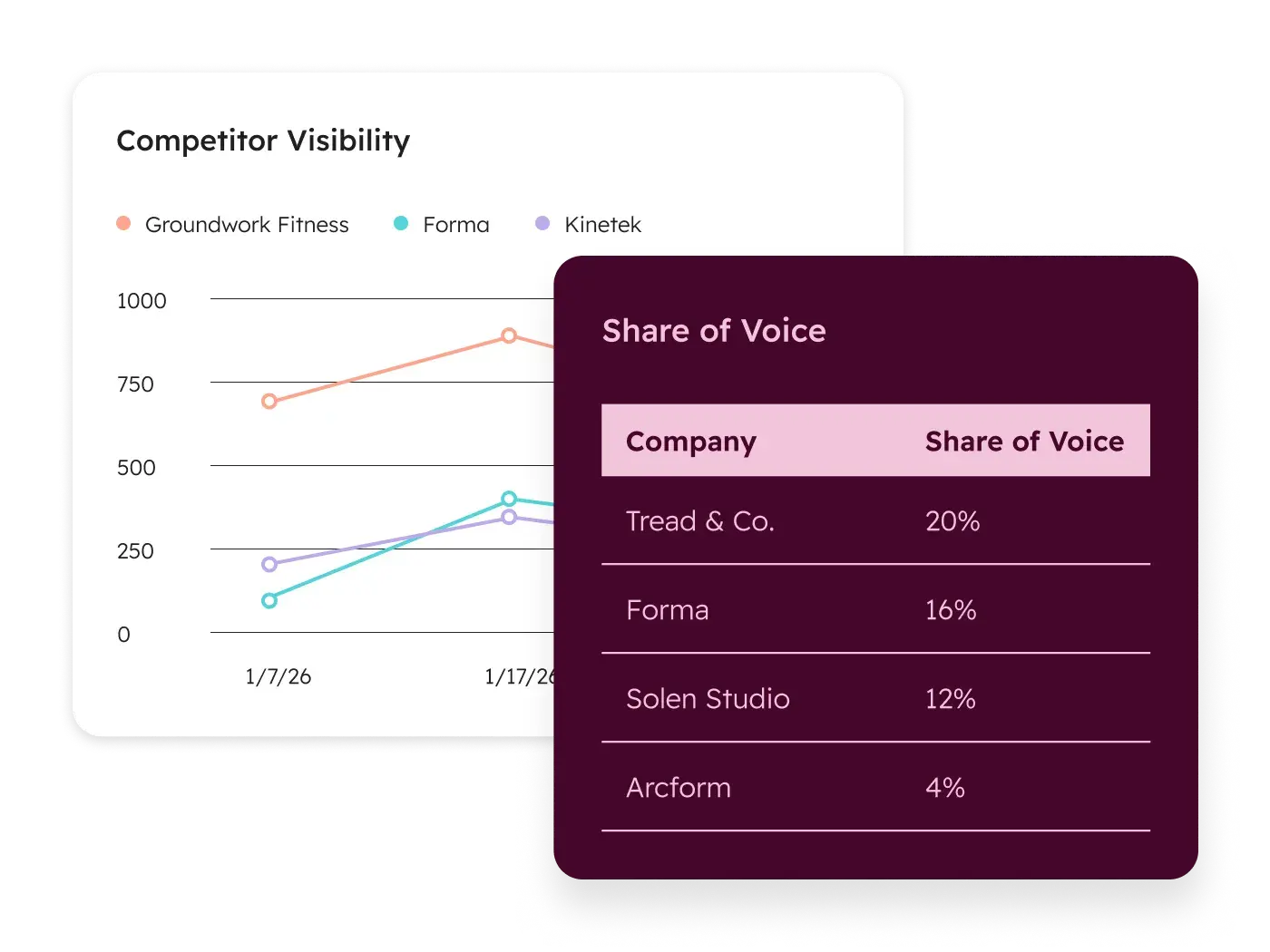
- The Solution: Emerging technologies, such as HubSpot’s dedicated AEO suite, aim to bridge this gap by offering centralized dashboards that track brand visibility, share of voice, and citation trends across critical industry prompts.
Chronology of a Disruption: How Discovery Evolved
To understand the urgency driving the adoption of AEO, it is necessary to chart the evolution of digital discovery over the past thirty years.
Phase 1: The Keyword Era (Late 1990s – 2010s)
In the early days of the commercial internet, digital marketing was dominated by exact-match keywords, meta-tags, and raw backlink volume. Websites competed to rank for specific terms, and the user journey was entirely transactional: search, click, browse, convert.
Phase 2: The Intent and Content Era (2010s – Early 2020s)
As search algorithms matured, Google and other engines shifted toward user intent. Content marketing, inbound methodologies, and user experience (UX) took center stage. Brands built vast libraries of blog posts, whitepapers, and guides to capture top-of-funnel traffic, establishing predictable funnels backed by multi-touch attribution software.
Phase 3: The Conversational AI and Answer Engine Era (2023 – Present)
The commercialization of generative AI fundamentally disrupted the traditional search paradigm. Users stopped hunting for links and began delegating entire research tasks to AI assistants. These engines consume vast corpora of web data, customer reviews, forum discussions, and knowledge bases, compressing the research phase into a single conversational turn.
Brands that built their organic authority during Phases 1 and 2 are discovering that their historic search dominance does not automatically translate into AI citation dominance. A company can rank number one organically for a key term while remaining entirely unmentioned by an LLM answering a buyer’s prompt about the same category.
Supporting Data and Metrics: Making the Business Case
For marketing leaders, securing budget for emerging channels is an uphill battle. Stakeholders notoriously view unproven tactics as experimental, demanding rigorous proof before committing capital. Without hard data, AEO risks being deprioritized in favor of channels with cleaner, more established ROI narratives.

However, internal research indicates that the cost of inaction is compounding rapidly. According to internal metrics from HubSpot, organizations that successfully optimize for answer engines and establish early AI visibility are generating 2.7x more Marketing Qualified Leads (MQLs) than those lagging behind.
Furthermore, early movers enjoy a compounding advantage. If a competitor secures consistent citations for the top ten prompts that define a specific software or service category, AI models reinforce that brand as the default market leader. Over time, this algorithmic preference becomes an entrenched moat that is exceptionally expensive and difficult for latecomers to dismantle.
To help marketing teams build an airtight business case for leadership and the board, platforms like HubSpot AEO provide a comprehensive data framework:
- Current Brand Visibility Scores: A single, quantifiable metric tracking how often a brand appears in relevant AI prompts over time.
- Share of Voice Analysis: Direct comparisons against named competitors across core category queries.
- Citation Trend Tracking: Historical data showing whether a brand’s AI presence is expanding or contracting.
- Actionable Recommendations: Specific strategic adjustments required to close visibility gaps and improve citation authority.
Official Responses and Industry Perspectives
Industry analysts and marketing executives are increasingly vocal about the necessity of adapting infrastructure before the market forces their hand.
"Marketing leadership decisions used to be about where to allocate resources between known channels like paid, content, events, and email," notes product strategy literature from HubSpot. "Each of these channels has established performance benchmarks and predictable customer acquisition cost (CAC) ranges. But now, that framework is getting harder to trust as more buyer discovery moves to answer engines."
Experts emphasize that AEO should not be viewed as a replacement for existing inbound strategies, but rather as an essential evolution of them. Just as social media marketing required brands to expand beyond corporate websites in the late 2000s, AEO requires brands to optimize their digital footprints for machine consumption and synthesis.

"If your brand isn’t showing up accurately and favorably in those answers, you’re already behind," industry strategists warn. Forward-thinking marketing leaders are no longer waiting for definitive industry standards; instead, they are actively embedding AI visibility metrics into their existing reporting stacks, aligning AEO activity directly with the pipeline metrics they are held accountable for by executive leadership.
Implications: The High Cost of Invalidation
The operational and strategic implications of the rise of answer engines touch every corner of the enterprise, from lead generation to board-level reporting.
1. The Death of Traditional Attribution
For years, marketers relied on last-click or multi-touch attribution models that tracked a direct line from a search engine query to a landing page form submission. Answer engines short-circuit this journey. When an AI provides a comprehensive vendor summary and frames the buyer’s problem, the user may arrive at the brand’s website with high intent, bypassing the traditional top-of-funnel educational content entirely. If marketing teams cannot tag AI-referred contacts and map them within their CRM, these high-value prospects will be misattributed, starving AEO of rightful credit.
2. Integration into Core CRM and Revenue Reporting
Marketing leaders who fail to connect AEO activity to tangible revenue outcomes will inevitably face the ultimate corporate ultimatum: Prove it or cut it. To survive budget scrutiny, modern marketing infrastructure must bridge the gap between AI visibility and CRM pipeline data.
- By tagging AI-referred contacts within CRM platforms like HubSpot, teams can track the complete lifecycle of a buyer—from their initial discovery via an answer engine to their conversion into an MQL, and ultimately to a closed-won deal.
- This integration ensures that AEO performance is evaluated using the exact same reporting language that executive leadership and the board already review.
3. The Narrowing Window of Opportunity
The strategic window to successfully build AEO into corporate marketing infrastructure is far narrower than it appears on the surface. Establishing baseline measurements, auditing brand visibility, and correcting competitive gaps requires time and sustained effort.
Organizations that wait for macroeconomic certainty or standardized industry benchmarks risk waking up to a reality where their organic pipeline has evaporated, replaced entirely by competitors who secured algorithmic dominance early. As the board begins to question why organic acquisition channels look radically different than they did three years ago, the brands equipped with robust AEO data foundations will hold an insurmountable competitive advantage.



