










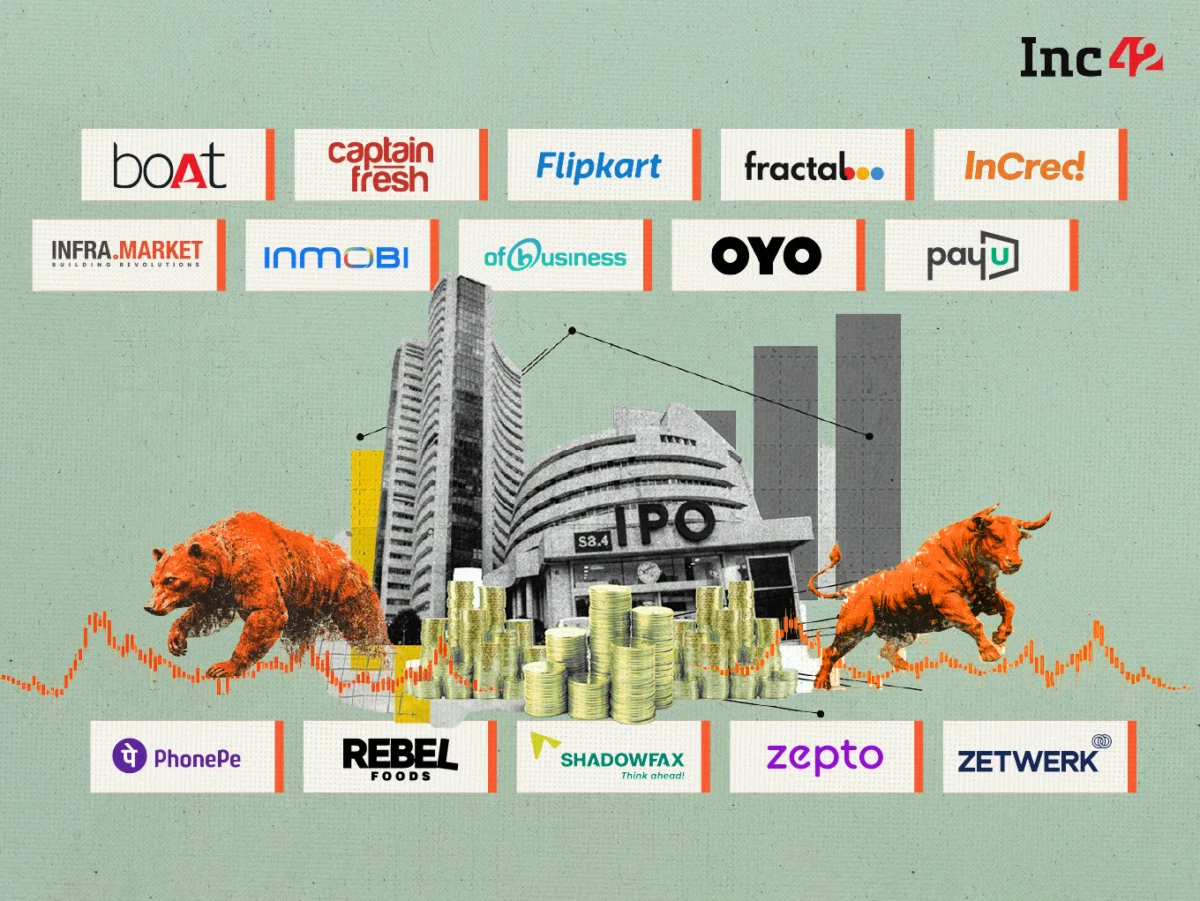
The year 2025 marked a historic turning point for the Indian startup ecosystem, transforming Dalal Street into a thriving "founder’s paradise." With 18 startups successfully listing on the public bourses and mopping up a record-breaking ₹41,248 Cr, the narrative of the Indian new-age tech sector has shifted from "growth at any cost" to a disciplined pursuit of long-term value. As we move through 2026, the momentum has not only sustained but intensified, with a robust pipeline of companies waiting to make their mark on the public markets.
Macroeconomic Tailwinds and Regulatory Catalysts
The surge in IPO activity is no coincidence. It is the result of a symbiotic relationship between robust macroeconomic growth and a proactive regulatory environment. India’s GDP growth projections have bolstered investor confidence, while the Securities and Exchange Board of India (SEBI) has acted as a primary facilitator.
Key regulatory reforms, such as the simplification of Draft Red Herring Prospectus (DRHP) filings, have significantly reduced the bureaucratic friction that previously discouraged tech startups. Furthermore, modernized ESOP (Employee Stock Ownership Plan) regulations have provided founders with the flexibility to retain meaningful ownership while incentivizing top-tier talent. This regulatory maturation, coupled with the milestone of retail demat accounts crossing the 20 Cr mark, has democratized participation in the wealth-creation journey of India’s most innovative firms.
The Performance Curve: Profitability Over Hype
Post-listing performance in 2025 and 2026 has followed a distinct trend: the market is ruthlessly rewarding companies that prioritize sustainable unit economics and governance over mere headline growth.
"Besides the readiness that startups showed in their unit economics, there is also an increase in the founders committing to their businesses for the next couple of decades and growing their businesses by adding adjacent profit pools—something that the public markets reward handsomely," noted Ashish Kumar, co-founder and general partner at Fundamentum Partnership.
This sentiment is echoed by Rehan Yar Khan, managing partner at Orios Venture Partners, who argues that 2026 represents a year of "recalibration." According to Khan, "IPO-bound startups in 2026 will be increasingly defined by their ability to demonstrate predictable cash flows, sustainable unit economics, and operational discipline rather than headline growth alone."
The 2026 IPO Landscape: A Strong Pipeline
Building on the momentum of 2025, fifteen new-age tech companies have already debuted on the bourses this year. Standout performers, including ESDS Software Solution, Klassroom, RentoMojo, SEDEMAC, Kissht, LEAP India, and Shiprocket, have signaled a healthy appetite for tech-led business models.
The future pipeline remains formidable. Currently, 26 startups have filed their DRHPs, with over 25 others in advanced stages of finalizing their IPO plans. Unicorns of the caliber of OYO, Razorpay, and Zetwerk are collectively eyeing a raise of over ₹34,000 Cr in 2026 alone, cementing the year as a landmark period for the startup ecosystem.
Key Market Developments and Challenges
Despite the bullish outlook, the landscape is not without friction. Foreign Institutional Investors (FIIs) have shown intermittent caution, reflecting global macroeconomic uncertainty and geopolitical tensions, particularly in West Asia. This has led to moderate retail subscription levels in some instances. However, the maturation of domestic capital pools has acted as a critical hedge, ensuring that the Indian IPO market remains resilient even when global sentiment wavers.
The current market environment favors companies that can demonstrate capital efficiency. The days of "growth at all costs" are firmly in the rearview mirror; the focus has shifted to companies that balance aggressive scaling with prudent financial management.
Snapshot of Recent IPO Debuts
The following table highlights the diversity of the recent class of IPO-bound companies, showcasing a transition from pure-play consumer tech to deeptech, SaaS, and logistics:
| Name | Sector | IPO Size [₹Cr] | Status |
|---|---|---|---|
| AceVector | Ecommerce | ₹300 Cr + OFS | Listed |
| Amagi | SaaS | ₹1,788.6 Cr | Listed |
| Aye Finance | Fintech | ₹1,010 Cr | Listed |
| ESDS Software | Cloud/Deeptech | ₹720 Cr | Listed |
| Fractal | SaaS | ₹2,833.9 Cr | Listed |
| Kissht | Fintech | ₹925.9 Cr | Listed |
| Klassroom | Edtech | ₹39 Cr | Listed |
| LEAP India | Logistics | ₹2,480 Cr | Listed |
| Moneyview | Fintech | ₹1,500 Cr + OFS | Listed |
| Purple Style Labs | D2C | ₹680 Cr | Listed |
| RentoMojo | Ecommerce | ₹150 Cr + OFS | Listed |
| SEDEMAC | Deeptech | ₹1,087 Cr | Listed |
| Shadowfax | Logistics | ₹1,907 Cr | Listed |
| Shiprocket | Logistics | ₹1,617 Cr | Listed |
| Turtlemint | Insurtech | ₹882.7 Cr | Listed |
Deep Dive: Select Startup Journeys
ESDS Software Solution: A Stellar Debut
ESDS, led by Piyush Somani, provides AI-led digital solutions and data center services. After a failed attempt in 2021, the company returned to the markets with a renewed focus on high-margin enterprise clients. Its public issue was oversubscribed 135.88X, resulting in a stellar debut with shares listing at a 76% premium over the issue price, proving that investors are willing to back data infrastructure providers with strong fundamentals.
Moneyview: The Fintech Surge
Fintech unicorn Moneyview made a bumper debut on October 1, 2026. Despite a competitive landscape, its strong Asset Under Management (AUM) growth and pivot to a comprehensive financial services platform attracted heavy interest from Qualified Institutional Buyers (QIBs). The stock listed at a 64% premium, highlighting the market’s hunger for profitable digital lending platforms.
The Challenges: The Case of Purple Style Labs
Not every debut has been a triumph. Purple Style Labs, an omnichannel luxury house, saw a muted reception. Its shares listed at a discount, serving as a reminder that the public market is selective. Investors were wary of the company’s widening net losses in FY26, highlighting that even in a bull market, financial prudence remains the ultimate arbiter of success.
Future Implications: What Lies Ahead?
The roadmap for 2026 and 2027 suggests that the "IPO season" is becoming the new standard for Indian startups. The transition of companies like Flipkart, Zepto, and Razorpay toward public listings—even if timelines shift due to market volatility—indicates that the Indian startup engine is no longer just about building private unicorns; it is about creating sustainable, publicly traded enterprises that can generate long-term wealth for both founders and retail shareholders.
The implications are clear: the next generation of Indian startups will be characterized by governance, transparency, and a relentless focus on profitability. As the regulatory framework continues to evolve and domestic capital deepens, India is well on its way to becoming the global hub for new-age tech IPOs, offering investors a front-row seat to the country’s digital transformation.
Data sourced from Inc42, respective DRHPs, and MCA filings. All figures represent the most recent reported data as of October 2026.



