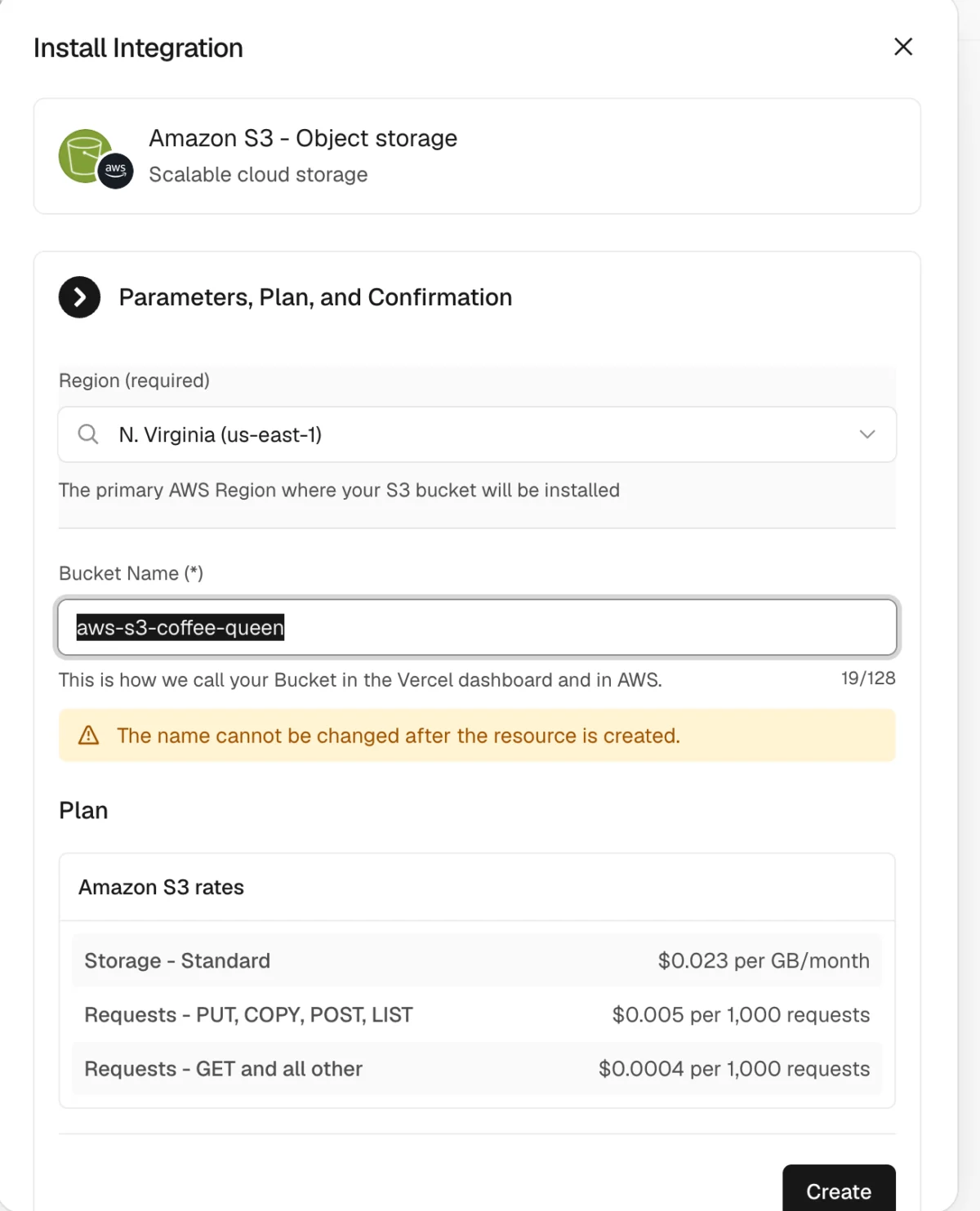
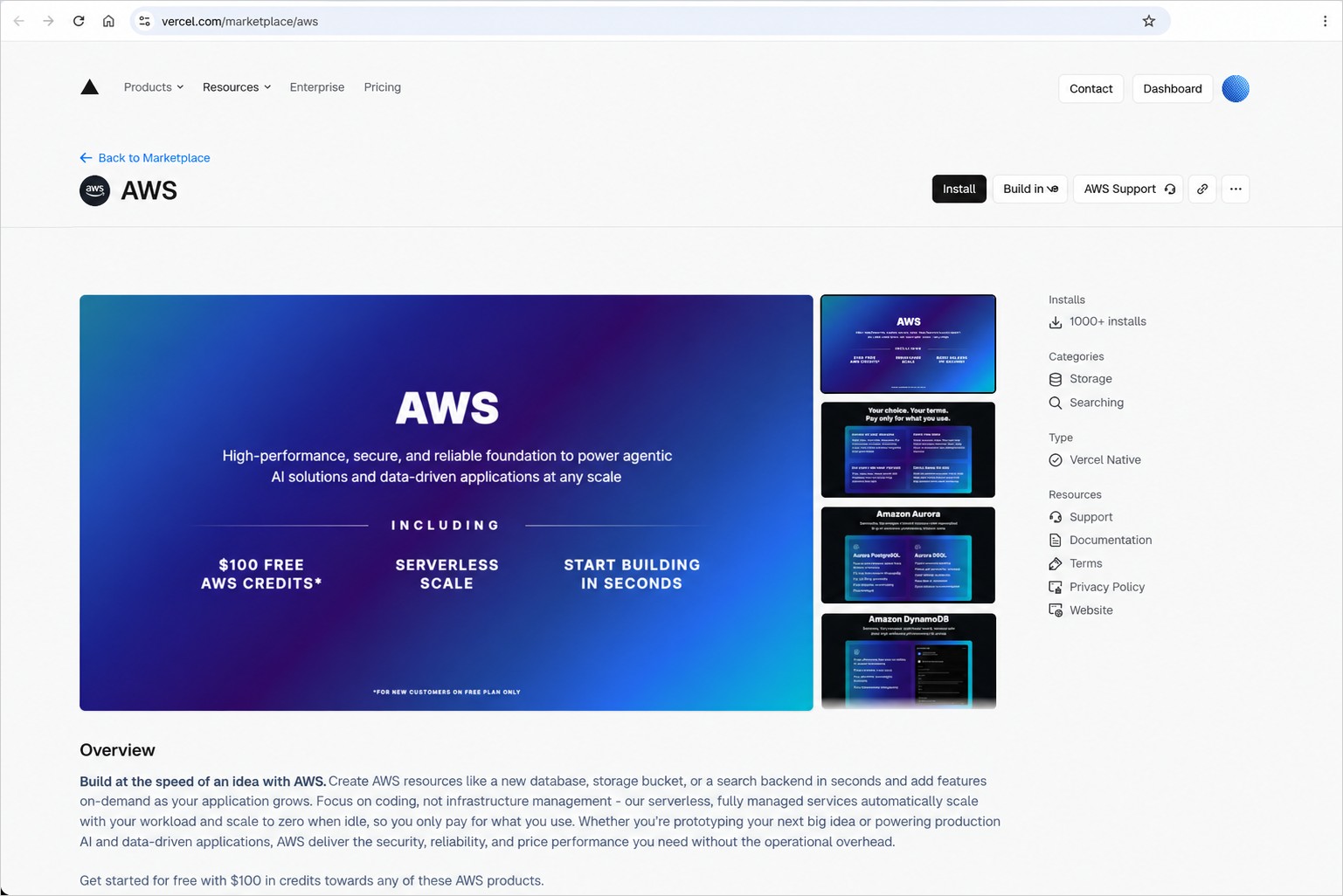
SAN FRANCISCO & SEATTLE — In a major development poised to streamline modern cloud architecture, Amazon Web Services (AWS) and Vercel have announced a powerful new integration that brings Amazon Simple Storage Service (Amazon S3)—including advanced features like S3 Tables and S3 Vectors—directly into the Vercel Marketplace and v0 by Vercel.
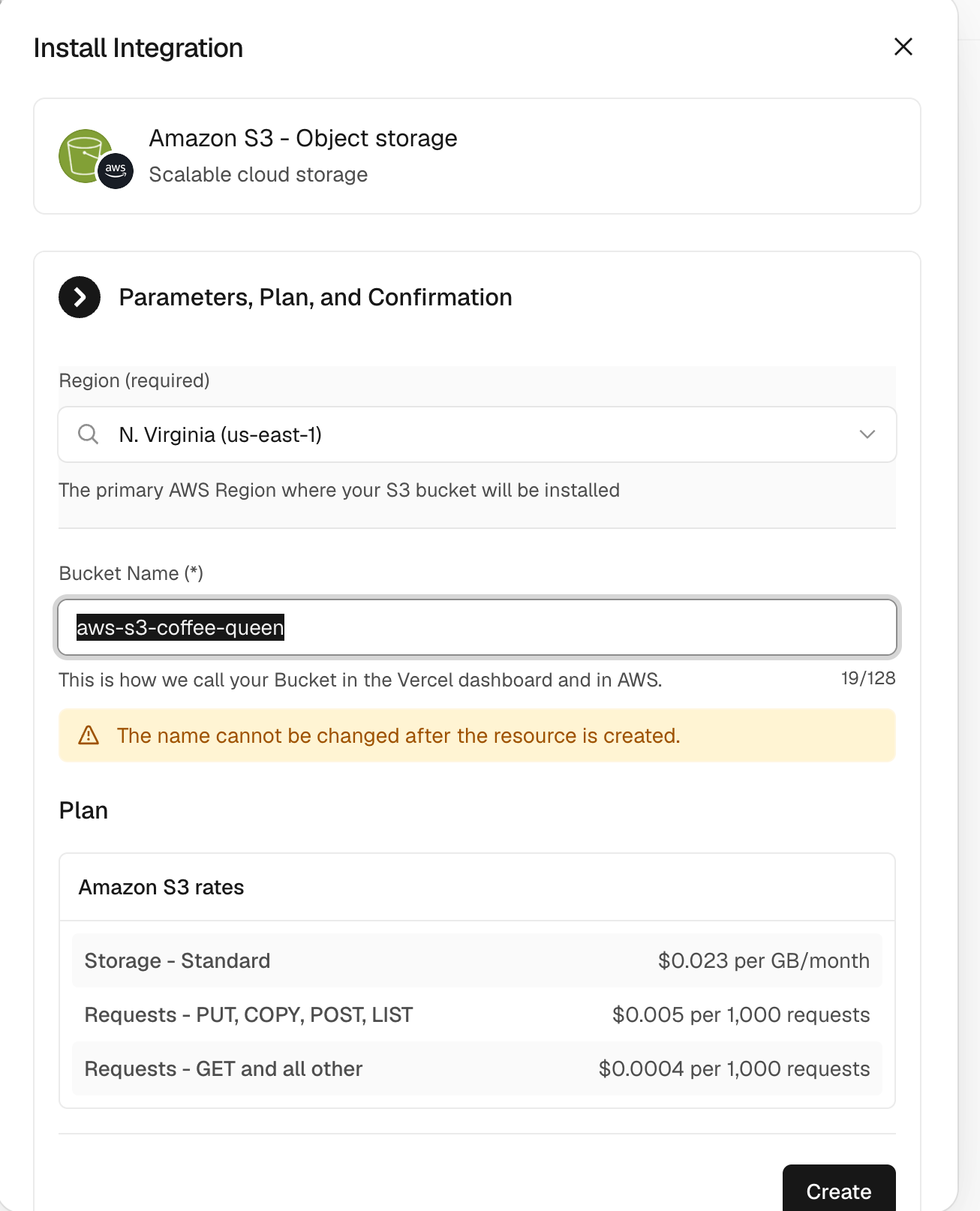
The collaboration eliminates historical friction points between frontend deployment and enterprise-grade backend infrastructure. Developers building high-performance web applications and artificial intelligence solutions can now provision, configure, and manage S3 resources natively within the Vercel ecosystem, bypassing the traditional complexities of manual cloud console provisioning while retaining complete ownership of their data within their own AWS accounts.
Main Facts: Bridging the Frontend-Backend Divide
The newly launched integration bridges two dominant forces in modern software development: Vercel’s globally distributed frontend cloud and AWS’s foundational storage infrastructure. Specifically, the integration makes three distinct tiers of Amazon S3 natively accessible via a unified workflow:
- General Purpose S3 Buckets: Traditional object storage optimized for everyday web workloads, such as user-uploaded imagery, media assets, and large files.
- Amazon S3 Tables: Purpose-built analytics storage designed for large-scale data lakes, providing fully managed Apache Iceberg tables with automated maintenance and compaction.
- Amazon S3 Vectors: Cost-optimized vector storage specifically tailored for AI agents, retrieval-augmented generation (RAG) pipelines, and semantic search workloads.
Crucially, the integration relies on modern security paradigms. Rather than utilizing static, long-lived access keys that pose security risks if leaked, Vercel leverages OpenID Connect (OIDC). At runtime, the awsCredentialsProvider from @vercel/functions/oidc seamlessly exchanges a short-lived OIDC token with the AWS Security Token Service (AWS STS) for temporary, highly scoped credentials.
Chronology of the Integration: From Conception to Launch
The journey toward a unified frontend-and-storage development experience has evolved rapidly over recent years as web development shifted from monolithic architectures to hyper-composable, serverless patterns.
- Early Serverless Era: Initially, developers deploying Next.js and serverless applications on Vercel who required scalable object storage had to navigate away from their deployment workflows, open the AWS Management Console, manually configure Identity and Access Management (IAM) policies, generate credentials, and paste them as manual environment variables into Vercel.
- The Database Expansion Phase: Recognizing the friction of multi-cloud and cross-platform management, Vercel and AWS introduced native integrations for core relational and NoSQL databases, including Amazon Aurora, Amazon DynamoDB, and Amazon OpenSearch Serverless. These offerings proved that developers deeply desired an integrated application stack billed under a single AWS account.
- The Rise of AI and Analytics: As generative AI applications and complex data processing pipelines exploded in popularity, the need for vector storage and open-format analytics tables became acute. General-purpose object storage alone could no longer satisfy the specialized demands of semantic search and high-throughput analytical queries.
- The October 2026 Launch: Today, Amazon S3, S3 Tables, and S3 Vectors join the Vercel ecosystem natively. Simultaneously, generative UI and code-generation tool v0 by Vercel gains the capacity to interpret natural language prompts, provision the correct S3 resource types automatically, and write the requisite integration code.
Supporting Data and Technical Implementation
The architectural elegance of the Vercel-S3 integration lies in its developer ergonomics. By abstracting away the boilerplate infrastructure code while maintaining strict adherence to native AWS primitives, development teams can build sophisticated systems with minimal configuration overhead.
1. Everyday Object Storage (Next.js Integration)
Handling file uploads no longer requires complex middleware or external proxy servers. Developers can instantiate standard AWS SDK clients utilizing Vercel’s OIDC credential provider directly within server-side API routes:
import  S3Client, PutObjectCommand  from "@aws-sdk/client-s3";
import  awsCredentialsProvider  from "@vercel/functions/oidc";

const s3 = new S3Client(
  region: process.env.AWS_REGION,
  credentials: awsCredentialsProvider(
    roleArn: process.env.AWS_ROLE_ARN,
  ),
);

export async function POST(request)
  const formData = await request.formData();
  const file = formData.get("file");

  await s3.send(new PutObjectCommand(
    Bucket: process.env.S3_BUCKET_NAME,
    Key: file.name,
    Body: Buffer.from(await file.arrayBuffer()),
    ContentType: file.type,
  ));

  return Response.json( success: true );
2. High-Performance Analytics with S3 Tables and DuckDB
For data analytics workloads, S3 Tables integrate smoothly with lightweight query engines like DuckDB running directly inside Vercel Functions. By treating S3 Tables as Apache Iceberg repositories, developers can execute aggregate queries over massive datasets without managing dedicated analytical clusters:

import  DuckDBInstance  from "@duckdb/node-api";
import  awsCredentialsProvider  from "@vercel/functions/oidc";

const creds = await awsCredentialsProvider(
  roleArn: process.env.AWS_ROLE_ARN,
)();

const db = await DuckDBInstance.create();
const conn = await db.connect();

await conn.run("INSTALL aws; LOAD aws; INSTALL httpfs; LOAD httpfs; INSTALL iceberg; LOAD iceberg;");

await conn.run(`
  CREATE SECRET s3cred (
    TYPE s3,
    KEY_ID '$creds.accessKeyId',
    SECRET '$creds.secretAccessKey',
    SESSION_TOKEN '$creds.sessionToken',
    REGION '$process.env.AWS_REGION'
  );
`);

await conn.run(`
  ATTACH '$process.env.AWS_RESOURCE_ARN' AS s3tables (
    TYPE iceberg,
    ENDPOINT_TYPE s3_tables
  );
`);

const rows = await (await conn.run(`
  SELECT town_city, AVG(median_price) AS avg_price
  FROM s3tables."$process.env.S3_TABLES_NAMESPACE".town_monthly
  GROUP BY town_city
  ORDER BY avg_price DESC
  LIMIT 10
`)).getRowObjects();
3. AI and Semantic Search with S3 Vectors
Artificial intelligence applications—such as customer support bots backed by proprietary PDF documentation—benefit directly from S3 Vectors. Developers can query vector embeddings stored natively in S3 without deploying a separate, dedicated vector database infrastructure:
import  S3VectorsClient, QueryVectorsCommand  from "@aws-sdk/client-s3vectors";
import  awsCredentialsProvider  from "@vercel/functions/oidc";

const vectors = new S3VectorsClient(
  region: process.env.AWS_REGION,
  credentials: awsCredentialsProvider(
    roleArn: process.env.AWS_ROLE_ARN,
  ),
);

export async function POST(request)
  const  embedding  = await request.json();

  const result = await vectors.send(new QueryVectorsCommand(
    vectorBucketName: process.env.S3_VECTOR_BUCKET_NAME,
    indexName: "documents",
    queryVector:  float32: embedding ,
    topK: 5,
    returnMetadata: true,
  ));

  return Response.json( matches: result.vectors );
Natural Language Provisioning via v0 by Vercel
Perhaps the most futuristic element of the new partnership is its synergy with v0 by Vercel, the platform’s generative user interface and application design tool. Rather than manually clicking through provisioning menus, developers can use natural language prompts to construct full-stack applications.
For instance, prompting v0 with "Build a photo gallery where users upload images using AWS" automatically directs the system to provision an S3 general-purpose bucket, configure the IAM trust relationships, establish environment variables, and generate the corresponding React and Next.js frontend code. Similarly, asking for "a support bot that answers questions from my PDFs" provisions an S3 Vectors resource, while request prompts for clickstream telemetry spin up S3 Tables configurations.
Official Responses and Strategic Vision
Industry analysts and engineering leaders have widely praised the collaboration for lowering the barrier to entry for enterprise-grade cloud architecture.
"Storage is the lifeblood of modern web and AI applications, yet setting it up has historically required context-switching between deployment platforms and cloud management consoles," noted engineering leadership close to the launch. "By bringing Amazon S3, S3 Tables, and S3 Vectors directly into Vercel and v0, we are delivering a unified application stack where developers can build from database to vector storage within a single workflow."
Furthermore, the financial and account management structures have been designed for maximum flexibility. Development teams can either link an existing AWS account—retaining all standard billing structures, organizational policies, and AWS-native tooling—or create a brand-new AWS account directly through the Vercel dashboard. To encourage adoption, AWS is offering new accounts created via the Vercel integration a $100 credit valid for six months, with no added platform fees charged by Vercel for the integration itself.
Broader Implications for the Cloud Ecosystem
The native convergence of Vercel and Amazon S3 signals a broader maturation in cloud computing: the boundaries between Infrastructure-as-a-Service (IaaS) and Platform-as-a-Service (PaaS) are increasingly dissolving in favor of integrated developer experiences.
By unifying object storage, analytical data lakes, and vector embeddings under a single authentication framework managed via OIDC, AWS and Vercel are setting a new benchmark for security and velocity. Developers no longer need to choose between the rapid iteration speed of modern frontend deployment platforms and the robust, scalable reliability of enterprise cloud backends.
As artificial intelligence agents and real-time analytics become standard features of web applications rather than specialized add-ons, the ability to spin up vector and table storage as effortlessly as a database table will likely become an industry baseline. For teams building the next generation of digital products, the friction of cloud infrastructure management has just been drastically reduced.