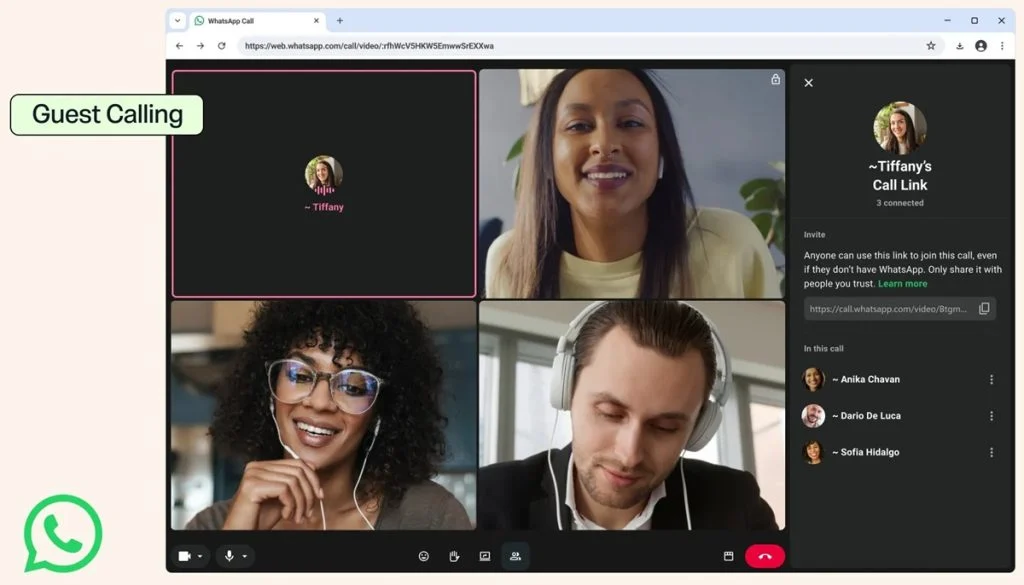
In a significant strategic pivot aimed at dismantling the barriers between proprietary messaging ecosystems and the broader web, WhatsApp has officially unveiled "Guest Calling." This feature represents one of the most substantial updates to the platform’s communication architecture since the introduction of end-to-end encrypted voice and video calls. By allowing individuals without a registered WhatsApp account to join one-to-one and group conversations via simple invitation links, Meta is positioning its flagship messaging service as a versatile tool for professional, educational, and casual cross-platform communication.
Main Facts: Breaking Down the Guest Calling Mechanism
The core premise of WhatsApp’s latest update is accessibility. Historically, the "walled garden" nature of WhatsApp necessitated that every participant in a call possess an active, verified account linked to a mobile number. The introduction of Guest Calling effectively bypasses this requirement for invitees.
The Mechanics of Access
The functionality is designed with a "host-first" philosophy. Only existing WhatsApp users—those with verified accounts—can initiate the creation of a call link. The process is streamlined:
- Creation: Within the ‘Calls’ tab, a user taps the ‘+’ icon to generate a unique, shareable call link.
- Distribution: This link can be disseminated via email, text, or any third-party messaging platform.
- The Digital Lobby: When a guest clicks the link, they are directed to a browser-based interface. They are prompted to enter their name before being placed into a "waiting room."
- Authorization: The host retains absolute control, manually admitting guests from the waiting room to ensure security and prevent unauthorized intrusions.
Security and Privacy Constraints
WhatsApp has emphasized that while the barrier to entry has been lowered, the platform’s rigorous security standards remain intact. All guest calls are protected by end-to-end encryption, ensuring that conversations remain private. To maintain user privacy, the system imposes strict limitations on guest behavior:
- Anonymity: Guests cannot view the phone numbers of other participants.
- Restricted Agency: Guests are barred from sending chat messages or inviting additional participants.
- Host Oversight: The host retains the authority to eject any guest from the call at any time, providing a necessary layer of moderation for group calls that may scale up to 32 participants.
Chronology: The Evolution of WhatsApp’s Communication Suite
The introduction of Guest Calling is the latest chapter in a long-term roadmap that has seen WhatsApp transition from a simple SMS replacement to a comprehensive unified communications platform.
- Early Years (2009–2014): WhatsApp focused exclusively on text-based messaging, cementing its status as the world’s most popular alternative to carrier-based SMS.
- The Voice Revolution (2015): The introduction of voice calling marked the beginning of WhatsApp’s competition with traditional telecom providers.
- The Video Era (2016): Video calling solidified the app’s utility, turning it into a primary tool for international and remote communication.
- Expansion of Capacity (2020–2022): Responding to the global shift toward remote work and digital socialization during the pandemic, WhatsApp steadily increased group call capacity, eventually reaching the 32-participant threshold.
- Web Integration (2023–2024): The refinement of the web client allowed for more seamless desktop-based calling, setting the stage for browser-based guest access.
- The Guest Era (2026): With the launch of Guest Calling, WhatsApp is now bridging the gap between its native app ecosystem and the open web, positioning itself as a direct competitor to services like Zoom, Microsoft Teams, and Google Meet.
Supporting Data: Why This Matters for the Market
The decision to open WhatsApp to non-users is not merely a feature update; it is a calculated market maneuver. Currently, WhatsApp boasts over 2 billion monthly active users. However, in professional and corporate environments, it has often taken a backseat to platforms that do not require an app install for meeting participation.
Scaling and Infrastructure
The support for up to 32 participants in a single call—now inclusive of non-account holders—positions WhatsApp as a formidable tool for small-to-medium enterprise (SME) meetings. By leveraging the existing infrastructure of WhatsApp Web, Meta is effectively turning the browser into a high-fidelity teleconferencing hub.
Cross-Platform Utility
Data suggests that user friction is the primary cause of meeting drop-offs. By removing the requirement to download the app or register with a phone number, WhatsApp significantly reduces the "onboarding friction" for new users. This is particularly critical in regions where WhatsApp is the dominant communication tool but where businesses struggle to coordinate with clients who may be wary of linking their personal phone numbers to a business account.
Official Responses and Strategic Vision
While Meta has not released a granular breakdown of the technical backend for this update, spokespeople have confirmed that the goal is "seamless, secure, and universal connectivity."
In an internal briefing regarding the rollout, a company representative noted: "Our users have long asked for ways to bring people together without forcing them into the app ecosystem. Guest Calling represents our commitment to keeping conversations private while acknowledging that the world of work and life happens across many different platforms. By integrating with browsers, we are meeting users exactly where they are."
The inclusion of calendar integration is another indicator of this shift toward productivity. By allowing users to generate a WhatsApp call link directly within Google or Outlook calendar invites, the company is signaling its intent to capture a larger share of the "calendar-scheduled" meeting market, which is currently dominated by dedicated enterprise software.
Implications: The Future of Messaging and Teleconferencing
The implications of this update are profound for both the telecommunications industry and the software-as-a-service (SaaS) sector.
A Challenge to Enterprise Competitors
Services like Zoom and Google Meet have long held the advantage of "browser-first" accessibility. With this update, WhatsApp has effectively neutralized that competitive advantage. A freelancer using WhatsApp can now hold a professional meeting with a client who is strictly a desktop user, all without the client ever needing to install the WhatsApp mobile application.
The Privacy Paradox
One of the most interesting aspects of this rollout is how it manages the tension between accessibility and privacy. WhatsApp’s brand identity is built on end-to-end encryption. By allowing non-users into this encrypted bubble, Meta is setting a new standard for how guest access should function. Most competitors require users to bypass encryption or lower security settings for web-based participants; WhatsApp appears to be enforcing the same standard for guests as it does for registered users.
The Shift Toward "Utility-First" Messaging
As the digital landscape becomes increasingly saturated, the "stickiness" of an app is no longer determined by its messaging features alone, but by its utility in a daily workflow. The upcoming calendar integration—set to launch later this year—is the final piece of this puzzle. By integrating directly with Google and Outlook, WhatsApp is embedding itself into the fabric of daily scheduling.
Conclusion: A New Horizon for WhatsApp
WhatsApp’s introduction of Guest Calling marks a maturation of the platform. By softening the edges of its ecosystem, the company is not diluting its brand but rather expanding its utility. The move serves as a bridge, connecting the massive user base of the WhatsApp mobile app with the vast, browser-centric world of desktop computing.
As the rollout continues globally, the integration of calendar features will likely serve as a catalyst for further adoption in professional sectors. For the average user, the takeaway is simple: WhatsApp is no longer just an app for chatting with friends and family. It is rapidly becoming a versatile, web-integrated communication suite capable of hosting professional-grade meetings, all while maintaining the privacy-centric ethos that made it a global phenomenon in the first place. Whether this will lead to a broader "platform-agnostic" future for Meta’s messaging suite remains to be seen, but the trajectory is clear: WhatsApp is moving beyond the smartphone, and into the center of the professional and personal digital workspace.