The holiday shopping season has officially commenced, and the battlefield is no longer just about pricing or logistics—it is about the "phygital" experience. On October 5, retail titans Target and Amazon simultaneously launched their respective holiday toy catalogs, signaling the start of a high-stakes competition to capture the attention of both children and parents. While both retailers are vying for the same holiday budget, their strategies represent two distinct philosophies: Target is leaning into community-driven, app-native social discovery, while Amazon is doubling down on its proprietary AI ecosystem and voice-activated convenience.
Main Facts: A New Era of Toy Discovery
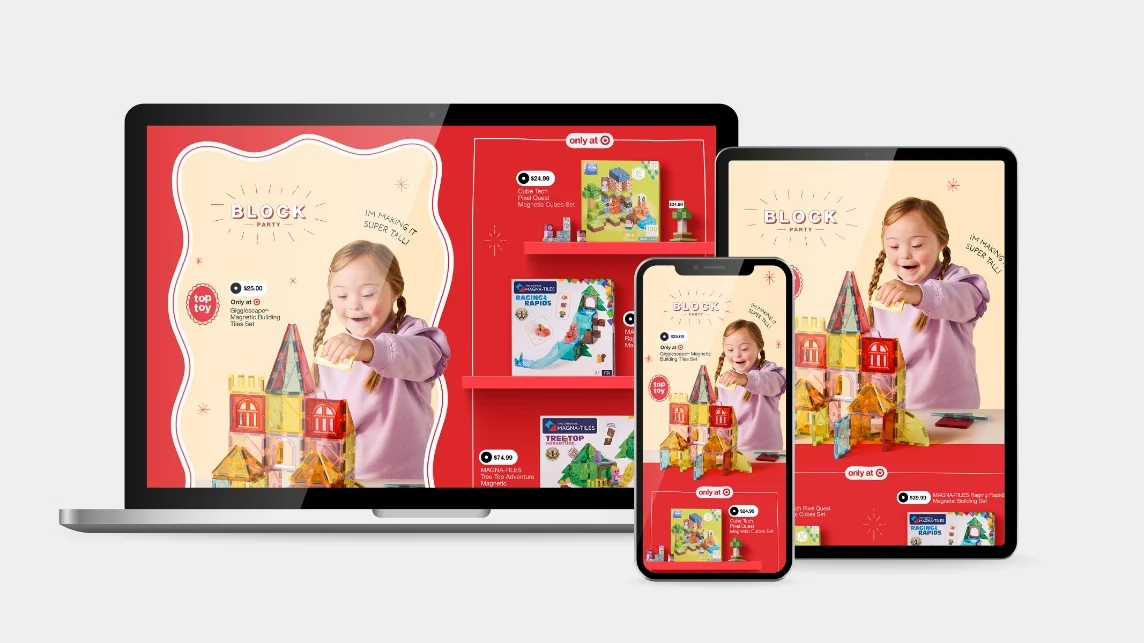
Target’s newly unveiled Interactive Holiday Kids Catalog is a departure from traditional circulars. Eschewing the static, grid-like layouts of the past, the retailer has reimagined the catalog as a shoppable content platform. Available on Target.com and through the company’s mobile app, the catalog features nearly 500 toys, games, and gifts.
The core of Target’s strategy lies in its "discovery-first" design. Rather than simply listing products, the catalog integrates video content, toy demonstrations, and professional reviews, allowing families to evaluate products together before making a purchase. A standout feature this year is the "list scanner," a bridge between the physical and digital worlds. Recognizing that many children still prefer the tactile experience of circling items in a printed book, Target allows users to scan their handwritten wish lists directly into the Target app, where they are converted into a digital, shareable registry. Each page of the physical catalog is also equipped with unique QR codes, ensuring a seamless transition from print to e-commerce checkout.
Chronology of the Holiday Push
The synchronization of the two launches on October 5 was far from coincidental. For nearly a decade, the release of holiday toy guides has served as the unofficial starting gun for the fourth-quarter retail sprint.
- Early October: Target and Amazon launch their respective catalogs simultaneously, intensifying the competitive pressure on toy manufacturers and third-party sellers.
- Mid-October: Retailers begin pushing "early access" deals to capitalize on the initial excitement generated by the catalogs.
- November/December (Projected): Both retailers are expected to leverage their logistical networks—Target’s same-day delivery and Amazon’s Prime infrastructure—to fulfill the demand generated by the lists created during the October launch.
Amazon’s entry, now in its ninth year, remains a formidable competitor. With over 600 items, the "Holiday Kids Gift Book" remains a massive undertaking. Unlike Target’s social-sharing focus, Amazon has opted to integrate its catalog with the Alexa voice-assistant ecosystem, offering a "choose-your-own-adventure" audio experience through a partnership with Readyland, which brings the book’s characters to life via Alexa-enabled devices.
Supporting Data: E-commerce Performance and Market Position
Target’s aggressive push into digital toy discovery comes on the heels of a strong fiscal performance in the toy category. Target, currently ranked No. 5 in Digital Commerce 360’s Top 1000 Database of North America’s largest online retailers, reported in its fiscal Q2 2026 results that its "Fun101" category—which encompasses toys, sporting goods, and entertainment—was the company’s strongest-performing segment, boasting double-digit comparable sales growth.
Target’s overall online sales saw an 8.7% year-over-year increase in the same quarter, significantly outpacing its total comparable sales growth of 3.8%. A major driver of this success has been the expansion of same-day delivery services, which saw more than 25% growth during the quarter. Furthermore, the company successfully fulfilled approximately 30% more same-day and next-day units compared to the previous year, highlighting the efficacy of its "store-as-a-hub" fulfillment model.
In contrast, Amazon maintains its dominant position as the No. 1 retailer in the Top 1000 Database. Amazon’s strategy relies on sheer scale and the integration of AI tools. Their "Alexa for Shopping" feature allows parents to use natural language queries—such as "find holiday gifts for my 10-year-old who likes space"—to receive highly personalized recommendations. Additionally, Amazon Lens technology enables users to scan products they see in the real world or on social media to instantly locate them on the platform.
Official Responses and Strategic Vision
The leadership teams at both retail giants have been vocal about the intent behind these new tools.
Cassandra Jones, senior vice president of Fun101 at Target, emphasized the collaborative nature of the company’s new catalog. "This year’s digital experience helps families discover toys together, create and share wish lists, and find gifts they’ll be excited about all season long," Jones noted. By focusing on the family unit, Target is attempting to position its app not just as a store, but as a holiday planning destination.
Amazon, meanwhile, continues to position itself as the ultimate "all-in-one" solution. By embedding toy experts and AI-driven curation directly into the shopping experience, Amazon aims to reduce the "decision fatigue" that often plagues parents during the holiday season. The inclusion of an original illustrated story in their gift book is a tactical move to drive sustained engagement, ensuring that the catalog is not discarded after the first browse, but kept as an activity piece throughout the season.
Implications for the Retail Industry
The divergence in strategy between Target and Amazon offers a glimpse into the future of holiday commerce.
1. The Death of the Static Catalog
The traditional, paper-only catalog is effectively dead. Even retailers who continue to print physical books are now treating them as "top-of-funnel" marketing assets that must bridge to digital platforms. The use of QR codes and app-based scanners is the new standard, ensuring that physical browsing leads directly to digital conversion.
2. The Rise of "Phygital" Engagement
Target’s focus on scanning handwritten lists acknowledges a fundamental human truth: children enjoy the physical act of marking up a catalog. By digitizing this ritual rather than forcing it into a screen-only format, Target is successfully blending nostalgic tradition with modern convenience.
3. AI as the Ultimate Shopping Assistant
Amazon’s integration of AI is designed to make shopping frictionless. As AI becomes more sophisticated, the role of the "human shopper" is shifting toward one of "approver." Instead of searching through thousands of products, parents are increasingly delegating the discovery process to algorithms that understand their family’s preferences.
4. The Logistical Arms Race
While the digital experience grabs headlines, the real winner of the holiday season will be decided by the supply chain. Target’s 30% growth in same-day and next-day unit fulfillment is a clear signal that they are optimizing their store footprint to compete with Amazon’s delivery speed. As the holiday season approaches its peak, the ability to deliver items on time will be just as important as the digital catalog used to select them.
Conclusion: A Tale of Two Shopping Strategies
Target and Amazon are currently engaging in a high-stakes experiment to see which path to the consumer’s wallet is more effective: the social, family-oriented, discovery-led model of Target, or the hyper-efficient, AI-augmented convenience model of Amazon.
For the average consumer, the result is a richer, more interactive shopping experience. Whether they choose to scan a physical catalog in the kitchen or ask an Alexa-enabled device for gift ideas, shoppers have more tools than ever to manage the complexities of holiday gifting. As the year draws to a close, the performance of these digital catalogs will serve as a bellwether for the retail industry, providing a clear indication of how consumers are balancing their desire for engagement with their need for efficiency in an increasingly digitized marketplace.
Retailers looking to compete in this environment must take note: the holiday season is no longer about having the most products in stock. It is about how effectively a retailer can guide the customer through the overwhelming sea of choices, turning the act of gift-giving into a seamless, enjoyable, and tech-enabled journey.