In an increasingly digitized global economy, the internet serves as the primary gateway to commerce, healthcare, education, and social interaction. Yet, for over 1.3 billion people—roughly 16% of the global population—the digital world remains fraught with invisible barriers. As digital accessibility moves from a niche technical concern to a boardroom priority, platforms like AudioEye are spearheading a paradigm shift, proving that an inclusive web is not only a moral imperative but a business necessity.
The Mission: Building an Equitable Digital Ecosystem
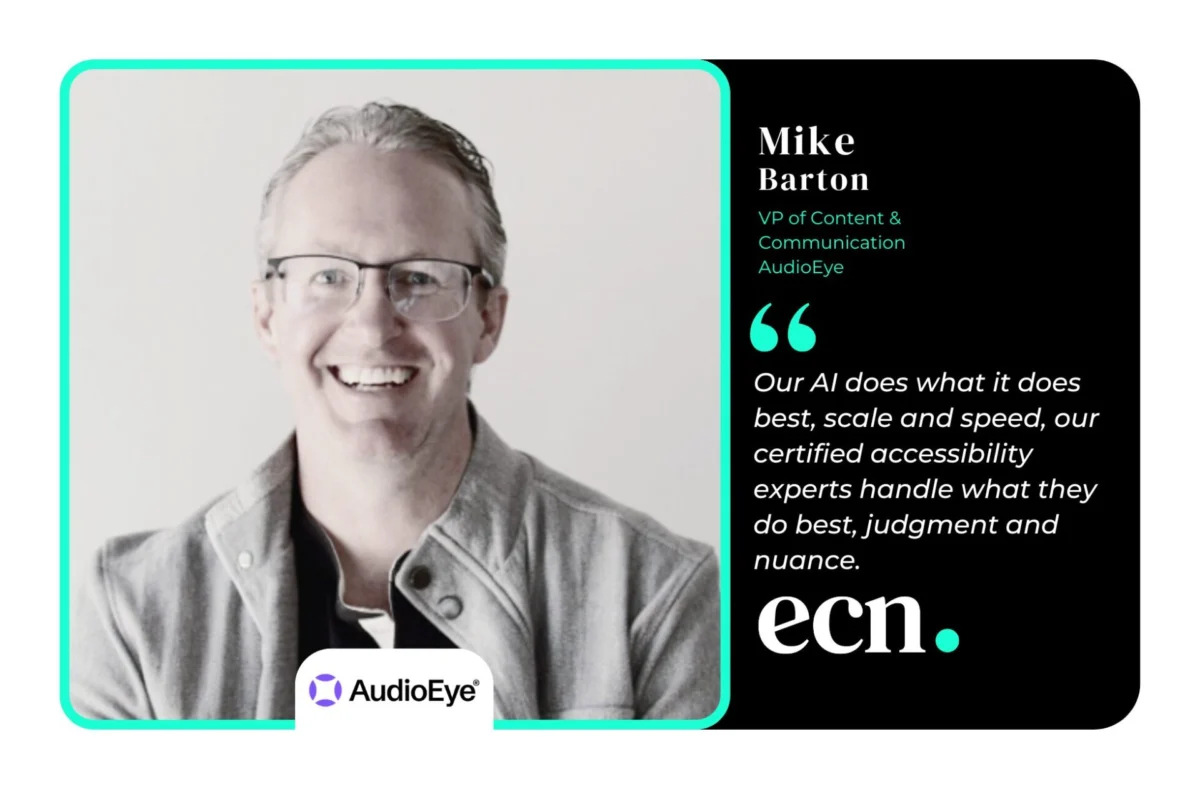
At the heart of AudioEye’s operations is a fundamental philosophy: the web should be a universal resource. Mike Barton, VP of Content Marketing and Communications at AudioEye, frames the company’s vision as a move away from reactive compliance toward a proactive, default state of inclusion.
"Our vision is a digital world where accessibility isn’t an afterthought or a legal scramble, but the default," Barton explains. For over a decade, AudioEye has been architecting a bridge between the complex, often inaccessible structure of modern websites and the needs of users relying on assistive technology. By supporting over 127,000 organizations, the company has established itself as a critical layer of infrastructure in the modern internet economy.
A Chronology of Evolution: From Niche Concern to Legal Necessity
The landscape of digital accessibility has undergone a seismic shift over the last twenty years. In the early 2000s, web accessibility was largely viewed through a compliance lens—a "checkbox" activity performed to satisfy minimum standards.
The turning point arrived as the legal and economic stakes escalated. In the last five years alone, the volume of digital accessibility lawsuits in the United States has doubled. This surge is mirrored by the introduction of robust international frameworks, most notably the European Accessibility Act (EAA), which has expanded the scope of compliance across borders.
AudioEye has evolved in lockstep with these pressures. While early solutions relied heavily on manual auditing, the sheer scale of the modern internet—where a single retail site may consist of thousands of dynamic pages—rendered manual methods insufficient. AudioEye’s evolution reflects a transition into a "hybrid" model: leveraging the raw speed of AI-driven automation for pattern detection while maintaining the human-centric judgment required to address complex, nuanced user experiences.
Supporting Data: The Business Case for Inclusion
The argument for accessibility is often framed in legal terms, but the data suggests it is also a powerful growth engine.
- The Spending Power: People with disabilities represent an estimated $18 trillion in global annual disposable income.
- The Bounce Factor: Research indicates that approximately 70% of users with disabilities will abandon a website if they encounter accessibility barriers, often migrating to competitors that provide a seamless experience.
- Legal Exposure: E-commerce remains the primary target for accessibility-related litigation, accounting for 78% of current cases.
- Efficiency Gains: AudioEye’s hybrid approach claims to resolve roughly 97% of accessibility issues before a client’s development team needs to intervene, drastically reducing the burden on technical resources.
The Hybrid Engine: How AudioEye Works
AudioEye’s platform functions as an integrated layer within a website’s architecture. Through a single line of JavaScript, the platform initiates a dual-process workflow:
1. AI-Driven Automated Remediation
The platform’s AI continuously scans the site, comparing the code against Web Content Accessibility Guidelines (WCAG). According to an independent 2026 study by Adience, AudioEye detects up to 2.5 times more issues than competing solutions. The AI automatically repairs common technical failures, such as missing alt text for images, broken form labels, and improper heading structures.
2. The Human Element
AI is limited by its inability to interpret context. For instance, a button may be coded correctly from a technical standpoint but fail to provide a meaningful user experience in a specific workflow. AudioEye utilizes certified accessibility experts—many of whom are individuals with disabilities—to perform deep-dive audits. These experts provide the nuance and "lived experience" necessary to resolve complex issues that automated software cannot fully grasp.
Implications for the Modern Enterprise
The implications of this technology extend far beyond avoiding lawsuits. As we enter the age of generative AI, the structure of the web is changing. AI agents are increasingly "crawling" the web to perform tasks on behalf of human users. These agents rely on the "accessibility tree"—the underlying semantic structure of a website—to understand content.
"If your site isn’t accessible, you’re invisible to one of the fastest-growing discovery channels online," Barton notes. By ensuring that websites are structurally sound and semantically clear, businesses are not just serving human users; they are optimizing their platforms for the next generation of AI-driven search and discovery.
Regulatory Landscapes and Legal Protection
For many organizations, the primary driver for adopting AudioEye is the mitigation of legal risk. The company differentiates itself in the market by offering a tangible legal guarantee, backed by a history of successful courtroom dismissals. Unlike "automated-only" widget providers, which often fail to satisfy legal requirements, AudioEye’s hybrid model provides a defensible audit trail.
When legal challenges arise, AudioEye acts as an extension of the client’s legal team, providing expert testimony and documentation to debunk meritless claims. This approach has led to reported legal protection rates three to four times higher than industry alternatives.
Looking Forward: The Future of the Accessible Web
As the EAA and other international mandates come into full force, the global business community is facing a "compliance crunch." AudioEye’s roadmap for the coming years focuses on two major pillars: global expansion and the weaponization of AI.
The company is particularly concerned about the "accessibility gap" created by general-purpose AI coding tools. Because these tools are trained on existing, often inaccessible web content, they are inadvertently generating new websites with the same errors as the old ones. AudioEye views this as a critical problem to solve—a race to ensure that as the web scales through AI, it does not leave behind the very users it should be serving.
"The internet should work for everyone who uses it," Barton concludes. "Our job is to make sure it does."
By integrating 24/7 monitoring, expert human oversight, and a commitment to the evolving standards of the global web, AudioEye is moving beyond the role of a service provider. It is positioning itself as a foundational partner for any enterprise that wishes to remain relevant, compliant, and accessible in an increasingly interconnected and digital-first world. As the boundaries between AI and human navigation blur, the commitment to digital inclusion will undoubtedly define which brands survive—and which brands disappear from the screen.