Main Facts
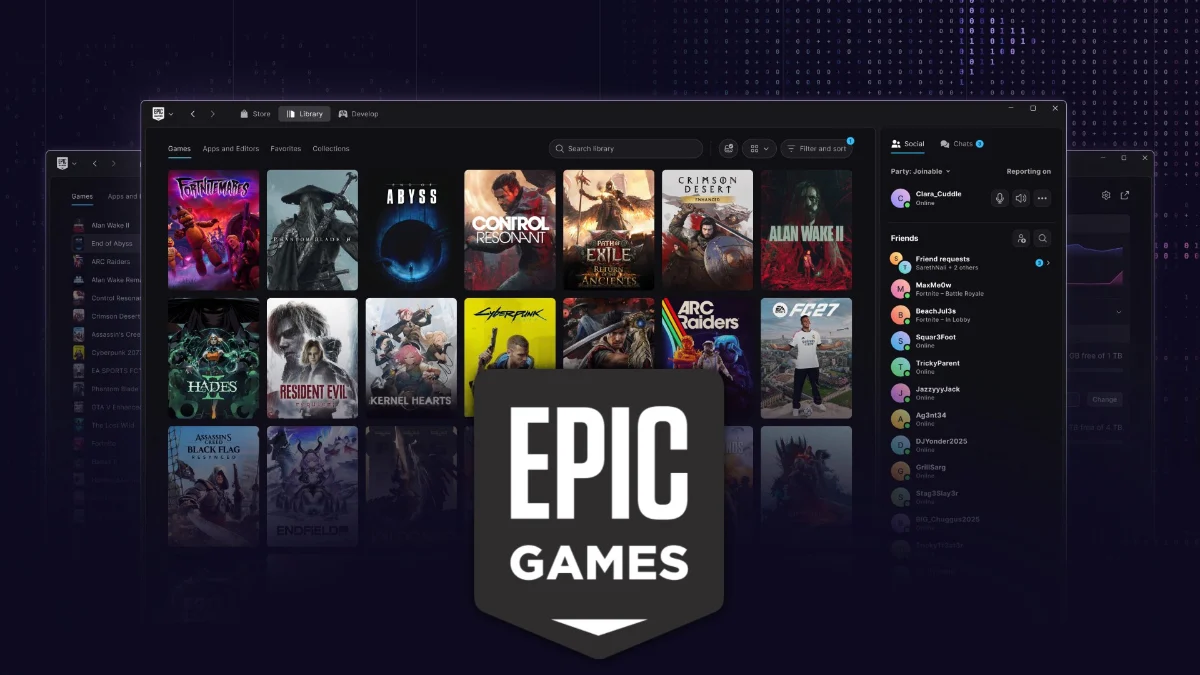
Epic Games, the powerhouse developer behind the global phenomenon Fortnite and the industry-standard Unreal Engine, has officially rolled out its next-generation desktop application in Preview. Marketed as a radically overhauled, "vibe-coded" platform, this new Epic Games Launcher represents a complete architectural reimagining of the company’s storefront and library interface.
The launch follows closely on the heels of CEO Tim Sweeney’s October 12, 2026, announcement that Epic Games is aggressively pivoting toward an "AI-first" development strategy across its ecosystem. To prove the efficacy of this new paradigm, Epic has leveraged AI-driven workflows to craft a launcher that it claims significantly outperforms its primary market competitor, Valve’s Steam, in crucial speed benchmarks.
According to preliminary performance metrics published directly by Epic Games, the new iteration slashes cold-start times dramatically. A cold start of the Epic Games Store now clocks in at an impressive 5.47 seconds, leaving Steam far behind at 10.07 seconds. Furthermore, when resuming operations by reopening the Library from the Windows system tray, Epic’s new software registers a blazing-fast 0.36 seconds compared to Steam’s 0.42 seconds.
Beyond raw speed, the updated launcher introduces a comprehensive slate of quality-of-life enhancements. These include consolidated download management, detailed playtime tracking, highly customizable visual collections, and a streamlined library interface that is reportedly up to 30 times faster than its sluggish predecessor. Crucially, the platform also lays the groundwork for native Linux support, addressing a long-standing request from the PC gaming community, albeit with the Preview release currently limited to mainstream desktop environments.
However, the transition has not been entirely without controversy. The moniker "vibe-coded"—referring to an AI-centric programming methodology where developers guide artificial intelligence to generate functional codebases—has sparked intense debate across gaming forums. While some industry analysts view it as an exciting glimpse into the future of software engineering, a segment of the player base remains skeptical of AI-generated infrastructure.
Chronology
To understand how Epic Games arrived at this pivotal moment in desktop client design, it is necessary to trace the timeline of events leading up to the Preview release:
- Early 2024 – Mid 2025: User dissatisfaction steadily mounts regarding the performance of the legacy Epic Games Launcher. Critics frequently cite sluggish library loading times, heavy resource consumption, and a lack of organizational features compared to mature competitors like Steam or GOG Galaxy.
- Late 2025: Rumors and developer leaks indicate that Epic Games is quietly experimenting with native Linux support, signaling a strategic shift toward capturing a broader, more diverse operating system demographic.
- October 12, 2026: Epic Games CEO Tim Sweeney delivers a landmark corporate address, formally declaring that the company is transitioning to an "AI-first" development methodology. This strategic pivot impacts multiple internal departments, including upcoming initiatives like the heavily anticipated Fortnite-Disney metaverse project.
- Mid-October 2026: Amidst routine content updates—such as the promotional announcement of the Fortnite and Yeat musical collaboration—Epic hints at a major infrastructural overhaul for its desktop distribution network.
- Late October 2026: Epic Games officially drops the Preview version of its redesigned launcher. The company couples the release with transparent benchmark comparisons against Steam, showcasing the concrete benefits of its new AI-assisted coding pipeline.
- Present Day: Early adopters begin testing the preview build, providing bug reports and community feedback while debating the merits and implications of "vibe-coded" software engineering.
Supporting Data
The core argument of Epic Games’ marketing campaign for the new launcher hinges on quantitative performance metrics. Software optimization has historically been a weak point for the Epic Games Store, with users frequently complaining about bloated web-wrapper architectures that cause unnecessary system latency.
To quantify the success of their AI-assisted rewrite, Epic released side-by-side performance analytics comparing the new Preview launcher against Valve’s dominant Steam client:
-
Cold Start (Full Application Launch):
- New Epic Games Launcher (Preview): 5.47 seconds
- Valve Steam: 10.07 seconds
- Analysis: Epic’s launcher boots nearly twice as fast from a complete cold start, dramatically reducing the friction players experience when trying to jump straight into a game.
-
Library Warm Resume (From System Tray):
- New Epic Games Launcher (Preview): 0.36 seconds
- Valve Steam: 0.42 seconds
- Analysis: While both clients offer near-instantaneous restoration from the background tray, Epic edges out a minor victory in responsiveness.
-
Library Interface Rendering & Navigation:
- Previous Epic Launcher: Prone to stuttering, slow asset loading, and sluggish scrolling when handling large libraries.
- New Epic Launcher: Up to 30 times faster, featuring seamless toggling between Grid and Details views, instant searching, and dynamic visual sorting tools.
Beyond raw speed metrics, the feature set has expanded significantly:
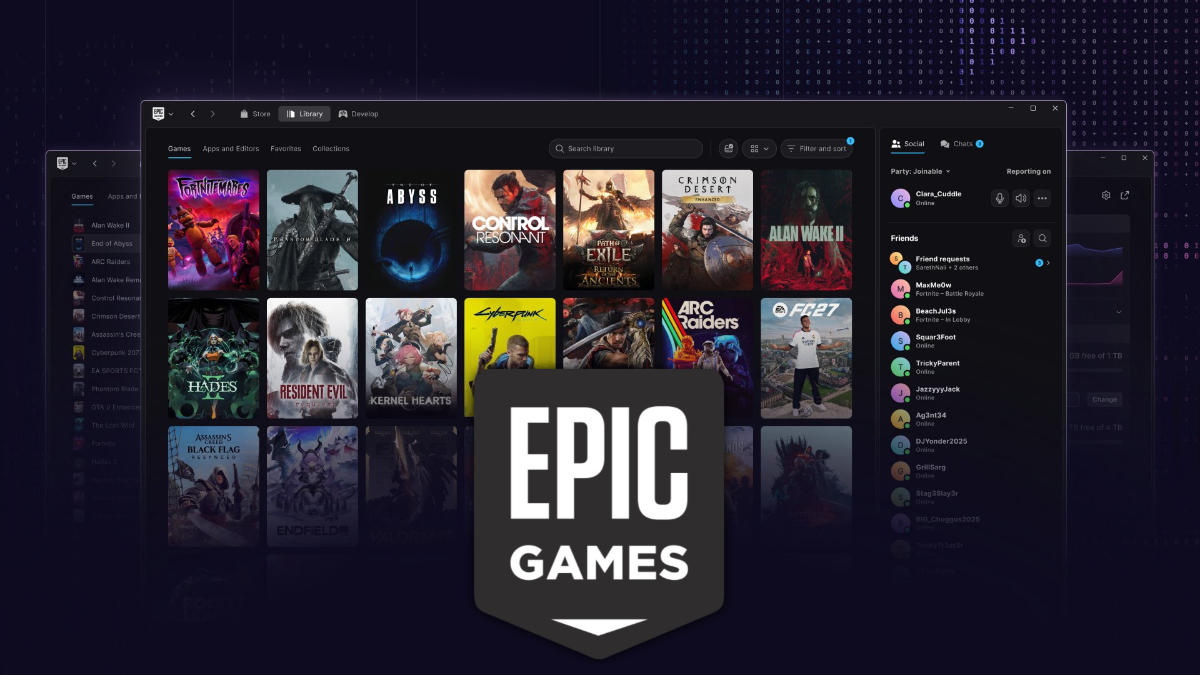
- Unified Downloads: All active patches, updates, and game installations are now housed in a single, dedicated, easy-to-monitor hub.
- Social Integration: Friends lists, party invites, and direct messaging have been woven closer into the core UI to reduce the need for separate overlay menus.
- Personalization: Users can now customize the top application bar, pin favorite titles, create custom visual asset collections, and hide dormant games that clutter their workspaces.
Official Responses and Developer Insights
The introduction of a "vibe-coded" application marks a cultural shift within Epic Games, reflecting broader industry trends surrounding generative artificial intelligence in software development.
What is "Vibe-Coding"?
For consumers unfamiliar with the terminology, "vibe-coding" refers to a modern programming workflow where human engineers act more as directors or curators rather than traditional line-by-line coders. By leveraging advanced large language models (LLMs) and specialized AI coding agents, developers feed architectural parameters, performance goals, and design frameworks into an AI, which then generates the underlying code. The human developer reviews, refines, and steers the output based on the desired "vibe"—or user experience and aesthetic feel—hence the colloquial term.
Epic Games’ Stance
Epic’s leadership has positioned this move not as a cost-cutting measure, but as a technological necessity to stay competitive in a fast-paced market. By utilizing AI-first development, small engineering teams can prototype, iterate, and optimize complex software systems at unprecedented velocities.
In its official release notes for the launcher preview, Epic acknowledged that bugs and instability are to be expected given the accelerated development timeline made possible by AI tooling. The company has actively solicited community feedback via its official channels, establishing dedicated bug-reporting pathways to polish the software before its stable, public rollout.
Furthermore, addressing the community’s persistent demands, Epic confirmed that the new architecture natively supports Linux environments, fulfilling a promise made earlier in the development cycle, even though the initial Preview build is currently restricted from direct Linux deployment.
Implications for the Gaming Industry
The release of Epic Games’ AI-engineered launcher carries profound implications for the broader PC gaming landscape, touching upon competition, labor dynamics, and consumer trust.
1. Escalating the Launcher Wars
For years, the PC storefront ecosystem has been locked in a duopoly or lopsided competition, with Steam maintaining a comfortable monopoly over the majority of digital PC game sales. While platforms like GOG, Ubisoft Connect, and EA App exist, none command the sheer market share or feature parity of Steam. By aggressively targeting performance bottlenecks—specifically cutting cold-start times in half—Epic Games is directly challenging Valve where it hurts most: user experience efficiency. If Epic can prove that its store is lighter, faster, and more responsive than Steam, it may peel away casual users who despise bloated launcher software.
2. The Normalization of AI-First Software Engineering
The gaming industry has experienced an ongoing, often contentious debate regarding the ethics and utility of artificial intelligence in creative and technical fields. While procedural generation and basic NPC pathfinding have used AI for decades, modern generative AI tools entering core software pipelines represent a paradigm shift. Epic Games openly embracing a "vibe-coded" product sets a powerful precedent. If this launcher proves stable, performant, and popular, other major publishers (such as Electronic Arts, Activision Blizzard, and Ubisoft) will likely accelerate their own internal AI development pipelines to cut overhead and speed up product lifecycles.
3. Consumer Skepticism vs. Practical Utility
Despite the impressive performance metrics, the reaction from the gaming community has been polarized. On one hand, players universally praise the massive speed improvements, the cleaner library management tools, the unified download queue, and the inclusion of Linux support. On the other hand, the explicit labeling of the software as "vibe-coded" has triggered anxieties regarding code bloat, potential security vulnerabilities, and the broader ethical implications of displacing human software engineers with AI models.
Looking Forward
As the Epic Games Launcher Preview continues to evolve through user testing and iterative patches, the industry will be watching closely. Will the performance gains overshadow ideological hesitations about AI development? Only time—and the stability of the final stable release—will tell.
In the meantime, players eager to test out the lightning-fast speeds and revamped interface can download the Preview build directly from the official Epic Games Launcher website. Whether you view it as a thrilling technological milestone or a harbinger of an automated future, one thing is certain: the race for the ultimate PC gaming storefront has just accelerated.